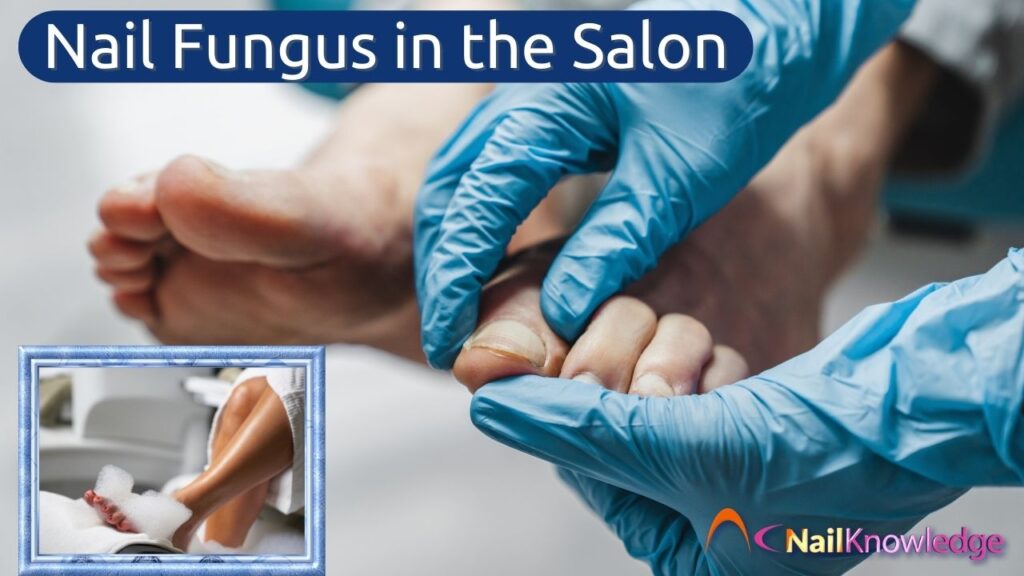
Cómo detectarlo, detenerlo, tratarlo y cuándo acudir al podólogo
Si trabajas en un salón de uñas, es probable que te hayas encontrado con hongos en las uñas del salón sin siquiera darte cuenta. Estas infecciones, conocidas como onicomicosis, son más comunes de lo que muchas personas piensan. Aunque no son inmediatamente peligrosas, pueden ser persistentes y antiestéticas, lo que dificulta su erradicación. Esto subraya la importancia de la detección temprana y el manejo efectivo, especialmente en un entorno de salón donde la higiene es fundamental.
Entonces, ¿cómo se detecta el hongo en las uñas a tiempo, qué debes hacer si una clienta lo tiene y cuándo es hora de derivarla a un podólogo? Vamos a desglosar todo, paso a paso.


Qué son los hongos de las uñas (onicomicosis)
Los hongos en las uñas (onicomicosis) son una infección de crecimiento lento causada por organismos fúngicos llamados dermatofitos. Estos hongos se alimentan de queratina, una de las proteínas que componen las uñas y la piel, lo que provoca engrosamiento, decoloración y a menudo uñas quebradizas.
La infección puede comenzar en una uña y, si no se trata, puede extenderse a otras, incluidas las uñas de las manos, aunque las de los pies se ven afectadas con mucha más frecuencia.
Pero aquí está el truco: el hongo en las uñas es persistente. No desaparece por sí solo y a menudo requiere meses de tratamiento. Es por eso que la detección temprana y el manejo adecuado son tan importantes, especialmente en un entorno de salón donde la higiene lo es todo.
Cómo identificar los hongos de las uñas en el salón de belleza
En las primeras fases, hongos en las uñas Las infecciones pueden ser sigilosas. No siempre gritan “¡Oye, soy una infección fúngica!” Por el contrario, suelen empezar de forma leve, con una ligera decoloración en algún lugar de la uña o alrededor de ella. lecho ungueal. Sin embargo, con el tiempo se hacen mucho más evidentes.
Signos y síntomas a tener en cuenta:
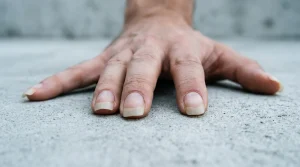
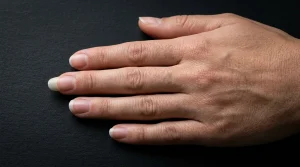
- Decoloración – Manchas amarillas, blancas o marrones en la uña. Algunas uñas pueden incluso parecer verdosas o negras en casos severos.
- Espesamiento – La uña puede volverse inusualmente gruesa, dificultando su corte.
- Fragilidad – Los bordes de la uña pueden desmoronarse, agrietarse o desprenderse fácilmente.
- Levantamiento (Onicólisis) – La uña puede separarse del lecho ungueal, creando un hueco donde la suciedad y las bacterias pueden acumularse.
- Distorsión La forma de la uña puede cambiar, volviéndose más curva o irregular.
- Olor – En algunos casos, las uñas fúngicas pueden desarrollar un olor ligeramente desagradable.
Las uñas fúngicas no siempre causan dolor, pero si la infección progresa, la uña engrosada puede presionar contra el calzado, lo que provoca molestias o incluso infecciones bacterianas secundarias.
Diagnóstico diferencial: ¿se trata realmente de una infección fúngica?
No todas las uñas engrosadas, descoloridas o dañadas son causadas por hongos. Como técnica de uñas, es importante conocer la diferencia entre una infección fúngica y otras afecciones que pueden imitarla.
Afecciones que pueden parecerse a los hongos de las uñas:
- Trauma – La presión repetida por zapatos apretados o una lesión pueden causar engrosamiento, parches blancos e incluso desprendimiento de la uña.
- Psoriasis – Las uñas psoriásicas a menudo presentan picaduras (pequeñas hendiduras), engrosamiento y una decoloración amarillenta o rojiza.
- Eczema y otras afecciones de la piel – Estos pueden causar uñas quebradizas y escamosas que pueden parecerse a infecciones por hongos.
- Infecciones bacterianas – Uñas verdosas, que se ven a menudo en clientas de salón, suelen estar causadas por un Pseudomonas bacterias en lugar de hongos.
- Envejecimiento de las uñas – A medida que envejecemos, nuestras uñas se vuelven naturalmente más gruesas y quebradizas, lo que a veces puede imitar los cambios fúngicos.
Si no está seguro de si un cliente tiene una infección fúngica u otra afección, no intente diagnosticarla usted mismo. Recuerde que identificar con precisión el hongo de las uñas en el salón es crucial para una derivación adecuada a un podólogo para pruebas y confirmación apropiadas.
¿Qué debe hacer si detecta hongos en las uñas en el salón de belleza?
1. No realice ningún tratamiento en la uña afectada
Es tentador intentar cubrir una uña descolorida que puede o no ser una infección por hongos con esmalte o gel, pero eso no resolverá el problema. De hecho, puede empeorar las cosas al atrapar la humedad y fomentar el crecimiento de hongos. Además, trabajar en una uña infectada pone en riesgo a tus clientes, especialmente si no se limpian y desinfectan adecuadamente.
En su lugar, explica amablemente al cliente lo que has notado y recomiéndale que busque asesoramiento profesional.
2. Desinféctelo todo
Las infecciones por hongos se propagan a través de diminutas esporas, que pueden permanecer en herramientas, limas de uñas y pediluvios. Para prevenir la contaminación cruzada:
- Lave primero todas las herramientas y superficies metálicas con agua y jabón
- Utilice desinfectantes de uso hospitalario en todas las superficies y herramientas metálicas.
- Deseche los artículos de un solo uso, como limas de uñas y pulidores.
- Limpiar correctamente los lavapiés entre cliente y cliente.
3. Asesorar al cliente sobre los próximos pasos
Si sospecha una infección fúngica en las uñas, aconseje a su cliente que visite a un podólogo. Muchas personas no se dan cuenta de que las infecciones fúngicas necesitan tratamiento médico; simplemente cortarse o limarse las uñas no las hará desaparecer. La única manera de estar seguro de que se trata de una infección fúngica es someterse a un análisis.
Opciones de tratamiento para los hongos en las uñas
Una vez diagnosticadas, las clientas tienen diversas opciones de tratamiento. Como técnico de uñas, conocer estos tratamientos te ayudará a educar a tus clientas y apoyarlas en su camino hacia la salud de las uñas.
1. Antifúngicos tópicos (lacas, cremas y soluciones)
Se aplican directamente sobre la uña y pueden ayudar en casos leves, aunque requieren un uso regular durante meses. Las opciones más populares son:
- Amorolfina (Loceryl) – Una laca de uñas medicada.
- Terbinafina (Lamisil) Un potente spray antifúngico
- Ciclopirox (Curanail) – Otro barniz antifúngico.
- Aceite de árbol de té y remedios naturales – Algunos clientes los juran, pero los resultados varían.
2. Medicamentos antimicóticos orales (sólo con receta)
Para casos más severos, los podólogos pueden recetar antifúngicos orales como:
- Terbinafina – Una de las opciones más efectivas, que se suele tomar durante 3 a 6 meses.
- Itraconazol (Sporanox) – Otra opción, utilizada a menudo para aquellos que no pueden tomar terbinafina.
3. Terapia láser
Algunas clínicas ofrecen tratamiento con láser para combatir infecciones por hongos. Esto puede ser efectivo, pero es costoso y no siempre está ampliamente disponible, y los resultados varían.
4. Extracción de uñas (en casos extremos)
Si la infección es grave, el podólogo puede recomendar la extirpación completa de la uña. Esto permite tratar directamente el lecho ungueal y evita que el hongo se siga extendiendo.
Cuándo acudir al podólogo
Como profesional de salón, no se espera que diagnostiques ni trates infecciones por hongos, pero puedes desempeñar un papel vital guiando a tus clientes hacia la ayuda adecuada.
Remitir a un cliente a un podólogo si:
- La uña está engrosada, descolorida o se desmorona.
- La infección se está extendiendo a varias uñas.
- El cliente ha tenido la infección durante mucho tiempo sin mejoría.
- El cliente tiene diabetes o mala circulación (estas condiciones aumentan el riesgo de complicaciones).
- La uña se levanta o causa dolor.
Los podólogos pueden confirmar si se trata de hongos (mediante pruebas de laboratorio si es necesario) y ofrecer el tratamiento más adecuado.
Reflexiones finales: Cómo proteger a sus clientes y su salón
Las uñas fúngicas son un problema común pero a menudo pasado por alto en los salones. Como profesional, tu trabajo no es solo hacer que las uñas se vean bonitas, sino también proteger la salud de tus clientes.
Al aprender a reconocer posibles infecciones fúngicas, mantener estándares de higiene estrictos y derivar a los clientes a podólogos cuando sea necesario, te diferenciarás como una técnica de uñas conocedora y responsable.
Y seamos sinceros, nadie quiere que los hongos arruinen su pedicura impecable. Así que, mantente vigilante, educa a tus clientas y mantén tu salón libre de hongos.