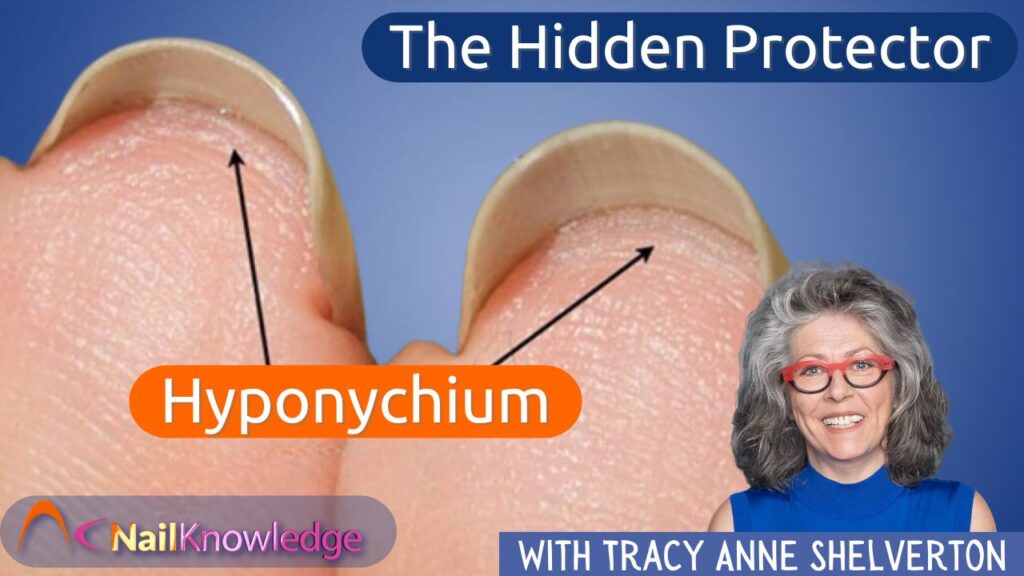
El protector oculto
Como profesional de las uñas, sabes lo importante que es mantener unas uñas impecables, pero ¿cuántas veces hablamos realmente de la hiponiquio? Puede que no sea la parte más glamurosa de la uña, pero es una de las más cruciales. Si la has estado pasando por alto, ahora es el momento de cambiar eso. Investiguemos por qué el hiponiquio merece tu atención y cómo entenderlo puede elevar tus habilidades de cuidado de uñas a un nivel completamente nuevo.


¿Qué es exactamente el hiponiquio?
El hiponiquio es el área de piel justo debajo del borde libre de la lámina ungueal, la parte de la uña que se extiende más allá de la punta del dedo. Piénsalo como el guardián de la unidad de la uña, formando un sello que mantiene fuera las bacterias dañinas, patógenos y alérgenos. Puede parecer pequeño y simple, pero juega un papel importante en mantener protegidas las áreas sensibles del lecho ungueal y la matriz. Descuidar esta área podría dejar a tus clientes vulnerables a infecciones u otros problemas de las uñas, lo que nos lleva a nuestro próximo punto.
¿Por qué los técnicos de uñas deben preocuparse por el hiponiquio?
Como profesionales de las uñas, sus clientes confían en usted no solo para que sus uñas luzcan estupendas, sino también para que se mantengan sanas. El hiponiquio está repleto de terminaciones nerviosas, algo así como un sistema de seguridad para la uña. Si este sello protector se rompe, esas terminaciones nerviosas entran en acción, alertando al cuerpo con molestias o dolor. Esta debería ser su primera señal de que algo no va bien. Un hiponiquio comprometido puede abrir la puerta a bacterias, infecciones fúngicas e incluso onicólisis (cuando la lámina ungueal comienza a separarse del lecho ungueal).
En resumen: un hiponiquio sano significa unas uñas felices y sanas. Y eso significa clientes contentos.
Signos de que el hiponiquio necesita atención
Como técnico de uñas, conocer los signos del hiponiquio puede evitar problemas mayores. He aquí algunas cosas que debes tener en cuenta:
- Engrosamiento o decoloración: Si el hiponiquio empieza a espesarse o a cambiar de color, podría ser un signo de infección. Si se sospecha de una infección fúngica, haz una prueba para saberlo con seguridad y trata en consecuencia.
- Dolor o malestar: Su cliente menciona sensibilidad o dolor alrededor del borde libre; esto podría indicar que el sellado se ha visto comprometido.
- Onicólisis: Si notas que la uña se levanta del lecho ungueal, es una señal de alerta importante. Esta afección a menudo se origina por un hiponiquio dañado y puede llevar a una infección más grave si no se trata.
El impacto del hiponiquio en la salud de las uñas
Si el hiponiquio se ve comprometido, no solo afecta la apariencia de las uñas, sino que puede causar verdaderos problemas de salud para tu clienta. Pueden aparecer infecciones y los problemas no tratados pueden incluso provocar daños a largo plazo en la matriz ungueal. Tú no quieres eso para tus clientas, y ellas tampoco quieren lidiar con ello.
¿Cómo proteger esta zona tan importante? La clave es manipular las uñas con cuidado. Limar demasiado el borde libre o utilizar herramientas demasiado agresivas puede dañar el hiponiquio. Además, asegúrate de animar a tus clientes a evitar malos hábitos como arrancarse las uñas, que pueden romper el sello e invitar a la infección.
Una buena higiene de las uñas es su mejor defensa.
Esto es lo que puede hacer como profesional de uñas para mantener un hiponiquio fuerte y saludable para sus clientes:
- Archivado suave: Al dar forma a las uñas, evite el exceso de limado cerca del borde libre para proteger el hiponiquio.
- Limpio pero cuidadoso: Mantenga limpia la zona de la uña, pero evite pinchar o empujar demasiado fuerte el hiponiquio.
- Atención a los signos de infección: Esté siempre atento a la decoloración, engrosamiento o signos de incomodidad.
- Educar a los clientes: Enseñe a sus clientes la importancia del hiponiquio y las rutinas adecuadas de cuidado de las uñas para mantener esta zona intacta.
- Mantenimiento de la unidad de clavos: Al aplicar el aceite, hazlo en la parte posterior del borde libre, de esta manera el aceite primero se empapa alrededor del hiponiquio antes de que llegue a los pliegues ungueales laterales hasta el PNF.
Pensamientos finales: No pases por alto el hiponiquio
Como profesional de las uñas, tu experiencia va más allá de la estética: tu trabajo es proteger la salud de las uñas de tus clientas. El hiponiquio puede estar oculto, pero desempeña un papel fundamental en la salud de las uñas. Al prestarle a esta estructura pequeña pero poderosa la atención que merece, te aseguras de que tus clientas no solo se vayan con uñas hermosas, sino con uñas fuertes y sanas de adentro hacia afuera.
Así que, la próxima vez que estés preparando las uñas de un cliente, tómate un momento para pensar en el hiponiquio.
No es solo otra parte de la uña, es el protector silencioso que marca la diferencia.