Why Do Nails Grow Crooked in the First Place?
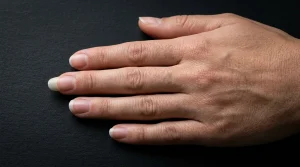
You trim your nails carefully, keep them clean, and yet one of them stubbornly curves to the left, hooks downward, or seems to grow at its own angle. It is one of those small things that quietly bothers people. So why do nails grow crooked? The answer often traces back to the nail matrix, the living tissue beneath the base of the nail.
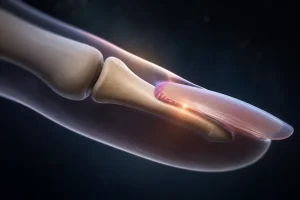
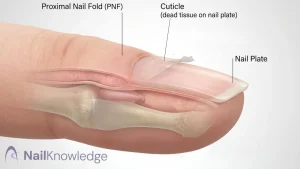
The nail matrix is the living tissue tucked under the base of your nail, hidden behind the cuticle. It is the engine of nail growth. Cells produced in the matrix multiply and flatten as they travel forward, eventually hardening into the nail plate you can see and feel. The shape of that matrix directly influences the shape of the nail it produces. A symmetrical matrix tends to produce a nail that grows straight. A matrix that is slightly curved, asymmetrical, or irregular will produce a nail that reflects that shape.
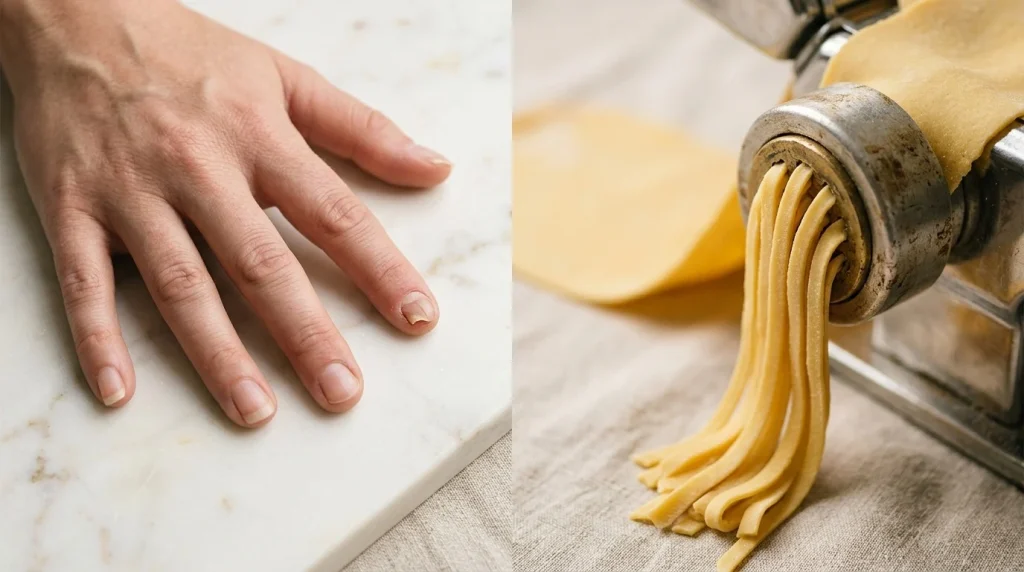
Think of it like a pasta machine. The shape of the die determines what comes out. If the opening is uneven, the pasta will be uneven. Your nail plate is simply following the instructions built into the matrix beneath it.
💡 Idea principal
Crooked nail growth often traces back to the shape of your nail matrix, the tissue that produces the nail plate. Genetics, past injuries, and age all influence that shape, so some curvature is completely normal. It is only when growth direction changes suddenly or noticeably that it is worth a closer look.

How Nail Matrix Damage Changes Growth Direction
One of the most common reasons a nail starts growing crookedly is past trauma to the matrix. Stubbing a toe, trapping a finger in a door, or dropping something heavy on your hand can all affect the matrix, sometimes permanently. Because the matrix contains the cells responsible for nail production, even a small disruption to its structure can alter the direction or shape of every nail that grows from it afterwards.
This is why a twisted fingernail or a nail growing sideways sometimes appears months after an injury, long after the original bruising has faded. The damage was not to the nail itself but to the factory producing it. You can read more about how nail matrix damage affects nail structure and why some changes can be lasting.
Not all matrix trauma is dramatic, either. Repeated minor pressure, like wearing shoes that are too tight around the toes, can gradually shift nail growth direction over time. That is why curved toenails are so common.
The nail is simply responding to chronic, low-level stress on the matrix.
Genetics, Age, and Why Some Nails Just Grow That Way
Sometimes there is no injury involved at all. Genetics may play a role in nail shape and growth direction. If a parent or grandparent had naturally curved fingernails or a nail that grew at a slight angle, there is a good chance you might too. The underlying shape of the matrix runs in families, so some degree of curvature is simply part of your biology.
Age adds another layer. As we get older, nail growth slows slightly, and the nail plate can become thicker and more prone to curving. Nails that were reasonably straight in your twenties might develop more noticeable curvature by your fifties or sixties.
That gradual change is normal and common. It can feel surprising if you have not noticed it building over the years, but it rarely signals anything to worry about.
Some curvature is completely normal. Nails are not designed to be perfectly flat, and a gentle arc across the width of the nail plate is standard anatomy for most people. It is only when the curve becomes pronounced, painful, or suddenly changes that it is worth paying closer attention.
When Crooked Nail Growth Is Worth Checking Out
Most crooked or curved nails are harmless. But there are situations where a change in nail shape signals something worth discussing with a doctor.
Clubbing is one example. The nail curves dramatically downward around a rounded fingertip, and this change can be associated with respiratory or cardiovascular conditions, so it is worth mentioning to a GP if you notice it. Koilonychia, sometimes called spoon nails, describes a nail that curves upward at the edges like a shallow bowl. This pattern can be associated with iron deficiency anaemia, so it is worth discussing with a GP if you notice it. A nail that suddenly starts growing sideways without any obvious injury is also worth mentioning to a healthcare professional, especially if it changes shape over a short period.
The key word here is change.
A nail that has always had a slight curve is almost certainly just your normal. A nail that has recently and noticeably shifted its growth direction, especially if accompanied by discolouration or pain, deserves attention. Recognising the difference between a lifelong quirk and a new development is genuinely useful information to carry.
Why Some Fingers Are More Affected Than Others
Have you ever noticed that your thumbnail curves differently from your index fingernail, even though they sit right next to each other? Each nail has its own matrix, and each matrix has its own individual shape. That is why uneven nail growth across different fingers is so common. A crooked thumbnail does not mean the rest of your nails will follow.
The thumbnail also tends to attract more attention because it is the widest nail. Any curvature or asymmetry is simply more visible there. Toenails, particularly the big toenail, are similarly prone to curved growth because of the constant pressure and friction from footwear and walking.
Blood flow may also play a role. Fingers on the dominant hand may grow slightly faster, possibly due to increased circulation from regular use. Faster growth does not necessarily mean straighter growth, but it does mean the matrix on that hand is more active. You can explore more about how dominant hand nail growth differs and what drives those differences.
Deformed Nail Growth vs. Normal Variation
There is a wide spectrum between perfectly straight and clinically deformed. Most nails that people describe as crooked or bent fall comfortably within the range of normal variation. The nail plate is a living structure that responds to its environment, its history, and its genetics. Expecting every nail to grow in a perfectly uniform direction is a bit like expecting every tree in a forest to grow perfectly vertical.
True deformed nail growth involves significant structural abnormality. It may be associated with factors such as severe matrix trauma, fungal infection, psoriasis affecting the nail bed, or a systemic health condition, all of which are worth discussing with a healthcare professional.
These cases look and feel noticeably different from the mild asymmetry most people are asking about.
If your nails have always grown at a slight angle and nothing has changed, you almost certainly have nothing to worry about. Your matrix is just shaped that way.
Understanding what drives crooked or curved nail growth is genuinely reassuring for most people. Once you know the nail plate is simply following its matrix, a lifetime of slightly sideways growth starts to make a lot more sense. But when the shape of a nail changes noticeably, whether after an injury or for no obvious reason, knowing how nail anatomy works helps you describe what you are seeing accurately and decide whether it is worth a closer look.
Nail anatomy is one of those subjects where a little real knowledge goes a long way. If this has made you curious about your own nails, the good news is that understanding nail structure does not require a science degree. There are genuinely accessible ways to build that knowledge, and once you have it, you start seeing your nails very differently.
If you want to go deeper on nail anatomy and health, la aplicación MyNailEra is a good place to start. Era, your personal nail coach, can answer your questions and help you build genuine knowledge about nail structure at your own pace.