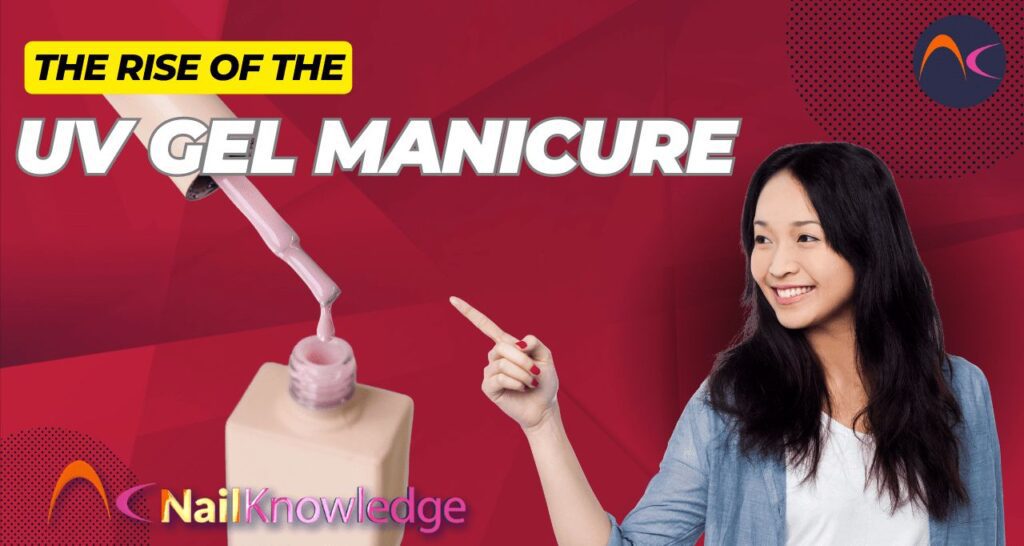
The term ‘gel manicure’ is commonly used as a nail service that provides a UV cured colour coat on the nails. It is not usually a traditional manicure as it may only provide work on cuticles, nail shaping, and, sometimes, a hand massage with suitable creams.
Importância da manicure com gel UV no setor de beleza
A UV gel manicure is the most popular nail service and has been for the last few years since it was introduced around 10 years ago. It is so popular with clients for several reasons, the main three being:
1. it is instantly dry so no waiting or polish to dry before leaving the salon
2. ele deve permanecer perfeito por 2 a 3 semanas, sem lascar nem perder o brilho.
3. Ele pode fortalecer as unhas e evitar quebras
No entanto, ele tem algumas desvantagens:
1. O cliente se compromete a visitar o salão a cada 2 ou 3 semanas para remoção ou manutenção, portanto, há um investimento de tempo e custo
2. The must be some simple home care steps to follow to keep the manicure and natural nails in top condition
3. Não pode ser removido com segurança em casa sem danificar as unhas
4. Some brands require buffing of the natural nail and, over the nail. and multiple manicures can result in the thinning of the natural nail.
No entanto, isso pode ser comparado a uma coloração de cabelo, ou seja, só deve ser feita por um profissional qualificado, mantida pelo mesmo cabeleireiro e há algum compromisso a ser feito com a condição do cabelo que precisa de cuidados em casa.
Entendendo a manicure com gel UV
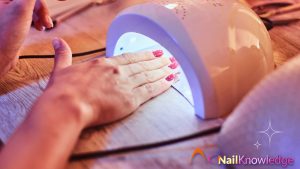
A UV gel polish, like traditional nail polish, is a type of plastic. It comes in a semi-liquid form, allowing it to be painted onto the natural nail in a thin coating. To set the gel, it needs to be cured under a lamp emitting UVA light. Curing is the scientific term for the process of transforming the semi-solid gel into a hard, solid state
Comparação entre o esmalte de unha comum e o esmalte de gel UV
Regular nail polish is another type of plastic, and it dries in the air as it contains solvents that evaporate, leaving behind a colored plastic coating. It can be easily and quickly removed with a solvent-based polish remover that breaks the bonds between the molecules.
Um esmalte em gel UV alcança um resultado semelhante, mas, diferentemente do esmalte comum, não contém solventes (a menos que seja um esmalte em gel híbrido). Em vez disso, contém ingredientes especiais que reagem com a luz UVA para facilitar a secagem. Quando se trata de remoção, o processo permanece o mesmo usando removedores com solvente, mas é necessário um tempo maior de contato com o solvente para quebrar suas ligações e ajudar no processo de remoção.
Entendendo o polimento em gel UV e a tecnologia da lâmpada
Para obter uma secagem instantânea, um polimento em gel UV incorpora ingredientes que reagem com a luz UV, transformando-o em um estado sólido.
A maioria das marcas agora utiliza lâmpadas com lâmpadas de LED, que ainda são UV, mas não usam mais tubos com gás devido a preocupações ambientais. Essas lâmpadas de LED consomem menos eletricidade e são mais ecológicas.
The bulbs in the lamps should only emit UVA light, which does not cause a tanning effect. However, prolonged exposure to UVA light can lead to minimal aging effects. Notably, a typical gel manicure session lasts around 3 minutes (or slightly longer if nail art is applied). Research suggests that having two gel manicures a month is equivalent to an additional 2 minutes of exposure to daylight each day.
Para clientes preocupados com a exposição à luz UV, o uso de luvas sem dedos ou de proteção com FPS (evitando a aplicação direta nas unhas) é uma precaução perfeitamente aceitável.
Preparação para um serviço de manicure em gel
Educating Clients on Pre-Manicure Nail Care
The health of the natural nail should be the nail professionals number 1 focus. Skilled application and removal should not cause any changes in the condition of the nail.
However, it is important that the manicure is only applied to healthy nails. Any nails that have an unwanted condition, such as lifting from the nail bed, discolouration, thin or weak nails etc. Sometime this nail service must be refused due to poor condition of the nails. This ensures that any condition is not made worse by the service. Some may need extra help with specific UV gel products to provide extra strength or to smooth a distorted nail plate. Without this extra help, thin and wet nails are not usually suitable for a UV gel manicure as the nail is too bendy for the more rigid coating.
Se um serviço for recusado, o profissional de unhas estará compreendendo as condições das unhas e preservando a saúde das unhas para o benefício de seu cliente
Remoção adequada de produtos para unhas existentes
For a UV gel manicure all existing coatings should be removed first. Some brands do allow for an ‘infill’. This is where the coating is not removed but the new growth area is covered with a new application of the colour. This is not always recommended, especially if the colour is opaque as the condition of the nail plate should be checked every 2-3 weeks and this can only be done with a clear coating.
Técnicas de modelagem e lixamento para manicure em gel
After inspection of the nail plate to check its condition and health, the nails should be shaped according to the clients wishes and the free edge cleaned to remove any loose nail or dirt.
Cuidados com as cutículas e práticas seguras de remoção de cutículas
Uma série de etapas muito importante no processo é preparar a placa ungueal para que o revestimento adira à superfície da unha sem levantar ou lascar.
The cuticle is a thin and clear layer of non-living skin that sits on the nail plate and is shed by the living skin at the base of the nail, which is actually called the prega ungueal proximal and NOT the cuticle as many believe. UV gel polish does not adhere to the skin only the nail plate so this thin layer must be very carefully removed without any damage to the nails. This is usually achieved by a cuticle tool or, sometimes by an electric file. Both are safe inexperienced hands. The use of an electric file requires extra training onto of manicure training so clients should ensure their nail tech has a suitable qualification.
There should be no removal of the band of clear ski at the base of the nail using nippers or scissors. This skin is still living and forms a very important seal that prevents pathogens (germs) from reaching the matrix where the nails are grown.
Garantia de condições sanitárias no salão de beleza
A última etapa antes da aplicação e após o trabalho com as cutículas é a limpeza da placa ungueal. Ela não deve ter óleos nem umidade, pois isso criará uma barreira entre a unha e o cátion e fará com que ele se desprenda, o que normalmente resultará em uma infecção que começa com um amarelo pálido e evolui para um verde escuro.
Geralmente, é uma mistura de solvente e álcool que removerá diferentes tipos de óleos. A lâmina ungueal tem seus próprios óleos naturais e isso os removerá, mas apenas temporariamente. Também removerá os óleos da maquiagem, dos cremes para as mãos e de qualquer outra coisa que possa estar na lâmina ungueal para garantir uma superfície limpa e perfeita para a aderência do revestimento
Some brands require that the nail plate is buffed. This should only be for removing the shine on the nail and not to scratch the nail. Older formulations relied on these scratches to hold onto the base coat as a physical bond. Modern formulations do not require this scratching as it will eventually damage the nail plate.
Guia passo a passo para aplicação de manicure em gel
Seleção de produtos e equipamentos de gel de alta qualidade
Many brands have a very specific base coat that is the one that is formulated to adhere to the natural nail. It is usually of a thin consistency and needs to be almost rubbed into the nail as no nail plate is entirely smooth. Its ingredients as such that the coating bonds with the keratin of the nail and creates a strong bond.
Algumas marcas têm os ingredientes necessários para uma boa aderência em sua camada de cor, portanto essa etapa não é necessária. Mas sempre consulte as instruções do fabricante.
Demonstração da aplicação correta do Gel Base Coat
There are different types of bases depending on the brand. Some are called a ‘rubber base’. These are designed for a nail that is a bit weak and bendy so they will move with the nail and not pull against it. Some builder gels are used as a base. This is usually thicker so they can provide some extra strength for a weaker nail They can also be used to reshape a flat nail, for example, to give a more aesthetically pleasing shape.
No entanto, elas não devem ser usadas em todas as unhas, pois algumas não precisam delas.
All base coats need curing under the UV lamp for the time stated by the manufacturer.
Otimização do tempo de cura para cada camada de polimento em gel
Se for usada uma base de borracha ou de construção, após a cura, pode ser necessário refinar o formato. Isso garantirá que o formato seja liso e fino na base e na borda livre, com uma área mais espessa no centro da unha para proporcionar uma resistência extra.
Antes de qualquer modelagem, a camada pegajosa deve ser removida. Essa é a superfície do revestimento que não está curada devido ao oxigênio do ar. Um álcool é usado para isso e a maioria das marcas tem seu próprio produto
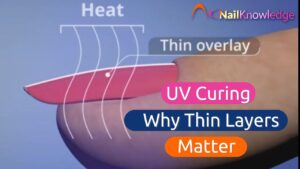
Whatever thickness of the builder is needed for the specific nail, it is important to apply it in thin layers. A thick layer can cause burning on the nail bed which is both painful and daggers. It is due to the extreme activity in the polymerisation (curing) process. It is better to apply even 3 thin layers than 1 thick layer as a thick layer will not cure properly and could cause allergy problems due to the uncured product left on the nail.
Principais dicas de aplicação para obter uma manicure em gel de longa duração
Depois que a base apropriada for aplicada, curada e modelada, é hora de aplicar a cor. Novamente, ela deve ser aplicada em uma camada fina. Mesmo que sejam necessárias várias camadas para obter uma boa cor, isso deve ser feito.
Ele deve ser curado na lâmpada da marca. Isso deveria ter sido testado para cada cor da linha, já que as cores mais escuras ou mais opacas demoram mais para curar, mas o teste dos pincéis deveria ter abordado isso na formulação e na mecânica da lâmpada, portanto, basta seguir as instruções.
A borda da unha também deve ser selada, pois ela sofre muitas batidas, especialmente ao digitar. Isso ajudará a evitar lascas e levantamentos.
Certifique-se de que as laterais e a base dos berços coloridos estejam perfeitamente uniformes e retas e que não estejam tocando a pele. Se alguma delas tocar a pele, tenha um bastão laranja pronto para limpá-la. Não use o dedo ou a unha, a menos que esteja usando luvas.
Se a cor parecer enrugada quando estiver fora da lâmpada, isso significa que você a aplicou com muita espessura e ela não está curada. Remova-o e comece novamente.
Criação de arte de unhas e técnicas de design
A arte em unhas é muito popular e cada técnico de unhas tem suas próprias especialidades.
Ela pode ser aplicada sobre as camadas de cor ou após o top cat, dependendo da técnica. No entanto, os clientes devem se certificar de reservar a arte, pois ela pode aumentar consideravelmente o tempo da consulta.
Lastly is the top coat. As with traditional nail polish, a top coat is there for protection and extra shine. It is a different formulation from bases and colour cats and is usually tougher and shinier. It is also used to seal in any art that has been applied. As usual, it needs curing in the cabine UV na configuração e no tempo prescritos pelo fabricante.
After curing, the gel will develop a sticky layer that must be removed using alcohol, taking care not to get any on the skin, as some gel products are known allergens.
Remoção de manicure em gel com segurança
Uma manicure de gel UV opaca deve ser removida a cada duas ou três semanas para verificar a saúde da placa ungueal. A única exceção a isso é se houver uma camada transparente na base. Nesse caso, a cor pode ser removida (polimento ou e-file) para ver a placa nula e o novo crescimento preparado como de costume e uma nova camada de cor aplicada.
Além disso, as unhas estão crescendo continuamente e a maioria dos usuários não gosta da área nua de crescimento.
Muitos profissionais têm o prazer de mostrar fotos das unhas de suas clientes com 5 a 6 semanas de crescimento, sem elevação. Isso NÃO é motivo de orgulho!!! A ausência de elevação é apenas o profissional de unhas fazendo seu trabalho corretamente, mas também demonstra que ele não instruiu suas clientes sobre o que é melhor para a saúde de suas unhas!
Some people have lost all their nails to an allergic reaction that wasn’t spotted intimately. This takes many months to grow out and has an impact on other areas of health for a lifetime! It isn’t worth it.
A importância dos serviços profissionais de remoção de gel
A remoção de um esmalte em gel UV em casa não é recomendada devido ao tempo e aos cuidados necessários, que normalmente variam de 1 a 3 minutos, dependendo da marca. O processo de remoção adequado envolve deixar as unhas de molho no removedor correto, e algumas camadas superiores podem precisar ser polidas com cuidado antes. A tentativa de remover o revestimento pode ser muito prejudicial, pois pode arrancar camadas da unha e enfraquecê-las consideravelmente. Para uma remoção segura e eficiente, é melhor procurar a ajuda de um profissional que saiba como lidar com o processo.
Remoção suave e não prejudicial do gel
A remoção deve ser rápida e eficiente. Algumas marcas exigem que a camada superior seja polida primeiro, pois ela não é removida com solvente. Isso deve ser feito de forma rápida e segura, ou seja, sem polir todas as camadas e sem atingir a pele.
Em seguida, as unhas podem ser embrulhadas em papel alumínio com um pequeno pedaço de algodão (do tamanho da placa ungueal) embebido em removedor, ou podem ficar de molho em uma tigela de solvente coberta com uma toalha para evitar a evaporação. Ou usar uma máquina elétrica de imersão que acelera o processo.
Colocar as mãos em uma almofada quente da bacia de imersão em uma bacia maior de água morna pode acelerar o processo.
Manutenção e cuidados posteriores da manicure em gel
- Ao sair do salão de beleza com suas unhas impecáveis, você deve se comprometer com alguns cuidados simples em casa.
- Your nails may feel stronger but they are not really so don’t use your nails as tools as you will just break them.
- Use um óleo para unhas de boa qualidade várias vezes ao dia. Isso não só ajudará a pele ao redor das unhas, mas também ajudará o revestimento a permanecer flexível.
- NÃO remova ou retire o revestimento!
- Se a unha parecer estranha ou se for possível ver alguma descoloração, entre em contato com o seu profissional de unhas imediatamente.
- Certifique-se de ter feito uma nova reserva para 2 a 3 semanas depois.
Problemas e soluções comuns
Se você notar qualquer elevação do revestimento, marque uma consulta o mais rápido possível. O levantamento significa que a água pode se infiltrar sob o revestimento e causar uma infecção.
Lifting means that the preparation of the nail has not been thorough enough. Maybe some cuticle is left on the nail, the coating has touched the skin or the nail condition is not suitable for a UV gel polish manicure. Not all nails are suitable for a UV gel polish. They may be too thin or even too thick and brittle.
Clients may arrive with damaged nails from previous UV gel polish manicures. The most important is if there are signs of an allergic reaction. If this is suspected then the only option is to remove all product and suggest the client see a GP in the hope they refer to a dermatologist for acrylate testing. This will determine exactly which ingredient/s are causing the reaction. Until this is done it is impossible to know which product can be used again.
Any nail damage must be grown out without any product. The best way is to keep the nails very short and a good nail oil used several times a day. When the nails are healthy, the testing will tell what needs to be avoided. If this is not available, a product that is HEMA free can be tested on one nail and removed in a couple of days to see if there is any adverse reaction. If all is clear, a full manicure can be applied with a strict 2-week appointment to remove to see the nail plate.
Tendências e inovações da manicure em gel
There are many possibilities for nail art when using a UV gel polish. The most popular at the moment is the use of pearlescent pigments over a neutral colour coat.
Mas glitters, foils e designs de carimbo podem ser usados com uma grande variedade de combinações, todas rápidas e econômicas.
Muitas marcas estão lançando produtos sem HEMA. Como o HEMA é o alergênico mais conhecido, é uma boa ideia usá-los. O HEMA é usado para obter uma boa adesão, portanto, ao passar a usar produtos sem HEMA, é necessário um protocolo muito mais rígido de preparação das unhas, pois a adesão dependerá mais de uma placa ungueal perfeitamente limpa.
Mais construtores de unhas estão sendo lançados, mas é essencial usá-los somente quando necessário. A aplicação de fortalecedores em unhas que não precisam deles pode causar mais problemas.
The coating should be able to break before the nail does. An overly strong overlay can result in the loss of a nail plate as the coating doesn’t break, but the nail can get pulled off the nail bed!