• Pular para navegação primária
  • Pular para o conteúdo principal
  • Pular Rodapé
NailKnowledge

NailKnowledge

  • Cursos
  • Livros eletrônicos
  • Cesta de livros eletrônicos
  • Base de conhecimento
    • Base de conhecimento
    • Pergunte aos especialistas
    • Glossário
  • Notícias
  • Blog
  • Galeria
    • Galeria de arte para unhas
    • Artistas de unhas
    • Junte-se à elite
  • Login

Informações gerais

A verdade sobre o esmalte de unhas Halal e as práticas muçulmanas

At Nailknowledge, we frequently receive inquiries about the compatibility of nail polish with Muslim practices. In this article, we aim to answer this common concern and offer insights into the topic.

The central question we address here is: “As a practicing Muslim, I am bound by the restrictions of Islamic law when it comes to the nail polish I can wear. This raises an important question: do you know which types of nail polish are permissible under these guidelines?”

A interseção do esmalte de unha e da lei islâmica

To be clear, I am not Muslim, and I do NOT have the qualifications needed to interpret Islamic law, but over the last several years I’ve consulted with several Muslim experts in these areas and I have relied heavily on their expertise.

By combining my scientific knowledge with their expert knowledge about specific Islamic laws, I’ve been better able to determine the facts behind this highly confusing issue, as it applies to wearing esmalte tradicional..

Many companies have recently started marketing “Halal” nail polish to Muslim women, which has led to confusion about whether these nail polishes adhere to Islamic law. Most of the confusion exists because the term “Halal” implies that all Islamic requirements have been met, but that is not the case for nail polish. Nail polishes have a separate and different requirement that goes beyond being Halal.

Certificação Halal: Sua importância e aplicação no contexto de esmaltes de unha

First, let’s discuss what it means to be “Halal certified”. What is that? Halal certified- simply means “permitted or lawful”, under Islamic law. This certification is provided for foods or cosmetics if they can demonstrate that they do not contain any substances forbidden by Islamic law, e.g. drinking alcohol which is called ethanol and pork are typical examples.

Halal certifications are intended for foods, but also include other items that may be swallowed, e.g. mouthwash, toothpaste or lipsticks. This requirement really doesn’t apply to nail polish, yet some marketers are using the term in a confusing fashion and some are misleading many Muslim women.

A certificação Halal é muito fácil de obter. As empresas devem pagar uma taxa monetária ao órgão regulador e, em seguida, analisar a lista de ingredientes do produto.

Esmalte de unha e a lei islâmica sobre o Wudu

Once it is determined that a food or cosmetic product contains no forbidden substances, it can become “Halal certified”. This is very much like the Kosher designation. Both Kosher and Halal have similar goals and requirements. However, nail polish is different from other cosmetics and MUST adhere to another Islamic law that so far has proven impossible for any nail polish to achieve.

This law requires Muslims to wet their nail plates before praying, and this can NOT be achieved if they are wearing nail polish. A “spiritual wash” called Wudu, is required to be performed before every prayer and this is extremely important. This ritual wash is used to attain a state of mental preparation for prayer and help to maintain good physical cleanliness. 

A doutrina muçulmana ensina que os praticantes DEVEM realizar uma lavagem espiritual ANTES de orar. Se não fizerem essa lavagem espiritual obrigatória, suas orações serão consideradas inválidas e não contarão. Em outras palavras, orar sem realizar o Wudu adequadamente é como não orar. Um assunto muito sério para os muçulmanos praticantes.

Esmalte de unha e sua compatibilidade com os requisitos do Wudu

Since Muslims are required to pray five times per day, they must perform the spiritual wash several times per day, which is why most practising Muslim’s don’t wear nail polish. If a Muslim does not get their nail plates wet with liquid water, their Wudu was not properly performed and thus their prayers do not count. Claiming that water “vapors” penetrate through nail polish to the nail plate is not nearly enough; vapors and traces of moisture do not count as a spiritual wash.

I have examined the ingredients and the testing is done on nail polish that claims to allow water to pass through the polish to reach the nail plate. In my opinion, these are nothing more than simple tricks designed to fool the public. I’m speaking specifically about a silly test where nail polish was applied to a coffee filter and then it was shown how water passed through the filter. What?  Since when did a coffee filter become a good substitute for the nail plate? This is utter foolishness and trickery, in my view. I suspect that I could make any nail polish pass this silly test, so it proves nothing. I believe this test was adopted to fool people into thinking they could perform a proper spiritual wash without removing their nail polish, but that is a false hope.

A perspectiva científica: Compatibilidade entre esmalte de unha e Wudu

As a scientist with more than 25 years’ experience developing nail coating products, I can assure everyone that there are NO known formulations of any nail polish that allow water to pass through the coating to fully wet the nail plate as required. Here is the simple truth; no nail polish is compliant with the requirements of Wudu spiritual washing.  Nail polishes that claim to be “Halal” compliant, are simply declaring they contain no forbidden ingredients and that has nothing to do with whether nail polish is Wudu compliant, as is required. Halal cosmetics are fine to wear, just as long as they do NOT interfere with Wudu spiritual washes before prayer.

O esmalte interfere no Wudu, portanto, as mulheres muçulmanas praticantes que se preocupam com o fato de a água atingir as placas ungueais devem ser informadas de que ainda precisarão remover o esmalte antes de realizar a lavagem espiritual e as orações. Os comerciantes devem ter cuidado para não prometer demais o que seus produtos podem fazer e devem ser claros sobre suas limitações.

Explorando o futuro: Perspectivas para esmaltes totalmente compatíveis

After 25+ years researching the natural nail, I have a deep understanding of nail coating products and their chemistry, so I’m often asked, “what about the future”?  Will there ever be a fully compliant nail polish that Muslim women can wear continuously and still pray regularly? I do believe that someday, a fully complaint nail polish that allows water to pass through the coating to wet the nail plate will someday be developed.

To make such a huge technological breakthrough will require a significant research effort, which now-a-days most cosmetic companies try to avoid. Only the biggest and the best can take on a significant challenge like this, so it’s not likely to happen any time soon and not likely to be developed by a small company. To date, all the money has been spent on marketing of “Halal” certifications and no one has been willing to invest in a real research program to create a fully complainant nail polish. But with approximately 500 million practicing Muslim women of nail polish wearing age, I suspect that sooner or later someone will create a useful and viable solution to great unfilled need.

Arquivado em: Informações gerais, Serviços para unhas

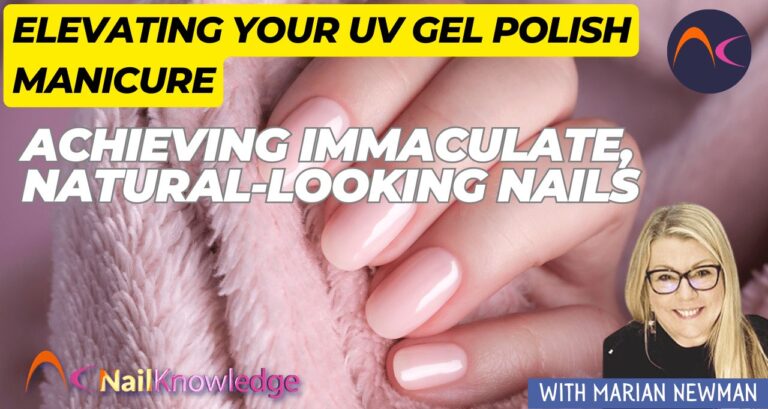
Elevando sua manicure com esmalte de gel UV: Obtendo unhas perfeitas e de aparência natural

Bio Sculpture pioneered coloured gel over 30 years ago, introducing the first soak-off gels to the market. The UV gel polish revolution began when brands, with some debate over whether it was Gelish or CND as the true pioneer, changed the gel’s viscosity and packaged it in a bottle with a brush. This new hybrid product offered a thinner application but had a shorter wear time.

Entendendo as diferenças: Formulações de gel puro vs. formulações de gel híbrido

A ‘pure gel’ consists entirely of polymers, while a ‘hybrid’ is a pure gel infused with solvents. Both are permeable, but hybrids allow for faster acetone penetration, making them quicker to soak off.

Evolução do esmalte em gel UV: Do acabamento brilhante, ao visual tradicional e elegante

The UV gel polish revolution gave the nail industry an amazing kick start as it was new and the consumer loved the long wear and instant dry characteristic.

Originally, the UV-gelled nail was super glossy, slightly thick and with a rounded edge. A look that many liked hence the invention of ‘gel-like’ traditional polishes. Not everyone liked that ‘bulbous ‘look and preferred the more sleek appearance of nail polish.

From Bulbous UV Gel to Sleek ‘Lip Gloss’ Finish

As coisas mudaram e alguns técnicos muito habilidosos tomam esse cuidado extra para obter uma aparência esbelta, elegante e totalmente natural. Mas isso exige mais tempo e habilidade.

The nails you see on socials with the ‘lip gloss’ look are good examples of this.

I’ve had my nails done by two such artists recently and I LOVE the look. So how do they do it?

Precisão na prática: As etapas para obter um acabamento impecável das unhas

I’ve watched and, if I was in a salon, I’m not sure I’d have the patience. I have no patience when doing my own nails.

  • preparação perfeita e exata.
  • base bem lisinha camada de base
  • applying a ‘slip layer’ (a thin layer of the coloured product, not cured, before the main coatings) gives the main coat something to hold on to before flooding the side walls
  • uma fina camada de cor, mas apenas duas unhas de cada vez para evitar qualquer movimento
  • inverting the fingers to use gravity to pull the coating away from the sides, make it thinner, and create a natural apex. The nail needs to be parallel to the desk for this to work efficiently
  • e depois curar
  • Termine as outras duas unhas da mesma maneira e, por fim, o polegar separadamente
  • if needed, the colour coat is finished with a fine buffer or block but those skilled in this do not need to do this step as their application is perfect already
  • then remove any dust and apply a top coat
  • A atenção principal está nas linhas de luz, pois isso mostra onde o revestimento é irregular e precisa ser corrigido

Tudo isso requer mais tempo e habilidades avançadas, mas é realmente a maneira de melhorar seu trabalho, e fazer com que o resultado das manicures com esmalte em gel sejam o melhor possível!

Não há mais espaço para unhas com esmalte grosso e irregular. E sim para unhas lindas e imaculadas de aparência natural que causam inveja a todos.

Como um excelente exemplo disso, recomendo que você dê uma olhada no Dryby Instagram. Ele mostra como as fotos podem capturar melhor esse tipo de design de unhas.    

Arquivado em: Informações gerais, Serviços para unhas, Gel UV

Microplásticos na indústria de unhas: Legislação da UE

Nós nos dedicamos ao conhecimento pioneiro no setor de unhas, enfatizando o conteúdo factual e científico. Nosso compromisso é contribuir para a conservação do meio ambiente e pesquisar continuamente métodos para apresentar informações que iluminem um mundo seguro e cintilante.

Atualização da legislação da UE: novas restrições às vendas de microplásticos

We would like to give you this ‘News Flash’ information regarding new legislation and to assist you in understanding the ‘jargon’. You may have seen that there is going to be a change in Legislação da UE com relação à venda de microplásticos a partir do dia 15 deth October, 2023. This new regulation is to restrict the uncontrolled release of microplastics into the environment. Microplastics is a very broad definition but it covers glitter & microbeads (exfoliation) for example.

Com base nas informações mais recentes, entendemos que a venda de glitters contidos em formulações usadas para modificações/aperfeiçoamentos corporais na pele, bombas de banho, cuidados pessoais, cabelos, maquiagem, tatuagens etc. se enquadram nas restrições da nova legislação imediatamente a partir desta data. Considera-se que esses produtos podem facilmente entrar no meio ambiente de forma não controlada, tanto durante a aplicação quanto na remoção. 

Glitters de cosméticos para unhas estão isentos de novas restrições

Cosmetic glitters that are solely used within the application of nail products (pre-made mixtures, encasing of glitter within a product or glitters added into nail products by nail professionals) or has any other intended use within a solid nail formulation will be unaffected for the next 12 years! So, there is no need to panic, nor the need to result in plain lifeless manicures! Phew!

Glitter ecologicamente correto: Uma mudança sustentável no setor de beleza

Em 2019, surgiu no mercado uma alternativa ecológica ao glitter tradicional, feito à base de plástico. Essa inovação usa materiais naturais e derivados de plantas, garantindo sua biodegradação em substâncias inofensivas no meio ambiente. Essas opções sustentáveis estão disponíveis em várias tonalidades, proporcionando uma escolha responsável para aqueles que se preocupam com o meio ambiente.

Por que os produtos para unhas têm uma legislação diferenciada em relação aos microplásticos?

  • Produtos usados em ‘industrial sites’ (nail salons) are not freely releasing microplastics during use (nail technicians capture glitter within a moulding product).
  • O setor de unhas funciona de forma inversa ao setor de beleza. Nós prendemos/encapsulamos em uma fórmula sólida, evitando assim a liberação de partículas soltas de glitter. 
  • ‘The regulation specifies a transitional period of 12 years for nail products until a ban on sale or use comes into force.’ 

Práticas recomendadas para profissionais de unhas para minimizar as emissões de microplásticos

 To prevent unnecessary microplastics emissions, we as nail professionals can elevate our procedures and take the following steps – 

  • Always firmly pat and press glitter into place using a brush
  • Não mergulhe os dedos nos frascos/potes
  • Do not use a large ‘duster’ brush to apply glitter
  • Top coat must be used to encase the glitter finish and any loose glitter used
  • Se algum glitter solto permanecer na unha após a aplicação, certifique-se de que todos os vestígios sejam removidos antes de lavar as mãos.
  • No final do dia, as pessoas que trabalham com glitter devem sacudir bem as roupas antes de lavá-las
  • Todos os resíduos de microplástico gerados devem ser varridos/aspirados, colocados em um recipiente de lixo apropriado, e recolhidos por um serviço de coleta de lixo autorizado. Nunca coloque resíduos na pia ou no vaso sanitário.

Nail technicians can also mix glitter into a clear gel/varnish/acrylic to almost negate any uncontrolled emissions.

Medidas para restringir microplásticos (europa.eu)
Perguntas e respostas: Restrição a microplásticos adicionados intencionalmente (europa.eu)
Regulamento da Comissão (UE) que altera o Regulamento REACH no que diz respeito às micropartículas de polímeros sintéticos (europa.eu)
https://www.cosmeticsandtoiletries.com/regulations/eco-sustainable/news/22874469/european-commission-adopts-measures-restricting-intentional-microplastics

Arquivado em: Informações gerais, Serviços para unhas

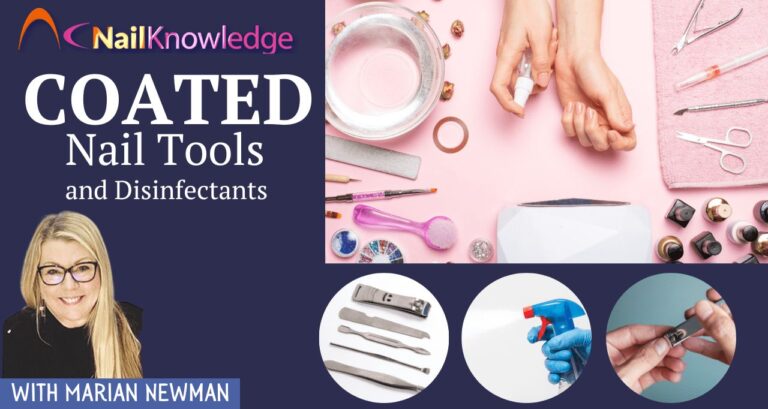
Ferramentas de unhas revestidas e desinfetantes

O setor de unhas usa muitas ferramentas de metal e há uma tendência para ferramentas de unhas revestidas, para as quais há muitas variedades disponíveis.

Por que os revestimentos são usados em ferramentas de metal para pregos e qual é a finalidade deles?

Os revestimentos são aplicados a ferramentas de metal para unhas para fins específicos relacionados à proteção e à aparência. Embora o aço inoxidável de boa qualidade seja durável, os revestimentos podem oferecer uma camada adicional de proteção contra arranhões, desgaste e ferrugem, que podem ocorrer com o tempo.

The primary purpose of these coatings is to enhance the longevity the tools. Additionally, certain coatings, such as titanium, have been claimed to exhibit bactericidal properties, potentially providing an extra layer of hygiene during their use. However, it is essential to consider the composition of the coating and its compatibility with disinfectants to ensure effective and safe sterilisation.

Em última análise, o uso de revestimentos em ferramentas de metal para unhas tem como objetivo alcançar um equilíbrio entre proteção e durabilidade, ao mesmo tempo em que mantém os padrões de higiene adequados no setor de unhas.

Graus e revestimentos de aço inoxidável para ferramentas para unhas

O aço inoxidável de boa qualidade não precisa de proteção. Há muitos tipos de aço inoxidável, sendo o 316 o de grau superior e o 304 a versão comum e mais barata.

Mesmo o aço de melhor qualidade não é imune a danos causados por arranhões, rugosidade e ferrugem. Obviamente, o revestimento pode ajudar a proteger contra arranhões, mas os revestimentos podem se desgastar, expondo o aço por baixo.

Desinfecção e compatibilidade com ferramentas para unhas revestidas

A maioria dos desinfetantes patenteados usa água para diluí-los e a imersão prolongada em água causará ferrugem. As instruções do fabricante para diluição e imersão DEVEM ser seguidas. Se as instruções indicarem imersão por 10 minutos, as ferramentas devem ser removidas, enxaguadas com água e deixadas secar, caso contrário ocorrerá ferrugem.

Há alguns desinfetantes que não são adequados para ferramentas revestidas e isso deve estar claro no rótulo como uma contraindicação. Leia os rótulos ou pergunte ao fabricante.

Importância dos números EN na seleção de desinfetantes

Os desinfetantes são fornecidos em vários graus, cada um identificado por um número EN impresso no rótulo. 

The EN number represents the disinfectant’s effectiveness against specific types of pathogens. For instance, EN13624 indicates that the disinfectant has been tested for fungicidal and yeasticidal properties, making it suitable for pedicure tools as fungal infections are more common on feet. 

On the other hand, EN13727 signifies that the disinfectant is bactericidal, effective against bacteria.

Similarly, EN14476 indicates its efficacy against viruses. Therefore, the selection of the appropriate disinfectant should consider the intended use of the tools and the specific pathogens they may come into contact with. 

It’s important to note that there is no one-size-fits-all disinfectant for all situations.

Considerações sobre a seleção de desinfetantes e a preparação de ferramentas para unhas

Escolha seu desinfetante com sabedoria, com razão e de acordo com a Avaliação de Risco de seus serviços.

Isopropyl alcohol (widely used in hand cleansers) can be used but it does depend on the purity of the alcohol and what it’smixed with. It evaporates very quickly and it efficiently needs contact in minutes rather than seconds.

But ALL disinfectants are useless unless the tools are cleaned first as any debris such as oils, skin, and nails are present. Cleaning with soap and water and scrubbing with a brush is essential as the first stage of disinfecting.

Voltando aos revestimentos: há algumas ferramentas revestidas de titânio que afirmam ser bactericidas. Esse é um revestimento comumente usado em implantes ósseos. O que há no revestimento é muito importante e como ele responde aos vários desinfetantes também é relevante. 

In conclusion, for keeping your tools as. hygienic as can be is not just a matter of buying a disinfectant and putting your tools in it and leaving them. There is much more science to it than that and every nail pro should do their own due diligence with regard to the quality of tools being used and if the disinfectant is appropriate for the service the tools are being used for

A recomendação mais importante é seguir à risca as instruções do fabricante, limpando as ferramentas primeiro e fazendo perguntas ao seu fornecedor de ferramentas e ao fabricante do desinfetante. Bons fornecedores/fabricantes não devem ter problemas para responder a quaisquer perguntas que você possa ter.

Com tudo isso em mente, nós da NailKnowledge recomendamos Mundo
(com agradecimentos por fornecer tantas informações sobre testes) e Labologia 3 (por sua dedicação).

Arquivado em: Informações gerais, Saúde e segurança, Serviços para unhas

Por que o polimento em gel queima?

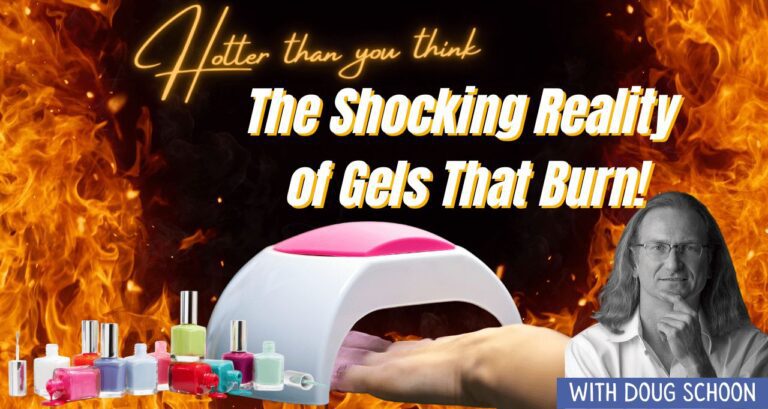
A chocante realidade dos géis que queimam!

Esclarecimento de uma questão candente

As the demand for gel nails continues to rise, it’s essential to address the burning sensation that some individuals experience during the application process. If you’ve ever wondered, “Why do gel polish burns?” or “Why do my gel nails burn under UV light?” you’re not alone. In recent months, there has been a significant increase in interest in this issue. This surge can be attributed to the growing number of individuals who are either doing their nails at home or seeking professional services, and leaving confused if this is a normal phenomenon or not. 

In this article, we will explore the reasons behind these burning sensations and provide insights into how to prevent them. Whether you’re a DIY enthusiast or a professional nail technician, understanding the science behind gel burning is crucial to ensure a comfortable and safe nail coating experience.

Let’s try to understand why this happens, and how to prevent it. 

A reação exotérmica: Entendendo a liberação de calor

Every artificial nail coating product, such as UV gels and L&P systems, can sometimes become warm during the application process. While a certain level of warmth is normal, excessive heat can cause discomfort – and potentially lead to serious nail bed damage.

To comprehend why gel polishes can cause a burning sensation, it’s important to understand the chemical reactions that occur during the curing process. Gel polishes and other similar products sofrer reações exotérmicasou seja, liberam calor durante a cura. 

The term “exotherm” refers to the release of heat during a chemical reaction. In the context of artificial nail coatings, these reactions occur when millions of tiny molecules in the liquid or gel product join together, creating the solid polymer chains that make up the finished nail coating. When two molecules react and join, a minuscule amount of heat is released.  The heat of one such reaction  is undetectable, however the cumulative effect of trillions  of molecules quickly reacting can lead to a substantial release of heat onto the nail plate which in turn heats the underlying nail bed. This phenomenon is typically observed during the curing process of all artificial nail coating products.

Sensações de queimadura com luz UV e gel UV

Many individuals have reported experiencing burning sensations when their nails are exposed to UV light during the curing process. The heat they experience does not come from the UV lamp, rather from the hardening process of the nail coating.  It’s essential to note that UV lamps are designed to emit specific wavelengths of UV light to facilitate the curing of UV gel polishes and other UV gels nail products. However, if the UV intensity is too high, this can cause excess heat that can become intense, leading to burning sensations. Using the correct nail lamp recommended by the UV gel manufacturer and proper positioning of the hands inside the lamp, and avoiding overly thick applications.

Superaquecimento e suas consequências

Em circunstâncias normais, os produtos para unhas adequadamente formulados e aplicados liberam uma quantidade mínima de calor que passa despercebida. Fabricantes de boa reputação realizam testes de controle de qualidade para garantir o aquecimento controlado, evitando picos excessivos de calor, o que destaca a importância de comprar produtos de fabricantes confiáveis. Entretanto, alguns produtos podem ter uma tendência a superaquecer, mesmo quando aplicados corretamente, e a condição do leito ungueal pode ser um fator contribuinte.

O calor excessivo pode causar vários problemas, principalmente quando o leito ungueal está lesionado ou a placa ungueal está muito fina. A placa ungueal atua como uma barreira isolante para proteger o leito ungueal do calor excessivo. Entretanto, se a lâmina ungueal for excessivamente limada, em sua condição mais fina, a lâmina se tornará uma barreira térmica ruim, permitindo que o calor flua rapidamente através da lâmina ungueal para o leito ungueal, podendo causar lesões. 

Lesões no leito ungueal, como queimaduras por fricção causadas por arquivamento agressivo, can significantly increase the sensation of heat. When the nail bed is damaged, it becomes super-sensitive, making it more susceptible to even normal levels of warming. It is essential to exercise caution while filing the nail plate, ensuring that you apply gentle pressure and avoid using coarse abrasives that can thin the nail plate. By maintaining the nail plate’s health and integrity, you can reduce the risk of heat-related discomfort. 

Apart from discomfort and pain, this excess heat can burn the nail bed, causing the nail plate to detach from it, and opening the nail bed to pathogens, and the risk of infections – which should be avoided at all costs.

Como evitar causar um pico de calor 

Para evitar o superaquecimento, é fundamental usar produtos de revestimento de unhas que sejam formulados, aplicados e curados adequadamente; e sempre em unhas saudáveis. Também é importante garantir que as lâmpadas UV tenham sido aprovadas para uso pelo fabricante do gel UV. O fabricante do gel UV deve informar quais lâmpadas UV para unhas foram testadas e aprovadas, bem como a forma como determinaram que a lâmpada para unhas estava curando adequadamente os géis UV.  

Os fabricantes cuidadosos projetam seus produtos para liberar o calor gradualmente durante o processo de cura, a fim de evitar a ocorrência de mudanças bruscas de temperatura. picos de calor. Ao seguir as técnicas de aplicação recomendadas e usar um sistema completo, conforme projetado pelo fabricante, incluindo a lâmpada de unha adequada, você pode minimizar o risco de superaquecimento.

This is particularly important when working with thicker viscosity gels, such as builder gel (called BIAB by many –  short for ‘builder in a bottle’).  Avoid apply these in thick layers, their thick consistency makes it easy to overapply them in layers that are too thick.

UV Gel – Avoiding Friction Burns

Friction burns occur when heavy-handed filing techniques are employed and are normally caused by either excessive downward force exerted on the nail file, or the wrong grit being used on the natural nail. Nail technicians should adopt gentle and careful filing practices, treating the natural nails with care. Always opt for a higher grit file (240 and above) when filing the natural nail. 

O papel da espessura do produto

The thickness of the nail coating product can also influence the release of heat. For that reason, applying UV gels in thin layers and curing them with the appropriate UV nail lamp ensures a proper cure and minimizes the risk of burning sensations. Generally, larger nail plates, such as thumb plates, tend to feel warmer compared to smaller nail plates. This is because more heat is released when a thicker layer of the coating product is applied. By avoiding excessive product application, especially with UV-curing gels, you can prevent this problem.

This issue occurs especially when applying builder gel, as most people believe it needs to be applied thickly – which is the fastest way to get a burning sensation.

Diretrizes para evitar o superaquecimento e as sensações de queimação do gel UV

  • Evite queimaduras por fricção lixando a placa ungueal com cuidado e usando técnicas e grãos de lixa adequados.
  • Manter a saúde e a espessura da placa ungueal, evitando o afinamento excessivo.
  • Tenha cuidado ao usar revestimentos de unhas de secagem rápida, especialmente em ambientes quentes de salões de beleza.
  • Use a lâmpada UV para unhas recomendada pelo fabricante do gel UV.
  • Aplique o produto em camadas finas para garantir a cura adequada.

Conclusão

Entender as razões por trás do calor excessivo e das sensações de queimação do gel UV durante a aplicação de produtos de revestimento de unhas é fundamental para profissionais e entusiastas do faça-você-mesmo. A formulação adequada, as técnicas de aplicação e os métodos de cura desempenham um papel importante na prevenção de desconforto e possíveis danos ao leito ungueal. Seguindo as diretrizes recomendadas, como evitar queimaduras por fricção, manter a espessura da placa ungueal e usar produtos de boa qualidade e sistemas completos, você poderá desfrutar de unhas bonitas sem medo de sensações de queimação.

Lembre-se de que o conhecimento e o cuidado são as chaves para uma experiência segura e agradável no serviço de unhas. Mantendo-se informada e praticando as técnicas adequadas, você pode manter unhas saudáveis e impressionantes e, ao mesmo tempo, minimizar o risco de superaquecimento e suas consequências. Portanto, tome as precauções necessárias, escolha produtos de boa reputação e você poderá obter unhas de gel deslumbrantes sem medo de queimaduras.

Perguntas frequentes

Q: If UV gels “burn like crazy” under the UV lamp, students are told that it is because the gel is “bad”? What do you think?
A: I do agree with this to an extent. When UV gels are properly applied and cured, they can become warm, but they are not supposed to “burn like crazy.” Excessive heating is often the result of improper application or curing, e.g. using the incorrect UV nail lamp. High-quality UV gels from reputable manufacturers are formulated to minimize heat spikes during the curing process. But on the other hand, it could be just misuse –  or too thick coatings , and/or the use of mismatched nail lamp  could be to blame.

P: Quais são os motivos comuns para o aquecimento excessivo dos géis UV?
R: O aquecimento excessivo dos géis UV pode ocorrer devido a técnicas de aplicação incorretas, como a aplicação do gel em uma espessura muito grande. Também pode ser resultado do uso de uma lâmpada UV inadequada para unhas que emite energia UV excessiva durante o processo de cura.

P: As lesões no leito ungueal podem contribuir para a sensação de queimação?
R: Sim, lesões no leito ungueal, especialmente queimaduras por fricção causadas por lixamento agressivo, podem aumentar a sensibilidade do leito ungueal ao calor. Os leitos ungueais danificados têm maior probabilidade de perceber até mesmo níveis normais de calor como sensações de queimação.

P: As unhas de gel devem queimar?
A: While a slight warming sensation is normal during the curing process, gel nails are not supposed to cause intense or prolonged burning. If you consistently experience excessive heat or discomfort, it’s important to reassess your application techniques and the products you’re using.

P: Por que as unhas de gel doem sob luz UV ou LED?
A: LED light is the same thing as UV light. LED nail lamps produce higher amounts of UV to cure the gels more quickly.  Faster curing causes the heat to be released more quickly to caused a heat spike.  Excessive heat can be caused by other factors such as , applying the product too thickly.  Following proper guidelines and using the right products can help alleviate this discomfort.

Q: How can heat related onycholysis be prevented or treated?
R: A onicólise pode ter várias causas. Em geral, a onicólise é a separação da placa ungueal do leito ungueal. Para prevenir a onicólise relacionada ao calor, é essencial evitar o superaquecimento do leito ungueal. Isso pode ser feito com o uso de técnicas de aplicação adequadas, produtos de qualidade e a lâmpada de unha adequada. Se ocorrer onicólise, recomenda-se manter a lâmina ungueal curta, manter a limpeza e a secura e evitar qualquer atividade que possa danificar ainda mais o leito ungueal. A condição geralmente se resolve sozinha em um ou dois meses nas mãos.

P: As técnicas de limagem com mão pesada às vezes são responsáveis por picos de calor em géis UV?
R: Sim, as técnicas de lixamento com mão pesada às vezes podem causar queimaduras por fricção no leito ungueal, tornando-o muito mais sensível ao calor. Ao praticar técnicas de lixamento suaves e cuidadosas, você pode minimizar o risco de desconforto relacionado ao calor e minimizar o potencial de queimaduras por fricção no leito ungueal

Arquivado em: Informações gerais, Serviços para unhas, Gel UV

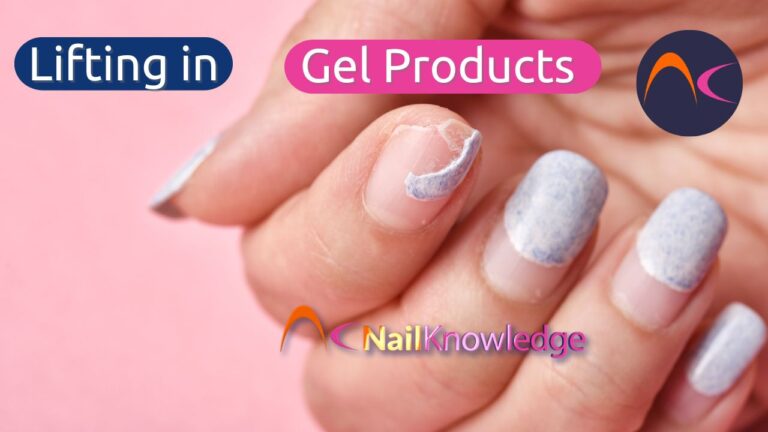
Entendendo o levantamento do gel para unhas e o papel dos géis construtores

Como profissionais especializados em unhas, nosso objetivo é oferecer serviços não apenas bonitos, mas também duradouros para seus clientes. No entanto, apesar de nossos melhores esforços, às vezes pode ocorrer uma falha no serviço, como o levantamento, o que deixa tanto nós quanto nossos clientes frustrados.

O levantamento de peso é um problema comum no setor de unhas, mas se entendermos por que isso acontece e incorporarmos medidas preventivas em nosso trabalho, poderemos reduzir significativamente sua probabilidade.

Let’s have a look at the reasons why gel service breakdowns happen, and the pivotal role builder gels play in creating flawless and durable gel manicures.

Preparação inadequada das unhas

One of the primary causes of service breakdown when working with gel products is inadequate nail preparation. Before applying gel products, it is essential to ensure the nail plate is clean, dry, and free of any oils or residue.

Failure to do so can lead to poor adhesion between the natural nail and the gel, resulting in premature lifting and chipping.

Always perform thorough nail cleansing before beginning the gel application, firstly by prepping the cuticles properly, making sure there is no dead tissue attached to the nail plate. We must always remember that gel does not adhere to skin, so removing the cuticle from the nail plate, and making sure the product NEVER touches the skin is incredibly important.

Em seguida, use o líquido de preparação recomendado para remover a umidade e os óleos da superfície.

Make sure to follow manufacturer’s instructions about which products work best as prep liquids and primers with their product, as they will know best their chemical formulations.

Evitando o levantamento do gel para unhas

The Importance of Proper Buffing and Application Techniques

Thinning the natural nail can also be detrimental to the bonding process of gel products. While it’s crucial to lightly buff the nail to increase the surface are to create better adhesion, excessive buffing and thinning of the nail plate can weaken it, leading to peeling or lifting. Remember – nail products do not damage nails – just improper application and removal do.

A cura inadequada pode fazer com que as unhas de gel se levantem

Ensuring proper cure is vital for gel nails to adhere correctly. A good understanding of the process of polymerisation is crucial to avoid any service breakdown.

Se o gel não for curado por tempo suficiente, se a lâmpada não estiver funcionando corretamente ou se a lâmpada usada for incompatível com o sistema de gel, o produto poderá não endurecer totalmente, causando levantamento, bolhas e outros problemas.

Be sure to follow the manufacturer’s guidelines for curing times, always use full systems, and regularly check the bulbs in your Lâmpada UV ou LED to make sure it’s working correctly.

Técnica de aplicação

The way you apply gel products can significantly impact the longevity of the service. If the gel is applied too thickly, it might not cure properly, which will cause service breakdown. It’s best to always apply thin and even layers of product to ensure proper curing, and to avoid heat spikes.

Always avoid touching the client’s skin, as the gel will not adhere to it, and that area will be the first to lift.

Encourage your clients to seek regular nail appointments to maintain the integrity of their gel manicure, and remember – gel is not meant to last forever and it will start to lose adhesion after a certain time.

Produtos de baixa qualidade

Using low quality gel products can contribute to service breakdown. It’s paramount to always invest in reputable and professional only gel brands, which have been tested and approved, and make sure they offer brand specific training.

Muitas marcas têm técnicas de aplicação diferentes, e aprender essas técnicas pode ser a diferença entre um serviço duradouro e um desastre prestes a acontecer.

Alternativas mais baratas podem parecer uma ótima ideia em um primeiro momento, mas podem comprometer a durabilidade da manicure, levando a clientes insatisfeitos e críticas negativas.

Géis construtores e sua importância

Géis construtores have become an essential tool in many nail professionals’ lives, particularly when it comes to providing additional strength and structure to the natural nail. These gels are thicker in consistency than regular gel polishes, making them ideal for creating extensions, correcting uneven nail surfaces, and reinforcing weak nails.

 Ao usar os géis construtores estrategicamente, você pode ajudar a evitar problemas comuns, como o levantamento em clientes com unhas difíceis, e aumentar a durabilidade geral da manicure.

Correção de imperfeições nas unhas

Quando uma cliente tem superfícies de unhas irregulares, como sulcos ou imperfeições, os géis construtores podem ajudá-la. Ao aplicar uma fina camada de gel construtor na unha, você pode criar uma tela lisa e bem estruturada para o restante da manicure em gel. Garantir que a superfície da unha esteja uniforme reduz o risco de levantamento do gel, pois não há pontos altos ou lacunas que possam comprometer a adesão.

Aumento da força das unhas

Some clients may have naturally weak or thin nails that are prone to quebra ou descascamento when external forces are applied. In such cases, applying a builder gel as an overlay can significantly reinforce the nails. The added strength and structure from the builder gel can act as a protective shield, reducing the chances of gel lifting and making the manicure more resilient to everyday wear and tear.

Técnicas de aplicação adequadas

When working with builder gels, it’s essential to pay close attention to the application technique. As a rule of thumb, it’s best to apply thin, even layers to ensure proper curing, as the improper cure will most definitely cause service breakdown (and may have other nasty consequences).

Again, following manufactures’ instructions and knowing how a product works is key!

Incentive seus clientes a agendar consultas regulares de manutenção para garantir que os revestimentos de gel da Builder permaneçam intactos e para tratar de possíveis problemas antes que eles se tornem mais significativos.

Compatibilidade com esmaltes em gel

As a nail professional, it’s preferable to work with products of the same brand to ensure chemical compatibility. Mixing products from different brands may lead to unpredictable results, including lifting.

If working with a different brand of builder to the gel polish, it’s always best to make sure the overlay is properly cured and cleansed before the gel is applied.

Levantamento de gel para unhas: Dominando a arte de manicures de gel perfeitas e duráveis

Mastering the art of gel manicures involves understanding of the polymerisation process and how service breakdown is avoided. By addressing issues such as improper nail prep, over buffing, improper cure, application technique, and poor-quality products, you can minimize lifting and chipping, and deliver flawless, long-lasting gel manicures that leave your clients impressed and satisfied.

Remember to educate your clients on nail care at home and the importance of maintenance to prolong the life of their gel manicures too – they can help us a lot by doing their home work.

Arquivado em: Informações gerais, Serviços para unhas, Gel UV

  • « Go to Previous Page
  • Página 1
  • Interim pages omitted …
  • Página 14
  • Página 15
  • Página 16
  • Página 17
  • Página 18
  • Interim pages omitted …
  • Página 30
  • Go to Next Page »

Aumente o nível de suas percepções sobre as unhas

Participe de nosso boletim informativo!
ASSINAR...

Direitos autorais © NailKnowledge

NailKnowledge

  • Livros eletrônicos
  • Sobre nós
  • Cursos
  • Notícias
  • Blog
  • Boletim informativo
  • Glossário

Políticas

  • Página de privacidade
  • Termos e condições
  • Política de cookies

Suporte

  • Entre em contato conosco
  • Pergunte aos especialistas
  • Suporte ao sistema
  • Perguntas frequentes
Portuguese
Portuguese
English Spanish Vietnamese