• Pular para navegação primária
  • Pular para o conteúdo principal
  • Pular Rodapé
NailKnowledge

NailKnowledge

  • Cursos
  • Livros eletrônicos
  • Cesta de livros eletrônicos
  • Base de conhecimento
    • Base de conhecimento
    • Pergunte aos especialistas
    • Glossário
  • Notícias
  • Blog
  • Galeria
    • Galeria de arte para unhas
    • Artistas de unhas
    • Junte-se à elite
  • Login

Informações gerais

Está confuso sobre o papel do pH na adesão das unhas?

Let’s clear things up!

As I stated previously, only water has pH.

Explorando o papel do pH e dos raios UV nos promotores de adesão das unhas

When nail plate adhesion promoters are mixed with water, it is their effect on the water’s pH that is measured. When this is done the water can become alkaline, acidic or neutral. HEMA is well known for its adhesion promoting ability produces a neutral pH in water. Other adhesion promoters can make the water alkaline, some acidic. So, clearly pH does not determine if something is an adhesion promoter.

Yes, in some cases pH can play a small role, but so does UV. UV causes polymerization of the gel which certainly promotes adhesion, but UV has no pH. So, obviously, there is much more to adhesion, than pH.

Entendendo a química da adesão do gel UV às placas de unhas


A adesão é causada pelos ingredientes do gel UV. Muitos ingredientes são repelidos pela superfície da lâmina ungueal. Entretanto, alguns são fortemente atraídos pela superfície da placa ungueal. Por quê? Esses ingredientes criam ligações químicas com a superfície da lâmina ungueal, que é a razão de sua atração. As ligações químicas com a superfície da placa ungueal é o que causa a atração e a adesão, não o pH.

There are three main types of bonds, which I’ve listed in order of their adhesive strength.

1. Ligações de hidrogênio são os mais fracos, mas muitos deles podem trabalhar juntos para criar uma quantidade significativa de força de adesão. Entretanto, elas podem ser facilmente rompidas por fatores como calor, umidade e estresse mecânico. Essas ligações estão constantemente mudando de posição, portanto, tendem a não ser muito fortes, mas ainda assim são altamente influentes e sempre desempenham um papel útil.

2. Ligações iônicas are stronger than hydrogen bonds and form by an attraction between opposite positive and negative charges on the ingredient and the nail plate’s surface. The strength of these can be influenced pH, in this way pH plays a small indirect role. These bonds, like hydrogen bonds can still be reversible.

3. Covalent bonds são, de longe, os mais fortes dos três tipos de ligações. As ligações covalentes são altamente estáveis e resistentes a fatores externos, proporcionando a adesão mais durável e duradoura. Em geral, são consideradas irreversíveis, pois requerem energia significativa para serem rompidas.

Fatores que influenciam a adesão de produtos para unhas

Other factors also affect adhesion, such as how well the product can flow into small nooks and crannies, which is a property called “wetting”. This important property is improved by properly cleaning the nail plate. So, you can see many things, including the cleanliness and condition of the nail plate, affect adhesion. A well-designed nail product will often use a combination of these bonds to achieve the best possible adhesion.

Os riscos das bases ácidas de gel em produtos para unhas

What about the so-called “acidic gel bases?

Alguns deles contêm ácido acrílico. Esse ingrediente usa todos esses três tipos de ligação para melhorar a adesão, mesmo assim NÃO recomendo o uso de produtos que contenham esse ingrediente. É um forte irritante para a pele e provavelmente é responsável por muitas reações alérgicas no setor de unhas. Na verdade, acredito que ele tenha mais probabilidade de causar problemas de pele do que o HEMA.

Cuidado! Evite o contato com a pele e nunca use esse produto em uma placa ungueal quebrada ou rachada.

Arquivado em: Informações gerais, Loções, poções e esmaltes, Desmistificação de mitos, Química dos produtos

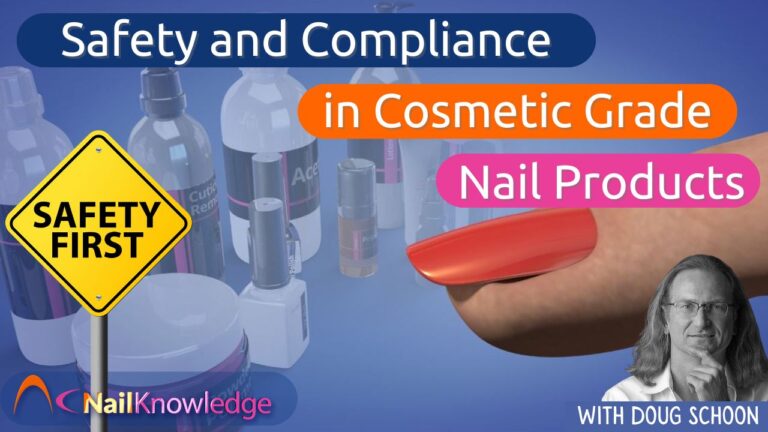
Garantia de segurança e conformidade em produtos para unhas de grau cosmético

As a seasoned expert in cosmetic chemistry and nail product safety, I often encounter queries from professionals in the nail industry who are eager to understand how to ensure their products are not only effective but also compliant with stringent safety and regulatory standards.

One such question recently highlighted the challenges of developing a nail art paint using an airbrush medium labeled as non-toxic, yet lacking in transparency concerning its ingredients. This medium, combined with FDA-approved pigments, raises important considerations about the term “cosmetic grade” and what it truly entails for product safety and market readiness.

Neste artigo, abordarei os aspectos críticos da transparência dos ingredientes, da conformidade regulatória e dos desafios específicos associados à formulação e à rotulagem de produtos cosméticos no setor de unhas. O foco será ajudar os profissionais a navegar no complexo cenário regulatório, garantindo que seus produtos atendam aos padrões de segurança exigidos nos EUA e no exterior, e entender por que o conhecimento abrangente dos ingredientes e das regulamentações é essencial para o sucesso nesse campo. Ao esclarecer esses elementos, meu objetivo é capacitar os técnicos e fabricantes de unhas com o conhecimento necessário para produzir e vender com confiança produtos cosméticos seguros e em conformidade com as normas.

Navegando pela transparência dos ingredientes na rotulagem de produtos para unhas

This question covers a lot of territory, so I couldn’t tell you all that you need to know, but I’ll do my best to answer. I’m sure others have similar questions about this. 

First, “non-toxic” is a marketing term with no real definition, so don’t be impressed by this claim. Anyone who sells a cosmetic product is required to know the ingredients, so they can list them on the label and on the product’s Safety Data Sheet or SDS (aka MSDS). They also must make sure the ingredients are not prohibited and determine the proper ingredient name to place on the label. This information is obtained from the International Dictionary of Cosmetic Ingredients (INCI Dictionary) it’s a list of names for cosmetic ingredients. 

Product manufacturers must ensure that all ingredients used are listed on the label and the correct INCI name is used for all ingredients. It is unlikely that any cosmetic product would be allowed to avoid listing the ingredients by claiming that it’s a proprietary blend unless you have trade secret status and that is a hard claim to make if you don’t know the ingredients. Even so, without the ingredient listing, the product couldn’t be sold outside the US, because Europe, Canada, Australia, and Japan will all insist on knowing the ingredients. Also, anyone who brings a new cosmetic product to market is expected to ensure all ingredients are safe for cosmetic use and not restricted from use in cosmetics.

A importância da aprovação da FDA para corantes de grau cosmético em produtos para unhas

Since the nail technician who asked this question is in the USA, it would be very important for her to ensure the colorants and pigments are FDA approved for use, specifically in cosmetics. That’s what is meant when the term “cosmetic grade” is used. To keep from being repetitive, I’ll use the word “colorants” to mean anything that is intended to impart color, including liquid dyes and solid pigments. It is very important to understand that the FDA and other agencies in different countries have approved a large number of colorants, but most are not approved for cosmetic uses. They represent a different “grade of material” that is considered non-cosmetic grade.

This is usually due to the chemical composition of the substance and how it is intended to be used. Non-cosmetic colorants may not be safe for use in nail products, so they should be avoided. For instance, if a non-cosmetic pigment which is based on nickel were used in nail products, it could trigger allergic reactions in those with nickel allergies. It’s estimated that 1 in 10 women in the US have nickel allergies, largely from wearing inexpensive jewelry that is plated with nickel… so you see how this could be a problem.

Apenas alguns poucos corantes são considerados seguros para uso em cosméticos e muitos países regulamentam e controlam rigorosamente o uso de todos os corantes cosméticos. Somente aqueles especificamente aprovados para uso em cosméticos podem ser adicionados a qualquer produto cosmético, inclusive produtos para unhas artificiais. Aqueles que não são especificamente aprovados para cosméticos NÃO podem ser adicionados a cosméticos. A UE e outros países também têm requisitos semelhantes aos dos EUA, portanto, esse é um conceito universalmente aceito.

Garantia de conformidade com os padrões de segurança e rotulagem de produtos para unhas

Product sellers are also required to develop and actively distribute product Safety Data Sheets to nail professionals who use their products and to update these sheets regularly. Those are the basic requirements, but it is also important to know that all seller are responsible to provide safe product, as well as to provide safe usage directions, and any warnings or precautions.

As advertências e precauções DEVEM ser exibidas com destaque, o que significa que devem ser criadas de forma que os técnicos de unhas possam vê-las e lê-las. Todos nos EUA que vendem cosméticos devem embalá-los de acordo com a Fair Packaging and Labeling Act, que é a lei federal de rotulagem. Outros países têm seus próprios padrões de embalagem semelhantes. Mais informações sobre essa lei podem ser encontradas no site US Federal Trade Commission’s website and you use the handy search box feature search for the “Fair Packaging and Labeling Act”.

O papel crucial dos consultores regulatórios no setor de cosméticos para unhas

Minha recomendação para qualquer pessoa que esteja pensando em vender um produto cosmético no setor de unhas é encontrar um bom consultor regulatório para garantir que seus produtos e embalagens atendam aos requisitos de cada local/região onde seus produtos serão vendidos. Isso é muito importante. 

Você pode consultar uma das muitas associações de cosméticos, como a ICMAD ou a PCPC, para obter uma indicação. ICMAD é um acrônimo para Fabricantes e distribuidores independentes de cosméticos. O PCPC é o Conselho de Produtos de Cuidados Pessoais. Ambos têm sites e podem encaminhá-lo a especialistas em regulamentação com conhecimento.

There are rules and regulations in every country which must be adhered to.  Now you can see it’s a myth that cosmetics aren’t regulated. Ha!  There are so many regulations, some think too many, but for some there are never enough regulations.  Some are constantly trying to force unnecessary regulations on top of the existing ones, which in my view is a foolish waste of time and resources.

Complexidade das regulamentações de cosméticos e sua importância para a segurança do produto

Cosmetics are more heavily regulated than some activist’s groups would like you to believe.  I’m sure some of you are saying, I had no idea it was so complicated. And I’ll tell you the process is far more complicated that it seems. That’s why I recommend that anyone selling cosmetic products to seek the help of a professional who specializes in cosmetic regulations and make sure you are doing things right.  Regulations and standards for arts and crafts products are entirely different from cosmetic requirements. Some confuse the two and this should be avoided.  

Here’s what I mean- some have asked me why it isn’t safe to use art and craft colorants or glitters when the product’s website and literature and Safety Data Sheet say they are “safe” for use.  Some don’t understand that this means the colorants are safe for the “intended use” arts and crafts and that does NOT include cosmetic use. Just because these are safe for use in a craft project, doesn’t mean they are safe for nail products or other cosmetics.

A inalação de limalhas e poeiras que contêm corantes não cosméticos pode causar problemas para os técnicos de unhas. E a superexposição pode levar a reações alérgicas bastante graves. Sempre que um ingrediente é comprado para uso em um produto cosmético, o fabricante deve esclarecer a todas as empresas que o ingrediente é para uso em um cosmético e explicar a finalidade pretendida, para que o fabricante do ingrediente possa informá-las se ele foi aprovado para esse uso.  

Qualquer pessoa que fabrique ou venda cosméticos é obrigada a fazer muitas coisas, a maioria das quais ajuda a garantir que os produtos sejam seguros quando usados conforme as instruções. A fabricação e/ou venda de cosméticos é um negócio sério, com sérias responsabilidades, e é por isso que recomendo que todos os envolvidos garantam a conformidade com todos os requisitos.

Arquivado em: Informações gerais, Desmistificação de mitos

Pregando a verdade: como separar o fato da ficção nos cuidados com as unhas

In the ever-evolving world of nail care, the line between fact and fiction can often seem as fine as a freshly filed nail. One of the recurring challenges that both professionals and enthusiasts face is the abundance of misinformation swirling through the industry, from fellow nail technicians to the very manufacturers of our tools and products. A common concern, expressed poignantly by a reader, captures the essence of this struggle: ‘I do my research, but there is so much incorrect information coming from other nail technicians and even from manufacturers. How am I supposed to separate the facts from the myths?’

No NailKnowledge, abordamos continuamente os mitos e esclarecemos dúvidas por meio de uma infinidade de perguntas feitas por nossos leitores. Hoje, vamos nos aprofundar em alguns dos mitos mais arraigados para revelar as verdades escondidas sob o verniz brilhante da superfície.

Eliminando os mitos: O método socrático no cuidado com as unhas

Determining fact from fiction is an age-old problem that has existed since the beginning of civilization.  In other words, misinformation has always been a problem. The best solution to this dilemma was discovered about 2500 years ago by a Greek philosopher named Socrates. Socrates and the people living in his time didn’t have to deal with the all the baloney circulated on the Internet or by the news media, but they sure did have their own fair share of myths and misinformation to deal with. So, Socrates developed a method to help him get the facts and he taught this method to his followers.

Seu método foi tão bem-sucedido que as pessoas o utilizam regularmente até hoje! Esse método é usado por juízes, advogados, repórteres, detetives e cientistas que procuram fatos e pistas sobre os fatos, mas qualquer pessoa pode usar esse método porque ele é muito simples, mas altamente eficaz.

Socrates’s method can be boiled down to just these two words, “Question Answers”.  Yes, it is that simple, yet it is powerful! Don’t just accept what you are told. That is how nail technicians are often fooled. Instead, ask lots of questions, and keep asking until you are satisfied you fully understand. It’s all about the questions you ask.  Here are some examples for you to try.

Polimento da verdade: o poder das perguntas abertas no cuidado com as unhas

The best way to get answers is to ask open ended questions. Start with the simplest question of all…  Ask “Why”? Quando alguém lhe disser algo que você suspeita estar incorreto, faça a seguinte pergunta, “Why do you believe this is true?” E ouça atentamente a resposta para obter pistas sobre o que eles realmente estão dizendo.

Ou pergunte “How do you know this?” Outra pergunta interessante é, “Where does your information come from?” e “What does this mean?” Ou meu favorito, “Please help me understand why I should believe this?” Ou, “Why is this information important?” If you don’t understand their explanation say, “Explain that to me in a different way so that I can understand.”  Ou “What does that mean?”  Esses são apenas alguns exemplos do tipo de perguntas abertas que podem ajudá-lo a fazer uma pesquisa melhor e a obter um entendimento mais profundo sobre qualquer assunto.

Revelando camadas: O Poder Revelador das Perguntas Persistentes no Cuidado das Unhas

Those who don’t know what they are talking about will have a hard time answering such questions. Those who want to deceive you, will not like being questioned. In either case, if someone doesn’t know the facts, it will be obvious when these types of questions are asked.  And those who don’t want you to know the facts, will become uncomfortable.

When people ask me questions like this, I love it!  This provides an opportunity to explain in greater detail and lets me know the questioner is interested.  It’s an opportunity to provide more detailed information, which I always appreciate. Don’t stop asking “why” and “how” until you get to the root of the issue and feel you understand the facts. You’ll learn that some don’t know why they believe, they just do and will have no clear answer to your questions.

Além da superfície: A importância do questionamento no cuidado com as unhas

Finally, don’t just accept what you hear or read and don’t just look at the headlines and expect you know the facts. Headlines are often intended to fool people, since those writing the headlines know most won’t take the time to read the article and won’t ask questions. Many are afraid to ask questions, but now you understand the tricks used by professionals who ask questions for a living.

With practice, you’ll find it’s easy.  Take the time to Question Answers! And you’ll be the wiser for it. Like anything, it takes practice- so dig in and don’t give up until you get the answers to your questions.

Arquivado em: Informações gerais, Desmistificação de mitos

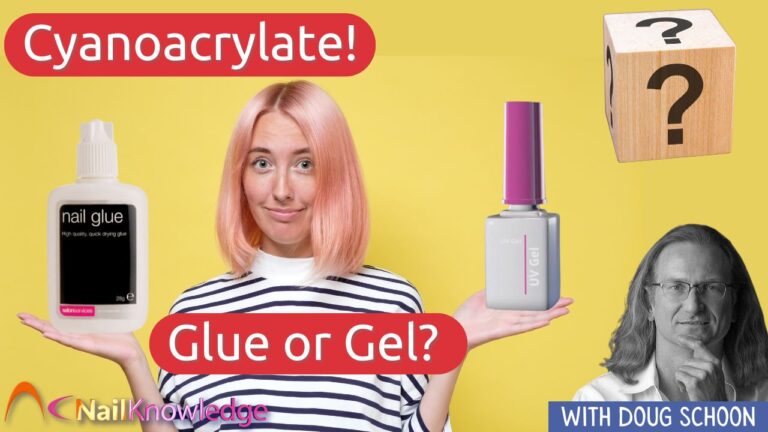
Cianoacrilato: Entendendo seu duplo papel como cola e gel em produtos para unhas

Terminology can often become a point of confusion among professionals and clients alike. A common query we encounter pertains to the use of the term “gel” in relation to products containing cyanoacrylate. A compound traditionally recognized as a type of glue. This issue underscores a broader challenge in the industry: understanding the distinctions and overlaps between different product categories.

Este artigo tem como objetivo esclarecer essas nuances, explorando como um ingrediente pode de fato se encaixar em várias definições de produto e por que a linguagem precisa é crucial no setor de beleza para aprimorar o profissionalismo e reduzir mal-entendidos.

Usos versáteis dos cianoacrilatos no setor de beleza

Cyanoacrylates are monomers from the acrylic family that are used for many purposes in the beauty industry. For instance, they are used as tip adhesives for nails, used to adhere rhinestones and other accessories to nails, they’re also used to create fiberglass and silk wraps, and they are regularly used as eyelash adhesives.  They are also sold as “no-light nail gels” and for so-called “dip” systems. 

In all cases, they are considered adhesives, since they stick to the nail plate and more commonly they are called “glue”.  Cyanoacrylates can be thin and watery or thickened to a gel-like consistency.  Some mistake the term “gel” to mean only UV-curing gels. UV curing gels are called “gels” because of their gel-like consistency. In other words, not all gels are UV-curing.  The word “gel” describes the consistency of the product, not its chemistry or composition.

Hair gels for instance are thickened to a high viscosity, which is why they’re called gels. Therefore, it is entirely proper to refer to a thickened cyanoacrylate as a gel.  Nail professionals should understand that not all gels are UV curing gels. That’s why when referring to UV gels, they should not just be called “gels”- which is an overly simplistic name. 

A importância da terminologia precisa nos cuidados profissionais com as unhas

Esse é um ótimo exemplo do motivo pelo qual é importante usar termos mais descritivos ao falar sobre produtos para unhas, se não for por outro motivo, para reduzir a confusão.

Another example of this are the sophisticated, high tech monomer blends used to create artificial nail products.  These products are among the most scientifically advanced products in the beauty industry, yet nail professionals refer to them as “liquid”. The polymer powders are equally sophisticated and complex, yet they are simply called “powders”.

If nail techs want clients to recognize them as professionals, they would be wise to use more professional terms, such as UV gel, monomers and polymers.

Arquivado em: Informações gerais, Loções, poções e esmaltes

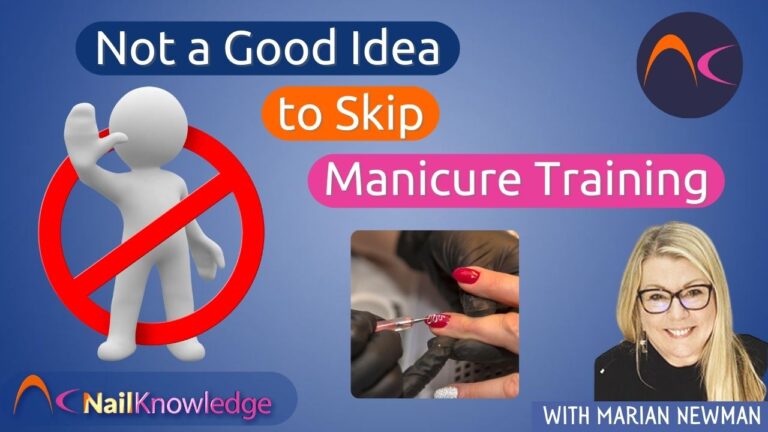
Manicures antes dos aprimoramentos: Construindo uma base sólida

Não é uma boa ideia pular a qualificação de manicure e ir direto para o polimento com gel UV ou para os aprimoramentos.

Isso é como aprender a pintar o cabelo sem entender de cabelo!

Por que o treinamento de manicure é essencial

A qualificação de manicure não é um curso de um dia. Há muita anatomia e fisiologia para aprender (e não apenas ler), condições das unhas e da pele, inclusive aquelas consideradas contra-indicações. Também há muita prática em fazer manicure, incluindo pintura. O ideal é que haja vários estudos de caso, pois cada indivíduo é diferente. Os estudos de caso devem seguir um plano de tratamento que pode ser alterado, se necessário. O número de horas de ensino recomendado para a qualificação regulamentada de "Tratamento de manicure" é de mais de 50 horas.

Como resolver as lacunas no treinamento tradicional de manicure

It is becoming obvious from questions being asked on SM platforms that manicure training is being skipped. Many nail professionals don’t know how to use traditional nail polish (it dries too quickly when they are used to using UV gel polish), they are unaware of common nail and skin conditions and do not know how to give good home care advice.

A manicure é a base de todos os serviços de unhas. Não pule essa importante primeira etapa!

Arquivado em: Informações gerais, Serviços para unhas

As verdadeiras causas do amarelamento da lâmina ungueal

Desvendando o mistério do amarelamento da lâmina ungueal

We often receive questions about nail care issues that both perplex and frustrate professionals and clients alike. One recurring topic that sparks a lot of curiosity and concern revolves around nail plate yellowing. Many believe that this discoloration is primarily caused by the pigments in nail polish. However, recent inquiries and expert insights suggest that other elements, such as nitrocellulose and various colorants, might play a significant role.

Este artigo investiga os meandros do que realmente causa o amarelamento da lâmina ungueal, com o apoio de análises especializadas e conhecimento do setor, para esclarecer esse problema comum, mas mal compreendido.

Entendendo a descoloração das unhas: Corantes e seu impacto

Pigments are not likely to stain the nail plate. They are too large to penetrate. Dyes and Lakes are other types of colorants that are often used, and many can and DO stain the nail plate. There are three different reds and one yellow colorant that have been reported as the most likely to stain the nail plate. The reds colorants are listed on product ingredient label as Red no. 6, Red no. 7, or Red no. 34.  In the European Union, all three of these red colorants would be sold under their color index number “15850”. The yellow that is reported to cause a lot of staining is Yellow #5 Lake, which in the European Union is labelled as “19140”.

O papel da nitrocelulose no amarelamento das unhas: A qualidade é importante

It is true that some grades of nitrocellulose can stain as well.  But the more expensive, higher quality grades are much less likely to discolor. Smaller companies that don’t sell much nail polish often use these inferior grades, since the best grades are too expensive when purchased in low quantities and the larger companies buy up all the high-quality nitrocellulose. When it does stain, nitrocellulose tends to be a more brownish-yellow stain, while discoloration caused by colorants tend to be the light yellowish tones or other odd shades, such as green.

Examinando as camadas de base: Nitrocelulose e vulnerabilidade da placa ungueal

If this base coat contained nitrocellulose and no colorants, the nitrocellulose is a possible suspect. However, a high-quality base coat should not stain the nail plate, unless its surface is damaged. Damaged nail plates are much more likely to pick up stains, even from some foods stains or clothing. Damaged nail plates will absorb stains more easily than healthy nail plates. To say the nitrocellulose is responsible for nail yellowing is an over simplification. Marketers tend to oversimplify things for three reasons,

  • They don’t understand the issues, so instead of giving the facts they just keep it simple to hide their lack of understanding.
  • Many nail techs often don’t understand these issues, so the message must be kept simple.
  • Os profissionais de marketing se concentram apenas no que os ajuda a vender seus produtos e, muitas vezes, exageram as informações.

It is definitely an over simplification to say that nitrocellulose is what stains the nail plate. More likely the causes are “dyes” and “lakes”.

Arquivado em: Informações gerais, Condições das unhas

  • « Go to Previous Page
  • Página 1
  • Interim pages omitted …
  • Página 5
  • Página 6
  • Página 7
  • Página 8
  • Página 9
  • Interim pages omitted …
  • Página 30
  • Go to Next Page »

Aumente o nível de suas percepções sobre as unhas

Participe de nosso boletim informativo!
ASSINAR...

Direitos autorais © NailKnowledge

NailKnowledge

  • Livros eletrônicos
  • Sobre nós
  • Cursos
  • Notícias
  • Blog
  • Boletim informativo
  • Glossário

Políticas

  • Página de privacidade
  • Termos e condições
  • Política de cookies

Suporte

  • Entre em contato conosco
  • Pergunte aos especialistas
  • Suporte ao sistema
  • Perguntas frequentes
Portuguese
Portuguese
English Spanish Vietnamese