O HEMA (metacrilato de hidroxietila) se tornou um dos ingredientes mais comentados nos últimos anos!
It is an ingredient that is used in MANY products. Dentists use it, orthopaedic surgeons use it. It is also used in 3D printing and many other applications. It has also been used in nail coating products for a very long time, safely!

Why is there now a ‘war’ against HEMA?
It 2018 the British Association of Dermatologists published a research paper specifically naming HEMA as a high-level allergen and the main cause of an ‘allergy epidemic’. They also named other ingredients used in nail coatings, but this was the ‘baddy’. It was also named ‘allergen of the year’ in 2018 by some sources. Isobornyl acrylate in 2020 which is another commonly used ingredient in nail coatings.
The situation arises from the retail sales of UV gel polishes and has, most definitely, spilled over into the professional industry. It is very clear that the consumer issue is due to UV lamps that don’t cure properly, excessive skin contact and high levels of HEMA that helps keep the price down. All of this has been replicated in the pro industry.
Once an individual developed an allergy it is for life. So, those consumers with an allergy and those that are well on the way to developing one, visit the salon for a UV gel polish and, boom, allergy symptoms! No more UV gel polish for them which equals lost clients.
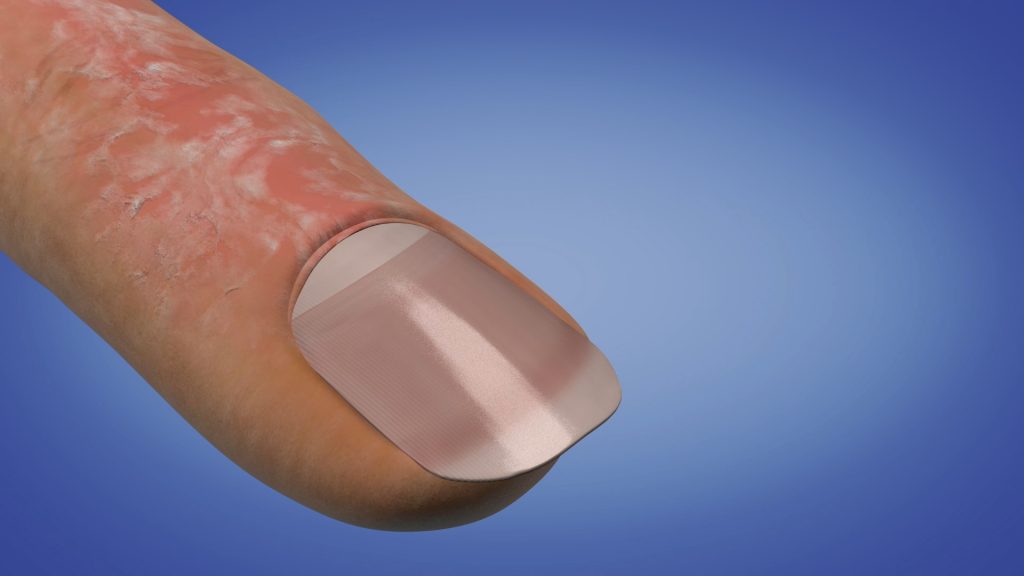
But some clients who have never touched a retail version are also developing allergies! Although HEMA has been identified as a known allergen it isn’t the only one by far!! The ONLY solution is an allergy test by a dermatologist to identify the cause. Changing brands is NOT the answer. Moving to a HEMA free product is not the answer. Identifying the cause is.
Cosmetic products are some of the safest in the world and every ingredient must be approved for use and usually with a recommended upper limit of the % used. HEMA’s upper limit is 35%. But even at low levels it still needs to be used safely.
Veteranos do setor com mais de 30 anos têm usado esses produtos durante todo esse tempo com pouca ou nenhuma incidência de alergias. É um problema moderno e que só pode aumentar, a menos que haja mais aceitação e compreensão do problema.
There are many HEMA free brands on the market now and, if you as a professional and many of your clients have developed an allergy that is known to be HEMA then this is the answer. If the situation is worrying you then this could be the answer but not if HEMA isn’t the problem! If you’re not working cleanly and safely the allergies to other ingredients will eventually occur for some. Not if, but when!
The whole family of acrylates and methacrylate are potential allergens. If you or your clients develop an allergy, then your dentist must be informed. Also, if any orthopaedic procedures are needed. If not, you may find what you are allergic to inside your body instead of in a nail coating that can be easily removed!
Change is starting to happen. As of the 3rd June 2021 consumer products containing HEMA (and di-HEMA which is much lower as an allergen and different from HEMA) cannot be placed on the market. From 3rd September 2021 they must not be available on the market in all of Europe. These products must be labelled ‘for professional use only’ and only sold to professionals in the belief they will know how to use them safely!! Considering the incidence of allergies in nail pros and their clients have overtaken the consumer numbers this is a bit worrying.
In conclusion, HEMA is not the demon it is made out to be. Badly formulated products, poor working practices and using the wrong UV lamp that isn’t properly curing the coatings are the problems. It may not be HEMA causing the allergy but any one of a number of other ingredients and this situation is for life and not a temporary one that will go away.
Não deixe de assistir ao nosso último vídeo sobre HEMA no setor de unhas.