• Bỏ qua primary navigation
  • Bỏ qua nội dung chính
  • Bỏ qua footer
Kiến thức về móng tay

Kiến thức về móng tay

  • Các khóa học
  • Sách điện tử
  • Giỏ sách điện tử
  • Cơ sở tri thức
    • Cơ sở tri thức
    • Hỏi các chuyên gia
    • Thuật ngữ
  • Tin tức
  • Blog
  • Phòng trưng bày
    • Thư viện nghệ thuật làm móng
    • Nghệ sĩ làm móng
    • Tham gia Elite
  • Đăng nhập

Công nghệ làm móng

Tôi có thể làm khô sơn móng tay bằng đèn không?

Những người đam mê làm móng thường tự hỏi, “Can I cure regular nail polish in a UV/LED lamp?” 
The short answer is no, but the long answer requires a deeper dive into why this is not an ideal practice. While gel polishes are designed specifically for UV/LED curing, traditional nail polish is formulated differently. Let’s explore this topic in detail, covering the science, risks, and alternatives.

Sự khác biệt giữa sơn móng tay thông thường và sơn gel là gì?

Before understanding if you can cure nail polish in a lamp, it’s important to grasp the fundamental difference between regular nail polish and gel polish.

  • Sơn móng tay truyền thống: Loại sơn bóng khô bằng không khí này dựa vào sự bay hơi của dung môi để đông cứng. Nó không chứa thành phần nào phản ứng với tia UV/LED.
  • Sơn Gel: This is a special formula designed to cure under UV or LED light. Gel polish contains photoinitiators that activate under light exposure, causing the polish to harden almost instantly.

Traditional nail polish simply doesn’t have the chemical components necessary to benefit from UV/LED exposure. Trying to use a lamp with traditional polish is merely a fruitless exercise. Some UV/LED lamps emit warmth/heat that may support the evaporation of the polish solvents to a small degree or this method may be used to keep a client with a fidgety hand to remain still, but either way does not assist the overall drying of the polish. 

Bạn có thể cho sơn móng tay thông thường vào đèn UV/LED không?

Về mặt kỹ thuật, bạn Có thể đặt sơn móng tay truyền thống vào đèn UV/LED, nhưng nó sẽ không đông cứng đúng cách. Sơn móng tay truyền thống cần không khí để dần dần làm bay hơi dung môi, và đèn UV/LED sẽ chỉ làm tăng tốc độ bay hơi dung môi nếu đèn tỏa ra bất kỳ hơi ấm nào. Điều này có thể tạo ra hiệu ứng làm khô hời hợt trên lớp sơn trên cùng, khiến các lớp sơn bên dưới ướt và mềm.

If the base layers aren’t dry, this can lead to:

  • Làm mờ
  • Kết cấu không đồng đều
  • Làm móng tay trong thời gian ngắn

Sử dụng đèn UV/LED trên sơn móng tay thông thường có nguy cơ gì?

Using a UV/LED lamp with regular nail polish isn’t just ineffective; it can also come with risks.

  1. Thời gian sấy kéo dài
    Thay vì đẩy nhanh quá trình khô, việc tiếp xúc với tia UV/LED có thể khiến sơn móng tay của bạn dính lâu hơn vì nó làm gián đoạn quá trình bay hơi tự nhiên.
  2. Sự đổi màu hoặc suy thoái
    Các loại sơn thông thường không được thiết kế để tiếp xúc với tia UV và có thể bị hỏng hoặc đổi màu khi tiếp xúc với ánh sáng UV/LED.
  3. Làm hỏng đèn của bạn
    Over time, using traditional nail polish in a lamp simply is a waste of the lamp’s working hours, which is best saved for the gel products it was designed for.

Tại sao một số chuyên gia lại sử dụng chất đánh bóng truyền thống với đèn UV/LED?

You may have seen nail technicians applying traditional nail polish with UV/LED lamps and wonder how they make it work. The trick lies in the technique.
Some professionals use a “gel sandwich” method, where they:

  1. Apply a gel base coat and cure it.
  2. Phủ một lớp sơn móng tay thông thường mỏng và để khô hoàn toàn (Việc này mất thời gian).
  3. Seal with a gel top coat and cure.

This method allows for the use of regular colours, however, it’s important to note that the regular polish must be completely dry before applying gel layers. Even light dampness can cause bubbling, peeling, or lifting, it is certainly not a fully trusted method. It is always best practice to use products according to the manufacturer’s instructions vs playing chemist with professional products. 

Giải pháp thay thế tốt nhất cho việc làm khô sơn móng tay thông thường là gì?

If you want the benefits of a UV/LED manicure while using traditional polish, there are safer and more effective methods:

  • Đánh bóng lai
    Some brands offer hybrid nail polishes designed for UV/LED curing. These products combine the thinner, swifter removal, and flexibility experienced with regular polish with the durability of gel.
  • Lớp phủ và bình xịt khô nhanh
    If you’re looking to speed up drying times, a quick-dry top coat for traditional polish is a better option than using a UV/LED lamp. Also available are quick dry drops or sprays which speed up the evaporation of the solvents within the polish. 
  • Phương pháp ứng dụng 

Có được kết quả tốt nhất và thời gian khô nhanh bằng cách nâng cao phương pháp áp dụng của bạn. Đảm bảo móng sạch và khô, sẵn sàng để sơn bóng, sơn nhiều lớp mỏng, để mỗi lớp gần khô, tránh mọi sai sót của người đưa thư.    

Điều gì xảy ra nếu bạn sử dụng sai sản phẩm trong đèn UV/LED?

Nếu bạn sử dụng sản phẩm không được thiết kế để xử lý bằng đèn UV/LED, một số điều có thể xảy ra không mong muốn:

  • Bảo dưỡng không hoàn chỉnh:Chất đánh bóng có thể vẫn mềm hoặc dính, dẫn đến bị nhòe.
  • Sủi bọt hoặc nâng lên:Việc bảo dưỡng không đúng cách có thể tạo ra các túi khí làm yếu lớp sơn móng tay.
  • Thời gian lãng phí: You won’t achieve the long-lasting, glossy finish you expect from gel polishes.

Phán quyết cuối cùng: Bạn có thể làm khô sơn móng tay bằng đèn không?

While it’s tempting to use a UV/LED lamp for regular nail polish, the results won’t be what you’re hoping for. Traditional polishes are not designed for curing under UV/LED light, and attempting to do so can lead to disappointing results and potential risks.

If you’re looking for the durability and shine of gel nails, it’s best to stick with products formulated for UV/LED curing. Alternatively, use hybrid polishes to combine the best of both worlds.

For a flawless manicure, the right tools and products make all the difference. Now you know the science and risks behind curing regular nail polish in a UV/LED lamp—so you can make the best choice for your nails!
Thuộc chủ đề:Sữa dưỡng, Thuốc và Chất đánh bóng, Dịch vụ làm móng, Công nghệ làm móng

Hiểu về Eponychium so với Cuticle

Have you ever been completely puzzled by nail terms thrown around in salons, classrooms, educational materials, or on social media channels?

You’re not alone! Today, we’re cracking the case on two often misunderstood heroes of nail anatomy: the eponychium and the cuticle. Ever mixed these two up? Let’s sort them out once and for all!

What is the Eponychium?

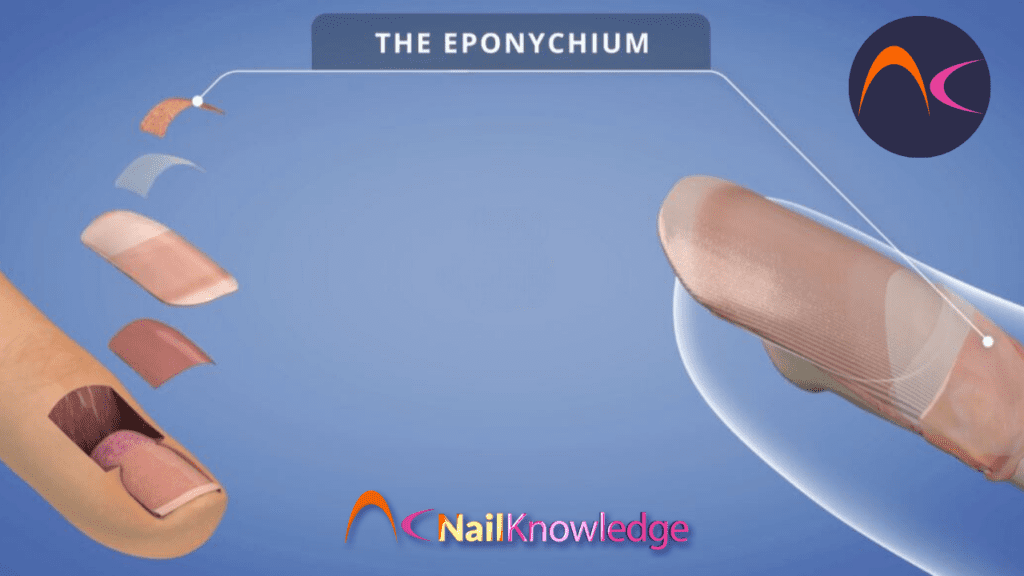
So, what exactly is the eponychium? Imagine it as a thin layer of specialized skin cells hidden underneath the proximal nail fold. It plays a crucial role in nail health, primarily responsible for producing the cuticle. Its main job? To form a protective barrier of non-living skin cells that shields your nail matrix from bacteria and germs—often referred to as opportunistic pathogens. Think of the eponychium as the mastermind behind the club’s security, keeping those unwanted guests out. Without its protection, your nails would be vulnerable to all sorts of intruders!

Cây Eponychium
Taken from our Animated Course The Essential Nail Diploma

What is the Cuticle?

Moving on to the cuticle—this is the part many people think they know.

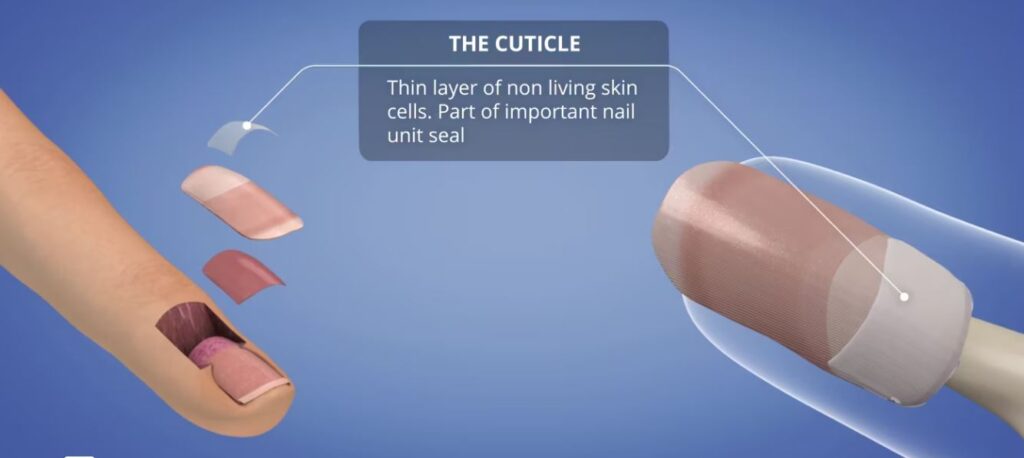
The cuticle is actually non-living skin that adheres tightly to your nail plate. If you think of the eponychium as the mastermind behind the club’s security, then the cuticle is the bouncer at the door. Why is this important? The cuticle forms a protective seal that prevents harmful agents from sneaking under your nail or reaching the crucial area of nail plate cell production. When this seal remains intact, your nail matrix is protected, continuously producing nail plate cells. Just as closing the door of a plane before take-off is crucial, maintaining the integrity of this cuticle seal is vital for the health of your nails—without it, there would be no nail plate!

The Nail Cuticle
Taken from our Animated Course The Essential Nail Diploma

Why the Confusion?

Now, you might wonder, why all the mix-up between the two? It’s easy to see why they’re often mistaken for one another—they’re neighbours, after all! Both reside in the same nail neighbourhood and work together to keep your nails looking fabulous and healthy. Plus, let’s be honest, even seasoned nail techs can find nail biology terms confusing, particularly when the focus is more on delivering a flawless mani-pedi than on discussing the finer points of giải phẫu móng tay.

The Importance of Distinguishing Between the Eponychium and Cuticle

Understanding the difference between the eponychium and the cuticle isn’t just nail tech jargon, it’s essential for proper nail care. Ever heard someone suggest cutting the cuticle? They might actually mean trimming excess living tissue that has dried out at the proximal nail fold as its almost impossible to trim the cuticle The good news is we can remove the cuticle safely from the nail plate with a quality oil and a curette, no scissors and no pain, just gorgeous nail plates ready for your favourite nail product. Knowing what’s what helps you avoid damaging your nails and ensures you’re actually taking care of them correctly. Would you rather treat your nails like delicate silk or just any old fabric? I thought so!

Further your Expertise on the Eponychium

Interested in enhancing your professional knowledge?  Why not explore our detailed master article on the nấm móng. This resource is tailored for nail technicians seeking to deepen their understanding of nail anatomy, ensuring precision and care in every procedure. Equip yourself with expert insights that elevate your practice above the rest. Our Knowledge Base serves as a comprehensive resource for all things related to nails!  

Phần kết luận

As a nail professional, whether you’re at your station in a salon or setting up for a client visit, keep these insights in mind. Understanding the difference between the eponychium and the cuticle is essential for avoiding common nail care errors that could affect your work and client satisfaction.

Thuộc chủ đề:BLOG, Thông tin chung, Phá vỡ huyền thoại, Công nghệ làm móng

Hiểu Bảy Tính Chất Quan Trọng Của Móng Tay Tự Nhiên Và Móng Tay Nhân Tạo – Phần 2 Độ Cứng

Độ cứng: Tính chất quan trọng thứ hai của móng tay tự nhiên và móng tay nhân tạo

Độ cứng là gì?

Hardness is often confused with strength, yet it’s important to distinguish between these two properties. Hardness specifically refers to a substance’s ability to resist surface scratching or denting. For example, glass is easy to shatter yet has a very hard surface. Diamonds, recognized as the hardest natural substance, can scratch glass and many other materials because of their superior hardness.

When it comes to nails, both natural and artificial, the level of hardness determines how likely they are to withstand surface damage such as scratches, stains, or peeling. The hardness of a nail can be noticeably different when it becomes softer than normal, making it more vulnerable to these issues, particularly during the removal of artificial nail coatings.

Tại sao độ cứng lại quan trọng đối với móng tay

Nail plates require a balanced level of hardness. If too hard, nails can become brittle, leading to issues like cracking and splitting. Conversely, overly soft nails are susceptible to peeling and damage from routine activities. Therefore, understanding and maintaining the correct hardness is crucial for the health and aesthetics of nail plates.

The comparison between nail plates and other materials can be quite illustrative. For instance, although a diamond is extremely hard, it isn’t necessarily the ideal hardness for a nail plate. Imagine nails as hard as diamonds; they would resist scratching but could become excessively brittle and impractical for everyday use.

Tác động của chất làm cứng móng tay

Chất làm cứng móng là sản phẩm được thiết kế để tăng độ cứng của móng. Tuy nhiên, chúng phải được sử dụng một cách thận trọng. Sử dụng chất làm cứng quá mức hoặc kéo dài có thể khiến móng trở nên quá cứng và giòn. Lý tưởng nhất là chỉ nên sử dụng chất làm cứng móng để đạt được mức độ cứng mong muốn và nên ngừng sử dụng khi đã đạt được mức độ này.

This concept aligns with the balance sought in other areas of life and nature. As Confucius famously said, “The green reed which bends in the wind is stronger than the mighty oak which breaks in a storm.” This analogy highlights the importance of flexibility within hardness; nails should have enough hardness to resist superficial damage but maintain enough flexibility to avoid breakage under stress.

Những cân nhắc khi phủ móng tay giả

Artificial nails also need to consider the balance between hardness and flexibility. Overly brittle artificial nails can lead to service breakdown, such as cracking and peeling. On the other hand, if artificial nails are too flexible, they may not provide the desired look or durability. Adjusting the hardness to achieve the right mix of rigidity and flexibility can significantly enhance the performance and longevity of artificial nails.

Cân bằng độ cứng để có sức khỏe móng tối ưu

Understanding and controlling the hardness of both natural and artificial nails is crucial for ensuring optimal performance and maintaining nail health. It allows nail care professionals to tailor treatments and products to the specific needs of their clients, ensuring both beauty and functionality are achieved.

Khám phá thêm các đặc tính chính của móng tay trong loạt bài gồm 7 phần của chúng tôi:

  • Sức mạnh của móng tay – Khám phá cách độ cứng của đinh ảnh hưởng đến hiệu suất và độ bền của chúng.
  • Độ cứng của móng tay – Hiểu rõ vai trò quan trọng của độ cứng đối với sức khỏe móng tay và cách duy trì sự cân bằng hoàn hảo.
  • Độ đàn hồi của móng tay – Hiểu rõ tầm quan trọng của sự dẻo dai trong việc ngăn ngừa móng tay gãy và duy trì độ bền.
  • Độ cứng của móng – Tìm hiểu điều gì khiến móng tay trở nên dẻo dai và đặc tính này khác biệt như thế nào so với độ bền và độ cứng.
  • Móng tay giòn – Tìm hiểu nguyên nhân khiến móng tay dễ gãy và cách phòng ngừa.
  • Khả năng kháng dung môi của móng tay – Tìm hiểu cách móng tay có thể chống lại tác hại của hóa chất và dung môi.
  • Mòn móng tay – Hiểu rõ các yếu tố ảnh hưởng đến khả năng chịu đựng của móng tay trước việc sử dụng thường xuyên và tác động của môi trường.

Thuộc chủ đề:Thông tin chung, Công nghệ làm móng

Tế bào Langerhans bảo vệ làn da của khách hàng trong quá trình chăm sóc móng

As a nail technician, you’ve probably encountered situations where products like polish or acrylics accidentally leak onto the skin around the nail. While this might seem like a small mishap, there’s a lot more happening beneath the surface of the skin than meets the eye. In fact, your bodies have their own natural defenders working hard to protect us from harm, meet the Langerhans cells, the unsung heroes of the immune system.

What Are Langerhans Cells?

Langerhans cells are like the security guards of the skin, always on patrol and ready to defend against anything that shouldn’t be there. Found in the outermost layer of the skin (the epidermis), including the delicate area around the nails, these cells are essential to keeping our  skin healthy.

So, what exactly do these tiny guardians do? Their main job is to detect harmful substances like bacteria, viruses, or even chemical irritants that may have entered the skin. Once they spot a threat, they capture it and alert the rest of the immune system to respond. Think of them as the first line of defense, always ready to call for backup when needed.

Why Nail Technicians Should Care

As a nail technician, understanding the role of Langerhans cells can help you better care for yourself and your clients. When a product leaks onto the skin, or a tấm móng tay has been so thinned out by filing it can reach the nail bed where these cells are stationed. If the Langerhans cells detect something harmful, they spring into action. This might result in redness, swelling, that could eventually trigger an allergic reaction as the immune system works to protect the skin and no one wants that so its smart to pay attention and avoid that.

For example, let’s say a bit of gel polish accidentally seeps onto the skin, gets under the nail or even leaks into the nail bed. The Langerhans cells might recognize some of the chemicals in the polish as foreign or irritating. In response, they activate, leading to an inflammatory reaction. While this is a natural and protective response, it’s not pleasant, as it can cause discomfort and spoil the beautiful work you’ve just done.

Practical Tips for Nail Technicians

To minimize the chances of product leakage and the resulting immune response, here are a few practical tips:

  1. Use Precise Application Techniques: Be mindful of the amount of product you’re using, especially near the proximal nail fold and sidewalls of the nails. Consider using a smaller brush for detailed work to avoid accidental spills.
  2. Protect the Skin: Apply a barrier cream around the nails before starting your service. This can help prevent products from seeping into the skin.
  3. Clean Up Immediately: If any product does get on the skin, wipe it away as quickly as possible. The less time it has to sit on the skin, the lower the risk of triggering an immune response.
  4. Be Aware of Client Sensitivities: Some clients may have more sensitive skin than others. Knowing this can help you choose gentler products or adjust your application technique to avoid any issues.
  5. Stop thinning the nail plate: Removing the protection layers of the nail plate not only upsets the balance of the nail enhancement that you are creating but also opens the nail for invading pathogens or product leakage

Communicating with Clients

If a client does experience redness or irritation, it’s important to communicate with them clearly and calmly. Here’s a simple way to explain what’s happening:
“Your skin has these amazing cells called Langerhans cells that act like security guards. When something they don’t like, like a little bit of product gets on your skin, they might react by causing some redness or swelling. It’s just your body’s way of protecting you.”

By explaining the situation in this way, you can reassure your client that what they’re experiencing is a normal reaction and that you’re aware of how to handle it.

Understanding Langerhans Cells: Key to Healthy Skin and Safe Nail Care

Langerhans cells may be tiny, but their role in protecting your clients’ skin is huge. By understanding how these cells work, you can take steps to prevent product leakage and ensure that your clients leave your salon with not only beautiful nails but also healthy skin.

Next time you’re working on a client, remember these guardians of the nail, and use your knowledge to provide the best care possible. Your clients will thank you for it!

Thuộc chủ đề:Tình trạng móng tay, Dịch vụ làm móng, Công nghệ làm móng

Ảnh hưởng của văn hóa đến công nghệ làm móng ở Chile

Nail care and decoration have played a significant role in human culture for centuries, serving as a reflection of social status, personal aesthetics, and cultural values. In Chile, the history of nail care is a captivating journey that intertwines indigenous traditions, colonial influences, and modern trends.

From the intricate grooming practices of the Mapuche people to the contemporary nail art seen in bustling salons across the country, the evolution of nails in Chile offers a unique lens through which we can explore the rich cultural tapestry of the nation. This blog explores the historical milestones of nail care in Chile, highlighting the transformations and continuities that have shaped the way Chileans view and adorn their nails today.

Spanish Colonization and Nail Care

The arrival of Spanish colonizers in the 16th century brought significant changes to many aspects of life in Chile, including nail care and grooming practices. The Spanish introduced European beauty standards and grooming techniques, which began to blend with the indigenous traditions already present.

During this period, nails were not only a matter of personal hygiene but also a reflection of social status and adherence to European customs. Spanish women brought with them more advanced grooming tools, such as metal nail scissors and files, which were a step up from the stone and wooden tools used by the indigenous population. These new tools allowed for more precise and refined nail care.

Mix of Cultures

As European and indigenous cultures interacted, a hybrid style of nail care began to emerge. Indigenous people adopted some of the Spanish tools and techniques, while Spanish settlers incorporated elements of local customs into their beauty routines. This combination created a unique fusion of self-care practices that would continue to evolve throughout the centuries.

For example, while Spanish women preferred well-manicured nails as a sign of elegance and sophistication, indigenous techniques of using dyes and natural materials for decoration persisted. This cultural exchange enriched practices and created a diverse approach to nail care.

Influence on Daily Life and Nails in Chile

The integration of European grooming habits into daily life in Chile marked a change in the way personal care was perceived. Nail care became more than just a functional routine; it was now part of a broader social fabric, reflecting the mixing of cultures and the adoption of new norms.

In addition to personal care, the influence of Spanish fashion trends began to be noticed. Women in colonial Chile paid more attention to their overall appearance, including their nails, which were often polished and painted with early forms of nail dyes brought from Europe. These practices were predominantly observed among the upper classes, as they had more access to the necessary tools and materials.

Conclusion of Colonial Influence

The colonial period in Chile marked a significant transformation in nail care practices, driven by the influence of European customs and interaction with indigenous traditions. This era set the stage for future developments in nail fashion and care techniques, laying the foundation for the modern practices we see today. As we continue to explore the history of nails in Chile, we will see how these early influences continued to shape and redefine nail care in the centuries that followed.

Modernization, Urbanization, and Nail Care in Chile

19th and Early 20th Centuries

When Chile entered the 19th century after independence from Spain, the country experienced significant modernization and urbanization with European immigration (Scotland, England, France, etc.). These changes brought with them a change in lifestyle and greater exposure to global trends. Urban centers became centers for fashion and personal care, including nail care.

With the rise of department stores and pharmacies, nail care products became more accessible to the general public. Items such as nail clippers, files, and cuticle removers were now available to a wider audience, promoting better hygiene and nail care. This period also saw the introduction of the first nail polishes and treatments, influenced by European and American beauty trends.

Xu hướng thời trang

During this time, nail fashion began to evolve. The influence of Hollywood and the global fashion industry brought new styles and colors to Chile. Women began to experiment with different nail shapes and lengths, often inspired by the glamorous styles seen in movies and magazines.

The 1920s and 1930s, in particular, were notable for the rise of the “moon manicure,” in which the base of the nail was left bare or painted in a contrasting color. This style, along with others, showed the growing importance of nails as a fashion statement.

Cultural Changes and Nail Care in Chile

Mid to Late 20th Century

The second half of the 20th century was a period of significant social and political changes in Chile. These changes were reflected in the beauty and fashion industries, including nail care. The influence of global movements, such as feminism and the counterculture of the 1960s and 1970s, led to more diverse and expressive nail styles.

The rise of nail salons in urban areas made professional nail care services more accessible. Women frequented these salons for manicures, pedicures, and nail art, which became increasingly popular. The introduction of acrylic nails in the 1980s offered new possibilities for nail length and design, further expanding the range of options available.

Popular Styles

Throughout the second half of the 20th century, nail trends continued to evolve. The bold colors and geometric patterns of the ’60s gave way to the natural, minimalist looks of the ’70s. The 1980s and ’90s saw a return to boldness, with bright colors, glitter, and intricate nail designs that became popular.

The media played an important role in shaping these trends. Television, magazines, and, later, the Internet provided endless inspiration for nail styles, allowing Chilean women to keep up with the latest fashions from around the world.

Contemporary Trends –  Innovations of the 21st Century

The turn of the century brought significant advances in nail care technology and products. Gel polish, nail extensions, and advanced nail art techniques became widely available, allowing for more complex and long-lasting designs.

Nail salons continued to thrive, offering a wide range of services to suit different preferences and budgets. Do-it-yourself nail care also gained popularity, and high-quality products and tools became more accessible for at-home use.

Global Influence on Nail Trends in Chile

Globalization has had a profound impact on contemporary nail trends in Chile. International beauty influencers, social media platforms, and global fashion shows have made it easier for Chileans to adopt and adapt trends from around the world. K-beauty (Korean beauty) trends, and Caribbean immigration trends, for example, have introduced innovative nail care products and unique nail art styles to Chile.

Environmental awareness has also influenced modern nail care. Eco-friendly and cruelty-free products are increasingly popular, reflecting a global shift toward sustainable beauty practices.

The Future of Nail Care in Chile

Emerging Trends

Looking ahead, the future of nail care in Chile is likely to be determined by technological advances and changing consumer preferences. Innovations like 3D printing for custom nail designs and smart nail technology (nails that can change color or display patterns) are on the horizon.

Sustainability will continue to be a major trend, with growing demand for eco-friendly products and practices. This change will likely influence the materials used in nail care products and the methods employed by nail technicians.

Cultural Integration

As Chile continues to embrace its rich cultural heritage while adapting to global trends, the nail care industry will reflect this combination. Traditional techniques and materials can be revived and incorporated into modern practices, offering a unique fusion of old and new.

The preservation of indigenous nail care traditions, combined with contemporary innovations, will create a diverse and dynamic landscape for nail care in Chile. This integration will ensure that the country remains a vibrant and influential player in the global beauty industry.

Conclusion – The Evolution and Future of Nail Care in Chile

The history of nail care in Chile is a fascinating journey through time, reflecting the country’s cultural evolution and global influences. From ancient indigenous practices to contemporary trends, nail care and decoration have always been a form of personal expression and cultural identity. As we look to the future, Chile’s nail care industry will continue to innovate and adapt, celebrating both tradition and modernity.

Thuộc chủ đề:Thông tin chung, Công nghệ làm móng

Trường hợp kỳ lạ của móng tay út dài

Have you ever seen someone with an unusually long pinky nail and wondered why? This seemingly odd choice actually carries a variety of meanings and uses across different cultures and contexts. Let’s explore the fascinating reasons behind this intriguing practice.

Ý nghĩa lịch sử và biểu tượng của sự giàu có

Theo truyền thống, móng tay dài, đặc biệt là móng tay út, là biểu tượng của sự giàu có và địa vị. Trung Quốc cổ đại, both men and women of the upper classes would grow their nails long to demonstrate that they didn’t engage in manual labour. This tradition indicated a life of luxury and ease, free from the physical demands that would break long nails. Even today, in some parts of the world, a long nail on the pinky finger can still symbolise prosperity.

May mắn và móng tay út trong văn hóa Châu Á

Trong một số nền văn hóa châu Á, người ta tin rằng nó thu hút may mắn. Người dân ở những vùng này thường để móng tay út dài ra ngoài khớp gần đầu ngón tay, nghĩ rằng điều đó sẽ mang lại may mắn và năng lượng tích cực.

Công dụng thực tế của móng tay út

While some grow their pinky nails for symbolic reasons, others find practical uses for them. A long nail on the pinky finger can serve as a handy tool for various tasks such as tightening screws, peeling labels, or even cutting soft items like fruits or plants. However, it’s worth noting that using your nails as tools can lead to damage or breakage, and experts recommend avoiding this to maintain nail health.

Hỗ trợ cho nghệ sĩ

Trong thế giới nghệ thuật, một móng tay út dài có thể là một công cụ hữu ích. Một số nghệ sĩ nuôi móng tay út để giúp giữ tay ổn định khi làm việc trên các chi tiết phức tạp. Bằng cách đặt móng tay trên vải, họ có thể tránh làm nhòe tác phẩm của mình bằng tay. Kỹ thuật này, mặc dù ít phổ biến hơn, cho thấy khía cạnh thực tế của phương pháp này.

Tiện ích âm nhạc

Các nhạc sĩ, đặc biệt là những người chơi guitar flamenco, đôi khi để móng tay út dài ra để hỗ trợ cho việc chơi đàn. Kỹ thuật được gọi là rasgueado bao gồm việc gảy đàn nhanh bằng nhiều ngón tay. Móng tay út dài hơn giúp cân bằng bàn tay và tăng cường âm thanh, mang lại trải nghiệm âm nhạc phong phú hơn.

Nâng cao nhận thức với móng tay út

Thật thú vị, một móng tay út dài cũng có thể đóng vai trò là biểu tượng cho các mục đích xã hội. Các chiến dịch như Polished Man yêu cầu những người tham gia sơn một móng tay, thường là móng tay út, để nâng cao nhận thức và gây quỹ chống lại bạo lực đối với phụ nữ và trẻ em. Hành động đơn giản này có thể khơi dậy các cuộc trò chuyện và thúc đẩy sự thay đổi xã hội đáng kể.

Những sử dụng giai thoại và quan niệm sai lầm

Some individuals use their long pinky nails for personal grooming tasks like cleaning their ears or noses, though this practice is not recommended by health professionals due to the risk of injury or infection. Additionally, there’s a common misconception in certain circles that a long pinky nail is linked to drug use, particularly as a “coke nail” or “cocaine fingernail.” While this association exists, it does not represent the majority of those who choose to grow their nails long.

In conclusion, the long pinky nail is more than just an unusual fashion statement. Its roots are deeply embedded in history, culture, and practical utility. Whether it’s for attracting good luck, aiding in artistic endeavours, or symbolising a social cause, the long pinky nail carries a rich tapestry of meanings that continues to evolve.

Thuộc chủ đề:Thông tin chung, Công nghệ làm móng

  • Trang 1
  • Trang 2
  • Trang 3
  • Chuyển đến Trang sau »

Nâng cao kiến thức về làm móng

Tham gia bản tin của chúng tôi!
ĐĂNG KÝ...

Bản quyền © NailKnowledge

Kiến thức về móng tay

  • Sách điện tử
  • Về chúng tôi
  • Các khóa học
  • Tin tức
  • Blog
  • Bản tin
  • Thuật ngữ

Chính sách

  • Trang riêng tư
  • Điều khoản và điều kiện
  • Chính sách Cookie

Ủng hộ

  • Liên hệ với chúng tôi
  • Hỏi các chuyên gia
  • Hỗ trợ hệ thống
  • Câu hỏi thường gặp
Vietnamese
Vietnamese
English Portuguese Spanish