• Bỏ qua primary navigation
  • Bỏ qua nội dung chính
  • Bỏ qua footer
Kiến thức về móng tay

Kiến thức về móng tay

  • Các khóa học
  • Sách điện tử
  • Giỏ sách điện tử
  • Cơ sở tri thức
    • Cơ sở tri thức
    • Hỏi các chuyên gia
    • Thuật ngữ
  • Tin tức
  • Blog
  • Phòng trưng bày
    • Thư viện nghệ thuật làm móng
    • Nghệ sĩ làm móng
    • Tham gia Elite
  • Đăng nhập

Công nghệ làm móng

Giải thích về độ pH trong chăm sóc móng: Hướng dẫn dành cho chuyên gia làm móng

Hiểu về độ pH trong chăm sóc móng tay

The concept of pH is widely discussed in beauty and nail care, but it’s often misunderstood. While pH plays a crucial role in the overall health of skin and hair, it’s important to clarify that nails themselves do not have a measurable pH value. Nails are solid structures made primarily of keratin, a protein, and pH applies only to aqueous (water-based) solutions. However, understanding how pH impacts the surrounding skin, nail products, and overall nail health is essential for nail technicians.

What is pH in Nail Care?

pH stands for “potential hydrogen” and measures the acidity or alkalinity of a substance on a scale from 0 to 14:

  • Acidic: A pH below 7
  • Neutral: A pH of 7
  • Alkaline (Basic): A pH above 7

The skin surrounding the nails typically has a slightly acidic pH, usually between 4.5 and 5.5. This natural acidity serves as a protective barrier against bacteria, fungi, and other harmful microorganisms. Maintaining this balance is crucial for overall nail and skin health.

Do Nails Have a pH?

No, nails do not have a measurable pH value. Nails are composed of keratinised cells—solid, fibrous proteins that lack free hydrogen ions or water content necessary for pH measurement. While some articles suggest that nails have a “natural pH,” this is scientifically inaccurate. Instead, what can be influenced is the surface environment of the nails due to external factors like water absorption, product application, or exposure to harsh chemicals.

Do Nails Have a pH Value in Nail Care?

While nails themselves don’t have a pH, the products applied to them—such as sơn móng tay, removers, gels, or creams—do have measurable pH values. These products can affect:

  1. Surrounding Skin: Products with extreme pH levels (either too acidic or too alkaline) can disrupt the natural barrier of the skin around nails, leading to irritation or increased susceptibility to infections.
  2. Nail Plate Condition: Prolonged exposure to certain products can alter the moisture balance within the nail plate, making it brittle or overly flexible.
  3. Product Performance: Nail products like primers or cleansers are often formulated with specific pH levels to optimise adhesion or removal processes.

Microorganisms

Our skin is full of all kinds of microorganisms, they help us stay healthy but sometimes they turn into monsters and start to attack us – but that’s a story for another day.

Nails are also surrounded by microorganisms and when we put artificial nail products on them the microorganisms that need oxygen to survive die – and the ones that function without oxygen stay alive.

Everyday on the socials we see what happens when our resident microorganisms become opportunistic and turn on us – pseudomonas aeruginosa is one of them.

An interesting fact: Men have a more moist layer of skin than women – testosterone is responsible for more oil and thicker skin and women have more estrogen which helps to maintain collagen and elasticity, removing any and or all of these skin layers as a ‘nail treatment’ and doing so will affect the pH balance of the skin in and around the nail unit.

Factors That Influence Nail Health

Rather than focusing on “nail pH,” professionals should prioritise factors that genuinely impact nail health:

  1. Hydration Levels: Nails can absorb water from their environment, which temporarily softens them but does not change their inherent composition.
  2. Product Safety: Using products that are gentle on both nails and surrounding skin helps maintain overall (Nail Unit) health.
  3. Skin Health: The cuticle area and surrounding skin play an important role in protecting nails from external damage. It’s important to maintain healthy skin or to improve it without exception.
  4. Kỹ thuật ứng dụng: Proper preparation and application techniques ensure product effectiveness while minimizing damage.

Tips for Nail Technicians

To provide effective nail care services:

  • Use products designed for professional use that are gentle on both nails and surrounding skin.
  • Avoid prolonged exposure to harsh chemicals (e.g., acetone or acidic primers).
  • Educate clients about maintaining healthy nails by protecting their cuticles and surrounding skin.
  • Focus on hydration by recommending hand creams or oils that support skin health without disrupting its natural balance.

Phần kết luận

While nails themselves do not have a measurable pH value due to their solid keratin structure, the concept of pH remains relevant in nail care through its impact on surrounding skin and product performance. By understanding how products interact with nails and skin, nail technicians can make informed choices that promote safety, health, and integrity for their clients.

Remember: it’s not about measuring “nail pH” but about ensuring that products work harmoniously with the body’s natural systems to maintain healthy nails and skin.

This revised article eliminates any misleading claims about nails having a natural pH while retaining useful information about how pH influences nail care practices indirectly through products and surrounding skin health. It provides clarity while maintaining its educational tone for professionals in the nail industry.
Thuộc chủ đề:Thông tin chung, Dịch vụ làm móng, Công nghệ làm móng

Khoa học đằng sau lớp sơn nền móng

Bật mí những lợi ích của lớp sơn lót móng tay

When it comes to achieving a flawless and long-lasting manicure, the role of a nail base coat is often underestimated. This seemingly simple product offers a range of benefits that go beyond just enhancing the appearance of your nails. In this article, we’ll explore the science and secrets behind nail base coats, revealing how they provide essential adhesion, protection, smoothing, and even prevention of yellowing. Join us on a journey through the world of nail science to understand the numerous advantages of incorporating a nail base coat into your nail care routine.

Hiểu về hóa học của lớp sơn nền móng

The science behind how a nail base coat works is quite fascinating. At its core, a base coat is formulated to perform several crucial functions that help ensure your nail polish adheres well and your manicure lasts longer. Let’s have a look at the science behind it:

Độ bám dính của lớp sơn nền móng

The primary function of a base coat is to provide a strong adhesive bond between your natural nails and the nail polish you apply. Without it, the sơn móng tay may not adhere properly, leading to chipping and peeling. The same is true for Gel Polish base coats.

Khoa học: Base coats typically contain special polymers and adhesive agents that create a chemical bond with the keratin in your nails. Keratin is a protein that makes up your nails, and the base coat’s formulation allows it to hold onto them effectively.  This adhesion is vital for the longevity of your manicure.

Bảo vệ bằng cách sử dụng lớp sơn lót móng tay

A base coat acts as a protective barrier between your nails and the pigments and hóa chất có trong sơn móng tay. This barrier prevents direct contact and can help shield your natural nails from staining – which you might be tempted to file off – causing your nails to be thinner and inadvertently causing damage.

Khoa học: Base coats often contain film-forming ingredients, like nitrocellulose or acrylic polyme. Những chất này tạo ra một lớp bảo vệ ngăn chặn sự hấp thụ các sắc tố màu từ sơn móng tay. Chúng cũng hoạt động như một lá chắn chống lại các hóa chất có khả năng gây hại, làm giảm nguy cơ móng tay của bạn bị đổi màu hoặc yếu đi.

Làm mịn

Lớp sơn lót được thiết kế để tạo ra bề mặt mịn trên móng tay của bạn, che đi các khuyết điểm và đường gờ. Lớp sơn mịn này đảm bảo lớp sơn móng tay trông đều và hoàn hảo.

Khoa học: Some base coats contain ingredients like silica or other fillers that help in filling in tiny imperfections and ridges on the nail’s surface. This smoothing effect provides a consistent base for your nail polish, resulting in a polished appearance.

Ngăn ngừa vàng

Sử dụng sơn móng tay thường xuyên, đặc biệt là với màu tối hoặc nhiều sắc tố, có thể khiến móng tay bị ố vàng theo thời gian. Một lớp sơn lót có thể giảm thiểu vấn đề này.

Khoa học: Lớp sơn lót thường có chứa bộ lọc tia UV hoặc chất làm sáng quang học giúp bảo vệ móng và ngăn ngừa móng bị ố vàng.

Tính linh hoạt và độ bền

Lớp sơn lót được thiết kế để cân bằng giữa độ linh hoạt và độ bền. Chúng cần đủ linh hoạt để di chuyển cùng với móng tay tự nhiên của bạn mà không bị nứt, đồng thời cung cấp bề mặt bền để hỗ trợ sơn móng tay.

Khoa học: The chemistry of base coat formulation involves selecting specific resins and plasticizers to achieve the right balance of flexibility and durability. Resins like tosylamide resin are commonly used in base coats to enhance both adhesion and flexibility.

In summary, the science behind a nail base coat involves the careful selection and combination of various ingredients to achieve adhesion, protection, smoothing, and other desirable properties. The formulation of a base coat is a precise process that relies on chemistry and material science to create a product that not only enhances the performance of your nail polish but also helps maintain the health and appearance of your natural nails. So, the next time you apply a base coat, you’ll have a better understanding of the science working behind the scenes to give you that perfect, long-lasting manicure.

Thuộc chủ đề:Sữa dưỡng, Thuốc và Chất đánh bóng, Công nghệ làm móng, Hóa học sản phẩm

Mở khóa bí mật của Onychodermal Band

Dải Onychodermal

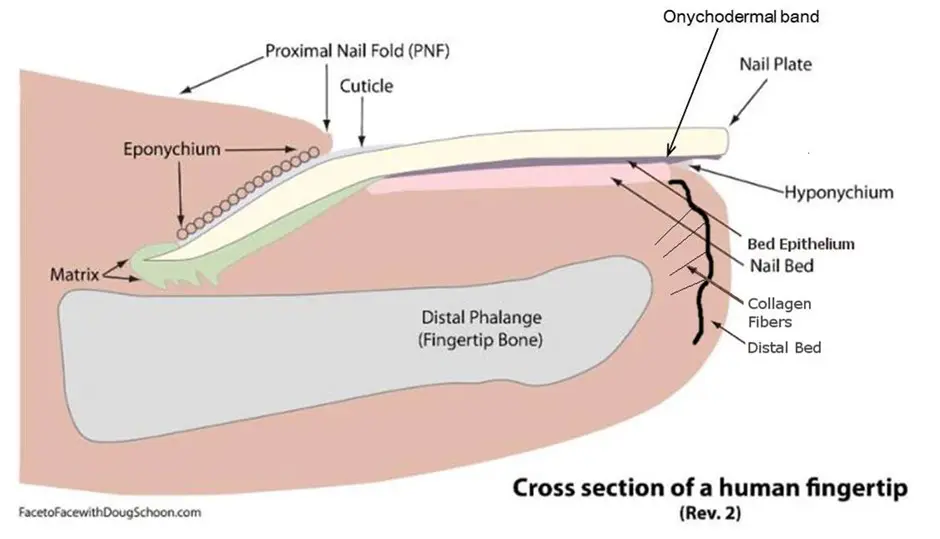
We see it every day while we’re at work, but do we really know what it is? Let’s take a closer look at Doug Schoon’s illustration to get a better understanding.

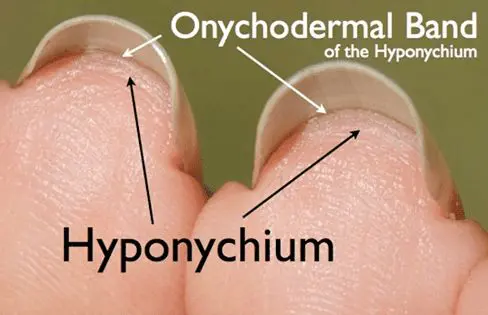
If we attempt to view it from behind the free edge, it appears like this:

• The Onychodermal Band is non-living tissue. It’s an extension of the bed epithelium.
• It has a gray-brownish color.

The Onychodermal Band: A Hidden Protective Barrier

Between the tấm móng tay and the nail bed lies the bed epithelium. When the bed epithelium reaches the end of the giường móng tay and folds in on itself, it becomes the Onychodermal Band. This narrow, compacted tissue acts as an extra pathogenic barrier beneath the free edge of the nail plate. It forms a partnership with the dưới móng and together they become a super seal – it often goes unnoticed and is nearly invisible. You have to look closely to perceive it.

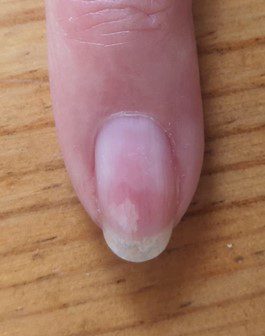
The Onychodermal Band is somewhat translucent, a thin layer beneath the distal edge (free edge) of the tấm móng tay, spanning the entire width of the nail plate and bordering the visible white of the free edge.

The Onychodermal Band serves to prevent the smallest infectious organisms and contaminants from infiltrating the nail bed. If this protective tissue (pathogenic barrier) is breached, the nail plate separates from the nail bed causing onycholysis and dramatically increasing the risk of infection.

Its partner in the nail unit is the Hyponychium and that hyponychium is one of the four guardian seals of the nail unit, designed to protect the giường móng tay from germs and other infections, such as fungus or yeast. While the dưới móng is composed of living epidermal tissue. It’s important to note that the Onychodermal Band is non-living tissue and needs to remain elastic to perform its job effectively.

Enhancing Elasticity: Applying Oil Behind the Free Edge for Nail Health

Applying oil behind the free edge, rather than on top of the nail plate, can help maintain the elasticity that is needed, even if the Onychodermal Band has already detached.

Cautionary Measures and Autoimmune Considerations for Nail Care

Beware when using an Efile to shorten the nail coming out of a nail enhancement behind the free edge or if you use a sharp instrument to clean under the free edge, might accidentally damage it, and you’ll immediately see the consequences as onycholysis.

Some auto immune diseases can also have an impact:

• Psoriasis
• Lichen Planus
• Eczema

These are all diseases that can affect the Onychodermal Band, the nail matrix, the nail plate or the nail bed which then causes the seal to break. Applying oil behind the free edge is crucial because oil repels water keeps the guardian seal elastic and does not provide a source of nourishment for germs, offering excellent protection.

In this image, you can clearly see how psoriasis can affect it. When the ‘oil slick’ blister forms, the bed epithelium is directly affected by the upwards pressure of the blister dislodging it from the nail bed.  As the nail plate moves (perpetual motion) and the damaged bed epithelium gets closer to the free edge onycholysis is a fact and the nail bed is exposed to any and all pathogens.

Sometimes, you may also notice that the hyponychium is pulled along with the Onychodermal Band. Something simple (but not always noticed) like product shrinkage can easily cause this to happen. If you recognize this happening, stop with your nail product until the hyponychium is recovered or find a more flexible product. Here, too, a good quality oil is your friend. If you work with a cuticle pusher or an e-file in this area, you’re likely to cause more irritation.

The Onychodermal Band is of utmost importance for the overall health of the nail unit and must be treated with care. Being cautious during cleaning under the free edge is necessary. It’s better to clean with a soft brush and oil, always avoiding sharp objects under the free edge to keep the nail unit healthy.

Kết luận

The Onychodermal Band may go unnoticed in our daily lives, but it plays a crucial role in protecting our nails from infections and maintaining their overall health. Understanding its function and how to care for it is essential for nail health and hygiene. So, next time you’re working on your nails, remember the significance of the Onychodermal Band and treat it with the care it deserves to keep your nails looking and feeling their best.

Thuộc chủ đề:Thông tin chung, Công nghệ làm móng

Một cuộc khám phá văn hóa về công nghệ làm móng trong thời đại Victoria

Victorian Age: 1837 AD – 1901 AD (Reign of Queen Victoria)

Một nghiên cứu về thời trang và xã hội

Trong thời đại Victoria, công nghệ làm móng đóng vai trò quan trọng trong thời trang và các hoạt động làm đẹp. Trong bài viết này, chúng ta sẽ khám phá những ảnh hưởng văn hóa của công nghệ làm móng trong thời đại Victoria, với mức độ phức tạp và bùng nổ cao.

Xã hội Victoria và Thực hành Làm đẹp

The Victorian Era was a time of social and cultural change, with fashion and beauty practices serving as a means of expressing one’s status and identity. Nail technology played a significant role in these practices, with elaborate nail designs and care techniques becoming increasingly popular.

• Tiêu chuẩn sắc đẹp: Trong xã hội Victoria, tiêu chuẩn về cái đẹp bị ảnh hưởng rất nhiều bởi địa vị xã hội và vai trò giới tính. Phụ nữ được kỳ vọng phải duy trì một mức độ ngoại hình nhất định, bao gồm cả móng tay và bàn tay được chăm sóc cẩn thận.
• Ảnh hưởng của Nữ hoàng Victoria: Queen Victoria’s reign had a significant impact on Victorian society, including beauty and fashion practices. The Queen herself was known for her impeccable personal style, which included well-manicured nails.

Sự xuất hiện của các phương pháp chăm sóc móng hiện đại

During the Victorian Era, modern nail care practices began to emerge, setting the foundation for modern-day nail technology. These practices were influenced by both beauty and health concerns.

• Sản phẩm chăm sóc móng: Nail care products such as cuticle creams, nail files, and buffers became widely available during the Victorian Age. These products helped to improve the health and appearance of nails, making them an essential part of beauty routines.
• Tiệm làm móng: Các tiệm làm móng cũng bắt đầu xuất hiện trong Thời đại Victoria, cung cấp không gian cho mọi người nhận được dịch vụ chăm sóc móng chuyên nghiệp. Những tiệm này cũng đóng vai trò là nơi tụ họp xã hội, càng làm nổi bật tầm quan trọng của việc chăm sóc móng trong xã hội Victoria.

Xu hướng thời trang

Fashion trends also played a significant role in the cultural influences of nail technology in the Victorian Age. Nails were seen as an extension of one’s personal style, with intricate designs and colors becoming increasingly popular.

• Thiết kế móng tay cầu kỳ: Elaborate nail designs featuring lace, flowers, and other intricate patterns were popular during the Victorian Era. These designs were often created by hand, showcasing the artistry and creativity of nail technicians.
• Ảnh hưởng của thời trang Gothic: The Victorian Era was also known for its Gothic fashion, which heavily influenced nail art designs. Dark colors and bold designs were popular, reflecting the somber and dramatic style of Gothic fashion.
• Vai trò của đồ trang sức: Jewelry was an essential part of Victorian fashion, and this included nail jewelry. Elaborate nail charms and rings were often worn as a way to enhance the overall appearance of one’s hands and nails.

Kết luận

Nail technology played a significant role in fashion and beauty practices during the Victorian Era. The emergence of modern nail care practices and elaborate nail art designs reflects the changing social and cultural norms of the time. Fashion trends and the influence of Queen Victoria’s personal style also highlight the importance of nail technology in Victorian society.

Thuộc chủ đề:Thông tin chung, Công nghệ làm móng

Một cuộc khám phá văn hóa về công nghệ làm móng trong thời kỳ Phục hưng

Inca Empire: 14th Century AD – 17th Century AD

Artistic Expression and Fashion Trends

The Renaissance period was a time of great artistic and cultural advancement in Europe, and the practice of nail technology was no exception. In this article, we will explore the cultural influences of nail technology in the Renaissance, with a high degree of perplexity and burstiness.

Artistic Expression

Nail technology during the Renaissance was seen as a form of artistic expression, with elaborate nail art designs becoming increasingly popular. The nails were seen as an extension of one’s personal style and were used to complement clothing and accessories.

• The Birth of Manicures: During the Renaissance period, the practice of manicures began to emerge. The nails were cleaned, trimmed, and filed, and then painted with elaborate designs and colors. The first recorded use of the term “manicure” dates back to the 17th century, although the practice likely began much earlier.
• Intricate Designs: The Renaissance was a time of great artistic expression, and nail technology was no exception. Intricate designs featuring floral patterns, geometric shapes, and religious symbolism were commonly seen on the nails of both men and women.
• The Influence of Renaissance Art: The art of the Renaissance period heavily influenced nail art designs. The use of perspective, chiaroscuro, and other techniques commonly found in Renaissance art were incorporated into nail art designs, creating a new form of artistic expression.

Xu hướng thời trang

Fashion trends also played a significant role in the cultural influences of nail technology in the Renaissance. The nails were seen as a way to complement and enhance one’s overall style, and were often coordinated with clothing and accessories.

• The Emergence of Nail Polish: During the Renaissance, nail polish was invented as a way to add color and shine to the nails. Initially, nail polish was made from natural materials such as beeswax, egg whites, and vegetable dyes. Later, the invention of synthetic materials led to the development of modern nail polish.
• Social Status: As with many aspects of Renaissance society, the style and care of one’s nails were heavily influenced by social status. The upper classes often had their nails painted with elaborate designs and bright colors, while the lower classes were more reserved in their nail care practices.
• The Influence of French Fashion: French fashion played a significant role in the cultural influences of nail technology in the Renaissance. The French court was known for its elaborate fashion and beauty practices, and the style of French fashion was often imitated throughout Europe.

Kết luận

Nail technology during the Renaissance period was a form of artistic expression and fashion statement. The emergence of manicures and elaborate nail art designs, as well as the use of nail polish, highlights the significance of nail technology in Renaissance society. The influence of Renaissance art and French fashion can still be seen in modern nail art, making it a timeless and constantly evolving aspect of the beauty industry.

Thuộc chủ đề:Thông tin chung, Công nghệ làm móng

Một cuộc khám phá văn hóa về công nghệ làm móng ở người Inca cổ đại

Inca Empire: 1438 AD – 1533 AD

Nghi lễ và Biểu tượng

Công nghệ làm móng có lịch sử lâu đời ở vùng Andes của Nam Mỹ, với nền văn minh Inca cổ đại có ảnh hưởng văn hóa độc đáo riêng của họ đối với hoạt động này. Trong bài viết này, chúng ta sẽ khám phá những ảnh hưởng văn hóa của công nghệ làm móng ở Inca cổ đại, với mức độ phức tạp và bùng nổ cao.

Ý nghĩa tâm linh

Vào thời Trung cổ, công nghệ làm móng có mục đích chức năng, chủ yếu là để bảo vệ móng khỏi bị hư hại và nhiễm trùng. Mọi người sẽ sử dụng hỗn hợp dầu và bồ hóng để phủ lên móng, tạo thành lớp bảo vệ chống lại bụi bẩn và các chất có hại khác

Thiết kế tượng trưng

The Inca believed that the nails held spiritual power and energy, and as such, nail care was an important part of their spiritual practices. The length and shape of the nails were believed to be indicators of the individual’s physical and spiritual health, with long and well-groomed nails signifying strength and vitality.

Tầm quan trọng của nghi lễ

Nail technology was also an important part of Inca rituals and ceremonies, with elaborate nail art designs being used to represent various aspects of Inca culture and mythology. Symbols such as the sun, moon, and stars were commonly used in nail art, representing the Inca’s reverence for celestial bodies.

Địa vị xã hội

Xã hội Inca có hệ thống phân cấp nghiêm ngặt và công nghệ làm móng được sử dụng như một cách để phân biệt địa vị xã hội. Giới quý tộc và tầng lớp thống trị được biết đến là có móng tay được sơn họa tiết phức tạp và màu sắc tươi sáng, trong khi tầng lớp thấp hơn thì kín đáo hơn trong việc chăm sóc móng.

Vật liệu tự nhiên

Inca nail technology relied heavily on natural materials, such as herbs and pigments derived from plants and minerals. The use of natural materials in nail care was believed to be more aligned with the spiritual energy of the earth, and was therefore considered to be more powerful than synthetic materials.

Ảnh hưởng đến công nghệ làm móng hiện đại

Những ảnh hưởng văn hóa của công nghệ làm móng ở Inca cổ đại vẫn có thể được nhìn thấy trong nghệ thuật làm móng hiện đại, với nhiều thiết kế kết hợp các biểu tượng và chủ đề từ văn hóa Andean. Việc sử dụng các vật liệu tự nhiên trong chăm sóc móng cũng đang trở nên phổ biến hơn, phản ánh sự quan tâm ngày càng tăng đối với các phương pháp làm đẹp thân thiện với môi trường và bền vững.

Kết luận

Công nghệ làm móng ở Inca cổ đại có nguồn gốc sâu xa từ các tín ngưỡng tâm linh và các nghi lễ. Việc sử dụng các thiết kế nghệ thuật làm móng cầu kỳ như một sự thể hiện của văn hóa và thần thoại Inca, cũng như tầm quan trọng của địa vị xã hội, làm nổi bật ý nghĩa của công nghệ làm móng trong xã hội Inca. Những ảnh hưởng văn hóa của công nghệ làm móng Inca tiếp tục truyền cảm hứng cho nghệ thuật làm móng hiện đại, biến nó thành một khía cạnh hấp dẫn và đa dạng của ngành công nghiệp làm đẹp.

Thuộc chủ đề:Thông tin chung, Công nghệ làm móng

  • « Chuyển đến Trang trước
  • Trang 1
  • Trang 2
  • Trang 3
  • Chuyển đến Trang sau »

Nâng cao kiến thức về làm móng

Tham gia bản tin của chúng tôi!
ĐĂNG KÝ...

Bản quyền © NailKnowledge

Kiến thức về móng tay

  • Sách điện tử
  • Về chúng tôi
  • Các khóa học
  • Tin tức
  • Blog
  • Bản tin
  • Thuật ngữ

Chính sách

  • Trang riêng tư
  • Điều khoản và điều kiện
  • Chính sách Cookie

Ủng hộ

  • Liên hệ với chúng tôi
  • Hỏi các chuyên gia
  • Hỗ trợ hệ thống
  • Câu hỏi thường gặp
Vietnamese
Vietnamese
English Portuguese Spanish