• Bỏ qua primary navigation
  • Bỏ qua nội dung chính
  • Bỏ qua footer
Kiến thức về móng tay

Kiến thức về móng tay

  • Các khóa học
  • MyNailEra
  • Sách điện tử miễn phí
  • Cơ sở tri thức
    • Cơ sở tri thức
    • Hỏi các chuyên gia
    • Thuật ngữ
  • Tin tức
  • Blog
  • Đăng nhập

Sữa dưỡng, Thuốc và Chất đánh bóng

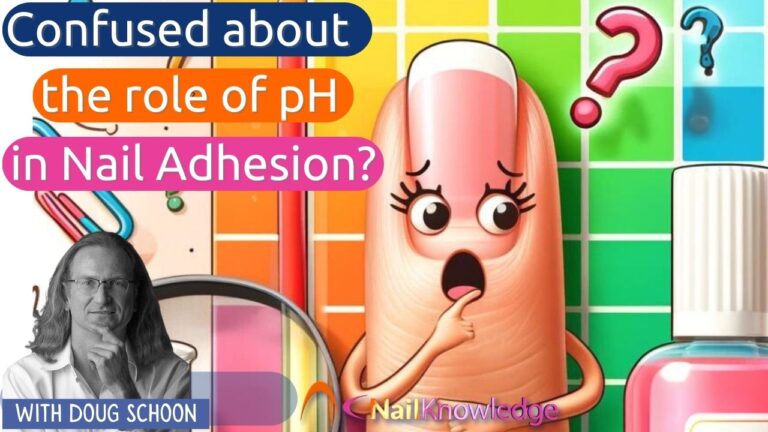
Bạn có bối rối về vai trò của độ pH trong độ bám dính của móng tay không?

Let’s clear things up!

As I stated previously, only water has pH.

Khám phá vai trò của pH và tia UV trong chất thúc đẩy độ bám dính của móng

When nail plate adhesion promoters are mixed with water, it is their effect on the water’s pH that is measured. When this is done the water can become alkaline, acidic or neutral. HEMA is well known for its adhesion promoting ability produces a neutral pH in water. Other adhesion promoters can make the water alkaline, some acidic. So, clearly pH does not determine if something is an adhesion promoter.

Yes, in some cases pH can play a small role, but so does UV. UV causes polymerization of the gel which certainly promotes adhesion, but UV has no pH. So, obviously, there is much more to adhesion, than pH.

Hiểu về tính chất hóa học của gel UV bám dính vào móng tay


Adhesion is caused by the ingredients in the UV gel. Many ingredients are repelled by the surface of the nail plate. However, some are strongly attracted to the nail plate surface. Why? These ingredients create chemical bonds with the nail plate surface, which is the reason for their attraction. The chemical bonds with the nail plate surface is what causes attraction and adhesion, not pH.

There are three main types of bonds, which I’ve listed in order of their adhesive strength.

1. Liên kết hydro là những liên kết yếu nhất, nhưng nhiều liên kết trong số chúng có thể kết hợp với nhau để tạo ra một lượng lớn lực bám dính. Tuy nhiên, chúng có thể dễ dàng bị phá vỡ bởi những thứ như nhiệt, độ ẩm và ứng suất cơ học. Những liên kết này liên tục thay đổi vị trí, vì vậy chúng có xu hướng không quá mạnh, nhưng vẫn có ảnh hưởng lớn và luôn đóng vai trò hữu ích.

2. Liên kết ion are stronger than hydrogen bonds and form by an attraction between opposite positive and negative charges on the ingredient and the nail plate’s surface. The strength of these can be influenced pH, in this way pH plays a small indirect role. These bonds, like hydrogen bonds can still be reversible.

3. Covalent bonds là loại liên kết mạnh nhất trong ba loại liên kết. Liên kết cộng hóa trị có độ ổn định cao và chống lại các yếu tố bên ngoài, cung cấp độ bám dính bền và lâu dài nhất. Chúng thường được coi là không thể đảo ngược vì chúng cần năng lượng đáng kể để phá vỡ chúng.

Các yếu tố ảnh hưởng đến độ bám dính của sản phẩm làm móng

Other factors also affect adhesion, such as how well the product can flow into small nooks and crannies, which is a property called “wetting”. This important property is improved by properly cleaning the nail plate. So, you can see many things, including the cleanliness and condition of the nail plate, affect adhesion. A well-designed nail product will often use a combination of these bonds to achieve the best possible adhesion.

Rủi ro của các loại gel có tính axit trong các sản phẩm làm móng

What about the so-called “acidic gel bases?

Some of these contain acrylic acid. This ingredient uses all three of these types of bonds to improve adhesion, even so I do NOT recommend using products that contain this ingredient. Is a strong skin irritant and likely is responsible for many allergic reactions in the nail industry. In fact, I estimate it is more likely to cause skin problems than HEMA.

Hãy cẩn thận! Tránh tiếp xúc với da và không bao giờ sử dụng trên móng tay bị gãy hoặc nứt.

Thuộc chủ đề:Thông tin chung, Sữa dưỡng, Thuốc và Chất đánh bóng, Phá vỡ huyền thoại, Hóa học sản phẩm

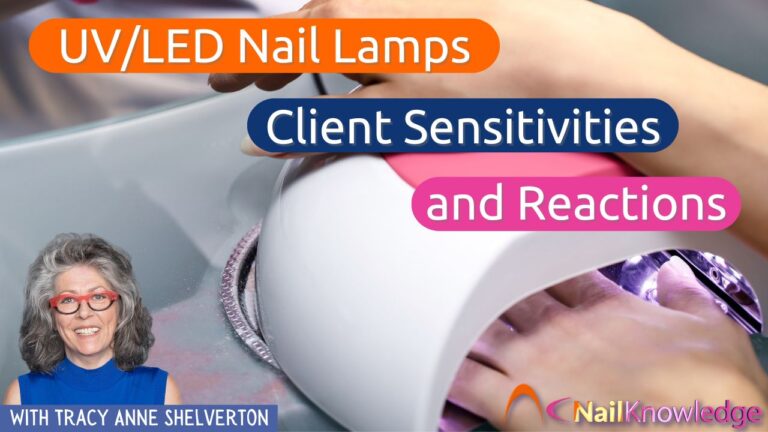
Đèn UV/LED làm móng: Hiểu về phản ứng và sự nhạy cảm của khách hàng

Đèn sấy UV và LED đã trở thành những công cụ không thể thiếu để tạo ra bộ móng bền đẹp và bóng mượt. Tuy nhiên, một số chuyên viên làm móng gặp phải trường hợp khách hàng phản ánh có phản ứng bất lợi trong quá trình sấy, khiến họ lo ngại về khả năng dị ứng với các loại đèn này.

Bài viết này nhằm làm sáng tỏ vấn đề, giải thích bản chất của những phản ứng này và phân tích lý do tại sao chúng thường liên quan đến các sản phẩm được sử dụng và mức độ nhạy cảm cá nhân hơn là do dị ứng với ánh sáng. Bằng cách hiểu rõ nguyên nhân gốc rễ và áp dụng các biện pháp cẩn trọng, các chuyên gia làm móng có thể nâng cao sự an toàn và thoải mái cho khách hàng, đảm bảo mang lại trải nghiệm tích cực cho những ai đang tận hưởng lợi ích của dịch vụ làm móng gel.

Những yếu tố quan trọng cần lưu ý khi sử dụng máy sấy móng tay UV/LED

Khi khách hàng cảm thấy khó chịu hoặc gặp phản ứng phụ trong quá trình sấy móng bằng tia UV hoặc đèn LED, các chuyên viên làm móng cần phải hiểu rõ các nguyên nhân tiềm ẩn có thể gây ra tình trạng này. Mặc dù hiếm khi có trường hợp dị ứng trực tiếp với tia UV hoặc đèn LED, nhưng nhiều yếu tố liên quan đến quá trình sấy có thể gây ra phản ứng. Dưới đây là bốn điểm chính cần lưu ý, giúp các chuyên viên xử lý và giảm thiểu hiệu quả các phản ứng nhạy cảm này.

Hiểu về hiện tượng nhạy cảm với ánh sáng trong chăm sóc móng

Nhạy cảm với ánh sáng: Một số người mắc các bệnh lý khiến da họ trở nên đặc biệt nhạy cảm với tia UV, chẳng hạn như phát ban đa hình do ánh sáng hoặc bệnh lupus. Những bệnh lý này có thể làm trầm trọng thêm các phản ứng da khi tiếp xúc với tia UV, dù là từ ánh nắng mặt trời hay từ đèn UV làm móng. Việc nhận biết các bệnh lý này có thể giúp các chuyên viên làm móng cung cấp dịch vụ an toàn và phù hợp hơn cho những khách hàng có làn da nhạy cảm.

Tác động của các phản ứng quang độc đối với các phương pháp điều trị móng tay

Phản ứng quang độc: Một số loại thuốc và sản phẩm bôi ngoài da có thể gây ra phản ứng quang độc, khiến da trở nên nhạy cảm hơn với tia UV. Sự gia tăng độ nhạy cảm này có nghĩa là mặc dù ánh nắng mặt trời thông thường có thể không gây ra phản ứng, nhưng việc tiếp xúc với ánh sáng tập trung từ đèn sấy móng có thể gây ra phản ứng bất lợi. Việc hiểu rõ các yếu tố kích hoạt này là điều cần thiết để quản lý việc chăm sóc khách hàng trong quá trình làm móng.

Phân biệt các phản ứng dị ứng trong các dịch vụ làm đẹp móng

Phản ứng dị ứng: Có thể xảy ra những hiểu lầm khi khách hàng có phản ứng với các liệu trình chăm sóc móng. Thông thường, những gì được cho là phản ứng với ánh sáng UV/LED thực chất lại là phản ứng dị ứng với các thành phần có trong sơn gel hoặc acrylic. Những phản ứng này đặc biệt dễ xảy ra nếu các sản phẩm chăm sóc móng chưa được làm khô hoàn toàn, dẫn đến việc da tiếp xúc kéo dài với các chất gây kích ứng. Việc hướng dẫn khách hàng về các chất gây dị ứng tiềm ẩn này có thể giúp tránh chẩn đoán sai và đảm bảo các biện pháp thích hợp được thực hiện.

Nhận biết hiện tượng nhạy cảm với nhiệt trong quá trình đóng rắn bằng tia UV/LED

Độ nhạy cảm với nhiệt: Cảm giác khó chịu hoặc rát bỏng trong quá trình chiếu tia UV/LED thường là do nhiệt tỏa ra từ đèn, đặc biệt là khi lớp gel quá dày hoặc cường độ ánh sáng của đèn quá cao. Việc hiểu rõ và điều chỉnh quy trình chiếu tia để phù hợp với những khách hàng nhạy cảm với nhiệt có thể giúp nâng cao trải nghiệm tổng thể và đảm bảo an toàn cho các dịch vụ làm móng.

Tăng cường an toàn trong các liệu pháp làm móng bằng tia UV/LED

Vì vậy, mặc dù đây không phải là dị ứng với ánh sáng nói chung, nhưng có nhiều yếu tố liên quan đến việc tiếp xúc với tia UV/LED trong quá trình làm móng có thể gây ra cảm giác khó chịu hoặc phản ứng. Luôn nên đảm bảo áp dụng đúng kỹ thuật và sử dụng các sản phẩm chất lượng cao, ít gây dị ứng để giảm thiểu những vấn đề này. Đồng thời, cần tránh việc loại bỏ các lớp da quan trọng bằng máy mài điện, vì điều này sẽ làm mất đi lớp da cuối cùng vô cùng quý giá, vốn đóng vai trò thiết yếu đối với sức khỏe và sự thoải mái của khách hàng.

Nếu khách hàng được biết là có tình trạng nhạy cảm với ánh sáng hoặc bệnh lý về da, hoặc đang điều trị hóa trị hoặc liệu pháp miễn dịch, thì không nên tiếp tục dịch vụ này; tốt nhất là nên đề xuất các phương pháp chăm sóc móng thay thế không cần sử dụng tia UV để làm khô. Có rất nhiều lựa chọn khác sẵn có, bạn chỉ cần sẵn sàng tìm hiểu và học hỏi các kỹ thuật mới.

Tầm quan trọng của sự sáng suốt trong việc lựa chọn sản phẩm chăm sóc móng

Trong một thế giới mà các sản phẩm móng tay nhân tạo trông quá đẹp đến mức khó có thể gây ra vấn đề, điều quan trọng là phải biết khi nào nên từ chối, hiểu rõ lý do đằng sau quyết định đó và đưa ra các lựa chọn thay thế.

Thuộc chủ đề:Sữa dưỡng, Thuốc và Chất đánh bóng, Tình trạng móng tay, Dịch vụ làm móng, Gel UV

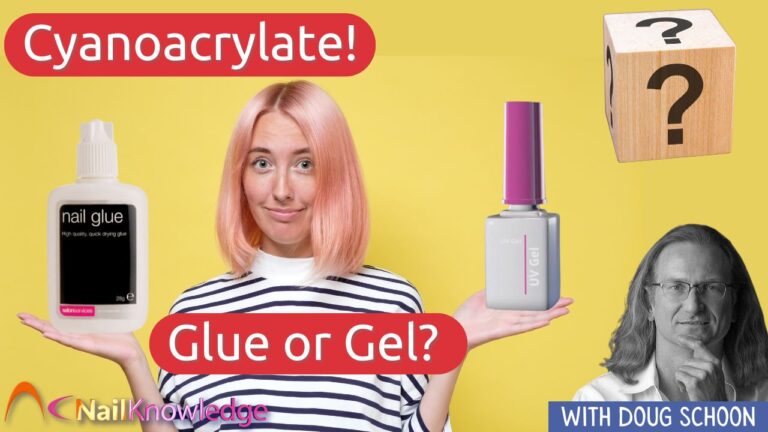
Cyanoacrylate: Hiểu về vai trò kép của nó như keo và gel trong các sản phẩm làm móng

Terminology can often become a point of confusion among professionals and clients alike. A common query we encounter pertains to the use of the term “gel” in relation to products containing cyanoacrylate. A compound traditionally recognized as a type of glue. This issue underscores a broader challenge in the industry: understanding the distinctions and overlaps between different product categories.

Bài viết này nhằm mục đích làm rõ những sắc thái này, khám phá cách một thành phần thực sự có thể phù hợp với nhiều định nghĩa sản phẩm và tại sao ngôn ngữ chính xác lại rất quan trọng trong ngành công nghiệp làm đẹp để nâng cao tính chuyên nghiệp và giảm hiểu lầm.

Công dụng đa dạng của Cyanoacrylates trong ngành công nghiệp làm đẹp

Cyanoacrylates are monomers from the acrylic family that are used for many purposes in the beauty industry. For instance, they are used as tip adhesives for nails, used to adhere rhinestones and other accessories to nails, they’re also used to create fiberglass and silk wraps, and they are regularly used as eyelash adhesives.  They are also sold as “no-light nail gels” and for so-called “dip” systems. 

In all cases, they are considered adhesives, since they stick to the nail plate and more commonly they are called “glue”.  Cyanoacrylates can be thin and watery or thickened to a gel-like consistency.  Some mistake the term “gel” to mean only UV-curing gels. UV curing gels are called “gels” because of their gel-like consistency. In other words, not all gels are UV-curing.  The word “gel” describes the consistency of the product, not its chemistry or composition.

Hair gels for instance are thickened to a high viscosity, which is why they’re called gels. Therefore, it is entirely proper to refer to a thickened cyanoacrylate as a gel.  Nail professionals should understand that not all gels are UV curing gels. That’s why when referring to UV gels, they should not just be called “gels”- which is an overly simplistic name. 

Tầm quan trọng của thuật ngữ chính xác trong chăm sóc móng chuyên nghiệp

Đây là một ví dụ tuyệt vời cho thấy tại sao việc sử dụng nhiều thuật ngữ mô tả hơn khi nói về các sản phẩm làm móng lại quan trọng, nếu không vì lý do nào khác thì cũng là để giảm thiểu sự nhầm lẫn.

Another example of this are the sophisticated, high tech monomer blends used to create artificial nail products.  These products are among the most scientifically advanced products in the beauty industry, yet nail professionals refer to them as “liquid”. The polymer powders are equally sophisticated and complex, yet they are simply called “powders”.

If nail techs want clients to recognize them as professionals, they would be wise to use more professional terms, such as UV gel, monomers and polymers.

Thuộc chủ đề:Thông tin chung, Sữa dưỡng, Thuốc và Chất đánh bóng

Người tiêu dùng đối mặt với thực tế dị ứng với sơn gel

Increasing numbers of consumers are experiencing negative responses to gel polishes, particularly those using home kits obtained from high street stores and the internet.

They report red and itchy skin on the fingers, face, arms or chest. When they stop using the products the reactions go away. This suggests it is an allergic reaction to the products.

Then they take to social media to ask what to do. The ideal solution is to have a dermatology test to discover which ingredient is so it can be avoided. Or if this isn’t an option, then remove the product and DO NOT use it. many don’t want to hear this reply as they want pretty nails.

Using nail polish is an option but it doesn’t have the benefits of gel polish as it takes a while to dry and doesn’t last as long.

But this is the only correct answer! There is no other option.

Why is this so difficult to accept? If a consumer tries new face cream and breaks out in spots the face cream is discarded. If a home hair colour causes a reaction it isn’t used so why not nail gel products? But it seems this is not easily accepted! Is it because ‘it’s just nails’ and not on the skin’?

Well, it doesn’t work like this. Most consumers are not that interested in understanding the whys and wherefore. But must be accepted even if the answer is annoying.

Remove all products immediately and do not reapply. Get a test if possible then go to a professional who can look for products without the offending ingredient.

There is no other solution and the longer you continue using the products the worse the symptoms will be and can affect other health issues long term.

Thuộc chủ đề:Sữa dưỡng, Thuốc và Chất đánh bóng, Dịch vụ làm móng, Gel UV

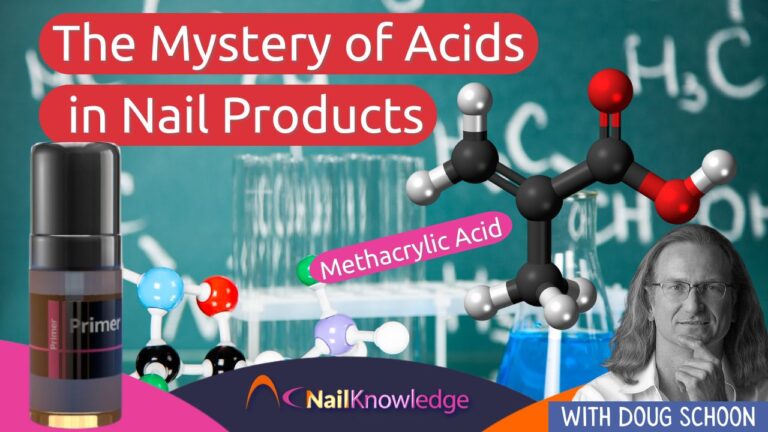
Giải mã bí ẩn về axit trong sản phẩm làm móng

When it comes to nail care, understanding the role of acids in various nail products is crucial for achieving healthy and beautiful nails. In this guide, we’ll explore the world of acids in nail products, debunk common myths, and provide essential safety tips for users.

Giải mã vai trò của axit trong các sản phẩm làm móng: Phân biệt sự thật và hư cấu

There’s a lot of confusion about pH and its effect on the nail plate. Acids are often misunderstood.

Acids play a significant role in nail products, but their presence often raises concerns among consumers. Let’s start by breaking down the basics of acids and their function in nail care.

Các loại axit trong sản phẩm làm móng: hữu cơ so với vô cơ

Acids can be categorized into two main types: organic and inorganic. Organic acids, containing carbon, not “certified organic”,  are commonly found in nail products and are generally safer for use. On the other hand, inorganic acids, while less common in nail care, require more cautious handling due to their potentially corrosive nature.

For example, vinegar is a harmless weak organic acid, while sulfuric acid is a dangerous strong inorganic acid. Just because something is acid doesn’t mean it is harmful, so don’t let the word scare you. Note: Strong inorganic acids are not used in nail products.

Phá vỡ huyền thoại: Xóa tan những quan niệm sai lầm phổ biến

Some acids and bases (alkaline) are corrosive to human skin and eyes, posing a risk to soft tissues. Bearing this in mind, let’s debunk a common myth about nail primers that contain acids, like methacrylic acid. Many believe that methacrylic acid eats holes in the nail plate to improve adhesion, but this is a misconception. Methacrylic acid is actually a weak organic acid that does not dissolve the nail plate. To demonstrate, I’ve soaked nail clippings in 100% methacrylic acid primers for months without any damage. Unlike strong inorganic acids, which can harm the nail plate, methacrylic acid is safe for such uses in the professional nail industry. This highlights the significant differences among types of acids, showing they are not the same.

An toàn là trên hết: Điều hướng sử dụng axit

While some acids are corrosive to skin and eyes, methacrylic acid is particularly potent. If using primers containing this acid, it’s crucial to avoid contact with skin and eyes. The nail plate, a highly cross-linked structure, resists damage from methacrylic acid. However, skin and eyes are vulnerable and can rapidly suffer damage upon contact. Should any contact with this type of primer occur on the skin, wash it off immediately with soap and water and keep rinsing for at least five minutes to prevent worsening corrosion. Eye contact is more severe; rinse the eye and seek medical attention right away.

Tầm quan trọng của thiết bị bảo vệ: Bảo vệ chống lại các mối nguy tiềm ẩn

Để đảm bảo an toàn, hãy luôn đeo găng tay và kính bảo vệ mắt khi sử dụng sơn lót axit methacrylic. Hãy nhớ rằng, ít hơn là nhiều hơn với sơn lót. Việc sử dụng quá nhiều có thể khiến sơn lót thấm vào thành bên, gây đau và có thể gây bỏng da. Hơn nữa, sử dụng quá nhiều sơn lót sẽ làm giảm hiệu quả của sơn lót. Để có kết quả tối ưu, chỉ nên thoa một lớp mỏng lên móng sạch và khô.

Tôi nghĩ điều thú vị cần lưu ý là độ pH của axit methacrylic nằm trong khoảng 1-2 và loại axit này không gây hại cho móng, do đó độ pH không phải là chỉ số tốt để đánh giá tình trạng hư tổn của móng khi nói đến các sản phẩm chăm sóc móng.

Ít hơn là nhiều hơn: Sử dụng axit một cách tiết kiệm

Applying nail products containing acids in moderation is key to preventing overexposure and potential skin irritation. By using these products sparingly and following recommended guidelines, users can achieve optimal results without compromising nail health.

Trao quyền cho người dùng bằng kiến thức

Demystifying acids in nail products is the first step towards empowering users to make informed choices about their nail care routine. By understanding the role of acids, debunking myths, and prioritizing safety, individuals can enjoy healthy and beautiful nails without fear or uncertainty.

Thuộc chủ đề:Sức khỏe và An toàn, Sữa dưỡng, Thuốc và Chất đánh bóng, Phá vỡ huyền thoại, Hóa học sản phẩm

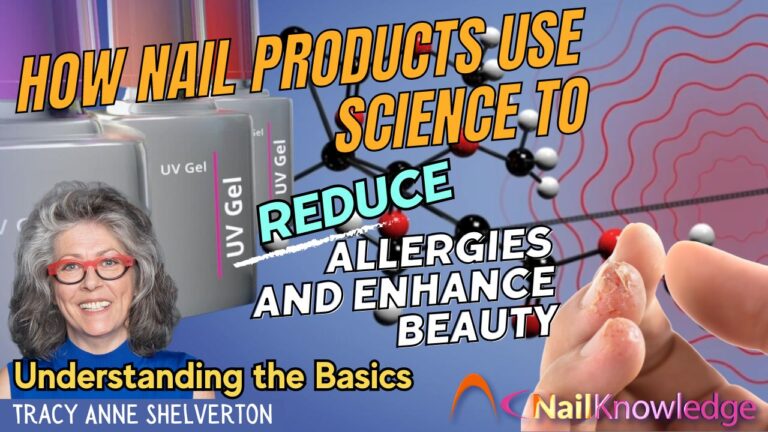
Sản phẩm làm móng sử dụng khoa học để giảm dị ứng và tăng cường vẻ đẹp

Hiểu những điều cơ bản và nền tảng của việc chăm sóc móng tay

Before diving into the complexities of nail product formulation, it’s crucial to establish a solid understanding of the basic principles that underpin the science behind nail producs.

Monome: Các khối xây dựng

Imagine you have a box full of colourful beads, each one unique but capable of connecting with others. In the world of chemistry, these beads are akin to what we call monomers, small, simple molecules that serve as the foundational units for more complex structures. Just as you might thread beads onto a string to create a necklace, monomers can link together in a process that transforms them from solitary units into a cohesive, larger entity.

Oligomer: Hiệu ứng dây chuyền

Now, picture yourself creating a small section of a beaded necklace, with just a handful of beads linked together. This segment isn’t quite a full necklace yet but is more substantial than a single bead. In scientific terms, this is similar to an oligomer: a structure composed of a few monomers bonded in a chain. Oligomers are more significant than individual monomers but not as large or complex as long polymer chains. Because of their size, oligomers are like the middle ground in the molecular world, they’re big enough to be sturdy and functional but not so large that they lose their flexibility or become unwieldy.

One of the key benefits of oligomers in nail products is their reduced ability to penetrate the skin, which significantly lowers the risk of allergic reactions. This is crucial for products applied close to or on the skin, like nail polish and gels, ensuring that beauty does not come at the expense of health.

Trùng hợp: Từ lỏng sang rắn

To understand how liquid nail products transform into the solid, durable coating we see on nails, let’s consider an everyday example: baking a cake. You start with various liquid and solid ingredients, mix them together, and then bake the mixture. Under the heat, these ingredients undergo chemical changes, combining to form a solid, cohesive whole that’s very different from the starting materials.

This transformation is similar to polymerisation in nail products. When monomers and oligomers in the nail gel are exposed to UV light or another curing method, they undergo a chemical reaction that bonds them together into long, sturdy chains known as polymers. This process changes the nail product from a liquid or semi-liquid state into a solid film that adheres to the nail, providing both beauty and protection. The magic of polymerisation is at the heart of modern nail technology, allowing for the wide array of nail enhancements available today.

Vai trò của Bis-HEMA và các Oligome khác

Tập trung vào Bis-HEMA

In the realm of nail care, one oligomer stands out for its beneficial properties: Bis-Hydroxyethyl Methacrylate, or Bis-HEMA. Think of Bis-HEMA as a special link in our beaded necklace analogy, one that not only adds length and beauty but also strength and durability to the overall structure. In nail gels and polishes, Bis-HEMA serves as a backbone, creating a network that is both resilient and flexible.

What sets Bis-HEMA apart is its knack for forming a solid structure that’s less prone to causing allergies. Since Bis-HEMA molecules are larger and more complex than single monomers, they’re less likely to seep into the skin. This means that while you enjoy your beautifully manicured nails, the risk of experiencing an allergic reaction is minimised, making products containing Bis-HEMA a preferred choice for those with sensitive skin.

Oligomer đa dạng, lợi ích đa dạng

While Bis-HEMA plays a starring role in the world of nail enhancements, it’s far from the only oligomer on stage. Various other oligomers contribute their unique properties to nail products, ensuring there’s something for every need and preference:

  • Urethane Acrylates: These oligomers are like the heavy lifters in nail formulations, providing exceptional strength and durability to the nail coating. They ensure your manicure can withstand the rigors of daily life, from typing on a keyboard to opening jars.
  • Epoxy Acrylates: Consider epoxy acrylates the protectors. They form a shield on your nails that resists chemicals and wear, much like a waterproof coat that keeps you dry in a downpour.
  • Polyester Acrylates: Hãy tưởng tượng polyester acrylate như chất uốn, mang lại sự linh hoạt và độ bám dính. Chúng đảm bảo lớp phủ móng tay của bạn di chuyển cùng với móng tay tự nhiên, giảm nguy cơ bị sứt mẻ hoặc bong tróc.

Each type of oligomer brings something unique to the table, allowing nail product formulators to mix and match properties like a chef combining ingredients for a perfect dish. This versatility means that whether you’re looking for durability, flexibility, or hypoallergenic properties, there’s likely a nail product formulated with the right mix of oligomers to meet your needs.

By understanding the role of Bis-HEMA and other oligomers, we can appreciate the science that makes our favourite nail products both beautiful and beneficial. It’s a reminder that behind every glossy finish and vibrant colour lies a carefully crafted blend of chemistry and innovation.

Làm cho sản phẩm không gây dị ứng: Khoa học về an toàn

Delving into the science behind nail products, it’s clear that the quest for hypoallergenic formulations is more than skin-deep. The strategic use of oligomers, such as Bis-HEMA, plays a pivotal role in this endeavour. Just as a thicker coat provides better protection against the cold, longer oligomer chains in nail products offer better defence against allergens penetrating the skin. This is because these larger molecules have a harder time slipping through the skin’s protective barrier. Even so, its important to take care. If the skin layers are not intact or you get the product on the skin and you or your client have a known allergy to HEMA – Bis-HEMA even though its in oligomer form and not as a singular monomer, it can still cause a diverse reaction.

Imagine applying a layer of paint on a finely woven canvas, the finer the weave, the less likely it is for the paint to seep through. Similarly, when nail products are formulated with a higher ratio of oligomers to monomers, the resulting ‘paint’ in this case, the nail product, is less likely to cause adverse reactions because its ‘particles’ are too large to infiltrate the skin’s ‘weave.’

Đổi mới trong chăm sóc móng tay

The beauty industry’s commitment to innovation shines brightly in the realm of nail care, where the health of the wearer is as important as the aesthetic appeal. Scientists and product developers work tirelessly, akin to artists and engineers, to concoct formulations that marry beauty with well-being. They experiment with the balances of monomers and oligomers, constantly seeking the optimal mix that ensures durability and visual appeal without compromising safety.

This dedication to innovation isn’t just about avoiding negative reactions; it’s about enhancing the user experience. It ensures that everyone, even those with the most sensitive skin, can enjoy the art of nail beautification without fear. This democratisation of beauty, where products are inclusive and considerate of diverse needs, underscores the industry’s broader commitment to safety and accessibility.

Ý nghĩa đối với các chuyên gia và người tiêu dùng

For professionals in the nail industry as well as discerning consumers, understanding the composition and formulation of nail products is essential. The presence of labels such as “hypoallergenic” signifies more than just a marketing strategy; they denote a product’s commitment to reducing the risk of allergic reactions through careful formulation. Nhận thức này rất quan trọng đối với các chuyên gia muốn mang đến trải nghiệm an toàn và thỏa mãn nhất cho khách hàng, cũng như đối với người tiêu dùng đang tìm kiếm sản phẩm kết hợp giữa vẻ đẹp và sức khỏe.

The development journey of a nail product, from the meticulous research in chemical laboratories to its application in salons, underscores the beauty industry’s dedication to marrying aesthetics with safety. For professionals, this knowledge equips you with the expertise to make informed recommendations, ensuring client satisfaction and well-being. Consumers, on the other hand, gain the confidence to select products that not only enhance their beauty but also safeguard their health.

Behind each vibrant shade and glossy finish of nail products lies a rich tapestry of scientific research, technological advancement, and conscientious formulation. This complex backdrop highlights the industry’s commitment to delivering products that not only meet aesthetic desires but also uphold the highest standards of health and safety.

What This Means for You – Choosing the Right Products

Navigating the vast sea of nail products can feel overwhelming, especially when you’re trying to make health-conscious choices. Armed with knowledge about monomers, oligomers, and their roles in hypoallergenic formulations, you’re now equipped to make informed decisions that align with your beauty and wellness goals. Here’s how you can apply this knowledge when selecting nail products:

  • Tìm nhãn không gây dị ứng: Products labeled “hypoallergenic” should be formulated to minimise the risk of allergic reactions. Mặc dù không đảm bảo, những nhãn này phải thể hiện nỗ lực tận tâm của nhà sản xuất trong việc đáp ứng nhu cầu của người dùng nhạy cảm.
  • Hỏi về hàm lượng Oligomer: Don’t hesitate to ask brands or professionals about the oligomer content in their products. A higher concentration of oligomers, like Bis-HEMA, generally suggests a lower potential for skin irritation.
  • Kiểm tra danh sách thành phần: Familiarise yourself with the names of common oligomers (e.g., Bis-HEMA or urethane acrylates). Spotting these ingredients can give you clues about the product’s formulation and its hypoallergenic potential.

Tầm quan trọng của việc được thông báo

Knowledge is your most valuable tool in the pursuit of beauty and health. Understanding the science behind nail products empowers you to make choices that not only enhance your appearance but also protect your well-being. It’s a powerful reminder that beauty should never come at the expense of health.

  • Tự giáo dục bản thân: Continue learning about the ingredients and technologies used in beauty products. The more you know, the better equipped you’ll be to navigate the ever-evolving landscape of cosmetic innovation.
  • Tham khảo ý kiến chuyên gia: When in doubt, seek advice from professionals. Nail technicians and dermatologists can offer valuable insights tailored to your specific needs and concerns.
  • Ưu tiên sự an toàn: Always remember that the most beautiful manicure is one that respects and preserves the health of your nails and skin. Let safety be your guiding principle as you explore the world of nail art and design. Removing the skin around the natural nail with scissors or an efile or roughing up the nail plate (removing its chemical resistant layer) before applying gel products is tantamount to taking the roof tiles off of your house before a storm – not a smart thing to do. Be aware of this and you will experience fewer problems in the salon.

Phần kết luận:

As we’ve journeyed through the intricate world of nail product formulation, it’s become clear that the beauty industry’s commitment to combining aesthetics with safety has led to remarkable innovations. From the science of monomers and oligomers to the art of creating hypoallergenic products, every step in the process is a testament to the industry’s dedication to delivering beauty solutions that are as safe as they are stunning.

However, it’s crucial to remember that even the most carefully formulated products must be used responsibly. Nail products are designed for use on the nail plate itself and should avoid contact with the skin as much as possible. This precaution minimises the risk of skin irritation and allergic reactions, ensuring that the pursuit of beauty remains a joyous and safe experience for everyone.

Khi bạn đứng trước một loạt các sản phẩm làm móng đầy màu sắc trong lần ghé thăm tiệm làm đẹp hoặc cửa hàng làm đẹp tiếp theo, hãy nhớ rằng mỗi chai là sự kết hợp giữa khoa học, đổi mới và chăm sóc. Hãy tự tin lựa chọn, biết rằng sức mạnh kết hợp vẻ đẹp với sức khỏe nằm trong tầm tay bạn.

Thuộc chủ đề:Thông tin chung, Sữa dưỡng, Thuốc và Chất đánh bóng, Dịch vụ làm móng, Gel UV

  • « Chuyển đến Trang trước
  • Trang 1
  • Các trang tạm thời đã được bỏ qua …
  • Trang 4
  • Trang 5
  • Trang 6
  • Trang 7
  • Trang 8
  • Các trang tạm thời đã được bỏ qua …
  • Trang 11
  • Chuyển đến Trang sau »

Nâng cao kiến thức về làm móng

Tham gia bản tin của chúng tôi!
ĐĂNG KÝ...

Bản quyền © NailKnowledge

Kiến thức về móng tay

  • MyNailEra
  • Sách điện tử
  • Về chúng tôi
  • Các khóa học
  • Tin tức
  • Blog
  • Bản tin
  • Thuật ngữ

Chính sách

  • Trang riêng tư
  • Điều khoản và điều kiện
  • Chính sách Cookie

Ủng hộ

  • Liên hệ với chúng tôi
  • Gặp gỡ các chuyên gia
  • Hỏi các chuyên gia
  • Hỗ trợ hệ thống
  • Câu hỏi thường gặp
Vietnamese
Vietnamese
English Portuguese Spanish