• Saltar a la navegación principal
  • Saltar al contenido principal
  • Saltar al pie de página
Conocimientos de uñas

Conocimientos de uñas

  • Cursos
  • Libros electrónicos
  • Cesta de libros electrónicos
  • Base de conocimientos
    • Base de conocimientos
    • Pregunte a los expertos
    • Glosario
  • Noticias
  • Blog
  • Galería
    • Galería Nail Art
    • Artistas de uñas
    • Únete a la élite
  • Inicio de sesión

Información general

Clavos de grapa y soluciones

Transformación de las uñas

La salud de las uñas es un reflejo de nuestro bienestar general, pero a veces, incluso sin motivo aparente, nuestras uñas pueden sufrir cambios inesperados. Entre ellos está el desarrollo de lo que algunos pueden notar como apariencia de grapas, donde las uñas, típicamente curvadas, empiezan a crecer cuadradas.

We explore the unique condition known as “staple nails,” and its possible causes, and suggest ways to manage and potentially improve this nail phenomenon.

El fenómeno de las uñas de grapa

clavos de grapa
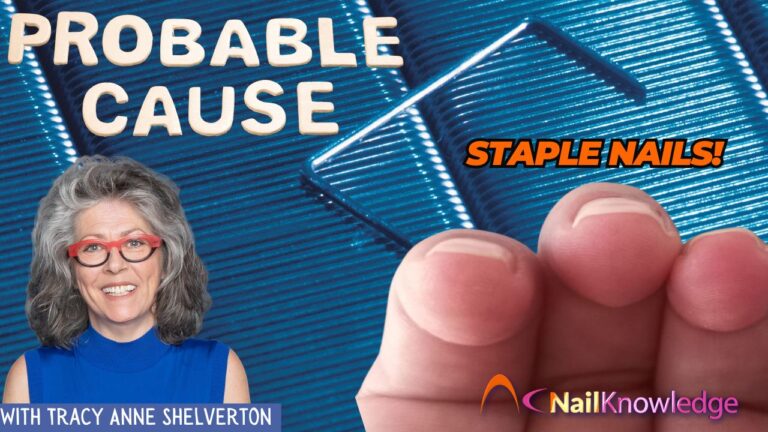
Staple Nails – looks very much like an office staple

This condition is characterised by a nail plate with squared front that looks very much like an office staple. This change can start subtly with one nail and others can be affected too or not. It’s a noticeable shift that can leave many puzzled about their nail health.

Causas subyacentes de los clavos engrapados

Hay varios factores que pueden contribuir a la aparición de uñas postizas, y conocerlos puede ser clave para tratar esta afección.

Psoriasis y cambios en las uñas

La psoriasis es una enfermedad cutánea común que también puede afectar a las uñas o al lecho ungueal, provocando diversos cambios, entre ellos la cuadratura de la lámina ungueal. Esto ocurre cuando el lecho ungueal se hincha, sometiendo a la lámina ungueal a una presión extrema y provocando su deformación.

Suministro sanguíneo comprometido

Another possible cause for staple nails is a damaged blood supply to the nail matrix. When the blood supply is compromised, it may result in weaker nail plate cells. These weakened cells can cause the nail plate to buckle, creating squared corners instead of the usual rounded edges.

Envejecimiento y formación de células en las uñas

A medida que envejecemos, la formación de las células de la placa ungueal puede alterarse, dando lugar a células más débiles que son más propensas a doblarse bajo presión. Este cambio contribuye significativamente al aspecto de las uñas grapadas, poniendo de relieve el impacto del envejecimiento en la salud de las uñas.

Consejos prácticos para clavos de grapa

To manage this condition effectively, keeping the nails flexible and well-moisturised is crucial. Regular use of a high-quality nail and skin oil can help maintain nail flexibility and prevent the nail plate from fracturing, especially at the free edges. For those seeking an alternative to oils, a rinse solution containing moisturising components like allantoin and urea can be used several times a day to help retain moisture and prevent dryness, which can exacerbate the problem.

It’s also important to choose the right type of artificial nail products if you use them. Opt for flexible, soak-off products to minimize the risk of further damaging the nail plate during removal.

Reflexiones finales: Gestionar la salud de las uñas en medio de los cambios

Las uñas postizas pueden ser una afección inusual e inesperada de las uñas, pero con los cuidados adecuados y prestando atención a la salud de las uñas, es posible controlar este problema. Mantener las uñas cortas, flexibles e hidratadas y evitar tratamientos agresivos puede ayudar a mitigar los efectos de las uñas engrapadas.

Como siempre, si persisten los problemas en las uñas, se recomienda consultar a un experto sanitario o dermatólogo para descartar cualquier afección subyacente que pueda necesitar un tratamiento específico.

Publicado en: Información general, Afecciones de las uñas

Nanómetros mal entendidos: Aclarando las longitudes de onda en el curado UV en gel

Some people are using the term “nanometers” incorrectly when talking about UV gel manicures or enhancements.

Los nanómetros no son lo que cura los productos de curado UV; son simplemente una unidad de medida, equivalente a la milmillonésima parte de un metro, que se utiliza para describir las longitudes de onda de la luz. Son estas longitudes de onda específicas las que son cruciales para el curado del producto.

Explorando el espectro: La gama de longitudes de onda emitidas por las lámparas UV para uñas

Nail lamps don’t just emit a single wavelength. They actually give off a range of wavelengths. For example, a 405 nm lamp emits wavelengths ranging from 420 to 390 nanometers (nm), with 405 nm being the center of this range. Similarly, 365 nm lamps emit wavelengths ranging from 380 to 350 nm, with 365 nm being the center.

Más allá de las longitudes de onda: el papel crucial de la intensidad en el curado UV adecuado

It’s important to note that wavelength range isn’t the only factor in curing nail products. The intensity of the light is just as important, in fact it is crucial to proper curing. Cheaper lamps often have a low intensity, which means they don’t cure the product properly. Both the intensity and the wavelength range need to be correct for proper curing to occur.

Piense que el sol broncea la piel de forma diferente en invierno que en verano. La luz UV del sol es la misma, pero la intensidad es menor durante los meses de invierno. Por tanto, la intensidad importa mucho.

Comprender las medidas reales de la eficacia de las lámparas de uñas

Some companies that sell cheap lamps might try to trick you by focusing on wattage instead of intensity. But wattage only tells you how much electricity the lamp uses, not the intensity of the UV light. UV intensity is measured in units called mW/cm2, not watts.

Publicado en: Información general, Gel UV

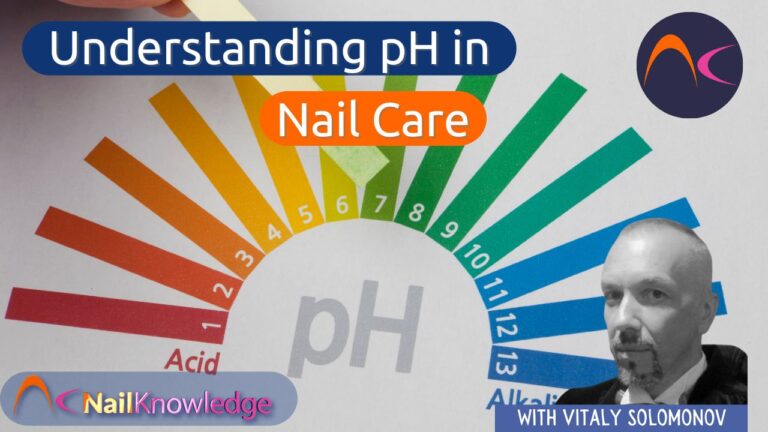
Explicación del pH en el cuidado de las uñas: Guía para profesionales de la manicura

El pH en el cuidado de las uñas

The concept of pH is widely discussed in beauty and nail care, but it’s often misunderstood. While pH plays a crucial role in the overall health of skin and hair, it’s important to clarify that nails themselves do not have a measurable pH value. Nails are solid structures made primarily of keratin, a protein, and pH applies only to aqueous (water-based) solutions. However, understanding how pH impacts the surrounding skin, nail products, and overall nail health is essential for nail technicians.

¿Qué es el pH en el cuidado de las uñas?

pH stands for “potential hydrogen” and measures the acidity or alkalinity of a substance on a scale from 0 to 14:

  • Acidic: Un pH inferior a 7
  • Neutral: Un pH de 7
  • Alkaline (Basic): Un pH superior a 7

The skin surrounding the nails typically has a slightly acidic pH, usually between 4.5 and 5.5. This natural acidity serves as a protective barrier against bacteria, fungi, and other harmful microorganisms. Maintaining this balance is crucial for overall nail and skin health.

¿Tienen pH las uñas?

No, nails do not have a measurable pH value. Nails are composed of keratinised cells—solid, fibrous proteins that lack free hydrogen ions or water content necessary for pH measurement. While some articles suggest that nails have a “natural pH,” this is scientifically inaccurate. Instead, what can be influenced is the entorno de superficie of the nails due to external factors like water absorption, product application, or exposure to harsh chemicals.

¿Tienen las uñas un valor pH en el cuidado de las uñas?

While nails themselves don’t have a pH, the products applied to them—such as esmaltes de uñas, removers, gels, or creams—do have measurable pH values. These products can affect:

  1. Piel circundante: Los productos con niveles de pH extremos (demasiado ácidos o demasiado alcalinos) pueden alterar la barrera natural de la piel que rodea las uñas, provocando irritación o una mayor propensión a las infecciones.
  2. Nail Plate Condition: Prolonged exposure to certain products can alter the moisture balance within the nail plate, making it brittle or overly flexible.
  3. Rendimiento del producto: Nail products like primers or cleansers are often formulated with specific pH levels to optimise adhesion or removal processes.

Microorganismos

Our skin is full of all kinds of microorganisms, they help us stay healthy but sometimes they turn into monsters and start to attack us – but that’s a story for another day.

Nails are also surrounded by microorganisms and when we put artificial nail products on them the microorganisms that need oxygen to survive die – and the ones that function without oxygen stay alive.

Everyday on the socials we see what happens when our resident microorganisms become opportunistic and turn on us – pseudomonas aeruginosa is one of them.

An interesting fact: Men have a more moist layer of skin than women – testosterone is responsible for more oil and thicker skin and women have more estrogen which helps to maintain collagen and elasticity, removing any and or all of these skin layers as a ‘nail treatment’ and doing so will affect the pH balance of the skin in and around the nail unit.

Factores que influyen en la salud de las uñas

Rather than focusing on “nail pH,” professionals should prioritise factors that genuinely impact nail health:

  1. Niveles de hidratación: Las uñas pueden absorber agua de su entorno, lo que las ablanda temporalmente pero no cambia su composición inherente.
  2. Seguridad del producto: El uso de productos suaves tanto para las uñas como para la piel circundante ayuda a mantener la salud general (de la unidad ungueal).
  3. Salud de la piel: The cuticle area and surrounding skin play an important role in protecting nails from external damage. It’s important to maintain healthy skin or to improve it without exception.
  4. Técnicas de aplicación: Una preparación y unas técnicas de aplicación adecuadas garantizan la eficacia del producto al tiempo que minimizan los daños.

Consejos para técnicos de uñas

Prestar servicios eficaces de cuidado de las uñas:

  • Utilice productos diseñados para uso profesional que sean suaves tanto para las uñas como para la piel circundante.
  • Avoid prolonged exposure to harsh chemicals (e.g., acetone or acidic primers).
  • Enseñar a los clientes a mantener unas uñas sanas protegiendo las cutículas y la piel circundante.
  • Concéntrese en la hidratación recomendando cremas o aceites de manos que favorezcan la salud de la piel sin alterar su equilibrio natural.

Conclusión

While nails themselves do not have a measurable pH value due to their solid keratin structure, the concept of pH remains relevant in nail care through its impact on surrounding skin and product performance. By understanding how products interact with nails and skin, nail technicians can make informed choices that promote safety, health, and integrity for their clients.

Remember: it’s not about measuring “nail pH” but about ensuring that products work harmoniously with the body’s natural systems to maintain healthy nails and skin.

Este artículo revisado elimina cualquier afirmación engañosa sobre el pH natural de las uñas y conserva información útil sobre cómo el pH influye indirectamente en las prácticas de cuidado de las uñas a través de los productos y la salud de la piel circundante. Aporta claridad al tiempo que mantiene su tono educativo para los profesionales del sector de las uñas.

Publicado en: Información general, Servicios de uñas, Tecnología de uñas

Cuidado con los esterilizadores UV

Atención, técnicos de uñas y propietarios de salones:

If you’re considering purchasing or using a UV sterilizer device in your salon, it’s crucial to understand the potential risks involved. Despite marketing claims touting their effectiveness in targeting pathogens and preventing infections, these devices may not be as reliable as they seem.

As an expert witness in numerous salon infection cases, I’ve seen firsthand the shortcomings of UV sterilizers. While the concept of using UV light to destroy pathogens’ DNA sounds promising, the reality is that these devices often fall short in salon environments.

Uno de los principales problemas es la incapacidad de la luz ultravioleta para penetrar eficazmente en los recovecos de las herramientas de los salones de belleza, como cortaúñas y tijeras. Estas zonas ocultas dan cobijo a los patógenos, lo que les permite escapar ilesos y propagar infecciones. Además, garantizar que cada lado de las herramientas esté adecuadamente expuesto a la luz UV requiere una atención meticulosa a los detalles y puede llevar mucho tiempo.

Además, la configuración de la mayoría de los esterilizadores UV plantea problemas. El uso de varios estantes puede parecer una solución, pero en realidad el estante superior a menudo protege las herramientas del estante inferior, dejándolas contaminadas. Además, cualquier resto de polvo o suciedad en la bombilla UV puede obstaculizar su eficacia, y a medida que las bombillas envejecen, su potencia disminuye, haciéndolas menos eficaces con el paso del tiempo.

In my professional opinion, UV sterilizers are not a practical or reliable solution for salon tool sterilization. Instead, the CDC and other leading experts recommend full immersion in a disinfectant solution as a far superior method for protecting both clients and technicians. When used correctly, a high-quality disinfectant can achieve a 99.99% effectiveness rate, providing peace of mind and confidence in salon safety.

In conclusion, while UV sterilizer devices may sound appealing, their limitations and potential risks outweigh any perceived benefits. It’s essential for salon owners to prioritize the health and safety of their clients and staff by opting for proven disinfection methods rather than relying on ineffective technologies.

Don’t be fooled by false promises – choose safety and efficacy in salon hygiene practices.


Publicado en: Información general, Salud y seguridad

Cómo influye chuparse el dedo en el crecimiento de las uñas

Thumb sucking, a common habit among children, can have surprising effects on nail growth and shape. In this article, we’ll explore the intriguing relationship between thumb sucking and nail plate distortion, shedding light on why some nails grow in distorted shapes while others seem to defy growth altogether.

¿Por qué chuparse el dedo deforma el crecimiento de las uñas?

El fenómeno de la distorsión de la lámina ungueal por chuparse el dedo es un aspecto fascinante y a la vez preocupante de los hábitos infantiles. Para entender por qué se produce, debemos profundizar en las propiedades de la propia lámina ungueal.

Imagine the nail plate as a solid structure, similar to ice in a glacier. While seemingly rigid, the nail plate possesses a degree of malleability, allowing it to change shape under prolonged pressure. This concept is crucial in comprehending why thumb sucking can lead to distorted nail growth.

La presión prolongada o repetida, como la que se ejerce al chuparse el dedo, hace que la lámina ungueal se deforme gradualmente. Aunque los cambios pueden no ser inmediatos, con el tiempo, la presión constante altera la forma de la lámina ungueal de forma permanente. Este fenómeno es especialmente evidente en afecciones como “Habit Tic,” en la que los individuos se golpean habitualmente las placas ungueales con otro dedo, lo que provoca deformaciones durante semanas o meses.

Causas de Habit-Tik

Comprender el caso de las uñas que no crecen

The case of a child whose nail on the sucking thumb refuses to grow presents an intriguing puzzle. While it’s tempting to attribute this phenomenon to moisture loss from the nail, the reality is far more complex.

Contrariamente a la creencia popular, chuparse el dedo no elimina la humedad de la lámina ungueal. De hecho, la boca proporciona abundante humedad, que se transfiere a la placa ungueal y se absorbe. Sin embargo, el crecimiento de la uña no se rige por los niveles de humedad, sino por la matriz ungueal.

The nail matrix, a specialized tissue beneath the cuticle, controls the rate of nail growth. Regardless of external factors like thumb sucking or moisture levels, the nail matrix dictates the pace at which nails grow. This explains why cutting the nail does not influence its growth rate; the matrix remains the ultimate arbiter of nail length.

Thumb Sucking’s Influence on Nail Growth: Parental Solutions

Thumb sucking can exert significant influence on nail growth and shape, leading to distortions over time. However, it’s essential to recognize that nail growth is primarily governed by the nail matrix, not external factors like moisture or pressure. By understanding these dynamics, parents can take proactive steps to address thumb sucking habits and promote healthy nail development in children.

 Preguntas frecuentes

1. ¿Succionarse el pulgar puede dañar permanentemente el crecimiento de las uñas?
   En efecto, chuparse el dedo puede provocar una deformación permanente de las uñas si el hábito persiste durante un periodo prolongado, ejerciendo una presión constante sobre la lámina ungueal.

2.  How can parents help children overcome thumb sucking habits?
   Fomentar el refuerzo positivo, proporcionar distracciones y buscar orientación profesional de pediatras o dentistas son estrategias eficaces para ayudar a los niños a abandonar el hábito de chuparse el dedo.

3.  Are there any preventive measures to protect nails from distortion?
   La aplicación de técnicas como la aplicación de esmaltes de uñas de sabor amargo o el uso de protectores para el pulgar pueden disuadir del comportamiento de chuparse el dedo y mitigar el riesgo de distorsión de las uñas.

4.  At what age should parents be concerned about persistent thumb sucking?
   Aunque chuparse el dedo es frecuente entre los lactantes y los niños pequeños, la succión persistente del pulgar más allá de los 4 ó 5 años puede justificar la intervención, ya que podría afectar al desarrollo dental y oral.

5.  Are there any long-term consequences of untreated thumb sucking habits?
   Los hábitos de succión del pulgar no tratados pueden provocar no sólo distorsiones de las uñas, sino también maloclusiones dentales, impedimentos del habla y problemas sociales, lo que subraya la importancia de intervenir a tiempo.

Publicado en: Información general, Salud y seguridad, Afecciones de las uñas

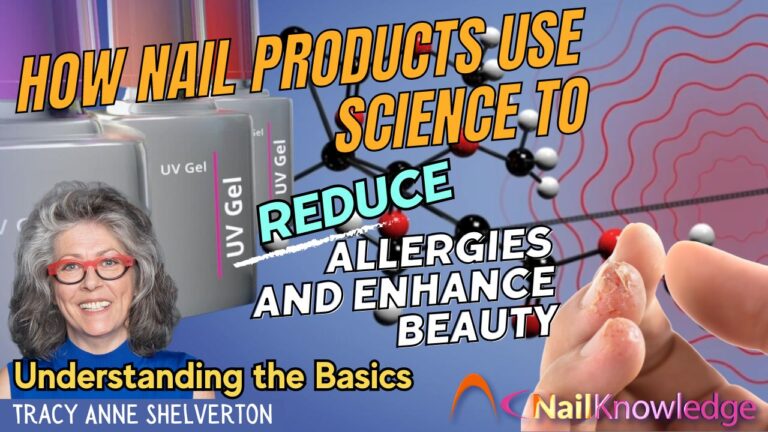
Cómo los productos para uñas utilizan la ciencia para reducir las alergias y realzar la belleza

Conceptos básicos y fundamentos del cuidado de las uñas

Before diving into the complexities of nail product formulation, it’s crucial to establish a solid understanding of the basic principles that underpin the science behind nail producs.

Monómeros: Los componentes básicos

Imagine you have a box full of colourful beads, each one unique but capable of connecting with others. In the world of chemistry, these beads are akin to what we call monomers, small, simple molecules that serve as the foundational units for more complex structures. Just as you might thread beads onto a string to create a necklace, monomers can link together in a process that transforms them from solitary units into a cohesive, larger entity.

Oligómeros: El efecto en cadena

Now, picture yourself creating a small section of a beaded necklace, with just a handful of beads linked together. This segment isn’t quite a full necklace yet but is more substantial than a single bead. In scientific terms, this is similar to an oligomer: a structure composed of a few monomers bonded in a chain. Oligomers are more significant than individual monomers but not as large or complex as long polymer chains. Because of their size, oligomers are like the middle ground in the molecular world, they’re big enough to be sturdy and functional but not so large that they lose their flexibility or become unwieldy.

Una de las principales ventajas de los oligómeros en los productos para uñas es su menor capacidad de penetración en la piel, lo que reduce significativamente el riesgo de reacciones alérgicas. Esto es crucial para los productos que se aplican cerca de la piel o sobre ella, como los esmaltes y geles de uñas, ya que garantiza que la belleza no vaya en detrimento de la salud.

Polimerización: Del líquido al sólido

To understand how liquid nail products transform into the solid, durable coating we see on nails, let’s consider an everyday example: baking a cake. You start with various liquid and solid ingredients, mix them together, and then bake the mixture. Under the heat, these ingredients undergo chemical changes, combining to form a solid, cohesive whole that’s very different from the starting materials.

This transformation is similar to polymerisation in nail products. When monomers and oligomers in the nail gel are exposed to UV light or another curing method, they undergo a chemical reaction that bonds them together into long, sturdy chains known as polymers. This process changes the nail product from a liquid or semi-liquid state into a solid film that adheres to the nail, providing both beauty and protection. The magic of polymerisation is at the heart of modern nail technology, allowing for the wide array of nail enhancements available today.

El papel de Bis-HEMA y otros oligómeros

Bis-HEMA en primer plano

In the realm of nail care, one oligomer stands out for its beneficial properties: Bis-Hydroxyethyl Methacrylate, or Bis-HEMA. Think of Bis-HEMA as a special link in our beaded necklace analogy, one that not only adds length and beauty but also strength and durability to the overall structure. In nail gels and polishes, Bis-HEMA serves as a backbone, creating a network that is both resilient and flexible.

What sets Bis-HEMA apart is its knack for forming a solid structure that’s less prone to causing allergies. Since Bis-HEMA molecules are larger and more complex than single monomers, they’re less likely to seep into the skin. This means that while you enjoy your beautifully manicured nails, the risk of experiencing an allergic reaction is minimised, making products containing Bis-HEMA a preferred choice for those with sensitive skin.

Oligómeros diversos, beneficios diversos

While Bis-HEMA plays a starring role in the world of nail enhancements, it’s far from the only oligomer on stage. Various other oligomers contribute their unique properties to nail products, ensuring there’s something for every need and preference:

  • Urethane Acrylates: These oligomers are like the heavy lifters in nail formulations, providing exceptional strength and durability to the nail coating. They ensure your manicure can withstand the rigors of daily life, from typing on a keyboard to opening jars.
  • Acrilatos epoxídicos: Considera los acrilatos epoxídicos como protectores. Forman un escudo sobre las uñas que resiste a los productos químicos y al desgaste, de forma parecida a un abrigo impermeable que te mantiene seco bajo un aguacero.
  • Acrilatos de poliéster: Imagine los acrilatos de poliéster como los flexores, que ofrecen flexibilidad y adherencia. Se aseguran de que el recubrimiento de tus uñas se mueva con tu uñas naturalesreduciendo las posibilidades de que se astillen o descascarillen.

Each type of oligomer brings something unique to the table, allowing nail product formulators to mix and match properties like a chef combining ingredients for a perfect dish. This versatility means that whether you’re looking for durability, flexibility, or hypoallergenic properties, there’s likely a nail product formulated with the right mix of oligomers to meet your needs.

By understanding the role of Bis-HEMA and other oligomers, we can appreciate the science that makes our favourite nail products both beautiful and beneficial. It’s a reminder that behind every glossy finish and vibrant colour lies a carefully crafted blend of chemistry and innovation.

Fabricar productos hipoalergénicos: La ciencia de la seguridad

Delving into the science behind nail products, it’s clear that the quest for hypoallergenic formulations is more than skin-deep. The strategic use of oligomers, such as Bis-HEMA, plays a pivotal role in this endeavour. Just as a thicker coat provides better protection against the cold, longer oligomer chains in nail products offer better defence against allergens penetrating the skin. This is because these larger molecules have a harder time slipping through the skin’s protective barrier. Even so, its important to take care. If the skin layers are not intact or you get the product on the skin and you or your client have a known allergy to HEMA – Bis-HEMA even though its in oligomer form and not as a singular monomer, it can still cause a diverse reaction.

Imagine applying a layer of paint on a finely woven canvas, the finer the weave, the less likely it is for the paint to seep through. Similarly, when nail products are formulated with a higher ratio of oligomers to monomers, the resulting ‘paint’ in this case, the nail product, is less likely to cause adverse reactions because its ‘particles’ are too large to infiltrate the skin’s ‘weave.’

Innovación en el cuidado de las uñas

The beauty industry’s commitment to innovation shines brightly in the realm of nail care, where the health of the wearer is as important as the aesthetic appeal. Scientists and product developers work tirelessly, akin to artists and engineers, to concoct formulations that marry beauty with well-being. They experiment with the balances of monomers and oligomers, constantly seeking the optimal mix that ensures durability and visual appeal without compromising safety.

This dedication to innovation isn’t just about avoiding negative reactions; it’s about enhancing the user experience. It ensures that everyone, even those with the most sensitive skin, can enjoy the art of nail beautification without fear. This democratisation of beauty, where products are inclusive and considerate of diverse needs, underscores the industry’s broader commitment to safety and accessibility.

Implicaciones para profesionales y consumidores

For professionals in the nail industry as well as discerning consumers, understanding the composition and formulation of nail products is essential. The presence of labels such as “hypoallergenic” signifies more than just a marketing strategy; they denote a product’s commitment to reducing the risk of allergic reactions through careful formulation. Esta información es crucial para los profesionales que desean ofrecer la experiencia más segura y satisfactoria a sus clientes y para los consumidores que buscan productos que armonicen belleza y salud.

The development journey of a nail product, from the meticulous research in chemical laboratories to its application in salons, underscores the beauty industry’s dedication to marrying aesthetics with safety. For professionals, this knowledge equips you with the expertise to make informed recommendations, ensuring client satisfaction and well-being. Consumers, on the other hand, gain the confidence to select products that not only enhance their beauty but also safeguard their health.

Behind each vibrant shade and glossy finish of nail products lies a rich tapestry of scientific research, technological advancement, and conscientious formulation. This complex backdrop highlights the industry’s commitment to delivering products that not only meet aesthetic desires but also uphold the highest standards of health and safety.

What This Means for You – Choosing the Right Products

Navigating the vast sea of nail products can feel overwhelming, especially when you’re trying to make health-conscious choices. Armed with knowledge about monomers, oligomers, and their roles in hypoallergenic formulations, you’re now equipped to make informed decisions that align with your beauty and wellness goals. Here’s how you can apply this knowledge when selecting nail products:

  • Busque etiquetas hipoalergénicas: Products labeled “hypoallergenic” should be formulated to minimise the risk of allergic reactions. Aunque no es una garantíaEstas etiquetas deberían indicar un esfuerzo concienzudo del fabricante por atender a los usuarios sensibles.
  • Infórmese sobre el contenido de oligómeros: Don’t hesitate to ask brands or professionals about the oligomer content in their products. A higher concentration of oligomers, like Bis-HEMA, generally suggests a lower potential for skin irritation.
  • Compruebe la lista de ingredientes: Familiarise yourself with the names of common oligomers (e.g., Bis-HEMA or urethane acrylates). Spotting these ingredients can give you clues about the product’s formulation and its hypoallergenic potential.

La importancia de estar informado

Knowledge is your most valuable tool in the pursuit of beauty and health. Understanding the science behind nail products empowers you to make choices that not only enhance your appearance but also protect your well-being. It’s a powerful reminder that beauty should never come at the expense of health.

  • Edúcate: Continue learning about the ingredients and technologies used in beauty products. The more you know, the better equipped you’ll be to navigate the ever-evolving landscape of cosmetic innovation.
  • Consulte a profesionales: En caso de duda, pida consejo a los profesionales. Los técnicos de uñas y los dermatólogos pueden ofrecerte valiosos consejos adaptados a tus necesidades y preocupaciones específicas.
  • Dar prioridad a la seguridad: Always remember that the most beautiful manicure is one that respects and preserves the health of your nails and skin. Let safety be your guiding principle as you explore the world of nail art and design. Removing the skin around the natural nail with scissors or an efile or roughing up the nail plate (removing its chemical resistant layer) before applying gel products is tantamount to taking the roof tiles off of your house before a storm – not a smart thing to do. Be aware of this and you will experience fewer problems in the salon.

Conclusión:

As we’ve journeyed through the intricate world of nail product formulation, it’s become clear that the beauty industry’s commitment to combining aesthetics with safety has led to remarkable innovations. From the science of monomers and oligomers to the art of creating hypoallergenic products, every step in the process is a testament to the industry’s dedication to delivering beauty solutions that are as safe as they are stunning.

However, it’s crucial to remember that even the most carefully formulated products must be used responsibly. Nail products are designed for use on the nail plate itself and should avoid contact with the skin as much as possible. This precaution minimises the risk of skin irritation and allergic reactions, ensuring that the pursuit of beauty remains a joyous and safe experience for everyone.

En tu próxima visita al salón o a la tienda de belleza, recuerda que cada frasco representa una mezcla de ciencia, innovación y cuidado. Elige con confianza, sabiendo que el poder de combinar belleza y bienestar está al alcance de tu mano.

Publicado en: Información general, Lociones, pociones y abrillantadores, Servicios de uñas, Gel UV

  • « Ir a la página anterior
  • Página 1
  • Páginas intermedias omitidas ...
  • Página 6
  • Página 7
  • Página 8
  • Página 9
  • Página 10
  • Páginas intermedias omitidas ...
  • Página 30
  • Ir a la página siguiente »

Mejora tus conocimientos sobre uñas

Suscríbase a nuestro boletín
SUSCRÍBETE...

Copyright © NailKnowledge

Conocimientos de uñas

  • Libros electrónicos
  • Quiénes somos
  • Cursos
  • Noticias
  • Blog
  • Boletín
  • Glosario

Políticas

  • Página de privacidad
  • Condiciones generales
  • Política de cookies

Ayuda

  • Póngase en contacto con nosotros
  • Pregunte a los expertos
  • Soporte del sistema
  • Preguntas frecuentes
Spanish
Spanish
English Portuguese Vietnamese