Una conexión llena de color
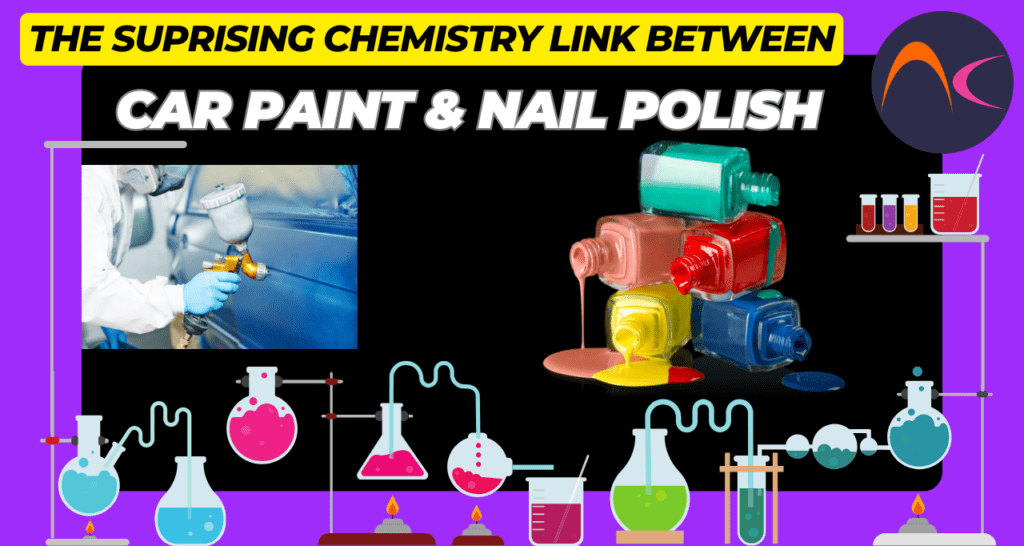
Cuando Yvonne Millner llamó la atención al adornar su Mitsubishi Mirage de 1996 con cientos de botellas de esmalte de uñas, causó un gran revuelo en los medios. Sin embargo, lo que puede parecer una elección de material inusual está más conectado científicamente de lo que podrías pensar. El esmalte de uñas y la pintura de automóviles comparten una ascendencia química común.


Nitrocelulosa – El Hilo Conductor
En el corazón del esmalte de uñas se encuentra la nitrocelulosa, un agente formador de película duradero derivado de la celulosa. Pero antes de convertirse en un elemento básico en el esmalte de uñas, la nitrocelulosa debutó en la pintura de automóviles, gracias a los químicos de DuPont. Poco después de su introducción en la pintura de automóviles en la década de 1920, la literatura de patentes comenzó a detallar formulaciones de esmaltes de uñas que contenían nitrocelulosa. Estas patentes revelaron el depósito de una película impregnada de pigmento en las uñas de manos y pies, imitando la aplicación en las superficies de los automóviles. De hecho, la popularidad de la pintura a base de nitrocelulosa fue tan inmensa que cubrió todos los automóviles de General Motors en tan solo cuatro años. Aunque la industria automotriz ha pasado a otros recubrimientos, la nitrocelulosa sigue siendo un componente clave en muchos esmaltes de uñas hoy en día.
Una mirada histórica
Si bien la década de 1920 marcó un salto tecnológico en la fórmula y producción del esmalte de uñas, el concepto de adornar las uñas no es nuevo. Registros de las cortes reales europeas de los siglos XVII y XVIII documentan el uso de uñas brillantes y barnizadas. Incluso en el siglo XIX, los recetarios de Gran Bretaña y EE. UU. incluían instrucciones para hacer pinturas de uñas, junto con recetas para artículos más convencionales como el pan.
Los ingredientes que hacen que se pegue
El esmalte de uñas moderno no es una receta que encontrarías en tu cocina, principalmente debido a los ingredientes poco apetitosos. Según Paul Bryson, director de I+D de OPI Products, el esmalte de uñas incluye polímeros adhesivos, como la resina de tosilamida-formaldehído (aunque esta no se ha utilizado en esmaltes de uñas desde hace algunos años, ya que a muchos les preocupaba la conexión con el formaldehído, a pesar de que estaba contenida de forma segura en una resina), lo que garantiza que la nitrocelulosa se adhiera a la superficie de la uña. Los plastificantes, como el alcanfor, se incrustan entre las cadenas de polímero, haciendo que el esmalte sea flexible y resistente a las grietas. Para añadir color y brillo, se incluyen pigmentos y partículas como la mica. Los agentes espesantes como la estearalconio hectorita evitan que las partículas brillantes se asienten en el fondo de la botella. Los estabilizadores ultravioletas como la benzofenona-1 garantizan que el esmalte mantenga su color cuando se expone a la luz ultravioleta. Todos estos ingredientes se disuelven o suspenden en un disolvente como el acetato de butilo o el acetato de etilo, que se evapora, dejando un acabado vibrante.
Cambio de fórmulas y preocupaciones
Desde la década de 1920, las fórmulas de esmalte de uñas se han mantenido relativamente sin cambios, excepto por la respuesta a las demandas de los consumidores. Una modificación notable fue la eliminación del plastificante dibutil ftalato en 2006 debido a preocupaciones ambientales y de seguridad. El tolueno, otro disolvente, también ha sido eliminado por muchas empresas por motivos de seguridad.
Revolución a base de agua
Una diferencia importante respecto a la fórmula clásica es la llegada de los esmaltes de uñas a base de agua. Si bien todavía requieren un disolvente, un pigmento y un agente formador de película, reemplazan la nitrocelulosa con variantes de copolímeros de estireno-acrilato. A diferencia de las fórmulas tradicionales, los esmaltes a base de agua no dependen únicamente de la evaporación del disolvente para secarse. En cambio, utilizan la permeabilidad de la queratina de las uñas para permitir que pase algo de agua. Este enfoque innovador es ideal para los consumidores que buscan cosméticos más ecológicos o aquellos sensibles a las fórmulas antiguas. Sin embargo, muchos patógenos necesitan agua para sobrevivir, algo que los esmaltes tradicionales no tienen, por lo que se deben agregar otros ingredientes para mantener los productos seguros para su uso.
Esmalte de Uñas – Donde la Química se Encuentra con la Belleza
El colorido mundo del esmalte de uñas tiene una conexión fascinante con la historia de la química y la tecnología. Desde sus humildes comienzos hasta las innovaciones modernas, la química del esmalte de uñas continúa evolucionando, sin dejar de ser un símbolo de autoexpresión y estilo. Así que, la próxima vez que te pintes las uñas, recuerda la química oculta detrás de esos colores deslumbrantes: ¡es realmente una mezcla de arte y ciencia!