¿Alguna vez te han desconcertado los términos relacionados con las uñas que se utilizan en salones de belleza, aulas, materiales educativos o redes sociales?
¡No estás solo! Hoy, resolveremos el misterio de dos héroes a menudo mal entendidos de la anatomía de las uñas: el eponiquio y la cutícula. ¿Alguna vez los has confundido? ¡Vamos a aclararlos de una vez por todas!


¿Qué es el eponiquio?
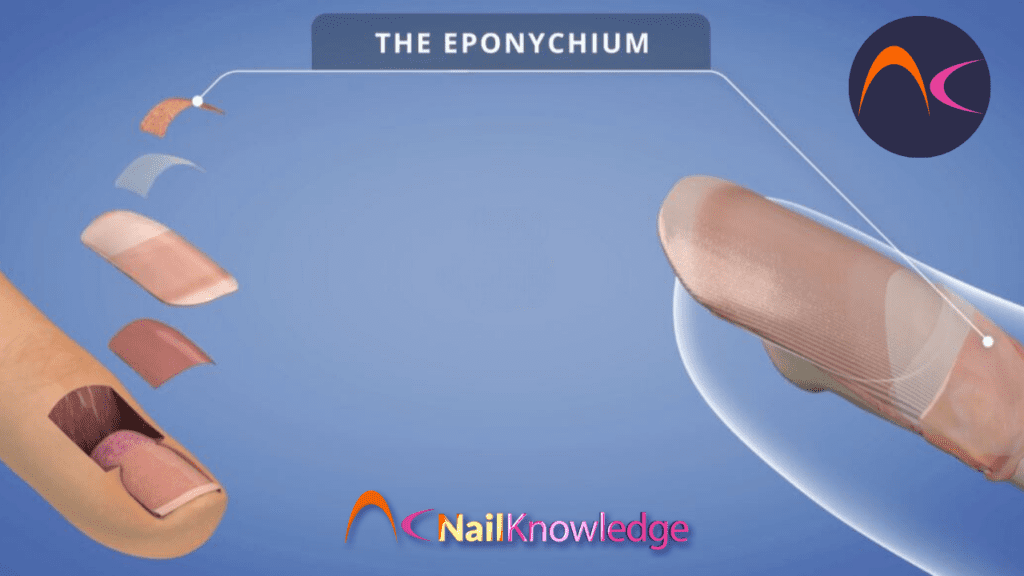
Entonces, ¿qué es exactamente el eponiquio? Imagínalo como una fina capa de células especializadas de la piel oculta debajo del pliegue proximal de la uña. Juega un papel crucial en la salud de las uñas, siendo principalmente responsable de producir la cutícula. ¿Su trabajo principal? Formar una barrera protectora de células de piel no vivas que protege tu matriz ungueal de bacterias y gérmenes, a menudo denominados patógenos oportunistas. Piensa en el eponiquio como el cerebro detrás de la seguridad del club, manteniendo fuera a esos invitados no deseados. ¡Sin su protección, tus uñas serían vulnerables a todo tipo de intrusos!
¿Qué es la cutícula?
Pasando a la cutícula, esta es la parte que mucha gente piense en lo saben.
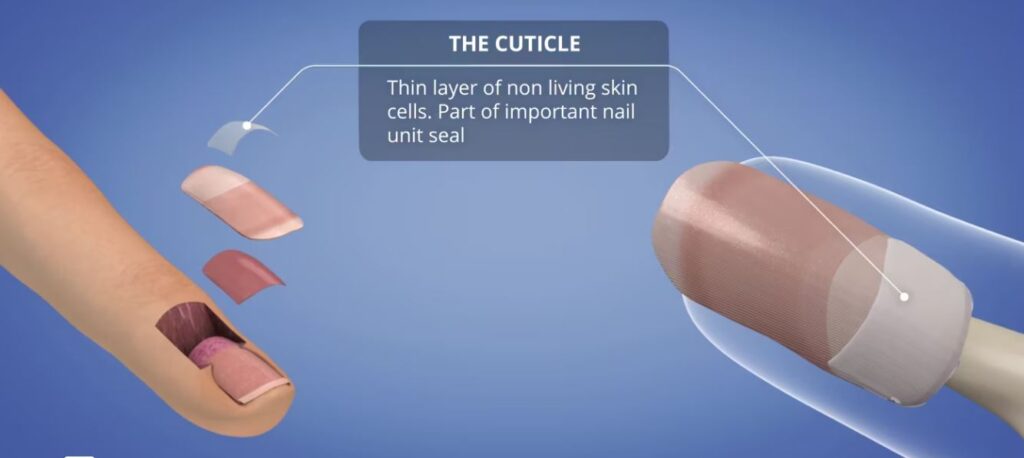
La cutícula es en realidad piel no viva que se adhiere firmemente a tu uña. Si piensas en el eponiquio como el cerebro detrás de la seguridad del club, entonces la cutícula es el portero en la puerta. ¿Por qué es esto importante? La cutícula forma un sello protector que evita que agentes dañinos se filtren debajo de tu uña o lleguen al área crucial de producción de células de la lámina ungueal. Cuando este sello permanece intacto, tu matriz ungueal está protegida, produciendo continuamente células de la lámina ungueal. Tan crucial como cerrar la puerta de un avión antes del despegue, mantener la integridad de este sello cuticular es vital para la salud de tus uñas; ¡sin él, no habría lámina ungueal!
¿Por qué la confusión?
Ahora, te preguntarás, ¿por qué toda esta confusión entre los dos? Es fácil ver por qué a menudo se confunden entre sí, ¡después de todo, son vecinos! Ambos residen en el mismo vecindario de las uñas y trabajan juntos para mantener tus uñas luciendo fabulosas y saludables. Además, seamos honestos, incluso los técnicos de uñas experimentados pueden encontrar confusos los términos de biología de las uñas, especialmente cuando el enfoque está más en ofrecer una manicura-pedicura impecable que en discutir los detalles de anatomía de la uña.
La importancia de distinguir entre eponiquio y cutícula
Comprender la diferencia entre el eponiquio y la cutícula no es solo jerga de técnico de uñas, es esencial para el cuidado adecuado de las uñas. ¿Alguna vez has oído a alguien sugerir cortar la cutícula? En realidad, podrían referirse a recortar el exceso de tejido vivo que se ha secado en el pliegue ungueal proximal, ya que es casi imposible cortar la cutícula. La buena noticia es que podemos eliminar la cutícula de forma segura de la placa ungueal con un aceite de calidad y una cureta, sin tijeras ni dolor, solo unas uñas brillantes listas para tu producto de uñas favorito. Saber qué es qué te ayuda a evitar dañar tus uñas y asegura que las cuides correctamente. ¿Preferirías tratar tus uñas como seda delicada o como cualquier tela vieja? ¡Creí que sí!
Amplíe sus conocimientos sobre el eponiquio
¿Interesado en mejorar tus conocimientos profesionales? ¿Por qué no explorar nuestro artículo maestro detallado sobre eponychium. Este recurso está diseñado para técnicos de uñas que buscan profundizar su comprensión de la anatomía de las uñas, garantizando precisión y cuidado en cada procedimiento. Equípate con conocimientos de expertos que elevarán tu práctica por encima del resto. ¡Nuestra Base de Conocimientos sirve como un recurso completo para todo lo relacionado con las uñas!
Conclusión
Como profesional de uñas, ya sea en tu estación de un salón o preparándote para una visita a domicilio, ten presentes estas ideas. Comprender la diferencia entre el eponiquio y la cutícula es esencial para evitar errores comunes en el cuidado de las uñas que podrían afectar tu trabajo y la satisfacción del cliente.