• Bỏ qua primary navigation
  • Bỏ qua nội dung chính
  • Bỏ qua footer
Kiến thức về móng tay

Kiến thức về móng tay

  • Các khóa học
  • Sách điện tử
  • Giỏ sách điện tử
  • Cơ sở tri thức
    • Cơ sở tri thức
    • Hỏi các chuyên gia
    • Thuật ngữ
  • Tin tức
  • Blog
  • Phòng trưng bày
    • Thư viện nghệ thuật làm móng
    • Nghệ sĩ làm móng
    • Tham gia Elite
  • Đăng nhập

Thông tin chung

Hiểu về đinh bấm và giải pháp

Điều hướng chuyển đổi móng tay

Sức khỏe móng tay phản ánh sức khỏe tổng thể của chúng ta, nhưng đôi khi, ngay cả khi không có lý do rõ ràng, móng tay của chúng ta có thể trải qua những thay đổi bất ngờ. Trong số đó có sự phát triển của những gì một số người có thể nhận thấy là hình dạng giống như ghim bấm, khi móng tay, thường cong, bắt đầu mọc ra vuông vắn.

We explore the unique condition known as “staple nails,” and its possible causes, and suggest ways to manage and potentially improve this nail phenomenon.

Hiện tượng đinh ghim

đinh bấm
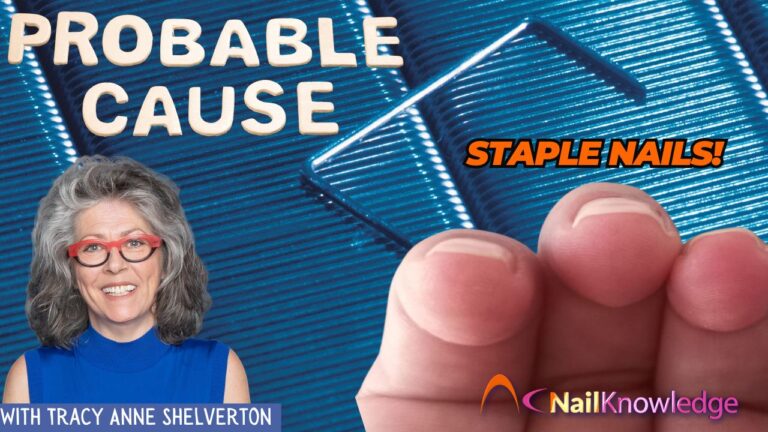
Staple Nails – looks very much like an office staple

This condition is characterised by a nail plate with squared front that looks very much like an office staple. This change can start subtly with one nail and others can be affected too or not. It’s a noticeable shift that can leave many puzzled about their nail health.

Nguyên nhân cơ bản gây ra tình trạng móng tay bị đóng ghim

Có một số yếu tố có thể góp phần gây ra tình trạng móng tay bị kẹt và việc hiểu những yếu tố này có thể đóng vai trò quan trọng trong việc kiểm soát tình trạng này.

Bệnh vẩy nến và những thay đổi ở móng tay

Psoriasis is a common skin condition that can also affect the nails or the nail bed, leading to various changes, including the squaring of the nail plate. This occurs as the nail bed swells, putting the nail plate under extreme pressure and causing it to deform.

Nguồn cung cấp máu bị tổn hại

Another possible cause for staple nails is a damaged blood supply to the nail matrix. When the blood supply is compromised, it may result in weaker nail plate cells. These weakened cells can cause the nail plate to buckle, creating squared corners instead of the usual rounded edges.

Lão hóa và sự hình thành tế bào móng

Khi chúng ta già đi, sự hình thành các tế bào móng có thể thay đổi, dẫn đến các tế bào yếu hơn, dễ bị cong vênh dưới áp lực. Sự thay đổi này góp phần đáng kể vào hình dạng của móng tay bấm, làm nổi bật tác động của lão hóa đối với sức khỏe của móng.

Lời khuyên thực tế cho việc đóng đinh

To manage this condition effectively, keeping the nails flexible and well-moisturised is crucial. Regular use of a high-quality nail and skin oil can help maintain nail flexibility and prevent the nail plate from fracturing, especially at the free edges. For those seeking an alternative to oils, a rinse solution containing moisturising components like allantoin and urea can be used several times a day to help retain moisture and prevent dryness, which can exacerbate the problem.

It’s also important to choose the right type of artificial nail products if you use them. Opt for flexible, soak-off products to minimize the risk of further damaging the nail plate during removal.

Suy nghĩ cuối cùng: Quản lý sức khỏe móng tay giữa những thay đổi

Móng tay bấm có thể là tình trạng móng tay bất thường và không mong muốn, nhưng với sự chăm sóc và chú ý đúng cách đến sức khỏe móng tay, bạn có thể kiểm soát được vấn đề này. Giữ móng tay ngắn, mềm dẻo và đủ ẩm, đồng thời tránh các phương pháp điều trị khắc nghiệt có thể giúp làm giảm tác động của móng tay bấm.

Như thường lệ, nếu vấn đề về móng vẫn tiếp diễn, bạn nên tham khảo ý kiến của chuyên gia chăm sóc sức khỏe hoặc da liễu để loại trừ bất kỳ tình trạng bệnh lý tiềm ẩn nào có thể cần điều trị cụ thể.

Thuộc chủ đề:Thông tin chung, Tình trạng móng tay

Hiểu sai về nanomet: Làm rõ bước sóng trong quá trình đóng rắn gel UV

Some people are using the term “nanometers” incorrectly when talking about UV gel manicures or enhancements.

Nanometers are not what cure UV curing products; they are simply a unit of measurement, equivalent to one billionth of a meter, used to describe the wavelengths of light. It is these specific wavelengths that are crucial in curing the product.

Khám phá quang phổ: Phạm vi bước sóng phát ra từ đèn UV làm móng tay

Nail lamps don’t just emit a single wavelength. They actually give off a range of wavelengths. For example, a 405 nm lamp emits wavelengths ranging from 420 to 390 nanometers (nm), with 405 nm being the center of this range. Similarly, 365 nm lamps emit wavelengths ranging from 380 to 350 nm, with 365 nm being the center.

Vượt ra ngoài bước sóng: Vai trò quan trọng của cường độ trong quá trình đóng rắn UV thích hợp

It’s important to note that wavelength range isn’t the only factor in curing nail products. The intensity of the light is just as important, in fact it is crucial to proper curing. Cheaper lamps often have a low intensity, which means they don’t cure the product properly. Both the intensity and the wavelength range need to be correct for proper curing to occur.

Hãy nghĩ về cách mặt trời làm rám nắng da bạn khác nhau vào mùa đông so với mùa hè. Ánh sáng UV từ mặt trời là như nhau, nhưng cường độ thấp hơn trong những tháng mùa đông. Vì vậy, cường độ rất quan trọng.

Hiểu các biện pháp thực sự về hiệu quả của đèn làm móng

Some companies that sell cheap lamps might try to trick you by focusing on wattage instead of intensity. But wattage only tells you how much electricity the lamp uses, not the intensity of the UV light. UV intensity is measured in units called mW/cm2, not watts.

Thuộc chủ đề:Thông tin chung, Gel UV

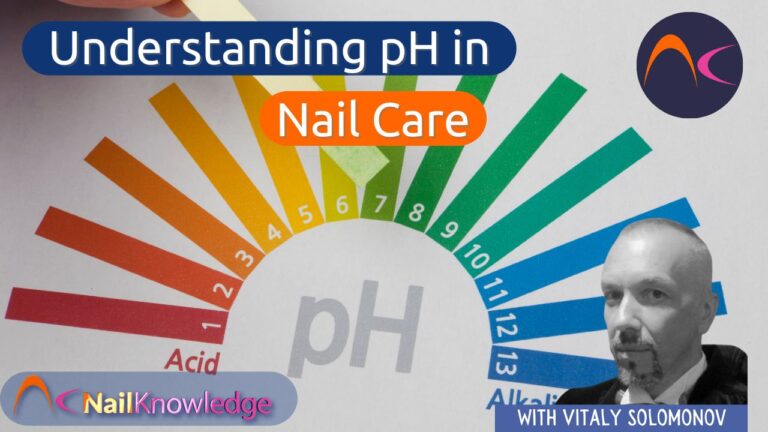
Giải thích về độ pH trong chăm sóc móng: Hướng dẫn dành cho chuyên gia làm móng

Hiểu về độ pH trong chăm sóc móng tay

The concept of pH is widely discussed in beauty and nail care, but it’s often misunderstood. While pH plays a crucial role in the overall health of skin and hair, it’s important to clarify that nails themselves do not have a measurable pH value. Nails are solid structures made primarily of keratin, a protein, and pH applies only to aqueous (water-based) solutions. However, understanding how pH impacts the surrounding skin, nail products, and overall nail health is essential for nail technicians.

What is pH in Nail Care?

pH stands for “potential hydrogen” and measures the acidity or alkalinity of a substance on a scale from 0 to 14:

  • Acidic: A pH below 7
  • Neutral: A pH of 7
  • Alkaline (Basic): A pH above 7

The skin surrounding the nails typically has a slightly acidic pH, usually between 4.5 and 5.5. This natural acidity serves as a protective barrier against bacteria, fungi, and other harmful microorganisms. Maintaining this balance is crucial for overall nail and skin health.

Do Nails Have a pH?

No, nails do not have a measurable pH value. Nails are composed of keratinised cells—solid, fibrous proteins that lack free hydrogen ions or water content necessary for pH measurement. While some articles suggest that nails have a “natural pH,” this is scientifically inaccurate. Instead, what can be influenced is the surface environment of the nails due to external factors like water absorption, product application, or exposure to harsh chemicals.

Do Nails Have a pH Value in Nail Care?

While nails themselves don’t have a pH, the products applied to them—such as sơn móng tay, removers, gels, or creams—do have measurable pH values. These products can affect:

  1. Surrounding Skin: Products with extreme pH levels (either too acidic or too alkaline) can disrupt the natural barrier of the skin around nails, leading to irritation or increased susceptibility to infections.
  2. Nail Plate Condition: Prolonged exposure to certain products can alter the moisture balance within the nail plate, making it brittle or overly flexible.
  3. Product Performance: Nail products like primers or cleansers are often formulated with specific pH levels to optimise adhesion or removal processes.

Microorganisms

Our skin is full of all kinds of microorganisms, they help us stay healthy but sometimes they turn into monsters and start to attack us – but that’s a story for another day.

Nails are also surrounded by microorganisms and when we put artificial nail products on them the microorganisms that need oxygen to survive die – and the ones that function without oxygen stay alive.

Everyday on the socials we see what happens when our resident microorganisms become opportunistic and turn on us – pseudomonas aeruginosa is one of them.

An interesting fact: Men have a more moist layer of skin than women – testosterone is responsible for more oil and thicker skin and women have more estrogen which helps to maintain collagen and elasticity, removing any and or all of these skin layers as a ‘nail treatment’ and doing so will affect the pH balance of the skin in and around the nail unit.

Factors That Influence Nail Health

Rather than focusing on “nail pH,” professionals should prioritise factors that genuinely impact nail health:

  1. Hydration Levels: Nails can absorb water from their environment, which temporarily softens them but does not change their inherent composition.
  2. Product Safety: Using products that are gentle on both nails and surrounding skin helps maintain overall (Nail Unit) health.
  3. Skin Health: The cuticle area and surrounding skin play an important role in protecting nails from external damage. It’s important to maintain healthy skin or to improve it without exception.
  4. Kỹ thuật ứng dụng: Proper preparation and application techniques ensure product effectiveness while minimizing damage.

Tips for Nail Technicians

To provide effective nail care services:

  • Use products designed for professional use that are gentle on both nails and surrounding skin.
  • Avoid prolonged exposure to harsh chemicals (e.g., acetone or acidic primers).
  • Educate clients about maintaining healthy nails by protecting their cuticles and surrounding skin.
  • Focus on hydration by recommending hand creams or oils that support skin health without disrupting its natural balance.

Phần kết luận

While nails themselves do not have a measurable pH value due to their solid keratin structure, the concept of pH remains relevant in nail care through its impact on surrounding skin and product performance. By understanding how products interact with nails and skin, nail technicians can make informed choices that promote safety, health, and integrity for their clients.

Remember: it’s not about measuring “nail pH” but about ensuring that products work harmoniously with the body’s natural systems to maintain healthy nails and skin.

This revised article eliminates any misleading claims about nails having a natural pH while retaining useful information about how pH influences nail care practices indirectly through products and surrounding skin health. It provides clarity while maintaining its educational tone for professionals in the nail industry.

Thuộc chủ đề:Thông tin chung, Dịch vụ làm móng, Công nghệ làm móng

Hãy cẩn thận với các thiết bị khử trùng bằng tia UV

Lưu ý dành cho thợ làm móng và chủ tiệm:

If you’re considering purchasing or using a UV sterilizer device in your salon, it’s crucial to understand the potential risks involved. Despite marketing claims touting their effectiveness in targeting pathogens and preventing infections, these devices may not be as reliable as they seem.

As an expert witness in numerous salon infection cases, I’ve seen firsthand the shortcomings of UV sterilizers. While the concept of using UV light to destroy pathogens’ DNA sounds promising, the reality is that these devices often fall short in salon environments.

Một vấn đề lớn là tia UV không thể xuyên qua hiệu quả các ngóc ngách của dụng cụ làm móng, chẳng hạn như kềm cắt móng và kéo. Những khu vực ẩn này cung cấp nơi trú ẩn cho mầm bệnh, cho phép chúng thoát ra mà không bị tổn hại và có khả năng lây lan bệnh tật. Ngoài ra, việc đảm bảo mỗi mặt của dụng cụ được tiếp xúc đầy đủ với tia UV đòi hỏi sự chú ý tỉ mỉ đến từng chi tiết và có thể tốn thời gian.

Hơn nữa, cấu hình của hầu hết các thiết bị khử trùng bằng tia UV đặt ra nhiều thách thức. Sử dụng nhiều kệ có vẻ như là một giải pháp, nhưng trên thực tế, kệ trên thường che chắn các dụng cụ ở kệ dưới, khiến chúng bị nhiễm bẩn. Ngoài ra, bất kỳ bụi hoặc mảnh vụn nào trên bóng đèn UV đều có thể cản trở hiệu quả của nó và khi bóng đèn cũ đi, độ bền của chúng sẽ giảm dần, khiến chúng kém hiệu quả hơn theo thời gian.

In my professional opinion, UV sterilizers are not a practical or reliable solution for salon tool sterilization. Instead, the CDC and other leading experts recommend full immersion in a disinfectant solution as a far superior method for protecting both clients and technicians. When used correctly, a high-quality disinfectant can achieve a 99.99% effectiveness rate, providing peace of mind and confidence in salon safety.

In conclusion, while UV sterilizer devices may sound appealing, their limitations and potential risks outweigh any perceived benefits. It’s essential for salon owners to prioritize the health and safety of their clients and staff by opting for proven disinfection methods rather than relying on ineffective technologies.

Don’t be fooled by false promises – choose safety and efficacy in salon hygiene practices.


Thuộc chủ đề:Thông tin chung, Sức khỏe và An toàn

Hiểu tác động của việc mút ngón tay cái đến sự phát triển của móng tay

Thumb sucking, a common habit among children, can have surprising effects on nail growth and shape. In this article, we’ll explore the intriguing relationship between thumb sucking and nail plate distortion, shedding light on why some nails grow in distorted shapes while others seem to defy growth altogether.

Why Does Thumb Sucking Distort Nail Growth?

The phenomenon of nail plate distortion due to thumb sucking is a fascinating yet concerning aspect of childhood habits. To understand why this occurs, we need to delve into the properties of the nail plate itself.

Imagine the nail plate as a solid structure, similar to ice in a glacier. While seemingly rigid, the nail plate possesses a degree of malleability, allowing it to change shape under prolonged pressure. This concept is crucial in comprehending why thumb sucking can lead to distorted nail growth.

Prolonged or repeated pressure, such as that exerted during thumb sucking, gradually causes the nail plate to deform. While the changes may not be immediate, over time, the constant pressure alters the shape of the nail plate permanently. This phenomenon is particularly evident in conditions like “Habit Tic,” where individuals habitually flick their nail plates with another finger, resulting in deformation over weeks or months.

Habit-Tik Causes

Understanding the Case of Non-Growing Nails

The case of a child whose nail on the sucking thumb refuses to grow presents an intriguing puzzle. While it’s tempting to attribute this phenomenon to moisture loss from the nail, the reality is far more complex.

Contrary to popular belief, sucking the thumb does not deplete moisture from the nail plate. In fact, the mouth provides ample moisture, which is transferred to the nail plate and absorbed. However, the growth of the nail is not governed by moisture levels; instead, it is regulated by the nail matrix.

The nail matrix, a specialized tissue beneath the cuticle, controls the rate of nail growth. Regardless of external factors like thumb sucking or moisture levels, the nail matrix dictates the pace at which nails grow. This explains why cutting the nail does not influence its growth rate; the matrix remains the ultimate arbiter of nail length.

Thumb Sucking’s Influence on Nail Growth: Parental Solutions

Thumb sucking can exert significant influence on nail growth and shape, leading to distortions over time. However, it’s essential to recognize that nail growth is primarily governed by the nail matrix, not external factors like moisture or pressure. By understanding these dynamics, parents can take proactive steps to address thumb sucking habits and promote healthy nail development in children.

 Câu hỏi thường gặp

1. Can thumb sucking permanently damage nail growth?
   Thumb sucking can indeed lead to permanent nail distortion if the habit persists over an extended period, exerting consistent pressure on the nail plate.

2.  How can parents help children overcome thumb sucking habits?
   Encouraging positive reinforcement, providing distractions, and seeking professional guidance from pediatricians or dentists are effective strategies for helping children break the habit of thumb sucking.

3.  Are there any preventive measures to protect nails from distortion?
   Implementing techniques such as applying bitter-tasting nail polishes or using thumb guards can deter thumb sucking behavior and mitigate the risk of nail distortion.

4.  At what age should parents be concerned about persistent thumb sucking?
   While thumb sucking is common among infants and toddlers, persistent thumb sucking beyond the age of 4 or 5 may warrant intervention, as it could potentially impact dental and oral development.

5.  Are there any long-term consequences of untreated thumb sucking habits?
   Untreated thumb sucking habits can lead to not only nail distortions but also dental malocclusions, speech impediments, and social challenges, emphasizing the importance of timely intervention.

Thuộc chủ đề:Thông tin chung, Sức khỏe và An toàn, Tình trạng móng tay

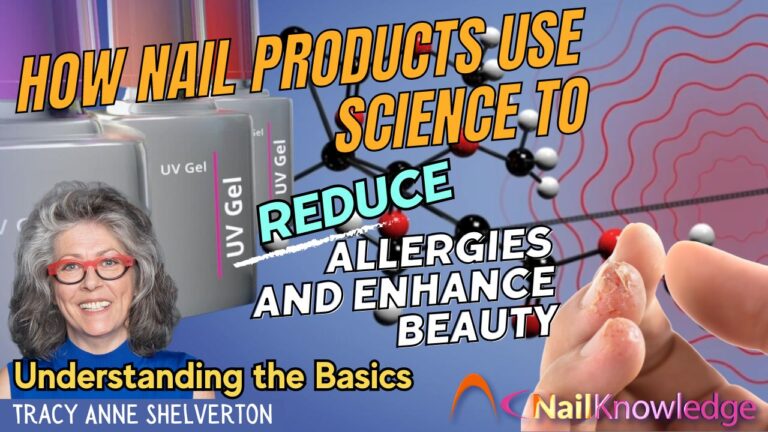
Sản phẩm làm móng sử dụng khoa học để giảm dị ứng và tăng cường vẻ đẹp

Hiểu những điều cơ bản và nền tảng của việc chăm sóc móng tay

Before diving into the complexities of nail product formulation, it’s crucial to establish a solid understanding of the basic principles that underpin the science behind nail producs.

Monome: Các khối xây dựng

Imagine you have a box full of colourful beads, each one unique but capable of connecting with others. In the world of chemistry, these beads are akin to what we call monomers, small, simple molecules that serve as the foundational units for more complex structures. Just as you might thread beads onto a string to create a necklace, monomers can link together in a process that transforms them from solitary units into a cohesive, larger entity.

Oligomer: Hiệu ứng dây chuyền

Now, picture yourself creating a small section of a beaded necklace, with just a handful of beads linked together. This segment isn’t quite a full necklace yet but is more substantial than a single bead. In scientific terms, this is similar to an oligomer: a structure composed of a few monomers bonded in a chain. Oligomers are more significant than individual monomers but not as large or complex as long polymer chains. Because of their size, oligomers are like the middle ground in the molecular world, they’re big enough to be sturdy and functional but not so large that they lose their flexibility or become unwieldy.

One of the key benefits of oligomers in nail products is their reduced ability to penetrate the skin, which significantly lowers the risk of allergic reactions. This is crucial for products applied close to or on the skin, like nail polish and gels, ensuring that beauty does not come at the expense of health.

Trùng hợp: Từ lỏng sang rắn

To understand how liquid nail products transform into the solid, durable coating we see on nails, let’s consider an everyday example: baking a cake. You start with various liquid and solid ingredients, mix them together, and then bake the mixture. Under the heat, these ingredients undergo chemical changes, combining to form a solid, cohesive whole that’s very different from the starting materials.

This transformation is similar to polymerisation in nail products. When monomers and oligomers in the nail gel are exposed to UV light or another curing method, they undergo a chemical reaction that bonds them together into long, sturdy chains known as polymers. This process changes the nail product from a liquid or semi-liquid state into a solid film that adheres to the nail, providing both beauty and protection. The magic of polymerisation is at the heart of modern nail technology, allowing for the wide array of nail enhancements available today.

Vai trò của Bis-HEMA và các Oligome khác

Tập trung vào Bis-HEMA

In the realm of nail care, one oligomer stands out for its beneficial properties: Bis-Hydroxyethyl Methacrylate, or Bis-HEMA. Think of Bis-HEMA as a special link in our beaded necklace analogy, one that not only adds length and beauty but also strength and durability to the overall structure. In nail gels and polishes, Bis-HEMA serves as a backbone, creating a network that is both resilient and flexible.

What sets Bis-HEMA apart is its knack for forming a solid structure that’s less prone to causing allergies. Since Bis-HEMA molecules are larger and more complex than single monomers, they’re less likely to seep into the skin. This means that while you enjoy your beautifully manicured nails, the risk of experiencing an allergic reaction is minimised, making products containing Bis-HEMA a preferred choice for those with sensitive skin.

Oligomer đa dạng, lợi ích đa dạng

While Bis-HEMA plays a starring role in the world of nail enhancements, it’s far from the only oligomer on stage. Various other oligomers contribute their unique properties to nail products, ensuring there’s something for every need and preference:

  • Urethane Acrylates: These oligomers are like the heavy lifters in nail formulations, providing exceptional strength and durability to the nail coating. They ensure your manicure can withstand the rigors of daily life, from typing on a keyboard to opening jars.
  • Epoxy Acrylates: Consider epoxy acrylates the protectors. They form a shield on your nails that resists chemicals and wear, much like a waterproof coat that keeps you dry in a downpour.
  • Polyester Acrylates: Hãy tưởng tượng polyester acrylate như chất uốn, mang lại sự linh hoạt và độ bám dính. Chúng đảm bảo lớp phủ móng tay của bạn di chuyển cùng với móng tay tự nhiên, giảm nguy cơ bị sứt mẻ hoặc bong tróc.

Each type of oligomer brings something unique to the table, allowing nail product formulators to mix and match properties like a chef combining ingredients for a perfect dish. This versatility means that whether you’re looking for durability, flexibility, or hypoallergenic properties, there’s likely a nail product formulated with the right mix of oligomers to meet your needs.

By understanding the role of Bis-HEMA and other oligomers, we can appreciate the science that makes our favourite nail products both beautiful and beneficial. It’s a reminder that behind every glossy finish and vibrant colour lies a carefully crafted blend of chemistry and innovation.

Làm cho sản phẩm không gây dị ứng: Khoa học về an toàn

Delving into the science behind nail products, it’s clear that the quest for hypoallergenic formulations is more than skin-deep. The strategic use of oligomers, such as Bis-HEMA, plays a pivotal role in this endeavour. Just as a thicker coat provides better protection against the cold, longer oligomer chains in nail products offer better defence against allergens penetrating the skin. This is because these larger molecules have a harder time slipping through the skin’s protective barrier. Even so, its important to take care. If the skin layers are not intact or you get the product on the skin and you or your client have a known allergy to HEMA – Bis-HEMA even though its in oligomer form and not as a singular monomer, it can still cause a diverse reaction.

Imagine applying a layer of paint on a finely woven canvas, the finer the weave, the less likely it is for the paint to seep through. Similarly, when nail products are formulated with a higher ratio of oligomers to monomers, the resulting ‘paint’ in this case, the nail product, is less likely to cause adverse reactions because its ‘particles’ are too large to infiltrate the skin’s ‘weave.’

Đổi mới trong chăm sóc móng tay

The beauty industry’s commitment to innovation shines brightly in the realm of nail care, where the health of the wearer is as important as the aesthetic appeal. Scientists and product developers work tirelessly, akin to artists and engineers, to concoct formulations that marry beauty with well-being. They experiment with the balances of monomers and oligomers, constantly seeking the optimal mix that ensures durability and visual appeal without compromising safety.

This dedication to innovation isn’t just about avoiding negative reactions; it’s about enhancing the user experience. It ensures that everyone, even those with the most sensitive skin, can enjoy the art of nail beautification without fear. This democratisation of beauty, where products are inclusive and considerate of diverse needs, underscores the industry’s broader commitment to safety and accessibility.

Ý nghĩa đối với các chuyên gia và người tiêu dùng

For professionals in the nail industry as well as discerning consumers, understanding the composition and formulation of nail products is essential. The presence of labels such as “hypoallergenic” signifies more than just a marketing strategy; they denote a product’s commitment to reducing the risk of allergic reactions through careful formulation. Nhận thức này rất quan trọng đối với các chuyên gia muốn mang đến trải nghiệm an toàn và thỏa mãn nhất cho khách hàng, cũng như đối với người tiêu dùng đang tìm kiếm sản phẩm kết hợp giữa vẻ đẹp và sức khỏe.

The development journey of a nail product, from the meticulous research in chemical laboratories to its application in salons, underscores the beauty industry’s dedication to marrying aesthetics with safety. For professionals, this knowledge equips you with the expertise to make informed recommendations, ensuring client satisfaction and well-being. Consumers, on the other hand, gain the confidence to select products that not only enhance their beauty but also safeguard their health.

Behind each vibrant shade and glossy finish of nail products lies a rich tapestry of scientific research, technological advancement, and conscientious formulation. This complex backdrop highlights the industry’s commitment to delivering products that not only meet aesthetic desires but also uphold the highest standards of health and safety.

What This Means for You – Choosing the Right Products

Navigating the vast sea of nail products can feel overwhelming, especially when you’re trying to make health-conscious choices. Armed with knowledge about monomers, oligomers, and their roles in hypoallergenic formulations, you’re now equipped to make informed decisions that align with your beauty and wellness goals. Here’s how you can apply this knowledge when selecting nail products:

  • Tìm nhãn không gây dị ứng: Products labeled “hypoallergenic” should be formulated to minimise the risk of allergic reactions. Mặc dù không đảm bảo, những nhãn này phải thể hiện nỗ lực tận tâm của nhà sản xuất trong việc đáp ứng nhu cầu của người dùng nhạy cảm.
  • Hỏi về hàm lượng Oligomer: Don’t hesitate to ask brands or professionals about the oligomer content in their products. A higher concentration of oligomers, like Bis-HEMA, generally suggests a lower potential for skin irritation.
  • Kiểm tra danh sách thành phần: Familiarise yourself with the names of common oligomers (e.g., Bis-HEMA or urethane acrylates). Spotting these ingredients can give you clues about the product’s formulation and its hypoallergenic potential.

Tầm quan trọng của việc được thông báo

Knowledge is your most valuable tool in the pursuit of beauty and health. Understanding the science behind nail products empowers you to make choices that not only enhance your appearance but also protect your well-being. It’s a powerful reminder that beauty should never come at the expense of health.

  • Tự giáo dục bản thân: Continue learning about the ingredients and technologies used in beauty products. The more you know, the better equipped you’ll be to navigate the ever-evolving landscape of cosmetic innovation.
  • Tham khảo ý kiến chuyên gia: When in doubt, seek advice from professionals. Nail technicians and dermatologists can offer valuable insights tailored to your specific needs and concerns.
  • Ưu tiên sự an toàn: Always remember that the most beautiful manicure is one that respects and preserves the health of your nails and skin. Let safety be your guiding principle as you explore the world of nail art and design. Removing the skin around the natural nail with scissors or an efile or roughing up the nail plate (removing its chemical resistant layer) before applying gel products is tantamount to taking the roof tiles off of your house before a storm – not a smart thing to do. Be aware of this and you will experience fewer problems in the salon.

Phần kết luận:

As we’ve journeyed through the intricate world of nail product formulation, it’s become clear that the beauty industry’s commitment to combining aesthetics with safety has led to remarkable innovations. From the science of monomers and oligomers to the art of creating hypoallergenic products, every step in the process is a testament to the industry’s dedication to delivering beauty solutions that are as safe as they are stunning.

However, it’s crucial to remember that even the most carefully formulated products must be used responsibly. Nail products are designed for use on the nail plate itself and should avoid contact with the skin as much as possible. This precaution minimises the risk of skin irritation and allergic reactions, ensuring that the pursuit of beauty remains a joyous and safe experience for everyone.

Khi bạn đứng trước một loạt các sản phẩm làm móng đầy màu sắc trong lần ghé thăm tiệm làm đẹp hoặc cửa hàng làm đẹp tiếp theo, hãy nhớ rằng mỗi chai là sự kết hợp giữa khoa học, đổi mới và chăm sóc. Hãy tự tin lựa chọn, biết rằng sức mạnh kết hợp vẻ đẹp với sức khỏe nằm trong tầm tay bạn.

Thuộc chủ đề:Thông tin chung, Sữa dưỡng, Thuốc và Chất đánh bóng, Dịch vụ làm móng, Gel UV

  • « Chuyển đến Trang trước
  • Trang 1
  • Các trang tạm thời đã được bỏ qua …
  • Trang 6
  • Trang 7
  • Trang 8
  • Trang 9
  • Trang 10
  • Các trang tạm thời đã được bỏ qua …
  • Trang 30
  • Chuyển đến Trang sau »

Nâng cao kiến thức về làm móng

Tham gia bản tin của chúng tôi!
ĐĂNG KÝ...

Bản quyền © NailKnowledge

Kiến thức về móng tay

  • Sách điện tử
  • Về chúng tôi
  • Các khóa học
  • Tin tức
  • Blog
  • Bản tin
  • Thuật ngữ

Chính sách

  • Trang riêng tư
  • Điều khoản và điều kiện
  • Chính sách Cookie

Ủng hộ

  • Liên hệ với chúng tôi
  • Hỏi các chuyên gia
  • Hỗ trợ hệ thống
  • Câu hỏi thường gặp
Vietnamese
Vietnamese
English Portuguese Spanish