• Bỏ qua primary navigation
  • Bỏ qua nội dung chính
  • Bỏ qua footer
Kiến thức về móng tay

Kiến thức về móng tay

  • Các khóa học
  • Sách điện tử
  • Giỏ sách điện tử
  • Cơ sở tri thức
    • Cơ sở tri thức
    • Hỏi các chuyên gia
    • Thuật ngữ
  • Tin tức
  • Blog
  • Phòng trưng bày
    • Thư viện nghệ thuật làm móng
    • Nghệ sĩ làm móng
    • Tham gia Elite
  • Đăng nhập

Thông tin chung

Hiểu về đèn Flash Cure và Gel chạm

Với tình trạng dị ứng móng tay ngày càng gia tăng, đặc biệt là viêm da tiếp xúc, việc hiểu rõ về các dụng cụ và sản phẩm hiện có trên thị trường là vô cùng quan trọng, nhất là những sản phẩm được quảng cáo dành cho việc tự làm tại nhà. Đèn sấy nhanh và các sản phẩm gel có thể chạm vào đang ngày càng trở nên phổ biến, thường được các công ty làm móng không chuyên quảng cáo là vượt trội hơn so với các lựa chọn tại tiệm. Phần giới thiệu này nhằm làm rõ đèn sấy nhanh và gel có thể chạm vào là gì, những lợi ích của chúng, cũng như những lưu ý cần ghi nhớ để đảm bảo việc sử dụng an toàn và hiệu quả.

Những hạn chế và ứng dụng của đèn Flash Cure trong chăm sóc móng

Đèn sấy nhanh không được thiết kế để làm khô hoàn toàn bất kỳ loại gel UV nào. Chúng chỉ dùng để bắt đầu quá trình sự trùng hợp nhưng việc này phải được thực hiện trong đèn sấy hoàn chỉnh.

Những dụng cụ này rất hữu ích khi dán móng giả che kín toàn bộ, giúp giữ móng giả cố định tại chỗ cho đến khi các ngón tay còn lại được hoàn thiện và cả bàn tay có thể đưa vào đèn UV để làm khô đúng cách. Có thể thấy rằng cách làm này còn cách xa việc làm khô đúng cách, vì móng giả có thể dễ dàng bị bong ra, khiến gel vẫn còn mềm.

Chúng cũng rất hữu ích trong nghệ thuật làm móng khi cần giữ cho mẫu thiết kế không bị xê dịch khi sử dụng sơn có độ nhớt thấp (loãng).

Không bao giờ nên sử dụng phương pháp này để làm khô hoàn toàn, vì hầu như tất cả các vật liệu làm khô bằng tia UV đều cần ít nhất 30 giây, nếu không phải là 60–90 giây. Rất hiếm khi thời gian làm khô ngắn hơn mức này, và nếu có trường hợp nào như vậy và nhà sản xuất đã xác nhận, thì không nên nghi ngờ điều đó.

Gel Touchable: Xử lý và Ứng dụng của Gel UV có thể gập lại

Chất liệu này được làm cứng bằng tia UV và có thể uốn cong, nên rất hữu ích cho một số ứng dụng nhất định, chẳng hạn như nghệ thuật làm móng 3D phức tạp. Tuy nhiên, vì đây vẫn là gel chưa được làm cứng, nên cần tránh tiếp xúc trực tiếp với da để phòng ngừa các phản ứng dị ứng có thể xảy ra. Do vẫn ở trạng thái chưa được làm cứng và có nguy cơ tiếp xúc với da, sản phẩm này không thích hợp để làm móng giả phủ toàn bộ móng.

Loại gel này cũng rất hữu ích để tạo ra các mẫu móng 3D. Các loại gel màu có độ nhớt cao có thể được uốn nắn thành những hình dạng phức tạp, nhưng quá trình này luôn phải được thực hiện khi đeo găng tay để tránh tiếp xúc với da. Do độ đặc và độ đục của các loại gel này, chúng cần thời gian đóng rắn lâu hơn bình thường để đảm bảo được đóng rắn hoàn toàn.

Thuật ngữ ’có thể chạm vào’ không phải là thuật ngữ phù hợp vì không được chạm vào bằng da không được bảo vệ

Thuộc chủ đề:Thông tin chung, Dịch vụ làm móng, Gel UV

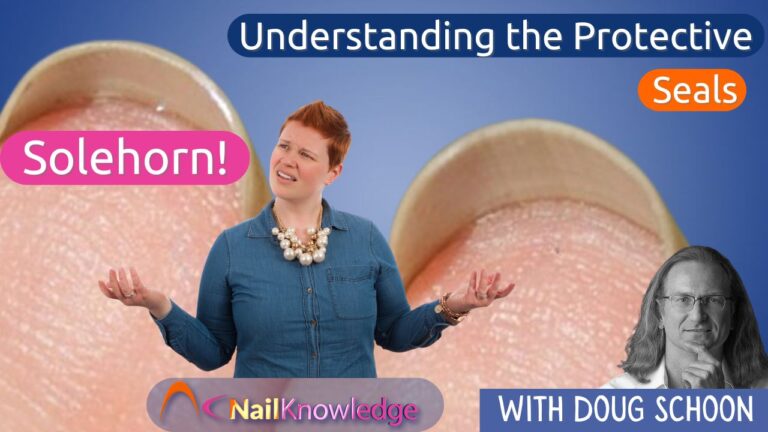
Hiểu về lớp niêm phong bảo vệ của nền móng

We are constantly asked about the various protective features of the nail bed, particularly the roles of the hyponychium and the onychodermal band. Many wonder why there are two types of seals and how they differ from the solehorn.

This confusion often arises from unclear illustrations and explanations.

In this article, we aim to clarify these concepts by exploring the intricate structures and functions of these protective layers. Understanding the dưới móng, onychodermal band, and the often misunderstood solehorn will provide a clearer picture of how they contribute to the overall health and protection of the nail bed.

Clarifying the Role of Nail Bed Epithelium

Protective seals of the nail bed

I know this is confusing because many of the current illustrations are unclear and clarity is what is needed. Sandwiched between the nail plate and nail bed is an important, but very thin layer of tissue called the nail bed epithelium. 

Many don’t understand, but this paper-thin layer of tissue helps to guide the nail plate as it grows.  Interestingly, the bed epithelium adheres only to the underside of the nail plate and not to the nail bed itself. This allows the plate to glide smoothly across the nail bed allowing it to eventually reach the free edge and beyond. 

As the nail plate moves, the bed epithelium continues to tightly adhere to the underside of the nail plate, even as it moves past the finger and can be seen on the underside of the nail, still firmly attached. This tissue is usually removed during a manicure when cleaning up under the free edge. The tightly adhered tissue on the underside of the nail plate is still the “bed epithelium”, but some feel a need to give it a new name and they call it “solehorn”. 

Reevaluating the Term “Solehorn”: Why Proper Naming Matters

I don’t agree that this old-fashioned name should be used. Why?

This term existed before the true source of this tissue was properly understood.  The solehorn does not simply emerge out of nowhere nor does it come from the hyponychium, so why should it be given a different name? This is still bed epithelium tissue and should be called by its proper name.

Bed epithelium clinging to the underside of the free edge.

Understanding the Onychodermal Band: A Visual Effect of the Bed Epithelium

The onychodermal band is NOT another kind of tissue even though it does form a distinct region. The onychodermal band is also created by the bed epithelium. How? As the bed epithelium moves with the nail plate, it must somehow squeeze past the hyponychium, which is the seal under the free edge that prevents pathogens from infecting the nail bed. It’s a tight squeeze getting past this seal, but the bed epithelium manages to squeeze past. In doing so, it becomes bunched up and doesn’t flow smoothly past the hyponychium. This “bunching” causes a rippling effect which creates a barrier that prevents penetration of substances from seeping past the hyponychium, so this helps to protect the nail bed.

In the zone preceding the hyponychium is where this bunch up of the bed epithelium occurs. This bunched up, rippled tissue produces a greyish zone called the onychodermal band.  Therefore, this is only a visual effect caused by the bunching up of the bed epithelium as it grows past the hyponychium.  You can’t see the onychodermal band by looking under the free edge, it’s not there. It is located underneath the nail plate and on the nail bed and can only be seen by looking though the nail plate and observing the grayish band that occurs just before the hyponychium.

Thuộc chủ đề:Thông tin chung, Dịch vụ làm móng

Tác động của lớp sơn lót lột ra đối với sức khỏe móng tay

Lớp sơn lót lột là giải pháp tiện lợi cho những người thường xuyên thay đổi màu móng, nhưng cái giá thực sự của sự tiện lợi này đối với sức khỏe móng của bạn là gì?

Bài viết này đi sâu vào những quan niệm sai lầm phổ biến và những rủi ro tiềm ẩn liên quan đến lớp sơn lót lột.

Lột trần sự thật về lớp sơn lót lột

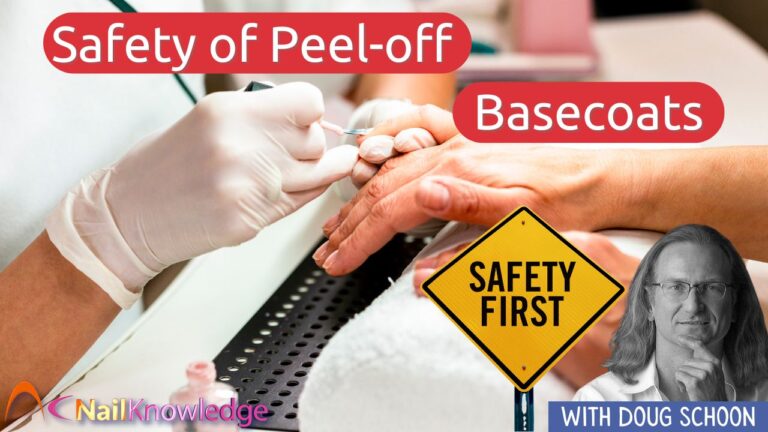
We are receiving a lot of questions from nail professionals regarding the safety of peel-off basecoats. A common inquiry concerns the correct method of removal: “Are peel-off basecoats safe as long as they are peeled from the base of the nail plate toward the tips, supposedly going with the grain of the keratin cells?”

If they did as you described, then they would be going “against the grain”, since any so-called grain in the nail would run across the width of the nail plate. Keratin fibers inside the nail cells lays across the width of the nail plate, which is why the nail plate typically splits across the width of the plate and not down the length. Therefore, the grain doesn’t seem to make a difference, at least when it comes to nail surface damage. People with healthy nail plates may not see damage when these base coats are used according to directions.  Even so, if the nail plate is already damaged, these peelable nail coatings can worsen existing damage. If the nail plates become dry-appearing or small white spots develop on the surface of the plate, then I would recommend that the wearer should discontinue use and/or reevaluate how they are using and removing these products. 

Sử dụng sơn lót lột không đúng cách có thể ảnh hưởng đến sức khỏe móng tay như thế nào

These types of peel-off basecoats are more likely to worsen existing nail surface damage, but it is very common that people ignore directions and do it “their way” and then blame the product when it doesn’t work.  Users will likely notice decreased wear time. In other words, they won’t get the same wear.  These basecoats are likely to shorten wear time by as much as 50%.  Often those who use these types of products are people who want to change their nail color often and doing so can also increase nail damage.

Thuộc chủ đề:Thông tin chung, Sữa dưỡng, Thuốc và Chất đánh bóng, Dịch vụ làm móng

Hiểu về các tuyên bố về sản phẩm làm móng trong ngành công nghiệp làm đẹp

Ngành công nghiệp làm đẹp tràn ngập các sản phẩm hứa hẹn kết quả kỳ diệu, từ móng mọc nhanh hơn đến độ bền không thể phá vỡ. Nhưng có bao nhiêu phần trăm sự thật trong những tuyên bố tiếp thị này?

Chúng tôi thường xuyên nhận được những câu hỏi về hiệu quả của các sản phẩm chăm sóc móng, đặc biệt là những sản phẩm có tác dụng làm móng chắc khỏe hoặc ngăn ngừa gãy móng.

A typical example of a query we encounter a lot is: “I read in your book that nothing you can apply to the nails will make them grow faster or stronger, as this is determined by the nail matrix. However, some nail products claim to fuse together the nail plate layers to protect the nail and prevent cracking and breaking, stating that when they are used, the nail plate is stronger and grows longer. Is this a false claim? How could they possibly work?

We’ll also provide tips on how to interpret these claims accurately and when it might be worth reaching out to manufacturers for clarity. Let’s clear up the confusion on the above question and ensure that you’re fully informed about what you’re applying to your nails.

Giải mã các tuyên bố mỹ phẩm: Sức mạnh so với sự tăng trưởng trong các sản phẩm chăm sóc móng tay

Tôi nghe câu hỏi này rất nhiều và nó luôn là nguồn gây nhầm lẫn. Các sản phẩm mỹ phẩm KHÔNG được phép tuyên bố hợp pháp là có thể làm móng mọc nhanh hơn, nhưng đó không phải là những gì các sản phẩm này tuyên bố.

When you carefully read the claims, and take the time to understand what is really being said, this becomes clear. These products don’t claim to make the nail grow faster. But they do claim to make the nail stronger.  These products reinforce the nail plates making them stronger which prevents them from breaking, so they can naturally grow longer.  Grow is the key word here.

Cosmetics can’t and don’t affect the way the nail plate grows. But they can reinforce the existing nail plate to make it stronger, so it can naturally grow longer. That is hugely different than saying the product makes the nail grow faster, which would be a false claim. Instead, these products claim to make the nail plate stronger, so it won’t break and can therefore naturally grow longer.

I think this is a valid claim. It pays to carefully read marketing claims to make sure you properly understand what’s being said and if you don’t understand, I suggest contacting the manufacturers to ask for a better explanation that you can understand.

Thuộc chủ đề:Thông tin chung, Dịch vụ làm móng

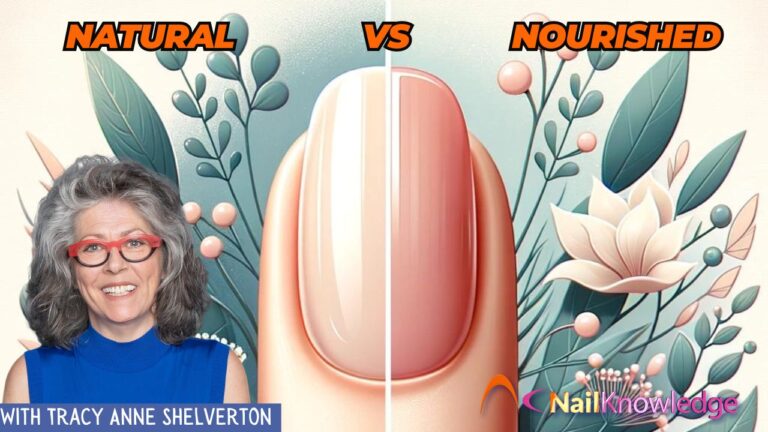
Tự nhiên so với nuôi dưỡng: Bare có tốt hơn cho móng tay của bạn không?

Exploring the realm of nail care often prompts many individuals to consider whether they should embellish their nails with the latest colors or maintain them in their natural state. With various care strategies at your disposal, choosing the optimal approach for maintaining healthy nails can sometimes feel overwhelming. In this blog, we’ll delve into the advantages and disadvantages of leaving your nails bare compared to using protective products like ridge fillers or base coats. Whether you’re a fan of a minimalistic look or thinking about adding a layer of protection, this guide will help you make an informed decision about your nail care routine.

 We frequently receive questions about whether it’s better to leave nails bare or use products like ridge fillers or base coats. It’s a common concern for many who want to maintain healthy and attractive nails without excessive use of products. Let’s break down the options to help you understand what might work best for you.

Lợi ích của việc giữ móng tay trần và đủ độ ẩm

Keeping your nails bare is a straightforward approach that avoids potential exposure to chemicals found in many nail products. These are not a problem if used according to the manufacturer’s instructions but it’s important to remember that after we reach the age of 21, our bodies ability to maintain moisture levels starts to decrease – so even when choosing no nail coating it’s important to focus on maintaining your nails’ natural state and ensuring they are well-moisturized and cared for. Regular use of a good quality nail oil and hand cream, as you’ve been doing, is excellent for keeping your nails and surrounding skin hydrated, which is crucial for healthy nails and healthy nail units. So that’s all fine just as long as you are consequent with that essential maintenance.

Ưu điểm của việc sử dụng Ridge Fillers và Base Coats để bảo vệ móng

However, there are benefits to using products like ridge fillers or base coats. These products do not inhibit any necessary physiological processes as nails do not “breathe.” Instead, they can provide a protective layer that guards against physical damage, enhance the appearance of your nails, and can even contribute to a more effective moisture level for the nail and the nail unit depending on the formulation.

For those considering using a protective product, it’s important to select formulas that are suited to your needs. This ensures you’re not trading one issue for another. That’s sometimes like looking for a needle in a haystack. Let’s put a few things in a row and see if it helps.

Chọn sản phẩm chăm sóc móng phù hợp để có móng khỏe mạnh tối ưu

Da và móng tay khô là lý do số một khiến tình trạng biến dạng ở móng tay và các đơn vị móng tay trở nên tồi tệ hơn. Vấn đề là tình trạng khô có thể do nhiều nguyên nhân gây ra, nhưng nếu chúng ta gác suy nghĩ đó sang một bên trong một phút, chúng ta có thể đưa ra một số giải pháp.

  • If your nails are weak – the cause could be that you have a short nail matrix, we can’t change that but a strengthener of some kind could be beneficial. Even then, chăm sóc móng tay việc bảo trì là cần thiết.
  • If you nails split – the cause could be a weakness in the nail matrix that we cannot change but a soak off gel polish base and top coat with a piece of silk may be an option if you don’t mind wearing a nail coating. If you want to avoid a nail coating IBX would be the perfect solution as it works a bit like a support stocking, holding the nail plate cells together as the nail continues to grow. In both cases nail care maintenance is important. If none of those are an option nail care maintenance is essential.
  • If you have ridges in the nail plate these will be likely caused by mini defects of nail plate cells when they leave the nail matrix, you can use a ridge filler but not all of the time unless the ridge filler is flexible. If the ridge filler just makes your natural nail harder your nails will become brittle and you will experience a different kind of problem, your nail plates will just split and shatter – again, nail maintenance is important. The supplier of the ridge filler should be able to advise about how long the product should be used if not, don’t purchase it. Again, IBX could be the solution as this works IN the nail plate and NOT ON the nail plate.

For any or all of these problems an artificial nail product could be the solution – and if your salon of choice understand the products that they use they will match you and the product for a happy resolution but all of it will be a temporary fix – nails grow and our skin is in perpetual motion – again maintenance is paramount.

Có vô số lựa chọn nhưng sự thật thì vẫn vậy.

Các bước hiệu quả để kiểm soát tình trạng móng mãn tính

Những tình trạng mãn tính gây ra khuyết tật ở móng hoặc các vấn đề về da không thể giải quyết được, chúng ta chỉ có thể cải thiện vẻ ngoài của chúng.

Bước 1 When trying to improve ANY nail or skin conditions it’s essential to improve or maintain moisture levels – with something simple like a quality nail and skin oil and lotion to boot, the improvement can be lifechanging. If natural is important to you find a product containing allantoïne or urea and of course jojoba oil or avocado oil.

Bước 2 Is knowing your habit’s.

Bước 3 Hãy đưa ra lựa chọn đúng đắn cho bạn.

Nail varnish can be a solution for dry nails as it also provides a coating over the natural nail, but not without nail maintenance and it will need to be replaced on a regular basis, but for weak nails it’s not an effective solution.

A clear soak off gel polish base and top coat could be a solution, but needs to be removed every 2-3 weeks depending on the condition of the natural nail and the recommended wear time of the product, maybe a couple of hrs. a month are needed to apply and remove and again nail care and maintenance are essential.

Using a nail coating that needs ‘filling’ could be a solution if your nail plates have pitting from psoriasis – in this case prep of the natural nail is paramount and filing of the nail plate before product application needs to be avoided as this will weaken the entire nail structure and this is when I go against the main stream and say acryl liquid and powder can be your best friend – by a correct and professional application – it will make a difference but remember that this is cosmetic, we didn’t cure the psoriasis – we just make the nails look better.

When it comes to removing any nail products, choosing an acetone-free remover will not solve the dryness problem. All solvents used to remove artificial nail coatings and or nail varnish will dry out the natural nail and or the nail unit. It may even take longer to remove or soak the nail coating off!

A nail polish remover containing acetone will remove your nail polish well. Wash your hands after with a neutral soap and water and apply a good quality nail and skin oil followed by a good lotion and your nail and skin moisture levels will be recovered – dryness from acetone is temporary and will not affect the health of your natural nail if you replenish it after.

Lựa chọn giữa móng tay trần và lớp phủ bảo vệ: Quyết định cá nhân

Ultimately, the decision to keep your nails bare or use a ridge filler or base coat depends on your personal preference, lifestyle, and the specific needs of your nails.

Cả hai phương pháp đều có ưu điểm riêng và với các sản phẩm và biện pháp phù hợp, bạn có thể duy trì móng tay khỏe mạnh, đẹp dù bạn chọn để móng trần hay sử dụng sản phẩm bảo vệ, miễn là quy trình chăm sóc và bảo dưỡng là một phần trong thói quen hàng ngày của bạn.

Thuộc chủ đề:Thông tin chung, Dịch vụ làm móng

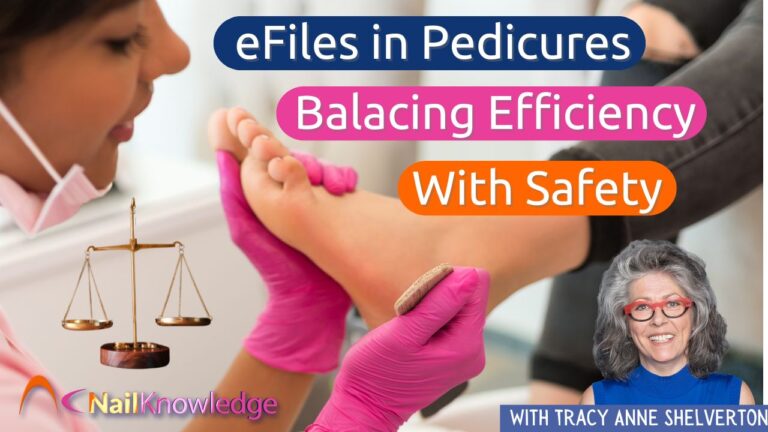
Efiles trong chăm sóc móng chân: Cân bằng hiệu quả với sự an toàn

In the evolving landscape of pedicure techniques, the use of electronic files (efiles) for hard skin removal has sparked a significant shift in how professionals approach foot care. With the promise of efficiency and precision, efiles offer a modern alternative to traditional methods.

However, this technological advancement also raises questions about safety and best practices. As more nail technicians and spas adopt this tool, it’s crucial to understand the right techniques to ensure a safe and effective treatment. In this article, we’ll delve into the safe use of efiles for hard skin removal during pedicures, providing professional insights and tips to help both practitioners and clients achieve optimal results without compromising safety.

Identifying Causes of Hard Skin on Feet and Safe Pedicure Guidelines

It’s important to realize that there could be more than one reason for hard skin on the bottom of a foot. Several factors might contribute to this common condition, ranging from natural body mechanics to external environmental influences. For instance, repetitive pressure and friction, often caused by regular walking or ill-fitting shoes, can lead to the development of thickened skin as a protective response.

Additionally, underlying health issues such as diabetes or skin conditions like eczema and psoriasis might also manifest as hard skin on the feet.

Lifestyle elements, including insufficient moisturization or excessive standing, further complicate the picture. Understanding the multifaceted causes of hard skin is crucial for addressing the issue effectively and choosing the appropriate treatment or preventative measures.

I think its easier to say IF the client has a contra indication ie Diabetes, Chemotherapy, immunotherapy, Reuma or Rheumatoid arthritis that NO cosmetic service should be undertaken simply because the complications of going to far with an efile are realistic and should not be ignored.

The Drawbacks of Using an Efile for Pedicures: A Cautionary Perspective

The advantage of an efile is not clear to me, a quality foot file should be more than enough for a cosmetic service providing you have used an callous softener as directed by the manufacturer and even then you need to leave a layer of hardened skin in place to prevent overproduction of more keratinized cells being produced by the body to protect itself creating even more problems by the following service.

With an efile if too much pressure is applied damage to the foot even if not intentional can cause extreme discomfort to your client and worse and infection with all the complications that that can bring with it.

Just because everyone is doing it doesn’t mean it’s a good thing.

Effective Callous Management: Understanding and Treating the Root Causes

When addressing issues of excessive callous or hard skin on a client’s feet, it’s essential to investigate and treat the underlying causes, rather than merely addressing the symptoms. This approach ensures that you’re not caught in a cycle of recurring problems.

The many questions we get on this subject highlights the need for a deeper understanding of the foot’s anatomy and the complexities of its skin layers before performing any procedures.

My advice to fellow professionals is straightforward: opt for a high-quality hand file coupled with an effective callous softener. This method not only maintains the integrity of the foot’s skin but also keeps your clients satisfied and healthy.

Thuộc chủ đề:Thông tin chung, Dịch vụ làm móng

  • « Chuyển đến Trang trước
  • Trang 1
  • Các trang tạm thời đã được bỏ qua …
  • Trang 4
  • Trang 5
  • Trang 6
  • Trang 7
  • Trang 8
  • Các trang tạm thời đã được bỏ qua …
  • Trang 30
  • Chuyển đến Trang sau »

Nâng cao kiến thức về làm móng

Tham gia bản tin của chúng tôi!
ĐĂNG KÝ...

Bản quyền © NailKnowledge

Kiến thức về móng tay

  • Sách điện tử
  • Về chúng tôi
  • Các khóa học
  • Tin tức
  • Blog
  • Bản tin
  • Thuật ngữ

Chính sách

  • Trang riêng tư
  • Điều khoản và điều kiện
  • Chính sách Cookie

Ủng hộ

  • Liên hệ với chúng tôi
  • Hỏi các chuyên gia
  • Hỗ trợ hệ thống
  • Câu hỏi thường gặp
Vietnamese
Vietnamese
English Portuguese Spanish