• Bỏ qua primary navigation
  • Bỏ qua nội dung chính
  • Bỏ qua footer
Kiến thức về móng tay

Kiến thức về móng tay

  • Các khóa học
  • MyNailEra
  • Sách điện tử miễn phí
  • Cơ sở tri thức
    • Cơ sở tri thức
    • Hỏi các chuyên gia
    • Thuật ngữ
  • Tin tức
  • Blog
  • Đăng nhập

Sữa dưỡng, Thuốc và Chất đánh bóng

Khoa học đằng sau sơn móng tay thông thường: Nó hoạt động như thế nào?

In this enlightening journey, we will unravel the captivating world of nail polish and how it works, diving deep into its composition, application techniques, and the mesmerising process of drying. We’ll decode the essential ingredients that transform liquid polish into a glossy masterpiece and understand the factors that influence its longevity.

What is Nail Polish?

Nail polish, also known as nail varnish, nail enamel, or nail lacquer, is a cosmetic product specifically designed for painting and decorating the nails. It comes in a wide array of colors, finishes, and formulations, making it a versatile accessory for people of all ages and styles.

The Popularity of Nail Polish as a Cosmetic Product.

A History of Beauty and Self-Expression

Nail polish has a rich history dating back to ancient civilizations. It was used by the Egyptians, Chinese, and other cultures as a form of self-expression and a symbol of social status. Over time, nail polish has evolved from basic dyes to the vibrant, diverse range of colors we have today.

A Statement of Style

Today, nail polish is not just a cosmetic product; it’s a fashion statement. People use nail polish to express their personality, match their outfits, and follow seasonal trends. It’s an easy and affordable way to experiment with different looks.

The Influence of Pop Culture

The popularity of nail polish has been further amplified by pop culture, with celebrities and influencers frequently showcasing their nail art on social media platforms. Nail trends spread like wildfire, inspiring individuals to try out new designs and colors.

Nail Care and Health

Apart from aesthetics, nail polish has also played a role in nail care. Some nail polishes are fortified with ingredients that claim to promote nail strength and health, making them a dual-purpose product.

The Global Market

The global nail polish market continues to thrive, with countless brands offering a vast spectrum of colors and formulations. From classic reds and pinks to unconventional blues and metallics, there’s a nail polish for every preference.

Composition of Nail Polish

Each ingredient in nail polish plays a specific role in its formulation and performance. Here’s an overview of the role of each key ingredient:

1. Solvents:

   – Role: Solvents are volatile liquids that keep the nail polish in a liquid state inside the bottle but evaporate after application. The process is called air drying as opposed to UV gel polish that needs to be polymerised to ‘dry’ (proper name cure)

   – Function: They allow the nail polish to be easily spread on the nail’s surface during application.
   – Importance: Solvents enable the drying process by evaporating, leaving behind a solid, colored film on the nail.

2. Polymers:

   – Role: Polymers are responsible for forming a durable and glossy film on the nail as the polish dries.
   – Function: They provide the structure and strength to the nail polish, ensuring it adheres well to the nail’s surface.
   – Importance: Polymers contribute to the longevity of the nail polish and its resistance to chipping and peeling.

3. Pigments and Colorants:

   – Role: Pigments and colorants give nail polish its desired color and opacity.
   – Function: They provide the vibrant or subtle hues that enhance the appearance of the nails.
   – Importance: Pigments and colorants are crucial for creating the wide range of nail polish shades available in the market. Also, effects such as a summer or glitter.
– When applying a nail polish it is quite thick and hides any imperfections on the surface of the nail e.g. ridges. When the solvents have evaporated, it is much thinner and imperfections are noticeable. This is due to the pigments laying flat on each other without the bilk of the solvents.

4. Plasticisers:

   – Role: Plasticizers are additives that make the dried nail polish flexible and prevent it from becoming brittle.
   – Function: They maintain the polish’s flexibility and durability, allowing it to bend and move with the nail without cracking.
   – Importance: Plasticizers contribute to the overall quality and wearability of nail polish.

5. Film Formers:

   – Role: Film formers are responsible for creating a smooth and even layer of polish on the nail.
   – Function: They ensure that the polish dries into a solid, continuous film rather than leaving streaks or imperfections.
   – Importance: Film formers help achieve a polished and professional appearance on the nails.

6. Stabilisers and Additives:

   – Role: Stabilizers and other additives are included to enhance the shelf life, consistency, and application properties of nail polish.
   – Function: They help maintain the product’s quality, prevent separation or clumping, and improve application.
   – Importance: These ingredients ensure that the nail polish remains in good condition over time and is easy to use.

7. UV Inhibitors

   – Role: Some nail polishes may include UV inhibitors to protect the color from fading or changing when exposed to sunlight.
   – Function: UV inhibitors help preserve the polish’s color integrity, especially in bright or sunny conditions.
   – Importance: These ingredients are more common in nail polishes with vibrant or light-sensitive colors.

Understanding the role of each ingredient in nail polish can help users make informed choices and select products that meet their specific preferences and needs.

Preparing your Nails

      1. Nail cleaning and removal of old polish. The nail plate must be perfectly clean and free from oils, creams and the skin of the cuticle for the polish to anger. Without this level of cleanliness the polish will chip or peel off
      2. Using a base coat for better adhesion. A specific base coat is always recommended as this is formulated to adhere to a nail plate it is usually thinner in viscosity so it will very slightly penetrate the upper layers of the nail for a good anchor.

How to Apply Nail Polish Effectively

1. Thin, even coats.
2. Three thin coats is better than one thick one. It will dry faster and have better longevity.
3. Using a good nail oil after finishing will help it dry.
4. There is no need to wait for layers to dry as the solvents in the next coat will just make it wet again.

Why Multiple Coats are Necessary for Color Intensity

The first coat may look streaky but more thin coats will give an even and intense colour coating.

The Drying Process

Have you ever wondered how that freshly applied nail polish miraculously transforms into a stunning, glossy finish?

Let’s demystify the enchanting drying process. First, it all begins with the evaporation of solvents, those volatile liquids that allow the polish to glide smoothly onto your nails during application. As these solvents gracefully evaporate, they pave the way for the next captivating step: the formation of a solid film. This film not only adds durability but also gives your nails that flawless, polished look. And here’s the artistic touch – as the pigments within the polish settle, they flatten and meld together, creating a sleek, thin plastic film that enhances the color’s vibrancy and ensures your nail art remains nothing short of mesmerising.

How drying time can vary based on factors like humidity

The rate of evaporation of the solvents will affect the drying time. A warm atmosphere will speed it up (and sometimes make it difficult to paint as it is drying too quickly). Colder will slow down the evaporation and different brands have very different drying times. But slow can be good as a fast drying time can result in a brittle coating.

Topcoats for Shine and Protection

The role of clear topcoats:

1. Sealing the color.
2. Preventing chipping.
3. Top coats are usually harder wearing than colour coats so will help with longevity
4. Some modern top coats have a small amount of UV cured polymers so they become tougher over time with exposure to daylight.

It is often worth applying an additional top coat a few days after the first. It will brighten up the colour and toughen up the coating.

Maintenance and Longevity

Tips for extending the life of your nail polish:

1. Avoiding activities that may damage your nails.
2. Regular touch-ups.
3 Another top coat
4. Avoid soaking in water
5 Apply a good nail oil every day

Factors affecting the longevity of nail polish:

1. Quality of the product.
2. Application technique. e.g too thick

Advantages and Disadvantages of Regular Nail Polish

Regular nail polish is relatively easy to apply and remove, making it a popular choice for at-home and salon manicures. However, it may not last as long as other nail enhancements like gel or acrylic nails, so you may need to touch up your nail polish periodically to maintain the desired look. Additionally, the longevity of regular nail polish can vary depending on factors such as the quality of the product and how well it’s applied and cared for.

   A. Pros:
1. Easy to apply and remove.
2. Wide variety of colors and shades.

   B. Cons:
1. May not last as long as other nail enhancements.
2. Potential for chipping.

Những câu hỏi thường gặp (FAQ)

1. Why might regular nail polish not last as long as other nail enhancements?

Regular nail polish, while versatile and easy to apply, may not have the same durability as other nail enhancements like gel or acrylic nails. The reason lies in its formulation, as it lacks the robust structure and adhesion properties of these enhancements, which are designed for extended wear. However, with proper care and maintenance, you can still enjoy a stunning manicure with regular nail polish.

2. What causes the potential for chipping in regular nail polish?

Chipping in regular nail polish can occur due to various factors. One common cause is everyday wear and tear, such as typing, household chores, or physical activities that subject your nails to impact. Additionally, the absence of the sturdy layers found in gel or acrylic nails makes regular polish more susceptible to chipping. However, following best practices during application and investing in top-quality products can help minimize this issue.

3. Are there any tips for extending the life of regular nail polish?

Yes, there are several tips for prolonging the life of your regular nail polish. Avoid activities that could damage your nails, such as using them to open packages or engage in rough tasks. Consider regular touch-ups to fill in any minor imperfections, and applying an additional top coat a few days after the initial application can refresh the color and enhance durability. Also, avoid soaking your nails in water for extended periods and apply a nourishing nail oil daily to keep your nails in optimal condition.

4. How can I choose the right regular nail polish for the best results?

Selecting the right regular nail polish involves considering factors like the quality of the product and your application technique. Invest in reputable brands known for their long-lasting formulas and vibrant color selections. When applying, remember that thinner, even coats are preferable to thick ones, as they dry faster and tend to have better longevity. Additionally, using a high-quality base and top coat specifically designed for regular nail polish can enhance both the application process and the overall results.

5. What is breathable polish? How do nails breathe?

Nails don’t breathe, they are non living modified skin cells. It is a marketing term that is used to demonstrate that the coating is permeable, which means that the tiny molecules of water and oxygen can pass through in both directions.


Thuộc chủ đề:Sữa dưỡng, Thuốc và Chất đánh bóng, Hóa học sản phẩm

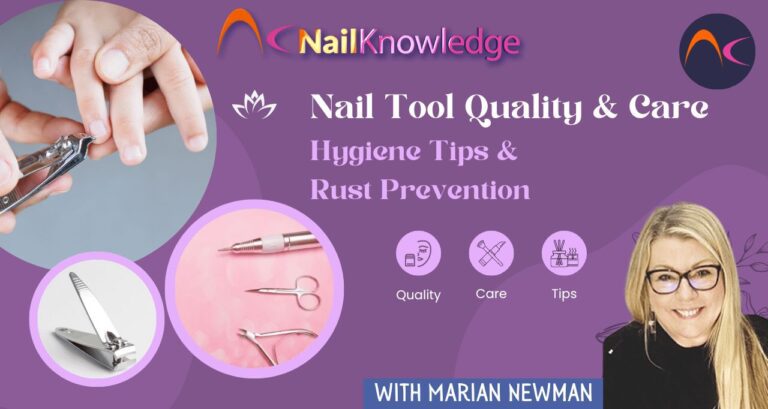
Chất lượng và cách chăm sóc dụng cụ làm móng: Mẹo vệ sinh và phòng ngừa rỉ sét

Có vẻ như vẫn còn nhiều nhầm lẫn về quy trình vệ sinh dụng cụ làm móng.

A recent blog ‘dụng cụ làm móng phủ‘ was published, however, the blog I’m discussing here has a slightly different emphasis as it delves into the topic of tool quality and maintenance.

Hiểu về các loại thép không gỉ cho dụng cụ làm móng

Stainless steel comes in various grades, and when it comes to nail tools, you want to focus on the ones that are also used in the food and medical fields. The top-notch choices are typically stainless steel grades 304 and 316. There’s another grade known as 420, which is sometimes claimed to have medical uses, but it’s generally of lower quality compared to the first two options.

The quality of steel will be reflected in the price an also if the tool is a unique shape. The majority are manufactured in Pakistan and China and are ‘off the shelf’. There are very few, if any new and unique designs in recent years..

Dụng cụ làm móng phủ: Phân biệt sự thật với các tuyên bố về mỹ phẩm

Có một xu hướng về các công cụ phủ. Đây là lý do thẩm mỹ và không có gì khác. Nếu có bất kỳ khiếu nại nào về sản phẩm thuộc bất kỳ loại nào, chúng tôi, với tư cách là những người chuyên nghiệp, hoàn toàn có quyền yêu cầu bằng chứng về khiếu nại từ một người kiểm tra độc lập! Hãy nhớ điều này.

Hãy hỏi mọi thứ!!!

Doug Schoon đã viết trong một Blog gần đây về trộn sản phẩm/brands in answer to those who say I’ve been mixing for years and had no problem: Who told you could and it is safe?? We are not scientists nor chemists we are nail professionals although rather too much science needs to be known and understood than many are comfortable with But that is the job and we deal with the public and their (and our) health and safety is our #1 priority!

Tăng tuổi thọ của dụng cụ làm móng thông qua các quy trình vệ sinh

Về các quy trình vệ sinh: chúng ta có thể kéo dài tuổi thọ của dụng cụ bằng cách bảo vệ độ sắc bén của chúng và tránh hư hỏng hoặc trầy xước.

Đặt các cạnh sắc vào hộp thủy tinh sẽ làm chúng cùn. Tương tự như việc ngâm chúng trong chất lỏng gốc nước quá lâu!

Bất kỳ vết xước nào trên kim loại đều sẽ thúc đẩy sự ăn mòn tức là rỉ sét. Hãy cẩn thận với các dụng cụ có khắc tên thương hiệu vì điều này tương tự như vết xước và có thể bị ăn mòn nếu không được chăm sóc.

Hầu hết các chất khử trùng độc quyền đều được pha loãng với nước, vốn được biết là có thể gây ăn mòn trong những trường hợp không mong muốn nhưng có thể tránh được.

The most important first step is to scrub every tool with soap and water, then submerge in correctly diluted disinfectant. Only leave it in there for the time instructed. Then remove them, rinse with water and dry. Then store them in a clean and closed container.

Đây là yêu cầu của hầu hết các thương hiệu nhưng lưu ý có thể có sự khác biệt về thời gian ngâm.

Wiping or spraying tools is NOT enough!!  This does not clean the crevices in a hinge for example an etched surface or even where a coating has worn away. Spraying is only spraying a metal that will have skin or nail debris or oils and creams on it so will not reach the surface to do any geed at all. (same goes for files and buffers)

Trên hết, hãy làm theo hướng dẫn của nhà sản xuất và nếu bạn không chắc chắn, hãy hỏi họ. Tất cả các chất khử trùng phải có số EN để cho biết chúng đã được thử nghiệm với những gì (xem biểu đồ trong Blog trước) Tầm quan trọng của vệ sinh trong ngành làm móng

Không cần phải rỉ sét các dụng cụ kim loại nếu bạn làm theo hướng dẫn. Thêm vào đó, có nhiều cách để bảo vệ lớp phủ. Một dụng cụ được phủ có thể trông đẹp khi mới nhưng một dụng cụ có những chỗ bị mòn trông thật bẩn!

Không có lý do gì mà chất khử trùng gốc nước lại gây hại cho dụng cụ của bạn. Hiểu các bước và quy trình thì khoản đầu tư của bạn sẽ bền lâu.

It’s important to check if your supplier provides a sharpening service. If they do, your nail tools should return to you as sharp as they were when they were brand new, not just as dull as some people have experienced.

Kết luận

Khi nói đến việc chăm sóc, vệ sinh và phòng ngừa rỉ sét cho dụng cụ làm móng, kiến thức là công cụ tốt nhất của bạn. Hiểu biết về các loại thép không gỉ khác nhau được sử dụng trong dụng cụ làm móng và lựa chọn các tùy chọn chất lượng cao có thể đảm bảo tuổi thọ và hiệu suất. Hãy cẩn thận với các xu hướng mỹ phẩm như dụng cụ phủ và luôn xem xét kỹ lưỡng các tuyên bố về sản phẩm, yêu cầu bằng chứng khi cần thiết.

Hygiene protocols play a pivotal role in extending the life of your nail tools. Avoid practices that can dull or damage them and follow manufacturer instructions meticulously, including proper disinfection procedures. Remember that water-based disinfectants, when used correctly, are safe for your tools.

Cuối cùng, hãy cân nhắc xem nhà cung cấp của bạn có cung cấp dịch vụ mài không, vì điều này có thể trẻ hóa các dụng cụ của bạn và duy trì độ sắc bén theo thời gian. Bằng cách tuân theo các hướng dẫn này và luôn cập nhật thông tin, bạn có thể đảm bảo rằng các dụng cụ làm móng của mình không chỉ đáp ứng các tiêu chuẩn của ngành mà còn cung cấp hiệu suất nhất quán và đáng tin cậy trong suốt vòng đời của chúng.

Thuộc chủ đề:Chất lỏng và bột, Sữa dưỡng, Thuốc và Chất đánh bóng, Hóa học sản phẩm, Gel UV

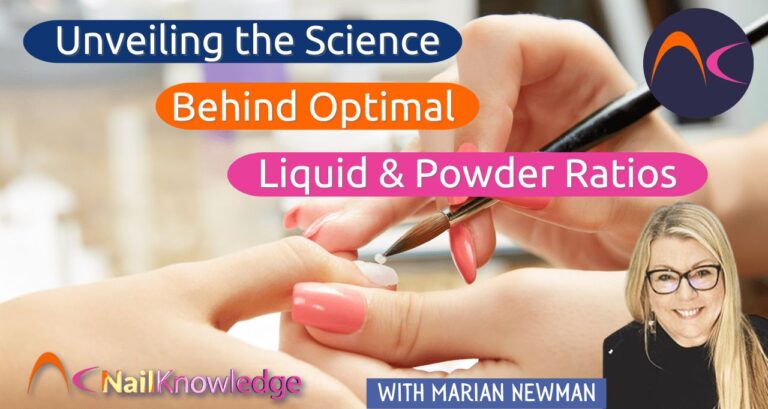
Tiết lộ khoa học đằng sau tỷ lệ chất lỏng và bột tối ưu

Thinking about application skills and the critical role of liquid and powder ratios. The ratios hold the key to achieving nail perfection aesthetically and for longevity.

We explore how the ratios shape the essence of our craft from bead formation to mastering structure.

Mối quan tâm về monome trong gel UV và ứng dụng L&P

By now I hope most nail professionals are aware of the issues with high %’s of monomers in Gel được xử lý bằng tia UV. If there are so many they cannot all properly cure and some are left behind trapped in the solid coating and can leach out during wear.

The same applies to L&P. The monomer is the liquid and the powder is the polymer that also carries the initiator. The monomers need the initiator to start the polymerisation process but, instead of the UV energy that the UV-cured gels need, the energy comes from the heat of the finger and the temperature of the atmosphere.

Nếu bạn sử dụng tỷ lệ quá ướt, sẽ không có đủ chất khởi tạo trên ít hạt polyme của bột để bắt đầu các monome liên kết với nhau để tạo thành polyme. Vì vậy, rất nhiều monome bị giữ lại trong lớp phủ rắn. Chúng không chỉ có thể rò rỉ ra ngoài mà còn tạo ra lớp phủ không đủ bền như mong muốn và có thể dẫn đến vỡ.

Hoàn thiện nghề thủ công: Làm chủ tỷ lệ hạt

Getting the correct L&P ratio is down to practice and those new to the system or a new brand must spend some time practicing picking up beads. The bead should melt into a glossy sphere. It should not be so wet that it could drip off the brush or be too dry that the bead is an irregular shape. The most usual ratio is medium dry.

Cách bạn nhúng cọ và lau nhiều như thế nào vào cạnh của danh sách sẽ phụ thuộc vào kích thước của hạt bạn cần nhặt và điều này sẽ cần có thời gian luyện tập.

Cách nhúng cọ đã đổ đầy bột vào là một bước khác cần thực hành. Bạn chỉ nên nhúng đầu cọ vào bột. Một số người thích vẽ một đường thẳng trên bột, trong khi những người khác chỉ nhúng. Cả hai đều đúng nhưng lượng bột cần lấy là khía cạnh quan trọng. Ví dụ, một chiếc đinh nhỏ không cần một hạt lớn như ngón tay cái. Và thực hành sẽ giúp bạn biết cần phải nhúng bao nhiêu chất lỏng vào cọ và nhúng cọ vào bột trong bao lâu.

Một cách thực hành tốt là quyết định kích thước hạt cần thiết và sau đó lấy đủ monome và đủ bột để tạo thành một quả cầu thủy tinh. Đặt nó trên một tấm nhựa (sẽ không tan chảy) và xem nó lắng xuống như thế nào. Trong vài giây, nó sẽ tan chảy thêm thành một mái vòm thủy tinh và không lan rộng quá nhiều. Nếu nó không phải là thủy tinh hoặc có hình dạng không đều thì nó quá khô. Nếu nó lan rộng thì nó quá ướt. Tiếp tục thực hành điều này cho đến khi bạn có thể nhặt một hạt có kích thước chính xác và tỷ lệ chính xác. Loại bỏ bất kỳ hạt nào trông không ổn.

Some people like to ‘feed the bead’. This is when the widest part of the brush is pressed onto the bead which gives it more liquid. This will almost certainly create a too wet ratio. So will redipping the brush into the liquid once the bead is placed on the nail.

Cách tốt nhất để đạt được tỷ lệ chính xác là bằng lượng chất lỏng chính xác trong cọ và lấy bột chính xác. Điều này cũng giúp tăng tốc độ thoa phấn.

Chuyên môn của nhà sản xuất: Vai trò quan trọng trong việc xác định tỷ lệ tối ưu

Các nhà sản xuất nên biết tỷ lệ chính xác cho sản phẩm của họ. Có một số loại bột màu đục cần nhiều chất lỏng hơn bình thường và điều này cần được dạy trong giáo dục dành cho người mới bắt đầu hoặc chuyển đổi.

Tạo ra hình dạng hạt lý tưởng: Thách thức những quan niệm sai lầm phổ biến

The videos that can be seen everywhere where the bead is applied to the nail and allowed to almost run down the length of the nail demonstrates a very wet bead that will leave a lot of uncured monomers in the coating. The bead should be manipulated into the correct shape by the brush as most of the liquid will have been used up by the polymer powder.

Một lần nữa, điều này đi kèm với việc thực hành về lực tác động lên cọ và góc nghiêng của cọ.

Phần kết luận

Something that looks so easy in skilled hands is actually a lot of careful practice and experience. It is not as easy as it looks and needs thought and practice. The structure is key with the apex perfectly positioned and a thin free edge and a blended edge at the base of the nail with no ridge to grow up and look unsightly

Tất cả những điều này sẽ đảm bảo bạn cung cấp dịch vụ tốt nhất cho khách hàng, lớp phủ và các cải tiến sẽ trông tuyệt đẹp và bền trong 2-3 tuần trước khi cần bảo trì.

Một điểm nữa cần đề cập là chất lượng tốt L&P, correctly applied and with a perfect structure, will break in an accident. This should happen before the natural nail breaks or is pulled off the nail bed. This seems to be happening a lot lately and is caused by too dry ration or too thick coatings. It is extremely painful and takes a very long time to heal.

For more in-depth insights on achieving perfect nails, don’t miss our comprehensive guide on Cọ sơn móng tay: Chuẩn bị và chăm sóc. Tìm hiểu cách giữ cọ sơn móng tay luôn trong tình trạng tốt nhất để có kết quả hoàn hảo.

Thuộc chủ đề:Chất lỏng và bột, Sữa dưỡng, Thuốc và Chất đánh bóng, Hóa học sản phẩm

Trộn các thương hiệu hoặc sản phẩm làm móng khác nhau

Where’s the Evidence for Safe Mixing of Nail Coating Products?

Lately a lot of nail techs are mixing different nail brands; using one brand of color and another brand of top UV gel. Many say “there is no proof that it’s dangerous” and the products are hardened.  So why can’t we blend them?

Actually, it is the opposite. I would say to those who claim they “can mix nail coating products”, where is the proof that this is safe? How do they know this is true? What do they base their information on? Most likely, their beliefs are based on a lack of understanding about how these products work.  Or just on their wishful thinking. There is plenty of proof that these products can cause skin allergies when used improperly. So, for these people to say there is no proof, simply shows they don’t know what they are talking about.  

Decades of Research on Mixing Nail Brands

I’m a scientist who has researched this question for more than 25 years, my opinions are based on scientific testing and fact-based information. There is absolutely no doubt that mixing products as you’ve described can lead to skin irritation and permanent allergic reactions and this happens all the time!

Recognized Globally: Government Acknowledgment and Independent Validation

This has been recognized by several government and safety related authorities in several different countries. I don’t sell any nail products or nail lamps, so why would I say this if I didn’t believe these are the facts? What some don’t understand is that each of these product layers would have to be properly cured and this requires exposure to the:

  • correct wavelengths of UV using the
  • proper intensity and
  • for the required length of time.

The Vital Triad for Achieving a Proper Cure

All three MUST be correct to ensure a proper cure. There is no other way to ensure a chữa bệnh đúng cách, and each layer must be properly cured.  In other words, each layer would need to be properly cured using the UV nail lamp that was designed to cure the product.  A different nail lamp for each layer?  That is NOT likely to happen.  What these techs don’t understand is that UV gels will harden when they are only 50% cured and may only reach 60-70% cure over the next few weeks. 

A Hazard for Both Nail Techs and Clients

When the under cured layer is later filed, both the nail tech and client are exposed to under cured dusts and this can lead to skin irritation and allergies. Many private labelers of UV gels only sell the products and don’t understand the science behind these products. That is why some don’t understand or teach this information correctly. The biggest risk of developing adverse skin reactions is to nail technicians since they are exposed daily to these under cured nail coating dust.

My Firsthand Exploration of Curing with Diverse Nail Lamps

I have personally tested the curing of various products under different types of nail lamps. I can tell you that it would not be uncommon for a nail tech to only cure a UV gel to 70%, in fact, it is far too common. Nail techs who expose themselves to these conditions often develop skin allergies. For some it may require six months of prolonged and/or repeated skin contact and for others it may take 10 years of exposure. Sadly, once you are allergic… you will be allergic to those ingredients for the rest of your life.

Cry for Help: Desperate Appeals from Nail Techs

I get e-mails from nail techs who are desperate to save their careers and want to know what they can do to stop their skin from overreacting to the products. The facts are, sooner or later many nail techs and/or clients will develop permanent allergic reactions because of improper cure. I hear from many of the nail techs to which this has happened. They’re usually very embarrassed and usually don’t want me to use their names on social media.  Sometimes they don’t want other nail techs to know about their issues because they are leading nail educators who improperly cured and mixed products for years, and now they have skin allergies that worsen with each exposure.

Nail Technicians Forced Out Due to Allergies

Many nail technicians are forced to get out of the nail industry and can no longer work with nail products. Here’s a hint: Take a look at the hands of some veteran nail trainers who teach these risky methods and you’ll find many have product sensitivities, which is not a coincidence.  Don’t copy their bad habits or repeat their same mistakes.

Thuộc chủ đề:Chất lỏng và bột, Sữa dưỡng, Thuốc và Chất đánh bóng, Hóa học sản phẩm, Gel UV

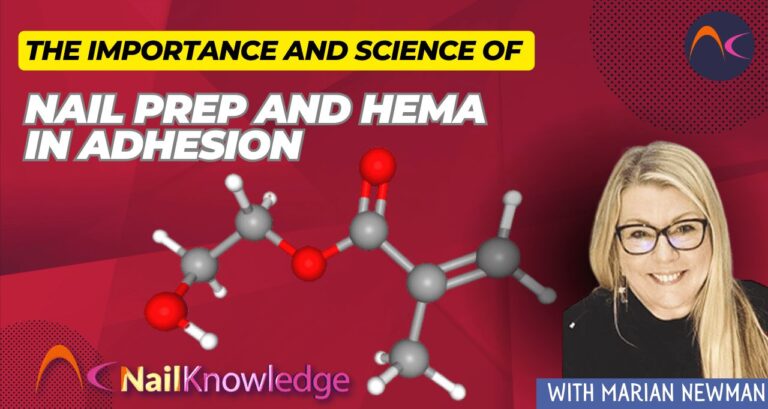
Tầm quan trọng và khoa học của việc chuẩn bị móng và Hema trong quá trình bám dính

The Role of HEMA in Elevating Nail Coating Adhesion

Most nail pros now understand the function of HEMA.

It is a monomer that enhances the adhesion of a coating on the nail plate. Higher percentages of HEMA allow for maximum adhesion with little nail prep. When HEMA is at a lower level then a better level of nail prep is needed.

Those who are rebranding from a high HEMA level to a lower level are often surprised that they have incidences of lifting. This is almost always due to the lack of accurate nail prep.

HEMA adheres very well to the keratin in the nail plate cells. Nail prep can be minimal for a high HEMA product. It will adhere well and stay put for several weeks.

However, higher percentages of HEMA can trigger allergic reactions, as a significant portion of the monomer might not undergo complete curing. This partial curing could result in the leaching of HEMA, potentially leading to various issues.

Enhancing Nail Prep During Transition to Lower HEMA Percentage

When rebranding to a lower HEMA % it is essential to give more attention to nail prep.

Tại sao lại như vậy?

The cells of the nail plate are non-living and are mostly keratin and a small amount of other cell contents. Non-living skin cells, that is the cuticle on the nail plate have less keratin content and more of the additional cell contents. It is more like the dry skin that we see on legs, for example. It will easily slough off, but the keratin of the nail plate cells is connected to other nail plate cells and is designed to stay put!

Comprehensive Nail Plate Preparation

Correct nail plate prep is a series of steps. These steps should take up around a third to a half of the whole service. It does take this long to carry out an accurate nail prep.

Firstly, the manufacturers instructions should be followed.

The process

  • some suggest using a cuticle remover. This is usually a sodium hydroxide based product that softens the non-living skin cells of the cuticle
  • others suggest a totally dry removal of the cuticle
  • leaving any trace of cuticle on the nail plate will result in lifting as the coating will not adhere to it
  • cuticle on the nail can be much further up the nail than many realise. It can be over ½ way up the nail
  • using a good cuticle tool will allow you to feel the cuticle. It is softer than the nail plate
  • every last trace must be removed by using gentle movements with a cuticle tool. If the cuticle ends up as a ‘frill’ at the base of the nail this is what must be cut off! NOT the living proximal nail fold
  • there is also a lot of cuticle found along the sides of the nail plate
  • after this many brands require the removal of the shine. This should only be the shine and a white block should be enough. Anything hasher will thin the nail plate and cause problems in the future
  • once you are absolutely confident that every trace of cuticle has been removed, the cleansing of the nail plate should follow
  • the nail plate always has a level of oils and moisture on its surface. This will create a barrier to the coating so should be carefully removed
  • usually a combination of acetone (a solvent) and IPA (an alcohol) will make sure this is done efficiently
  • care must be taken to include the side of the nail plate and right up to the proximal nail fold so every part of the nail plate is clean and oil-free
  • those then the manufacturers that have a problem holding onto coatings, this should be done a nail at a time and then apply the coating. Natural oils will very soon be replaced
  • then following manufacturers should be followed. Some recommend extra help with adhesion and the use of a primer to make sure the keratin is ready to accept the coating
  • if all these steps are done efficiently, it will be almost ½ of the whole service and it is worth it as there will be little chance of a service breakdown
  • many suggest that medications can affect adhesion. This is not necessarily true as the surface of the nail is what creates the adhesion and if this is good nothing will affect it

Many brands need this thorough and efficient nail prep and anything less will result in service breakdown.

Kết luận

If you are used to high HEMA content and change to lower HEMA content, you absolutely need to spend more time on your nail prep. Nothing less will do.

Be sure to watch our mini lesson on HEMA in the Nail Industry

Thuộc chủ đề:Sữa dưỡng, Thuốc và Chất đánh bóng, Hóa học sản phẩm

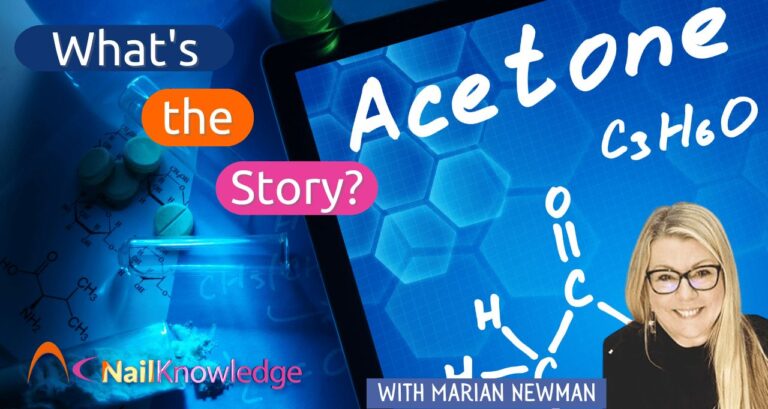
Acetone: Câu chuyện là gì?

The nail industry would be lost without acetone! It is the fastest and most efficient solvent remover for all nail coatings.

Understanding its Properties and Safety in Nail Care

Some people believe is an allergen (as they have experienced adverse skin reactions) but it is not an allergen. We know that the human body produces small quantities of acetone during metabolism. Some diabetic conditions produce larger quantities as do those on a keto diet.

It is, however, an irritant as it dries the skin faster than natural moisturisation and can be replaced when overused and after long skin contact.

It is a lot safer than alternatives used in ‘acetone free’ polish removers. These take considerable; y longer to remove coatings so result in much longer skin contact and therefore are more irritation. Acetone is a solvent as opposed to iso-propyl alcohol which is an alcohol. The two work well together as a nail plate cleanser as they remove different types of oils found on the tấm móng tay.

The Versatility and Precautions of Acetone:

Understanding its Usage in Various Industries

It is used in many applications in a variety of industries. e.g. paints, and household cleaners It poses no significant danger to the environment except aquatic systems due to microbial consumption. There is no strong evidence of chronic health effects with normal and careful usage.

It is a very volatile chemical so evaporates quickly. It is unwise to have too much in a salon breathing environment but US regulators state that 1000 parts per million is the safety limit which is quite high, especially when the known alternative, ethyl acetate (used in acetone free removers) is only 400 PPM.

The most hazardous property of acetone is its extreme flammability so must be kept away from a naked flame and even electrical equipment as a flash point can occur!

Smart Buying

It is best to purchase from beauty wholesalers. This is because it will be suitable for cosmetic use and relatively pure. Bottles bought from other outlets is likely to be contaminated with other chemicals that could cause adverse skin reactions.

Proper Storage of Acetone

Storing acetone should be in its original container in a cool, dark place away from any electricity. When decanted into pumps for the nail desk make sure it had a lid and is kept away from direct sunlight where it could get too warm and therefore more volatile.

Best Practices for Acetone Usage

It is safer to use when wearing protective nitrile gloves to avoid any skin irritation. For the removal of coatings that need soaking, a small piece of cotton wool (about the same size of the nail) that has been soaked in acetone and placed on the nail then wrapped in foil is one of the safest methods as it avoids too much skin contact and reduces evaporation. If using a bowl method, the surrounding skin can be painted with a petroleum jelly product and the bowl covered with a towel.

Disposing of Acetone Safely

Spillages should be soaked up with disposable towels and placed in a metal bin with a lid and liner. This should be removed and double bagged and placed in the usual refuse arrangement. Do NOT tip down any sink as most water pipes are plastic and it will end up in natural water.

Larger quantities of used acetone should be collected by the local hazardous waste management system.

Don’t be afraid of acetone just understand how to use it safely and effectively.

Phần kết luận

Acetone plays a vital role in the nail industry as a fast and efficient solvent remover for various nail coatings. While some individuals may mistakenly believe it to be an allergen, it is essential to understand that it is not one, but rather an irritant when used excessively with prolonged skin contact.

Acetone stands out as a safer alternative compared to “acetone-free” polish removers, as it efficiently removes coatings, reducing the risk of extended skin contact and subsequent irritation.

Being aware of acetone’s volatile and highly flammable nature is crucial for safe usage. Proper storage in a cool, dark place away from electricity is recommended to maintain stability and avoid potential hazards.

To protect against skin irritation, users should opt for protective nitrile gloves while handling acetone. The article provides safe methods for usage, such as the effective soaking of cotton wool and wrapping it on the nail to minimise skin contact and evaporation.

Disposing responsibly is vital, with spillages collected in metal bins with lids and liners. Pouring down sinks must be avoided to prevent potential contamination of natural water sources. Larger quantities should be handled through local hazardous waste management systems.

For assured quality and purity, it is advisable to purchase acetone from reputable beauty wholesalers, ensuring its suitability for cosmetic use and reducing the risk of skin reactions from potentially contaminated sources.

In conclusion, with proper knowledge and adherence to safety practices, acetone can be a valuable asset in the nail industry, offering efficient and effective results while ensuring the well-being of both professionals and users alike.

Câu hỏi thường gặp

1. Is acetone an allergen, and can it cause skin reactions?
Acetone is not an allergen; however, it can be an irritant to the skin when overused or with prolonged contact. Some individuals may experience adverse skin reactions due to its drying effect. It’s essential to handle acetone with care and use protective measures, such as wearing nitrile gloves, to avoid skin irritation.

2. Why is acetone considered a safer option compared to “acetone-free” polish removers?
It is a preferred choice for nail coating removal due to its efficiency and quick action. Unlike “acetone-free” removers, which may take considerably longer to remove coatings, acetone reduces skin contact time, thereby minimizing irritation risks. It is essential to use responsibly and according to recommended guidelines.

3. How should acetone be safely stored and disposed of?
To ensure safety, acetone should be stored in its original container in a cool, dark place, away from electricity and direct sunlight. When decanted into pumps or containers, ensure they have a lid and are kept away from heat to reduce volatility. Spillages should be absorbed with disposable towels and disposed of in metal bins with lids and liners. Avoid pouring acetone down sinks, as it can contaminate natural water sources. Larger quantities should be handled through local hazardous waste management systems for proper disposal.

Thuộc chủ đề:Thông tin chung, Sức khỏe và An toàn, Sữa dưỡng, Thuốc và Chất đánh bóng, Hóa học sản phẩm

  • « Chuyển đến Trang trước
  • Trang 1
  • Các trang tạm thời đã được bỏ qua …
  • Trang 8
  • Trang 9
  • Trang 10
  • Trang 11
  • Chuyển đến Trang sau »

Nâng cao kiến thức về làm móng

Tham gia bản tin của chúng tôi!
ĐĂNG KÝ...

Bản quyền © NailKnowledge

Kiến thức về móng tay

  • MyNailEra
  • Sách điện tử
  • Về chúng tôi
  • Các khóa học
  • Tin tức
  • Blog
  • Bản tin
  • Thuật ngữ

Chính sách

  • Trang riêng tư
  • Điều khoản và điều kiện
  • Chính sách Cookie

Ủng hộ

  • Liên hệ với chúng tôi
  • Gặp gỡ các chuyên gia
  • Hỏi các chuyên gia
  • Hỗ trợ hệ thống
  • Câu hỏi thường gặp
Vietnamese
Vietnamese
English Portuguese Spanish