Todos hemos escuchado los rumores en redes sociales, en salones, quizás incluso susurrados en la esquina de una clase para técnicos de uñas. “Los geles se filtran en la cama de la uña”. “Los acrílicos causan desprendimiento desde adentro hacia afuera”. Pero esperen, ¿Es eso cierto? Si alguna vez has hecho una pausa a mitad de la manicura y te has preguntado, ¿Los recubrimientos de uñas penetran la placa ungueal?, No estás solo. Esta pregunta ha generado confusión, mitos y preocupación tanto para los entusiastas como para los profesionales de las uñas.
Así que desglosémoslo juntos, al estilo de la ciencia y con lenguaje coloquial.


Qué incluso Es ¿la placa ungueal?
Antes de entrar en el jugoso desmantelamiento de mitos, tomemos un momento para apreciar la placa ungueal. Piensa en ella como un guardia de seguridad para tu lecho ungueal, es fuerte, inteligente y sorprendentemente selectivo con lo que deja pasar.
La lámina ungueal es la parte visible y dura de tu uña. Está compuesta por células de queratina muy compactas (como tu cabello, pero más planas y duras) y actúa como una barrera natural, protegiendo el sensible lecho ungueal subyacente de los elementos externos, incluidos los químicos. Pero aquí viene la parte salvaje, está semipermeable. Permite agua pasan fácilmente, ¿pero casi todo lo demás? Buena suerte superando ese muro de queratina.
Incluso los aceites de uñas, sí, los buenos que te aplicas religiosamente, tienen dificultades para ir más allá de la superficie. Los estudios demuestran que necesitan un mes o más de aplicación diaria solo para llegar a la parte superior 10% de la placa. ¡Eso sí que es perseverancia!
¿Penetran los esmaltes en la lámina ungueal?
Spoiler: No en uñas sanas.
Vamos al grano: ¿Penetran los recubrimientos de uñas en la lámina ungueal?
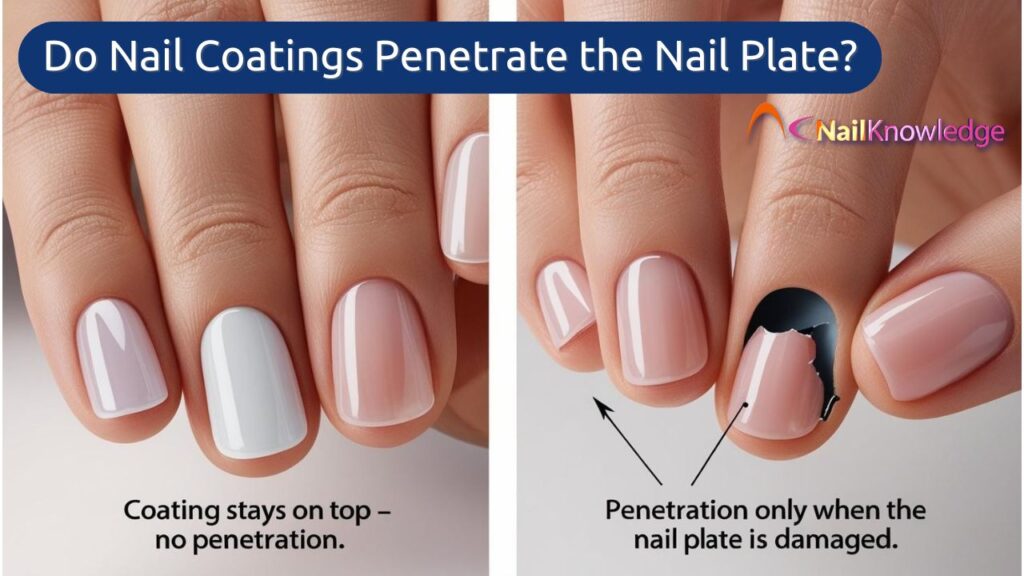
¿La respuesta corta? No. No si la placa ungueal está intacta y sana.
Ya sean geles UV, constructores en botella, polvos de inmersión o recubrimientos acrílicos, todos se asientan sobre top de la placa ungueal. Están diseñados para adherirse a la superficie, no para hundirse en ella. ¿El mito de que se adentran en el lecho ungueal y causan estragos? Eso es más ficción que realidad.
La onicolisis, el término para cuando la uña se desprende del lecho ungueal, ocurre, pero los recubrimientos no son los villanos en un escenario típico. ¿Los verdaderos culpables? Cosas como:
- Relleno excesivo de la lámina ungueal
- Usar demasiada presión al preparar
- Trauma severo (¡hola, uña postiza rota!)
- Determinados medicamentos o problemas de salud
En otras palabras, no es el producto el que se descontrola, es usualmente lo que se hace. antes de o en torno a el producto que causa problemas.
Pero ¿qué Si ¿Está dañada la lámina ungueal?
Agora, sejamos realistas. Nem todos las placas de uñas están en perfecto estado. Todos hemos pasado por eso, quitando el gel (no juzguen), limando en exceso para quitar una capa superior rebelde, o lidiando con roturas. Entonces, ¿qué sucede si la placa de la uña está agrietado, rotoo limado demasiado fino?
Ahí es cuando las cosas se ponen un poco complicadas.
Cuando la barrera natural de la placa de la uña se ve comprometida, los recubrimientos que apliques podrían potencialmente llegar a la piel de debajo. Esa exposición podría provocar irritación, reacciones alérgicas o, en casos raros, desencadenar onicólisis. Piénsalo como un techo con un agujero, el agua no era un problema antes, pero ahora el sofá está empapado.
¿La conclusión principal? Si la placa ungueal está dañada, incluso el producto más suave puede causar una reacción, no porque sea intrínsecamente “malo”, sino porque está yendo a un lugar donde nunca debió ir.
Recubrimientos de uñas = Jugadores de superficie, no buceadores profundos
Volvamos a lo básico: los recubrimientos están diseñados para ser arriba. Se unen a la queratina de la superficie, no debajo de ella. Son como la capa superior perfecta para un atuendo elegante. ¿Decorativas? Absolutamente. ¿Protectoras? A menudo. ¿Invasivas? Nel.
Cuando la gente dice: “Este producto causó daños”, a menudo quieren decir:
- La preparación era demasiado agresiva.
- El proceso de extracción no fue delicado.
- Las uñas ya estaban comprometidas antes de aplicar el producto.
El producto no se abrió paso hasta el lecho de la uña como un villano de película de espías, simplemente hizo lo que se le indicó, en la superficie.
Uñas sanas = Recubrimientos felices
Entonces, ¿cómo mantener el buen rollo entre nuestras uñas y nuestros productos favoritos?
- Evite archivar en exceso. Mantén esa capa protectora fuerte y feliz.
- Mantén unas uñas sanas. No aplique recubrimientos en uñas dañadas, inflamadas o finas.
- Tenga paciencia con la retirada. Remojar con cautela, reequilibrar pero no romper.
- Hidrata tus uñas. Incluso si los aceites no penetran profundamente, ayudan a prevenir la fragilidad y mantienen flexibles las capas superiores.
Proteger la integridad de la lámina ungueal significa dar a sus recubrimientos la mejor superficie para brillar, literal y figuradamente.
Reflexiones finales: Saber la verdad, acertar
Demos un acabado brillante como una capa superior:
¿Penetran los recubrimientos de uñas en la lámina ungueal? No, a menos que la placa de la uña se haya visto comprometida (lo cual es fácil). Así que, si se usan correctamente, con una buena preparación y unas uñas sanas, los geles, acrílicos y superposiciones son una belleza superficial, no invasores secretos.
Así que la próxima vez que alguien te diga que el gel “se filtra en la cama de tu uña”, puedes levantar una ceja y decir: “En realidad, así no funciona la lámina ungueal”. 💁♀️
💅 Consejo del día para las uñas:
Si no lijarías tu piel, no lijes tus uñas. Un toque suave = uñas más fuertes y manicuras más duraderas.