We’ve all heard the chatter on social, in salons, maybe even whispered in the corner of a nail tech class. “Gels seep into the nail bed.” “Acrylics cause lifting from the inside out.” But hold up, is that actually true? If you’ve ever paused mid-mani and wondered, Do nail coatings penetrate the nail plate?, you’re not alone. This question has sparked confusion, myths, and worry for nail enthusiasts and pros alike.
So let’s break it down together, science meets real talk style.


What Even Is the Nail Plate?
Before we get into the juicy myth-busting, let’s take a hot second to appreciate the nail plate. Think of it like a security guard for your nail bed, it’s strong, smart, and surprisingly picky about what it lets through.
The nail plate is the visible, hard part of your nail. It’s made up of tightly packed keratin cells (like your hair, but flatter and harder) and acts as a natural barrier, guarding the sensitive nail bed beneath from outside elements, including chemicals. But here’s the wild part, it’s semi-permeable. It lets water pass through easily, but nearly everything else? Good luck getting past that keratin wall.
Even nail oils, yep, the good stuff you apply religiously, struggle to go beyond the surface. Studies show they need a month or more of daily application just to reach the top 10% of the plate. That’s persistence!
Do Nail Coatings Penetrate the Nail Plate?
Spoiler: Not on healthy nails.
Let’s get to the heart of it: Do nail coatings penetrate the nail plate?
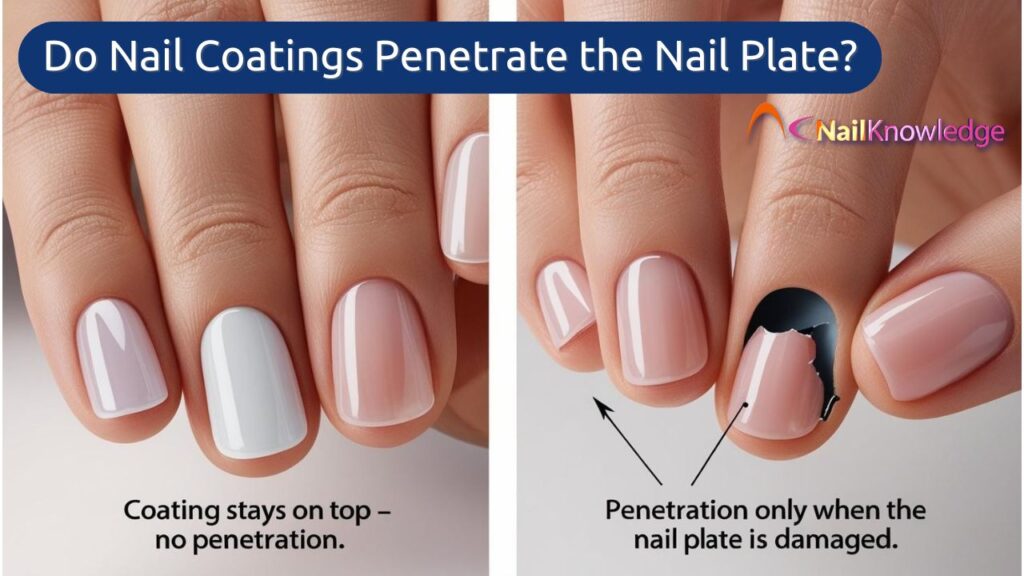
The short answer? No. Not if the nail plate is intact and healthy.
Whether it’s UV gels, builder in a bottle, dip powders, or acrylic overlays, they all sit on top of the nail plate. They’re designed to adhere to the surface, not sink into it. The myth that they burrow down to the nail bed and wreak havoc? That’s more fiction than fact.
Onycholysis, the term for when the nail lifts from the bed does happen, but coatings aren’t the villain in a typical scenario. The real culprits? Things like:
- Over-filing the nail plate
- Using too much pressure when prepping
- Harsh trauma (hello, stiletto nail stub!)
- Certain medications or health issues
In other words, it’s not the product going rogue, it’s usually what’s done before or around the product that causes problems.
But What If the Nail Plate Is Damaged?
Now, let’s be real. Not all nail plates are in perfect condition. We’ve all been there, peeling off gel (don’t judge), over-filing to remove a stubborn top coat, or dealing with breakage. So what happens if the nail plate is cracked, broken, or filed too thin?
That’s when things get a little dicey.
When the nail plate’s natural barrier is compromised, the coatings you apply could potentially reach the skin underneath. That exposure might lead to irritation, allergic reactions, or in rare cases, trigger onycholysis. Think of it like a roof with a hole, water wasn’t a problem before, but now the couch is soaked.
The key takeaway? If the nail plate is damaged, even the most gentle product can cause a reaction, not because it’s inherently “bad,” but because it’s going somewhere it was never supposed to go.
Nail Coatings = Surface Players, Not Deep Divers
Let’s go back to basics: Coatings are designed to be on top. They bond with the surface keratin, not beneath it. They’re like the perfect topcoat to a stylish outfit. Decorative? Absolutely. Protective? Often. But invasive? Nope.
When people say, “This product caused damage,” what they often mean is:
- The prep was too aggressive.
- The removal process wasn’t gentle.
- The nails were already compromised before the product went on.
The product didn’t tunnel its way to the nail bed like a villain in a spy movie, it just did what it was told, on the surface.
Healthy Nails = Happy Coatings
So, how do we keep the good vibes going between our nails and our favourite products?
- Avoid over-filing. Keep that protective layer strong and happy.
- Stick to healthy nails. Don’t apply coatings to damaged, inflamed, or thinning nails.
- Be patient with removal. Cautiously soak, rebalance but don’t rip.
- Hydrate your nails. Even if oils don’t go deep, they help prevent brittleness and keep the top layers flexible.
Protecting the integrity of the nail plate means giving your coatings the best surface to shine, literally and figuratively.
Final Thoughts: Know the Truth, Nail It Right
Let’s wrap this up like a glossy topcoat:
Do nail coatings penetrate the nail plate? Not unless that nail plate has been compromised (which is easily done). So when used properly, with good prep and healthy nails, your gels, acrylics, and overlays are surface-level beauty, not secret invaders.
So the next time someone tells you that gel “seeps into your nail bed,” you can raise an eyebrow and say, “Actually, that’s not how the nail plate works.” 💁♀️
💅 Nail Tip of the Day:
If you wouldn’t sand your skin, don’t sand your nails. A gentle touch = stronger nails and longer-lasting manis.