Cómo entender la descamación de los bordes libres: Por qué la parte superior de las uñas siempre parece descamarse primero
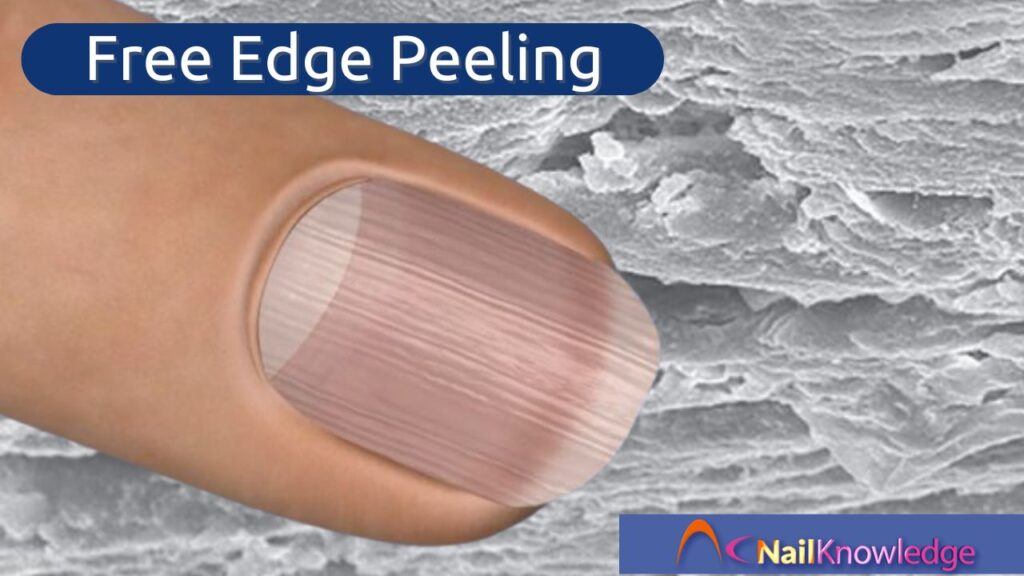
¿Has notado alguna vez cómo tus uñas parecen despegarse de la top lado del borde libre, en lugar de la parte inferior? Es uno de esos caprichos de belleza que pueden parecer aleatorios o simplemente molestos, pero resulta que hay una razón biológica fascinante detrás. El fenómeno del desprendimiento del borde libre está profundamente arraigado en el patrón de crecimiento natural de la placa ungueal, y una vez que entiendes lo que está sucediendo debajo de la superficie, todo empieza a tener mucho más sentido.
Echemos un vistazo más profundo a por qué sucede esto, qué te están diciendo tus uñas y qué puedes hacer para mantener esas puntas fuertes e intactas.


El Viaje de la Placa Ungueal: Cómo Crecen y Viajan las Células de las Uñas
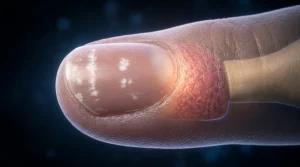
Para entender el desprendimiento del borde libre, tenemos que empezar por el origen, la matriz ungueal. Esta es la zona de la raíz donde nacen todas las células de la uña. Ahora bien, no todas las células de la uña siguen el mismo camino a medida que maduran y avanzan. Piensa en la matriz ungueal como una fábrica con dos líneas de producción principales: una en la parte posterior (llamada matriz dorsal) y otra cerca de la parte frontal (la lúnula, la zona pálida con forma de media luna que a veces se puede ver cerca de la base de la uña).
Aquí es donde las cosas se ponen interesantes. Las células de las uñas que se forman en la superficie superior de la placa ungueal provienen de esa matriz dorsal en la parte posterior. Tienen que recorrer un viaje más largo, aproximadamente de 50 a 60 días, solo para llegar al borde frontal de la lúnula. Eso es casi dos meses de envejecimiento, endurecimiento, compactación y formación en un escudo protector a medida que avanzan lentamente.

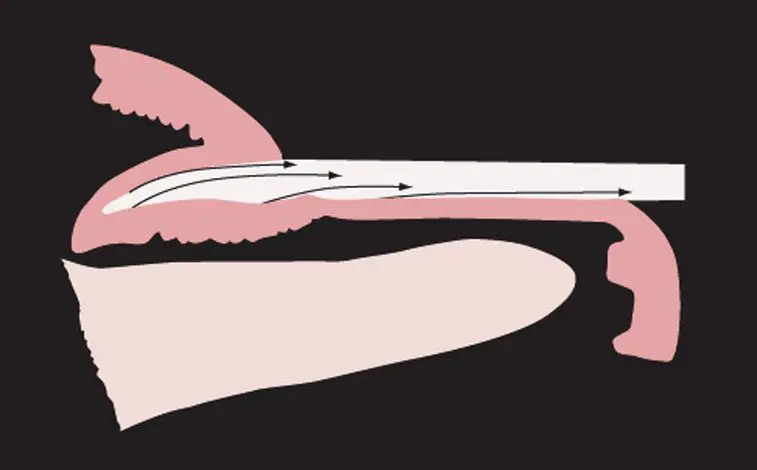
En contraste, las células de la uña de debajo —las que forman la parte inferior de la uña, provienen de la lúnula, justo en la parte delantera de la matriz. Estas células son mucho más nuevas y están expuestas al mundo exterior durante mucho menos tiempo.
¿Qué significa esto para el pelado?
Por qué el borde libre se despega de la parte superior
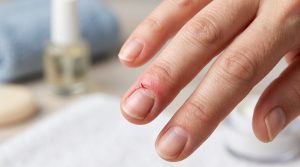
Aquí está el asunto: dado que las capas superiores de tu uña han estado ahí por más tiempo, son más viejas, más compactadas y más duras. Pero a pesar de su dureza, también han tenido más tiempo para ser afectadas por el medio ambiente, piensa en agua, aire, luz solar, detergentes, quitaesmaltes y todo el estrés físico por el que pasan tus manos a diario. El desprendimiento del borde libre que vemos a menudo es el resultado de que estas células viejas y endurecidas en la parte superior finalmente ceden.
Es un poco como las tejas de un tejado, están hechas para soportar mucho, pero con el tiempo, el desgaste acaba haciendo que algunas se levanten o se agrieten. Mientras tanto, la parte inferior de la uña, al ser más nueva y menos expuesta, generalmente permanece intacta por más tiempo. Además, recibe menos de ese abuso diario, menos productos químicos, menos fricción y menos luz solar.
Es esta diferencia en la edad y la exposición de las células lo que explica por qué el desprendimiento del borde libre ocurre de arriba hacia abajo.
El papel del eponiquio y los pliegues ungueales
Ahora, mientras hablamos de la anatomía de las uñas, no olvidemos el eponiquio, el tejido vivo que da origen a la cutícula. Aunque antiguamente se creía que era grueso y robusto, la investigación moderna demuestra que solo tiene entre 0.1 y 0.15 mm de grosor. Esta fina capa protege la matriz ungueal y contribuye al desarrollo de la cutícula.
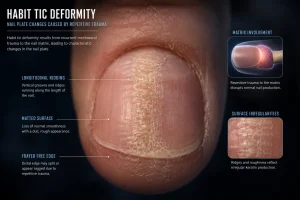
¿Por qué importa esto en el contexto de la exfoliación? Porque dañar el eponiquio o el pliegue ungueal proximal (PUP), esa pequeña “solapa” de piel en la base de tu uña, puede alterar el crecimiento saludable de la uña. Cortar en exceso o hurgar en esta área (un hábito común o un error en el salón) puede causar traumatismos en la matriz, afectando la calidad de la placa ungueal a medida que se forma.
Cuando la matriz de la uña está estresada o lesionada, puede producir capas más débiles o desiguales en la placa ungueal, preparando el terreno para la descamación de los bordes libres más adelante.
¿Qué puede hacer al respecto?
He aquí algunos consejos prácticos para ayudar a reducir o prevenir la descamación en el borde libre:
- Hidratar a diarioLas placas de las uñas están hechas de queratina, como tu cabello, y necesitan hidratación. Aceites como el de jojoba o la vitamina E pueden penetrar la superficie de la uña y mantenerla flexible.
- Evite la sobreexposición al agua: La humectación y el secado repetidos debilitan las capas de queratina. Utiliza guantes mientras limpias o friegas los platos.
- Sea delicado con sus herramientasNo uses tus uñas como herramientas para raspar o hacer palanca. Ese esfuerzo se acumula con el tiempo.
- Omitir el limado en brutoUsa un grano fino lima de uñas y lima siempre en una dirección. El limado agresivo de un lado a otro deshilacha las capas superiores, acelerando la descamación.
- No te quites ni te arranques el esmalte o el gelAl retirarte el esmalte o el gel, a menudo te llevas la capa superior de la uña contigo, lo que literalmente provoca que el borde libre se pele.
Comprender significa capacitar
Al final del día, tus uñas cuentan una historia. Ese pequeño desprendimiento en la punta no es solo cosmético, es el resultado visible de semanas de movimiento celular, exposición ambiental y, posiblemente, algunos hábitos que necesitan ser reconsiderados. Ahora que conoces la ciencia detrás del desprendimiento del borde libre, puedes cuidar tus uñas con un poco más de intención y esmero.
Y recuerda: las uñas fuertes y sanas no provienen de soluciones rápidas. Crecen de adentro hacia afuera, lenta y constantemente, como las mismas células de las uñas, en su silencioso viaje de dos meses desde la matriz hasta el borde libre.
Así que quizás la próxima vez que notes un pequeño descamado en la punta, no te quejes. En cambio, sonríe y piensa: “Ah, así es como se ven dos meses de uso”.”