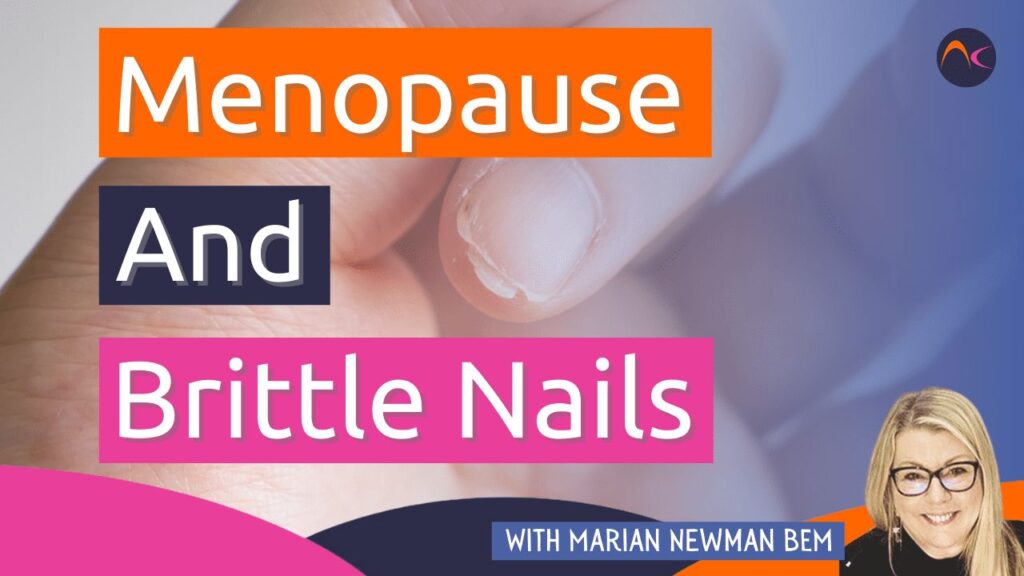
La menopausia provoca muchos cambios en el cuerpo de la mujer. Por ejemplo, durante la menopausia, las mujeres pierden aproximadamente un 25% del colágeno de su cuerpo. El resultado es una piel más fina y con menos elasticidad, uñas quebradizas, pérdida de cabello y pérdida de colágeno en la piel.
¿Cómo puede una pérdida de colágeno causar uñas quebradizas¿La lámina ungueal no está hecha de queratina, no de colágeno?
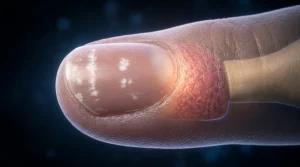
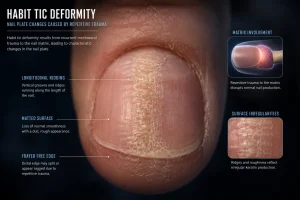
Sí, eso es cierto. La queratina se encuentra en la epidermis, uñas, cabello, cuernos, plumas y cascos. El colágeno se encuentra en la dermis, cartílago, huesos y tendones. La matriz de la uña también contiene colágeno. El colágeno es compatible con la estructura de la matriz de la uña, por lo que la pérdida de colágeno puede afectar la forma en que crece la placa de la uña. La matriz es el lugar de nacimiento de la placa de la uña. Los cambios en la matriz de la uña pueden resultar en cambios en la placa de la uña. Por lo general, estos cambios tardan de uno a dos meses en notarse, ya que es el tiempo que tardará la placa de la uña en crecer desde la matriz y emerger de debajo del pliegue ungueal proximal. Las hormonas también pueden hacer que la matriz de la uña funcione más lentamente, lo que puede hacer que la placa de la uña crezca más delgada. Las placas de uñas que crecen más delgadas son más débiles y excesivamente flexibles. La placa de la uña también puede volverse más quebradiza.
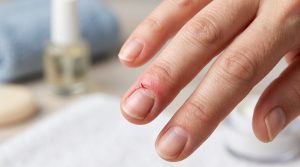
Las personas que están pasando por la menopausia informaron con mayor frecuencia tener uñas quebradizas; sin embargo, la gente a menudo confunde las uñas débiles con las uñas quebradizas. ¿Cómo se puede diferenciar? Las uñas débiles tienden a ser demasiado flexibles y se pueden rasgar más rápidamente, especialmente en las paredes laterales donde la uña crece más allá del lecho ungueal. Además, las uñas débiles tienden a agrietarse más fácilmente.
Las uñas quebradizas no son flexibles y se rompen a lo ancho de la placa. También pueden astillarse o desmoronarse con más facilidad. Algunas mujeres culpan a la terapia de reemplazo hormonal por estos problemas, pero es más probable que sus problemas de uñas sean causados por los cambios hormonales durante la menopausia. Digo esto porque incluso las mujeres que no usan terapia de reemplazo hormonal a menudo informan los mismos tipos de problemas en las uñas. Algunas mujeres que usan terapia de reemplazo hormonal también ven mejoras en sus uñas.
¿Qué se puede hacer para este tipo de problemas en las uñas?
Si la lámina ungueal es fina y demasiado flexible, un tratamiento de fortalecimiento de las uñas puede ayudar, pero sólo debe utilizarse hasta que las láminas ungueales se vuelvan más rígidas y dejen de ser excesivamente flexibles.
Una vez que la uña alcance la rigidez deseada, deje de usar el producto hasta que la uña crezca y vuelva a ser demasiado flexible. Algunos endurecedores de uñas contienen metilenglicol, también conocido como formaldehído, y estos pueden reducir la flexibilidad de la uña y aumentar su fragilidad, por lo que NUNCA los use en uñas quebradizas, solo en uñas débiles o finas con demasiada flexibilidad.
Un tratamiento diario con aceite penetrante de alta calidad también puede aumentar la flexibilidad de las uñas quebradizas. Las manicuras semanales con aceite caliente pueden hacer maravillas con las placas de uñas quebradizas.
Además, nuevos tratamientos curados con UV que curan con buena adherencia a la capa superior de la placa ungueal son un tratamiento eficaz para uñas finas, débiles o quebradizas. Estos reforzarán y protegerán la placa ungueal sin aumentar la fragilidad de la uña.