• Pular para navegação primária
  • Pular para o conteúdo principal
  • Pular Rodapé
NailKnowledge

NailKnowledge

  • Cursos
  • Livros eletrônicos
  • Cesta de livros eletrônicos
  • Base de conhecimento
    • Base de conhecimento
    • Pergunte aos especialistas
    • Glossário
  • Notícias
  • Blog
  • Galeria
    • Galeria de arte para unhas
    • Artistas de unhas
    • Junte-se à elite
  • Login

Informações gerais

Por que o treinamento de unhas e a dedicação são essenciais para o sucesso

Quebrando os mitos do setor de unhas: Por que o treinamento e a dedicação dos pregoeiros são essenciais para o sucesso

As an educator for the nail training industry, let’s explore common statements I hear in the nail community;

1. “I can’t afford the nail training.” (but you buy all the latest gel collections)

You will never earn a decent salary while you buy all the shiny things and don’t invest in knowing everything about them to be a master of your craft.

2. “Training is too expensive; I can’t justify the cost.”

Embora o treinamento possa ter um custo inicial, ele pode levar a um maior potencial de ganhos e a uma carreira mais gratificante. Pense nisso como um investimento em seu crescimento profissional e em suas capacidades salariais.

3. “I only do a few clients; It’s not worth doing more training.”

Você pode ter alguns clientes, mas para ser desejado pelas massas você precisa de conhecimento e habilidade. Esteja um passo à frente de seus concorrentes.

4. “It’s not my main job; I don’t need to know everything”

Yes, the nail industry is great to fit around family demands, not to mention an enjoyable craft, but it’s far more than a side hustle. Be taken seriously as a nail professional, never be the person who ‘just paints someone’s nails’.

5. “I’ve been doing this for years; I already know it all.”

Em qualquer setor, o conhecimento e as técnicas evoluem com o tempo. Há novas terminologias, inovações, sem falar nas descobertas de novos produtos. Manter-se atualizado e continuar aprendendo pode ajudá-lo a refinar suas habilidades e a se adaptar às tendências em constante mudança.

6. “I can’t find the time for training; my schedule is too busy.”

Investir tempo em treinamento agora pode levar a uma maior eficiência e eficácia a longo prazo. Considere isso como um investimento em seu sucesso futuro, trabalhe de forma mais inteligente e não com mais afinco.

7. “I watch a lot of online tutorials; I don’t need formal training.”

Online tutorials can be helpful, but they may not provide the comprehensive knowledge and hands-on experience that formal training offers. Generic how to’s and videos are very practical but may not be specific to all the different brand capabilities. Nor do they cover the theoretical knowledge needed to empower a nail professional.

8. “I’m too old to learn new techniques.”

A idade não é uma barreira para aprender e aprimorar suas habilidades. Muitos profissionais bem-sucedidos continuam a aprender e a crescer ao longo de suas carreiras.

9. “I’ve had a bad experience with training before; it’s not worth it.”

Not all training experiences are the same. And it pains me to say that not all courses are created equal. It’s important to research and choose reputable training programs that align with your goals and needs.

10. “I’m comfortable with my current skills; there’s no need to change.”

A complacência pode impedir o progresso. Os maus hábitos se instalam e muitos nem percebem que estão lá. A adoção de novos conhecimentos e técnicas é fortalecedora. Isso pode levar ao crescimento de seus negócios, ao aumento da satisfação do cliente e à reputação geral de um profissional de unhas.

11. “I don’t have access to quality training in my area.”

while access to in-person training may vary by location, there are often online courses and resources available that can provide valuable education and skills enhancement.

12. “I’m afraid of failure or making mistakes during training.”

Mistakes are a natural part of the learning process. At some point in everyone’s career a mistake will happen, even some become ‘happy mistakes’; a nail art design gone wrong could result in an unexpected work of art! Training provides a safe environment to make and learn from mistakes, ultimately improving your skills.

Essa mentalidade sempre impedirá que um profissional se desenvolva. Abordar essas desculpas pode ajudar as pessoas do setor de unhas a reconhecer o valor do treinamento contínuo e do desenvolvimento pessoal.

Arquivado em: Informações gerais, Desmistificação de mitos, Serviços para unhas

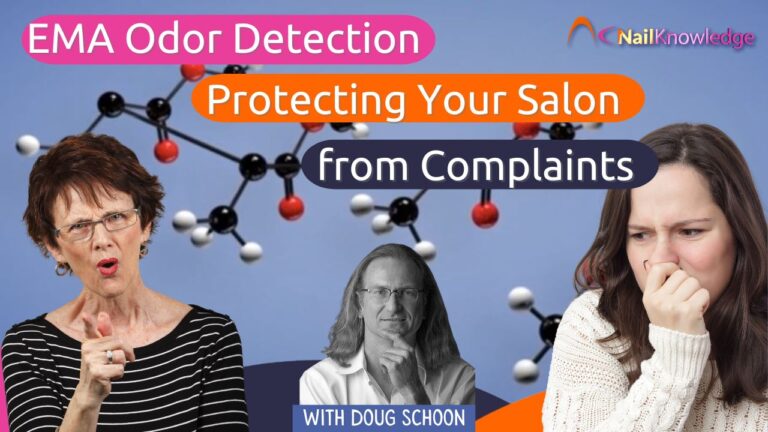
Nível de detecção de odor da EMA: Protegendo seu negócio de salão de beleza contra reclamações

Are you a salon owner battling the persistent challenge of EMA odor complaints that threaten your business’s existence? You’ve invested in quality ventilation and air purification systems, but the odor issue persists. Frustration mounts as your local council threatens action due to local resident complaints. In your quest for answers, you’ve stumbled upon a critical question: What is the EMA (ethyl methacrylate) odor detection level, the notorious culprit behind these persistent complaints?

This article seeks to unravel the mysteries surrounding EMA odor detection levels, offering you insights that could save your salon and your reputation. We’ll explore the science behind EMA odors, why conventional air purifiers may not be the solution, and how you can take proactive steps to ensure a safe, pleasant environment for both your clients and staff.

Purificadores de ar inadequados: Por que os modelos são insuficientes nos salões de beleza

Se você estiver usando purificadores de ar do tipo doméstico ou de escritório, eles não funcionarão em um salão de beleza. Algo feito para quartos ou escritórios não deve ser usado em um salão de beleza. 

A ciência dos odores de EMA

The monomer used to create liquid and powder systems is called ethyl methacrylate or EMA for short. EMA is so easy to smell that you can detect its odor with remarkable sensitivity. In fact, you can detect the smell of just one molecule of EMA diluted with one million molecules of air, which in technical terms is referred to as 1 part per million (ppm).

Ventilation is important for all salons.  In my view, if you can’t afford proper ventilation to ensure the work place breathing air is of good quality, then you should not be performing these services.

Isso é muito importante.

Garantindo a segurança da EMA por meio de ventilação adequada

A ventilação adequada é um requisito para trabalhar com segurança e todos os proprietários de salões de beleza e escolas são responsáveis por garantir que as pessoas no prédio recebam ar de boa qualidade. 

I strongly advise reaching out to a specialized company that can address your specific ventilation needs. They have the expertise and knowledge to guide you in selecting the right system tailored to your salon’s requirements.

Arquivado em: Negócios, Informações gerais, Saúde e segurança

O cheiro do líquido acrílico está relacionado ao MMA?

O cheiro de líquido acrílico: desfazendo o equívoco do MMA

Have you ever been told that if your acrylic liquid has a strong smell, it must contain MMA (methyl methacrylate)? It’s a common misconception in the nail industry, but let’s debunk this myth and set the record straight.

Entendendo o cheiro dos líquidos acrílicos

First and foremost, it’s essential to know that all artificial nail systems based on monomer liquids have some level of odor. Even those marketed as “odorless” still have a detectable scent. The intensity of the odor can vary between different marcas e produtos, but the presence of an odor alone doesn’t indicate the use of MMA.

Why Odor Isn’t a Reliable Indicator

Supondo que um líquido acrílico Contemplar o MMA apenas com base em seu cheiro é uma generalização imprudente. Alguns dos melhores e mais eficazes Ingredientes do monômero used in artificial nail liquids do have noticeable odors. Therefore, the presence of an odor doesn’t necessarily imply that the product is unsafe or contains MMA.

A importância das fichas de dados de segurança (SDS)

To make an informed judgment about a nail coating product, it’s crucial to refer to its Safety Data Sheet (SDS), also known as MSDS (Material Safety Data Sheet). If a product contains MMA in a concentration greater than 1%, it must be listed on the SDS.

Sinais de alerta e precauções de segurança

If you find that an SDS for a particular product is not readily available or easily obtainable, it’s a red flag. Nail technicians should exercise caution and prioritize safety. Using nail enhancement products without reviewing the SDS could mean missing essential information regarding proper and safe handling.

A verdade sobre os odores do líquido acrílico e o conteúdo de MMA

While the smell of acrylic liquid can vary from one brand to another, associating a strong odor solely with MMA is a misconception. Always refer to the SDS for accurate information about a product’s composition. Your safety and the quality of your nail applications should never be compromised. Stay informed, stay safe, and provide the best nail services to your clients.

Arquivado em: Informações gerais, Loções, poções e esmaltes, Desmistificação de mitos

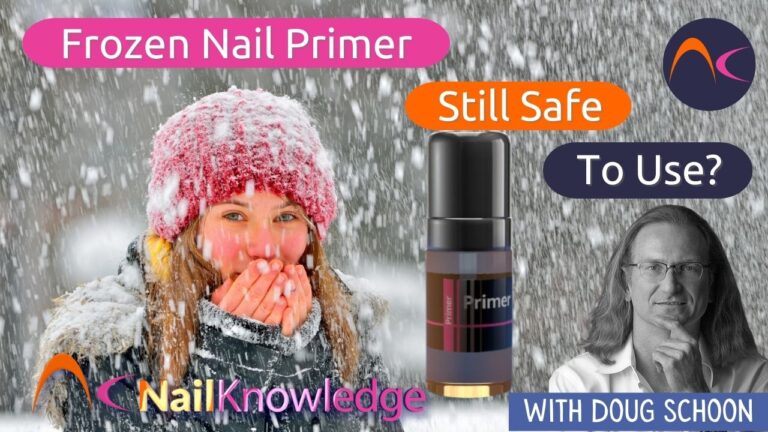
O seu primer para unhas congelado ainda é seguro para uso?

As the winter months cast their icy spell, nail technicians and enthusiasts alike may encounter a common cold-weather woe: frozen nail products. If you’ve ever opened your nail primer bottle only to find its contents frozen solid, you’re not alone. It’s not unusual for certain nail products, like primers, to succumb to the chill, making you wonder about their safety and efficacy.

When faced with the dilemma of a frozen nail primer, it’s natural to question whether it’s still suitable for use or if you should bid it farewell. To make an informed decision, it’s essential to understand the nuances of this chilly predicament and consider the implications for your nail care routine.

Primer para unhas congeladas: verifique as instruções

First and foremost, it’s crucial to check the product’s instructions. If the label explicitly states, “Do not refrigerate,” then it’s essential to heed this warning. Some primers para unhas podem ter requisitos específicos de armazenamento para manter sua integridade.

A temperatura ambiente é fundamental

In most cases, a thawed primer should be perfectly fine to use. However, the key here is to ensure that the primer has returned to room temperature before opening the container. Opening it while it’s still cold can lead to moisture condensation inside the bottle, which is less than ideal.

Observe os sinais de problemas

Keep an eye on your primer’s condition. If you notice that it has become cloudy or has formed a solid powder that settles at the bottom of the container, it’s time to bid farewell to your primer bottle. Refilling and reusing the same bottle might seem economical, but it can lead to contamination and increased lifting issues. The culprit here is a waxy substance, typically concentrated skin oils, which can negatively impact adhesion when deposited onto the placa ungueal.

Descongelando o mistério: A segurança do primer para unhas congeladas

Dealing with a frozen nail primer may seem daunting, but it’s generally safe to use once it has thawed back to room temperature. Always adhere to any provided storage guidelines, and keep a vigilant eye on your primer’s overall condition. Remember, the path to stunning nails involves both artistic finesse and the responsible use of products, ensuring a balance between beauty and safety.

Arquivado em: Informações gerais, Gel UV

Alergias ao pó de gel UV para unhas: É possível reagir a um produto e não a outro?

Desvendando o mistério das alergias ao pó de gel UV para unhas

A visit to the nail salon should be a pampering experience, but for some, it can lead to unexpected skin reactions, particularly around the eyes. If you’ve found yourself dealing with severe swelling, redness, and itching in the skin near your eyes after using a new line of nail gel, you’re not alone. You may be wondering, “Can we be allergic to the dust of one UV gel product and not another?”

In this article, we’ll delve into this intriguing question, shedding light on the complexities of nail gel dust allergies and dust sensitivity. Understanding the factors at play is crucial for both nail technicians and clients to ensure safe and enjoyable nail experiences. So, let’s embark on a journey to uncover the truth about nail gel dust allergies and how to safeguard your skin and well-being.

Poeira e reações alérgicas aos ingredientes do gel UV para unhas

Ninguém se torna alérgico a um produto, mas sim a um ingrediente (ou talvez vários) do produto. É importante entender isso. Se esse(s) mesmo(s) ingrediente(s) for(em) encontrado(s) em outro produto, essa pessoa desenvolverá reações alérgicas a ambos os produtos, devido ao ingrediente comum que compartilham.  

Os géis UV são muito diferentes uns dos outros, mas geralmente compartilham alguns ingredientes semelhantes, portanto, é provável que haja sensibilidade a outros produtos. Nesse caso, eu suspeitaria primeiro do pó. É muito comum que os técnicos de unhas não curem adequadamente seus aprimoramentos de unhas. Quando isso ocorre, o pó criado durante o lixamento é rico em ingredientes não curados. O pó não deve entrar em contato com a pele, a menos que esteja devidamente curado. 

A pele delicada ao redor dos olhos e a exposição à poeira das unhas

The thinnest skin on our bodies is around the eyes, so I’m not at all surprised that this part of your face is most affected. You should avoid exposure to under cured dust around your eyes.   Also, look around a crowded room and I guarantee you’ll see several people touching their face, maybe the eye area. We touch our faces more than we realize. Often without thinking, so the face and eye area is often accidentally exposed to monomer liquid or UV gel, etc.

Minhas dicas para quem está nessa situação são:

  • Make sure you are using the correct UV nail lamp. That’s the one specified by the manufacturer of the UV gel and cure as directed.
  • Em geral, evite curar camadas grossas; quanto mais finas, melhor.
  • Don’t cherry-pick and mix different UV gels from unrelated brands/systems.
  • Minimize dust and filings, use an oil designed for use with electric files to keep down dust.
  • Invest in a good quality, professional ventilation system designed for salon use.
  • Evite tocar seu rosto e lave as mãos após cada cliente.

Prevenção de reações alérgicas ao pó de gel UV

Medidas de segurança para os técnicos de unhas

Once you become allergic to an ingredient, you will likely be allergic to it for LIFE!  Avoid allergies; it’s easy if you work safely and correctly. One way is to ensure this is to follow the UV gel manufacturer’s directions and heed all warnings on the label. Also, make sure to read the Safety Data Sheets (SDS) that are supposed to be provided by the seller of the product.

Arquivado em: Informações gerais, Saúde e segurança, Gel UV

Aquecimento de monômeros para unhas em salões de beleza

Uma prática inteligente para aquecer monômeros para unhas ou um risco?

The issue of warming monomers in nail salons, especially during colder months, has become a topic of discussion. Some salons resort to heating monomer in baby bottle warmers to combat cold temperatures. But is this a wise practice, or does it come with potential risks?  We’ll explore the nuances of warming monomers and why it’s essential to exercise caution.

Entendendo a diferença: Aquecimento do monômero vs. aquecimento

Aquecendo o monômero to room temperature is a common practice to ensure it remains in its optimal state for nail services. However, it’s crucial to differentiate between warming and heating. Heating monomers to temperatures above normal room conditions can lead to various issues, including quebra de serviço e possíveis riscos à saúde.

Descoloração do monômero: Problemas de interrupção de serviço a serem evitados

Heating monomers beyond room temperature can have adverse effects on the quality of nail services. One significant concern is discoloration, where the monomer may change in color, affecting the final appearance of the nails. This discoloration can lead to client dissatisfaction and harm the salon’s reputation.

Riscos à saúde

Heating monomers can also pose health risks, primarily through increased inhalation of vapors. Overexposure to these vapors can lead to respiratory problems and other health issues. It’s essential to prioritize the safety and well-being of both nail technicians and clients.

Uma abordagem melhor: Prevenção de monômeros frios

Rather than resorting to heating monomer, a more effective strategy is to prevent it from becoming too cold in the first place. Many salons experience lower temperatures overnight after closing, which can impact the monomer’s consistency. To address this issue, consider storing your nail products inside an insulated container, such as an “ice container” or “chilly bin,” overnight. This simple step will help maintain the products at a suitable temperature, eliminating the need for additional warming.

Priorização da integridade e segurança do produto

In conclusion, while it’s essential to ensure that monomers are at room temperature for optimal performance, heating them to higher temperatures is not a recommended practice. Doing so can result in service breakdown issues and health risks. Instead, focus on prevention by storing your nail products in insulated containers overnight to maintain their integrity and protect the health of everyone in the salon. By prioritizing safety and product quality, you can deliver outstanding nail services while mitigating potential risks associated with heating monomers.

Lembre-se de que o objetivo é proporcionar unhas bonitas e, ao mesmo tempo, manter as clientes e os técnicos de unhas seguros e satisfeitos.

Arquivado em: Informações gerais, Saúde e segurança, Serviços para unhas, Gel UV

  • « Go to Previous Page
  • Página 1
  • Interim pages omitted …
  • Página 10
  • Página 11
  • Página 12
  • Página 13
  • Página 14
  • Interim pages omitted …
  • Página 30
  • Go to Next Page »

Aumente o nível de suas percepções sobre as unhas

Participe de nosso boletim informativo!
ASSINAR...

Direitos autorais © NailKnowledge

NailKnowledge

  • Livros eletrônicos
  • Sobre nós
  • Cursos
  • Notícias
  • Blog
  • Boletim informativo
  • Glossário

Políticas

  • Página de privacidade
  • Termos e condições
  • Política de cookies

Suporte

  • Entre em contato conosco
  • Pergunte aos especialistas
  • Suporte ao sistema
  • Perguntas frequentes
Portuguese
Portuguese
English Spanish Vietnamese