• Bỏ qua primary navigation
  • Bỏ qua nội dung chính
  • Bỏ qua footer
Kiến thức về móng tay

Kiến thức về móng tay

  • Các khóa học
  • Sách điện tử
  • Giỏ sách điện tử
  • Cơ sở tri thức
    • Cơ sở tri thức
    • Hỏi các chuyên gia
    • Thuật ngữ
  • Tin tức
  • Blog
  • Phòng trưng bày
    • Thư viện nghệ thuật làm móng
    • Nghệ sĩ làm móng
    • Tham gia Elite
  • Đăng nhập

Thông tin chung

Sự thật về sơn móng tay Halal và các tập tục của người Hồi giáo

At Nailknowledge, we frequently receive inquiries about the compatibility of nail polish with Muslim practices. In this article, we aim to answer this common concern and offer insights into the topic.

The central question we address here is: “As a practicing Muslim, I am bound by the restrictions of Islamic law when it comes to the nail polish I can wear. This raises an important question: do you know which types of nail polish are permissible under these guidelines?”

Sự giao thoa giữa sơn móng tay và luật Hồi giáo

To be clear, I am not Muslim, and I do NOT have the qualifications needed to interpret Islamic law, but over the last several years I’ve consulted with several Muslim experts in these areas and I have relied heavily on their expertise.

By combining my scientific knowledge with their expert knowledge about specific Islamic laws, I’ve been better able to determine the facts behind this highly confusing issue, as it applies to wearing sơn móng tay.

Many companies have recently started marketing “Halal” nail polish to Muslim women, which has led to confusion about whether these nail polishes adhere to Islamic law. Most of the confusion exists because the term “Halal” implies that all Islamic requirements have been met, but that is not the case for nail polish. Nail polishes have a separate and different requirement that goes beyond being Halal.

Chứng nhận Halal: Ý nghĩa và ứng dụng của nó trong bối cảnh của sơn móng tay

First, let’s discuss what it means to be “Halal certified”. What is that? Halal certified- simply means “permitted or lawful”, under Islamic law. This certification is provided for foods or cosmetics if they can demonstrate that they do not contain any substances forbidden by Islamic law, e.g. drinking alcohol which is called ethanol and pork are typical examples.

Halal certifications are intended for foods, but also include other items that may be swallowed, e.g. mouthwash, toothpaste or lipsticks. This requirement really doesn’t apply to nail polish, yet some marketers are using the term in a confusing fashion and some are misleading many Muslim women.

Chứng nhận Halal rất dễ để có được. Các công ty phải trả một khoản phí cho cơ quan quản lý, sau đó họ sẽ xem xét danh sách các thành phần của sản phẩm.

Sơn móng tay và luật Hồi giáo liên quan đến Wudu

Once it is determined that a food or cosmetic product contains no forbidden substances, it can become “Halal certified”. This is very much like the Kosher designation. Both Kosher and Halal have similar goals and requirements. However, nail polish is different from other cosmetics and MUST adhere to another Islamic law that so far has proven impossible for any nail polish to achieve.

This law requires Muslims to wet their nail plates before praying, and this can NOT be achieved if they are wearing nail polish. A “spiritual wash” called Wudu, is required to be performed before every prayer and this is extremely important. This ritual wash is used to attain a state of mental preparation for prayer and help to maintain good physical cleanliness. 

Giáo lý Hồi giáo dạy rằng những người thực hành PHẢI thực hiện nghi lễ rửa tội trước khi cầu nguyện. Nếu họ không thực hiện nghi lễ rửa tội bắt buộc này, những lời cầu nguyện của họ sẽ bị coi là không hợp lệ và không được tính. Nói cách khác, cầu nguyện mà không thực hiện Wudu đúng cách cũng giống như không cầu nguyện gì cả. Đây là điều khá nghiêm trọng đối với những người Hồi giáo đang thực hành.

Sơn móng tay và tính tương thích của nó với yêu cầu của Wudu

Since Muslims are required to pray five times per day, they must perform the spiritual wash several times per day, which is why most practising Muslim’s don’t wear nail polish. If a Muslim does not get their nail plates wet with liquid water, their Wudu was not properly performed and thus their prayers do not count. Claiming that water “vapors” penetrate through nail polish to the nail plate is not nearly enough; vapors and traces of moisture do not count as a spiritual wash.

I have examined the ingredients and the testing is done on nail polish that claims to allow water to pass through the polish to reach the nail plate. In my opinion, these are nothing more than simple tricks designed to fool the public. I’m speaking specifically about a silly test where nail polish was applied to a coffee filter and then it was shown how water passed through the filter. What?  Since when did a coffee filter become a good substitute for the nail plate? This is utter foolishness and trickery, in my view. I suspect that I could make any nail polish pass this silly test, so it proves nothing. I believe this test was adopted to fool people into thinking they could perform a proper spiritual wash without removing their nail polish, but that is a false hope.

Góc nhìn khoa học: Sự tương thích giữa sơn móng tay và Wudu

As a scientist with more than 25 years’ experience developing nail coating products, I can assure everyone that there are NO known formulations of any nail polish that allow water to pass through the coating to fully wet the nail plate as required. Here is the simple truth; no nail polish is compliant with the requirements of Wudu spiritual washing.  Nail polishes that claim to be “Halal” compliant, are simply declaring they contain no forbidden ingredients and that has nothing to do with whether nail polish is Wudu compliant, as is required. Halal cosmetics are fine to wear, just as long as they do NOT interfere with Wudu spiritual washes before prayer.

Sơn móng tay có thể ảnh hưởng đến Wudu, do đó, những phụ nữ Hồi giáo thực hành quan tâm đến việc nước tiếp xúc với móng tay của họ nên được khuyên rằng họ vẫn cần phải tẩy sơn móng tay trước khi rửa mặt và cầu nguyện. Các nhà tiếp thị nên cẩn thận không hứa hẹn quá mức về những gì sản phẩm của họ có thể làm và nên làm rõ về những hạn chế của họ.

Khám phá tương lai: Triển vọng cho loại sơn móng tay hoàn toàn tuân thủ

After 25+ years researching the natural nail, I have a deep understanding of nail coating products and their chemistry, so I’m often asked, “what about the future”?  Will there ever be a fully compliant nail polish that Muslim women can wear continuously and still pray regularly? I do believe that someday, a fully complaint nail polish that allows water to pass through the coating to wet the nail plate will someday be developed.

To make such a huge technological breakthrough will require a significant research effort, which now-a-days most cosmetic companies try to avoid. Only the biggest and the best can take on a significant challenge like this, so it’s not likely to happen any time soon and not likely to be developed by a small company. To date, all the money has been spent on marketing of “Halal” certifications and no one has been willing to invest in a real research program to create a fully complainant nail polish. But with approximately 500 million practicing Muslim women of nail polish wearing age, I suspect that sooner or later someone will create a useful and viable solution to great unfilled need.

Thuộc chủ đề:Thông tin chung, Dịch vụ làm móng

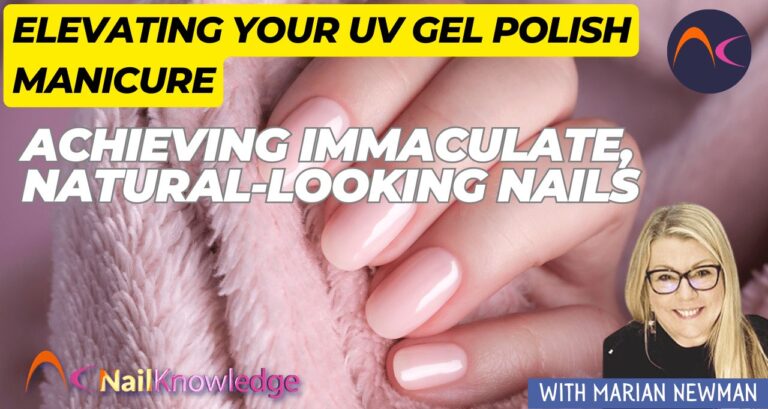
Nâng tầm lớp sơn gel UV của bạn: Có được bộ móng hoàn hảo, trông tự nhiên

Bio Sculpture pioneered coloured gel over 30 years ago, introducing the first soak-off gels to the market. The UV gel polish revolution began when brands, with some debate over whether it was Gelish or CND as the true pioneer, changed the gel’s viscosity and packaged it in a bottle with a brush. This new hybrid product offered a thinner application but had a shorter wear time.

Hiểu sự khác biệt: Công thức Gel nguyên chất so với Gel lai

A ‘pure gel’ consists entirely of polymers, while a ‘hybrid’ is a pure gel infused with solvents. Both are permeable, but hybrids allow for faster acetone penetration, making them quicker to soak off.

Sự phát triển của sơn gel UV: Từ lớp sơn bóng đến vẻ ngoài truyền thống bóng bẩy

The UV gel polish revolution gave the nail industry an amazing kick start as it was new and the consumer loved the long wear and instant dry characteristic.

Originally, the UV-gelled nail was super glossy, slightly thick and with a rounded edge. A look that many liked hence the invention of ‘gel-like’ traditional polishes. Not everyone liked that ‘bulbous ‘look and preferred the more sleek appearance of nail polish.

From Bulbous UV Gel to Sleek ‘Lip Gloss’ Finish

Mọi thứ đã thay đổi và một số kỹ thuật viên rất lành nghề đã dành nhiều thời gian chăm sóc hơn để có được vẻ ngoài thon gọn, bóng bẩy và hoàn toàn tự nhiên. Nhưng điều này đòi hỏi nhiều thời gian và kỹ năng hơn.

The nails you see on socials with the ‘lip gloss’ look are good examples of this.

I’ve had my nails done by two such artists recently and I LOVE the look. So how do they do it?

Độ chính xác trong thực hành: Các bước để có được lớp sơn móng tay hoàn hảo

I’ve watched and, if I was in a salon, I’m not sure I’d have the patience. I have no patience when doing my own nails.

  • sự chuẩn bị hoàn hảo và chính xác.
  • một sự trơn tru lớp sơn lót
  • applying a ‘slip layer’ (a thin layer of the coloured product, not cured, before the main coatings) gives the main coat something to hold on to before flooding the side walls
  • một lớp sơn mỏng nhưng chỉ sơn hai móng cùng một lúc để tránh bất kỳ chuyển động nào
  • inverting the fingers to use gravity to pull the coating away from the sides, make it thinner, and create a natural apex. The nail needs to be parallel to the desk for this to work efficiently
  • sau đó chữa bệnh
  • hoàn thiện hai móng còn lại theo cách tương tự và cuối cùng là móng cái riêng biệt
  • if needed, the colour coat is finished with a fine buffer or block but those skilled in this do not need to do this step as their application is perfect already
  • then remove any dust and apply a top coat
  • sự chú ý chính là các đường sáng vì chúng cho thấy lớp phủ không đều và cần được hiệu chỉnh

Tất cả những điều này cần nhiều thời gian và kỹ năng nâng cao hơn nhưng thực sự là cách nâng cao kỹ năng của bạn và tạo ra kết quả làm móng bằng sơn gel UV tốt nhất có thể!

Không còn móng tay phồng và không đều màu nữa. Móng tay đẹp tự nhiên không tì vết khiến ai cũng phải ghen tị.

Để có một ví dụ điển hình về điều này, tôi khuyên bạn nên kiểm tra Instagram của Dryby. Bài viết này sẽ giới thiệu cách chụp ảnh tốt nhất để nắm bắt được kiểu thiết kế móng tay này.    

Thuộc chủ đề:Thông tin chung, Dịch vụ làm móng, Gel UV

Vi nhựa trong ngành công nghiệp làm móng: Luật pháp EU

Chúng tôi tận tụy với kiến thức tiên phong trong Ngành công nghiệp làm móng, nhấn mạnh vào nội dung thực tế và khoa học. Cam kết của chúng tôi nằm ở việc đóng góp vào việc bảo tồn môi trường và liên tục nghiên cứu các phương pháp để trình bày thông tin làm sáng tỏ một thế giới an toàn và lấp lánh.

Cập nhật luật pháp EU: Các hạn chế mới về việc bán vi nhựa

We would like to give you this ‘News Flash’ information regarding new legislation and to assist you in understanding the ‘jargon’. You may have seen that there is going to be a change in Luật EU về việc bán các loại vi nhựa từ 15th October, 2023. This new regulation is to restrict the uncontrolled release of microplastics into the environment. Microplastics is a very broad definition but it covers glitter & microbeads (exfoliation) for example.

Dựa trên thông tin mới nhất, chúng tôi hiểu rằng việc bán các loại nhũ có trong các công thức được sử dụng để chỉnh sửa/nâng cao cơ thể trên da, bom tắm, chăm sóc cá nhân, tóc, trang điểm, hình xăm, v.v. đều nằm trong các hạn chế của luật mới ngay từ ngày này. Người ta cho rằng các sản phẩm này có thể dễ dàng xâm nhập vào môi trường theo cách không kiểm soát được trong quá trình sử dụng và/hoặc khi tháo ra. 

Nhũ trang mỹ phẩm làm móng được miễn trừ khỏi những hạn chế mới

Cosmetic glitters that are solely used within the application of nail products (pre-made mixtures, encasing of glitter within a product or glitters added into nail products by nail professionals) or has any other intended use within a solid nail formulation will be unaffected for the next 12 years! So, there is no need to panic, nor the need to result in plain lifeless manicures! Phew!

Kim tuyến thân thiện với môi trường: Sự thay đổi bền vững trong ngành công nghiệp làm đẹp

Vào năm 2019, một giải pháp thay thế thân thiện với môi trường cho kim tuyến gốc nhựa truyền thống đã xuất hiện trên thị trường. Sáng kiến này sử dụng các vật liệu tự nhiên và có nguồn gốc từ thực vật, đảm bảo phân hủy sinh học thành các chất vô hại trong môi trường. Các lựa chọn bền vững như vậy có sẵn ở nhiều sắc thái khác nhau, mang đến sự lựa chọn có trách nhiệm cho những người quan tâm đến môi trường.

Tại sao các sản phẩm làm móng có luật riêng biệt liên quan đến vi nhựa

  • Sản phẩm được sử dụng tại ‘industrial sites’ (nail salons) are not freely releasing microplastics during use (nail technicians capture glitter within a moulding product).
  • Ngành công nghiệp làm móng hoạt động ngược lại với ngành công nghiệp làm đẹp. Chúng tôi giữ/bao bọc/đóng gói trong một công thức rắn do đó ngăn chặn việc giải phóng các hạt kim tuyến lỏng lẻo. 
  • ‘The regulation specifies a transitional period of 12 years for nail products until a ban on sale or use comes into force.’ 

Các biện pháp thực hành tốt nhất dành cho thợ làm móng để giảm thiểu phát thải vi nhựa

 To prevent unnecessary microplastics emissions, we as nail professionals can elevate our procedures and take the following steps – 

  • Always firmly pat and press glitter into place using a brush
  • Không nhúng ngón tay vào lọ/nồi
  • Do not use a large ‘duster’ brush to apply glitter
  • Top coat must be used to encase the glitter finish and any loose glitter used
  • Nếu còn sót lại chút nhũ nào trên móng sau khi dán, hãy đảm bảo loại bỏ hết nhũ trước khi rửa tay.
  • Vào cuối ngày, những người làm việc với kim tuyến nên giũ sạch quần áo trước khi giặt.
  • Tất cả rác thải vi nhựa phát sinh phải được quét/hút bụi, cho vào thùng chứa rác thải phù hợp và được thu gom bởi dịch vụ thu gom rác thải được ủy quyền. Không bao giờ được đổ rác thải xuống bồn rửa hoặc bồn cầu.

Nail technicians can also mix glitter into a clear gel/varnish/acrylic to almost negate any uncontrolled emissions.

Các biện pháp hạn chế vi nhựa (europa.eu)
Hỏi & Đáp Hạn chế đối với việc cố ý thêm vi nhựa (europa.eu)
Quy định của Ủy ban (EU) sửa đổi Quy định REACH liên quan đến các hạt vi mô polyme tổng hợp (europa.eu)
https://www.cosmeticsandtoiletries.com/regulations/eco-sustainable/news/22874469/european-commission-adopts-measures-restricting-intentional-microplastics

Thuộc chủ đề:Thông tin chung, Dịch vụ làm móng

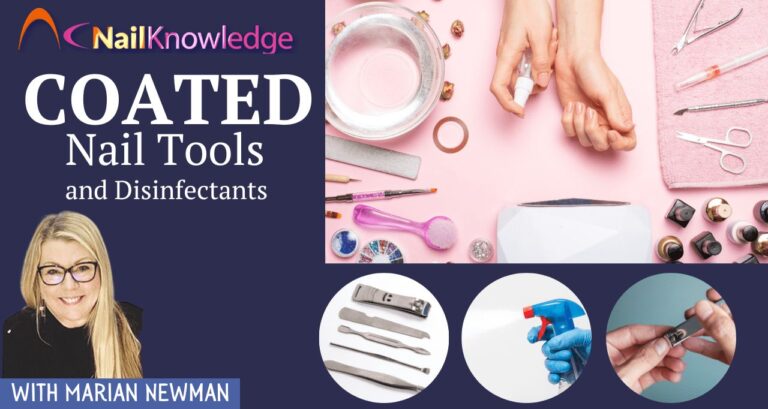
Dụng cụ làm móng phủ và chất khử trùng

Ngành làm móng sử dụng rất nhiều dụng cụ bằng kim loại và có xu hướng sử dụng dụng cụ làm móng có lớp phủ với nhiều loại khác nhau.

Why are coatings used on metal nail tools, and what purpose do they serve?

Coatings are applied to metal nail tools for specific purposes related to protection and appearance. While good quality stainless steel is durable, coatings can offer an additional layer of safeguarding against scratches, wear, and rusting, which can occur over time.

The primary purpose of these coatings is to enhance the longevity the tools. Additionally, certain coatings, such as titanium, have been claimed to exhibit bactericidal properties, potentially providing an extra layer of hygiene during their use. However, it is essential to consider the composition of the coating and its compatibility with disinfectants to ensure effective and safe sterilisation.

Ultimately, the use of coatings on metal nail tools aims to strike a balance between protection and durability while upholding proper hygiene standards in the nail industry.

Stainless Steel Grades and Coatings for Nail Tools

Good quality stainless steel does not need protection. There are many grades of stainless steel with 316 being the superiorgrade and 304 being the common and less expensive version.

Even the best grade of steel is not immune to damage from scratching, bluntness and rusting. Obviously, the coating can help protect from scratches but coatings can wear off exposing the steel underneath.

Disinfection and Coated Nail Tool Compatibility

Most proprietary disinfectants use water to dilute them and prolonged immersion in water will cause rusting. Following manufacturers instructions for dilution and immersion MUST be followed. If they say immerse for 10 minutes then tools must be removed, rinsed with water and allowed to dry or rusting will occur.

There are some disinfectants that are not suitable for coated tools and this should be clear on the label as a contraindication. Read the labels or ask the manufacturer.

Importance of EN Numbers in Disinfectant Selection

Disinfectants come in various grades, each identified by an EN number printed on the label. 

The EN number represents the disinfectant’s effectiveness against specific types of pathogens. For instance, EN13624 indicates that the disinfectant has been tested for fungicidal and yeasticidal properties, making it suitable for pedicure tools as fungal infections are more common on feet. 

On the other hand, EN13727 signifies that the disinfectant is bactericidal, effective against bacteria.

Similarly, EN14476 indicates its efficacy against viruses. Therefore, the selection of the appropriate disinfectant should consider the intended use of the tools and the specific pathogens they may come into contact with. 

It’s important to note that there is no one-size-fits-all disinfectant for all situations.

Considerations for Disinfectant Selection and Nail Tool Preparation

Choose your disinfectant wisely and with reason and fitting to your Risk Assessment for your services.

Isopropyl alcohol (widely used in hand cleansers) can be used but it does depend on the purity of the alcohol and what it’smixed with. It evaporates very quickly and it efficiently needs contact in minutes rather than seconds.

But ALL disinfectants are useless unless the tools are cleaned first as any debris such as oils, skin, and nails are present. Cleaning with soap and water and scrubbing with a brush is essential as the first stage of disinfecting.

Back to coatings: there are some tools coated in titanium which claim to be bactericidal. It is a coating commonly used in bone implants. What is in the coating is very relevant and how it responds to the various disinfectants is also relevant. 

In conclusion, for keeping your tools as. hygienic as can be is not just a matter of buying a disinfectant and putting your tools in it and leaving them. There is much more science to it than that and every nail pro should do their own due diligence with regard to the quality of tools being used and if the disinfectant is appropriate for the service the tools are being used for

The most important advice is to follow manufacturers instructions to the letter, cleaning tools first and asking questions of your tool supplier and disinfectant manufacturer. Good suppliers/manufacturers should have no problem answering any questions you may have.

With all of the above in mind, we at NailKnowledge recommend Mundo
(with thanks for providing so much information on testing) and Labology 3 (for your dedication).

Thuộc chủ đề:Thông tin chung, Sức khỏe và An toàn, Dịch vụ làm móng

Tại sao sơn gel lại bị cháy?

Sự thật kinh hoàng về gel gây bỏng!

Làm sáng tỏ một câu hỏi nóng bỏng

As the demand for gel nails continues to rise, it’s essential to address the burning sensation that some individuals experience during the application process. If you’ve ever wondered, “Why do gel polish burns?” or “Why do my gel nails burn under UV light?” you’re not alone. In recent months, there has been a significant increase in interest in this issue. This surge can be attributed to the growing number of individuals who are either doing their nails at home or seeking professional services, and leaving confused if this is a normal phenomenon or not. 

In this article, we will explore the reasons behind these burning sensations and provide insights into how to prevent them. Whether you’re a DIY enthusiast or a professional nail technician, understanding the science behind gel burning is crucial to ensure a comfortable and safe nail coating experience.

Let’s try to understand why this happens, and how to prevent it. 

Phản ứng tỏa nhiệt: Hiểu về sự giải phóng nhiệt

Every artificial nail coating product, such as UV gels and L&P systems, can sometimes become warm during the application process. While a certain level of warmth is normal, excessive heat can cause discomfort – and potentially lead to serious nail bed damage.

To comprehend why gel polishes can cause a burning sensation, it’s important to understand the chemical reactions that occur during the curing process. Gel polishes and other similar products trải qua phản ứng tỏa nhiệt, nghĩa là chúng giải phóng nhiệt khi đông cứng. 

The term “exotherm” refers to the release of heat during a chemical reaction. In the context of artificial nail coatings, these reactions occur when millions of tiny molecules in the liquid or gel product join together, creating the solid polymer chains that make up the finished nail coating. When two molecules react and join, a minuscule amount of heat is released.  The heat of one such reaction  is undetectable, however the cumulative effect of trillions  of molecules quickly reacting can lead to a substantial release of heat onto the nail plate which in turn heats the underlying nail bed. This phenomenon is typically observed during the curing process of all artificial nail coating products.

Cảm giác bỏng rát do đèn UV và gel UV

Many individuals have reported experiencing burning sensations when their nails are exposed to UV light during the curing process. The heat they experience does not come from the UV lamp, rather from the hardening process of the nail coating.  It’s essential to note that UV lamps are designed to emit specific wavelengths of UV light to facilitate the curing of UV gel polishes and other UV gels nail products. However, if the UV intensity is too high, this can cause excess heat that can become intense, leading to burning sensations. Using the correct nail lamp recommended by the UV gel manufacturer and proper positioning of the hands inside the lamp, and avoiding overly thick applications.

Quá nhiệt và hậu quả của nó

Trong những trường hợp bình thường, các sản phẩm làm móng được pha chế và áp dụng đúng cách sẽ giải phóng một lượng nhiệt tối thiểu mà không bị phát hiện. Các nhà sản xuất có uy tín tiến hành các thử nghiệm kiểm soát chất lượng để đảm bảo nhiệt độ được kiểm soát, tránh các đợt tăng nhiệt quá mức, điều này làm nổi bật tầm quan trọng của việc mua sản phẩm từ các nhà sản xuất đáng tin cậy. Tuy nhiên, một số sản phẩm có thể có xu hướng quá nhiệt, ngay cả khi được áp dụng đúng cách và tình trạng của nền móng có thể là một yếu tố góp phần.

Nhiệt độ quá cao có thể gây ra một số vấn đề, đặc biệt là khi nền móng bị tổn thương hoặc phiến móng quá mỏng. Phiến móng hoạt động như một rào cản cách nhiệt để bảo vệ nền móng khỏi nhiệt độ quá cao. Tuy nhiên, nếu phiến móng bị dũa quá mức, trong tình trạng mỏng hơn, phiến móng trở thành rào cản nhiệt kém - cho phép nhiệt nhanh chóng truyền qua phiến móng và đến nền móng, có khả năng gây thương tích. 

Chấn thương ở nền móng, chẳng hạn như bỏng do ma sát gây ra bởi nộp hồ sơ tích cực, can significantly increase the sensation of heat. When the nail bed is damaged, it becomes super-sensitive, making it more susceptible to even normal levels of warming. It is essential to exercise caution while filing the nail plate, ensuring that you apply gentle pressure and avoid using coarse abrasives that can thin the nail plate. By maintaining the nail plate’s health and integrity, you can reduce the risk of heat-related discomfort. 

Apart from discomfort and pain, this excess heat can burn the nail bed, causing the nail plate to detach from it, and opening the nail bed to pathogens, and the risk of infections – which should be avoided at all costs.

Làm thế nào để tránh gây ra sự gia tăng nhiệt độ 

Để tránh quá nhiệt, điều quan trọng là phải sử dụng các sản phẩm sơn móng tay được pha chế, áp dụng và bảo dưỡng đúng cách; và luôn luôn trên móng tay khỏe mạnh. Điều quan trọng nữa là phải đảm bảo rằng đèn UV đã được nhà sản xuất gel UV chấp thuận sử dụng. Nhà sản xuất gel UV phải cho bạn biết loại đèn UV nào mà họ đã thử nghiệm và chấp thuận, cũng như cách họ xác định đèn móng tay đã bảo dưỡng gel UV đúng cách.  

Các nhà sản xuất cẩn thận thiết kế sản phẩm của họ để giải phóng nhiệt dần dần trong quá trình đóng rắn để tránh đột ngột nhiệt độ tăng đột biến. Bằng cách làm theo các kỹ thuật ứng dụng được khuyến nghị và sử dụng toàn bộ hệ thống theo thiết kế của nhà sản xuất bao gồm đèn làm móng phù hợp, bạn có thể giảm thiểu nguy cơ quá nhiệt.

This is particularly important when working with thicker viscosity gels, such as builder gel (called BIAB by many –  short for ‘builder in a bottle’).  Avoid apply these in thick layers, their thick consistency makes it easy to overapply them in layers that are too thick.

UV Gel – Avoiding Friction Burns

Friction burns occur when heavy-handed filing techniques are employed and are normally caused by either excessive downward force exerted on the nail file, or the wrong grit being used on the natural nail. Nail technicians should adopt gentle and careful filing practices, treating the natural nails with care. Always opt for a higher grit file (240 and above) when filing the natural nail. 

Vai trò của độ dày sản phẩm

The thickness of the nail coating product can also influence the release of heat. For that reason, applying UV gels in thin layers and curing them with the appropriate UV nail lamp ensures a proper cure and minimizes the risk of burning sensations. Generally, larger nail plates, such as thumb plates, tend to feel warmer compared to smaller nail plates. This is because more heat is released when a thicker layer of the coating product is applied. By avoiding excessive product application, especially with UV-curing gels, you can prevent this problem.

This issue occurs especially when applying builder gel, as most people believe it needs to be applied thickly – which is the fastest way to get a burning sensation.

Guidelines to Prevent Overheating and UV Gel Burning Sensations

  • Avoid friction burns by filing the nail plate gently and using proper techniques and file grit.
  • Maintain the health and thickness of the nail plate, avoiding excessive thinning.
  • Be cautious when using fast-setting nail coatings, especially in warm salon environments.
  • Use the UV nail lamp recommended by the UV gel manufacturer.
  • Apply the product in thin layers to ensure proper curing.

Phần kết luận

Understanding the reasons behind excessive heat and UV Gel burning sensations during the application of nail coating products is crucial for both professionals and DIY enthusiasts. Proper formulation, application techniques, and curing methods play a significant role in preventing discomfort and potential nail bed damage. By following the recommended guidelines, such as avoiding friction burns, maintaining nail plate thickness, and using good quality products and full systems, you can enjoy beautiful nails without the fear of burning sensations.

Remember, knowledge and care are the keys to a safe and enjoyable nail service experience. By staying informed and practicing proper techniques, you can maintain healthy and stunning nails while minimizing the risk of overheating and its consequences. So, take the necessary precautions, choose reputable products, and you can achieve stunning gel nails without the fear of burning sensations.

Câu hỏi thường gặp

Q: If UV gels “burn like crazy” under the UV lamp, students are told that it is because the gel is “bad”? What do you think?
A: I do agree with this to an extent. When UV gels are properly applied and cured, they can become warm, but they are not supposed to “burn like crazy.” Excessive heating is often the result of improper application or curing, e.g. using the incorrect UV nail lamp. High-quality UV gels from reputable manufacturers are formulated to minimize heat spikes during the curing process. But on the other hand, it could be just misuse –  or too thick coatings , and/or the use of mismatched nail lamp  could be to blame.

Q: What are the common reasons for excessive heating of UV gels?
A: Excessive heating of UV gels can occur due to incorrect application techniques, such as applying the gel too thickly. It can also be a result of using an unsuitable UV nail lamp that emits excessive UV energy during the curing process.

Q: Can nail bed injuries contribute to the sensation of burning?
A: Yes, nail bed injuries, particularly friction burns caused by aggressive filing, can increase the sensitivity of the nail bed to heat. Damaged nail beds are more likely to perceive even normal levels of heat as burning sensations.

Q: Are gel nails supposed to burn?
A: While a slight warming sensation is normal during the curing process, gel nails are not supposed to cause intense or prolonged burning. If you consistently experience excessive heat or discomfort, it’s important to reassess your application techniques and the products you’re using.

Q: Why do gel nails hurt under UV light or LED light?
A: LED light is the same thing as UV light. LED nail lamps produce higher amounts of UV to cure the gels more quickly.  Faster curing causes the heat to be released more quickly to caused a heat spike.  Excessive heat can be caused by other factors such as , applying the product too thickly.  Following proper guidelines and using the right products can help alleviate this discomfort.

Q: How can heat related onycholysis be prevented or treated?
A: Onycholysis can have many causes. In general onycholysis is the  the separation of the nail plate from the nail bed. To prevent heat related onycholysis  is essential to avoid overheating the nail bed. This can be accomplished by using proper application techniques, quality  products and the proper nail lamp.  If onycholysis occurs, it is recommended to keep the nail plate short, maintain cleanliness and dryness, and avoid any activities that may further damage the nail bed. The condition often aa resolves itself within one to two months on the hands.

Q: Are heavy-handed filing techniques sometimes responsible for heat spikes in UV gels?
A: Yes, heavy-handed filing techniques can sometimes lead to friction burns on the nail bed, making it far more sensitive to heat. By practicing gentle and careful filing techniques, you can minimize the risk of heat-related discomfort and minimize the potential for friction burns to the nail bed

Thuộc chủ đề:Thông tin chung, Dịch vụ làm móng, Gel UV

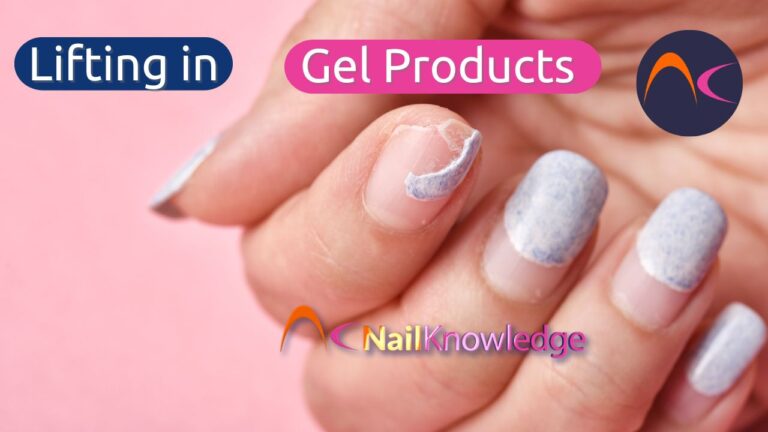
Hiểu về việc nâng móng bằng gel và vai trò của gel đắp móng

As skilled nail professionals, our goal is to deliver not only beautiful but also long-lasting services to your clients. However, despite our best efforts, service breakdown – like lifting -can sometimes occur, leaving both us and our clients feeling frustrated.

Lifting is a common issue in the nail industry, but if we understand why it happens and incorporate preventive measures into our work, we could significantly reduce its likelihood.

Let’s have a look at the reasons why gel service breakdowns happen, and the pivotal role builder gels play in creating flawless and durable gel manicures.

Chuẩn bị móng không đúng cách

One of the primary causes of service breakdown when working with gel products is inadequate nail preparation. Before applying gel products, it is essential to ensure the nail plate is clean, dry, and free of any oils or residue.

Failure to do so can lead to poor adhesion between the natural nail and the gel, resulting in premature lifting and chipping.

Always perform thorough nail cleansing before beginning the gel application, firstly by prepping the cuticles properly, making sure there is no dead tissue attached to the nail plate. We must always remember that gel does not adhere to skin, so removing the cuticle from the nail plate, and making sure the product NEVER touches the skin is incredibly important.

Follow that by using the recommended prep liquid to remove surface oils and moisture.

Make sure to follow manufacturer’s instructions about which products work best as prep liquids and primers with their product, as they will know best their chemical formulations.

Avoiding Nail Gel Lifting

The Importance of Proper Buffing and Application Techniques

Thinning the natural nail can also be detrimental to the bonding process of gel products. While it’s crucial to lightly buff the nail to increase the surface are to create better adhesion, excessive buffing and thinning of the nail plate can weaken it, leading to peeling or lifting. Remember – nail products do not damage nails – just improper application and removal do.

Inadequate Curing can Lead to Gel Nail Lifting

Ensuring proper cure is vital for gel nails to adhere correctly. A good understanding of the process of polymerisation is crucial to avoid any service breakdown.

If the gel is not cured long enough, if the lamp is not functioning correctly, or if the lamp used is incompatible to the gel system, the product may not fully harden, leading to lifting, bubbling and other issues.

Be sure to follow the manufacturer’s guidelines for curing times, always use full systems, and regularly check the bulbs in your UV or LED lamp to make sure it’s working correctly.

Application Technique

The way you apply gel products can significantly impact the longevity of the service. If the gel is applied too thickly, it might not cure properly, which will cause service breakdown. It’s best to always apply thin and even layers of product to ensure proper curing, and to avoid heat spikes.

Always avoid touching the client’s skin, as the gel will not adhere to it, and that area will be the first to lift.

Encourage your clients to seek regular nail appointments to maintain the integrity of their gel manicure, and remember – gel is not meant to last forever and it will start to lose adhesion after a certain time.

Poor-Quality Products

Using low quality gel products can contribute to service breakdown. It’s paramount to always invest in reputable and professional only gel brands, which have been tested and approved, and make sure they offer brand specific training.

Many brands have different application techniques, and learning those could be the difference between a long lasting service and a disaster waiting to happen.

Cheaper alternatives may seem like a great idea at first, but they might compromise the durability of the manicure, leading to dissatisfied clients and negative reviews.

Builder Gels and Their Importance

Builder gels have become an essential tool in many nail professionals’ lives, particularly when it comes to providing additional strength and structure to the natural nail. These gels are thicker in consistency than regular gel polishes, making them ideal for creating extensions, correcting uneven nail surfaces, and reinforcing weak nails.

 By using builder gels strategically, you can help prevent common issues like lifting on clients with challenging nails and enhance the overall durability of the manicure.

Correcting Nail Imperfections

When a client has uneven nail surfaces, like ridges or imperfections, builder gels may to the rescue. By applying a thin layer of builder gel to the nail, you can create a smooth and well-structured canvas for the rest of the gel manicure. Ensuring that the nail surface is even reduces the risk of gel lifting since there are no high points or gaps that could compromise adhesion.

Enhancing Nail Strength

Some clients may have naturally weak or thin nails that are prone to breaking or peeling when external forces are applied. In such cases, applying a builder gel as an overlay can significantly reinforce the nails. The added strength and structure from the builder gel can act as a protective shield, reducing the chances of gel lifting and making the manicure more resilient to everyday wear and tear.

Proper Application Techniques

When working with builder gels, it’s essential to pay close attention to the application technique. As a rule of thumb, it’s best to apply thin, even layers to ensure proper curing, as the improper cure will most definitely cause service breakdown (and may have other nasty consequences).

Again, following manufactures’ instructions and knowing how a product works is key!

Encourage your clients to schedule regular maintenance appointments to ensure their builder gel overlays remain intact and to address any potential issues before they become more significant problems.

Compatibility with Gel Polishes

As a nail professional, it’s preferable to work with products of the same brand to ensure chemical compatibility. Mixing products from different brands may lead to unpredictable results, including lifting.

If working with a different brand of builder to the gel polish, it’s always best to make sure the overlay is properly cured and cleansed before the gel is applied.

Nail Gel Lifting: Mastering the Art of Flawless and Durable Gel Manicures

Mastering the art of gel manicures involves understanding of the polymerisation process and how service breakdown is avoided. By addressing issues such as improper nail prep, over buffing, improper cure, application technique, and poor-quality products, you can minimize lifting and chipping, and deliver flawless, long-lasting gel manicures that leave your clients impressed and satisfied.

Remember to educate your clients on nail care at home and the importance of maintenance to prolong the life of their gel manicures too – they can help us a lot by doing their home work.

Thuộc chủ đề:Thông tin chung, Dịch vụ làm móng, Gel UV

  • « Chuyển đến Trang trước
  • Trang 1
  • Interim pages omitted …
  • Trang 14
  • Trang 15
  • Trang 16
  • Trang 17
  • Trang 18
  • Interim pages omitted …
  • Trang 30
  • Chuyển đến Trang sau »

Nâng cao kiến thức về làm móng

Tham gia bản tin của chúng tôi!
ĐĂNG KÝ...

Bản quyền © NailKnowledge

Kiến thức về móng tay

  • Sách điện tử
  • Về chúng tôi
  • Các khóa học
  • Tin tức
  • Blog
  • Bản tin
  • Thuật ngữ

Chính sách

  • Trang riêng tư
  • Điều khoản và điều kiện
  • Chính sách Cookie

Ủng hộ

  • Liên hệ với chúng tôi
  • Hỏi các chuyên gia
  • Hỗ trợ hệ thống
  • Câu hỏi thường gặp
Vietnamese
Vietnamese
English Portuguese Spanish