• Bỏ qua primary navigation
  • Bỏ qua nội dung chính
  • Bỏ qua footer
Kiến thức về móng tay

Kiến thức về móng tay

  • Các khóa học
  • Sách điện tử
  • Giỏ sách điện tử
  • Cơ sở tri thức
    • Cơ sở tri thức
    • Hỏi các chuyên gia
    • Thuật ngữ
  • Tin tức
  • Blog
  • Phòng trưng bày
    • Thư viện nghệ thuật làm móng
    • Nghệ sĩ làm móng
    • Tham gia Elite
  • Đăng nhập

Thông tin chung

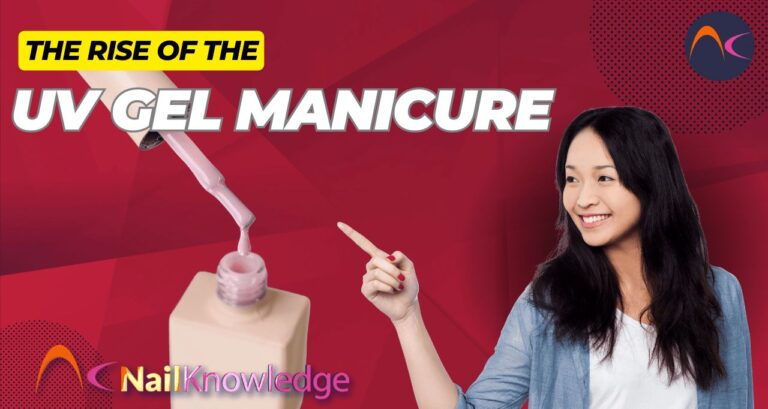
Sự trỗi dậy của phương pháp làm móng gel UV

The term ‘gel manicure’ is commonly used as a nail service that provides a UV cured colour coat on the nails. It is not usually a traditional manicure as it may only provide work on cuticles, nail shaping, and, sometimes, a hand massage with suitable creams.

Importance of the UV Gel Manicure in the Beauty Industry

A UV gel manicure is the most popular nail service and has been for the last few years since it was introduced around 10 years ago. It is so popular with clients for several reasons, the main three being:

         1. it is instantly dry so no waiting or polish to dry before leaving the salon
         2. it should stay perfect for 2-3 weeks with no chipping nor loss of shine.
         3. It can strengthen nails and avoid breakages

It does, however, have some downsides:

         1. It commits the client to revisit the salon every 2-3 weeks for removal or maintenance so there is a time and cost investment
         2. The must be some simple home care steps to follow to keep the manicure and natural nails in top condition
         3. It cannot be removed safely at home without some nail damage
         4. Some brands require buffing of the natural nail and, over the nail. and multiple manicures can result in the thinning of the natural nail.

However, this can be compared to having hair coloured i.e., it should only be carried out by a skilled professional, maintained by the same hairdresser and there is some compromise to be made with the condition of the hair that needs home care.

Understanding the UV Gel Manicure

A UV gel polish, like traditional nail polish, is a type of plastic. It comes in a semi-liquid form, allowing it to be painted onto the natural nail in a thin coating. To set the gel, it needs to be cured under a lamp emitting UVA light. Curing is the scientific term for the process of transforming the semi-solid gel into a hard, solid state

Comparing Regular Nail Polish and UV Gel Polish

Regular nail polish is another type of plastic, and it dries in the air as it contains solvents that evaporate, leaving behind a colored plastic coating. It can be easily and quickly removed with a solvent-based polish remover that breaks the bonds between the molecules.

A UV gel polish achieves a similar result, but unlike regular nail polish, it does not contain solvents (unless it is a hybrid gel polish). Instead, it contains special ingredients that react with UVA light to facilitate drying. When it comes to removal, the process remains the same using solvent removers, but it requires a longer contact time with the solvent to break its bonds and aid in the removal process.

Understanding UV Gel Polish and Lamp Technology

To achieve instant drying, a UV gel polish incorporates ingredients that react with UV light, transforming it into a solid state.

Most brands now utilise lamps with LED bulbs, which are still UV but no longer use tubes with gas due to environmental concerns. These LED bulbs consume less electricity and are more eco-friendly.

The bulbs in the lamps should only emit UVA light, which does not cause a tanning effect. However, prolonged exposure to UVA light can lead to minimal aging effects. Notably, a typical gel manicure session lasts around 3 minutes (or slightly longer if nail art is applied). Research suggests that having two gel manicures a month is equivalent to an additional 2 minutes of exposure to daylight each day.

For clients concerned about UV light exposure, wearing fingerless gloves or using SPF protection (while avoiding direct application to the nails) is a perfectly acceptable precaution.

Preparing for a Gel Manicure Service

Educating Clients on Pre-Manicure Nail Care

The health of the natural nail should be the nail professionals number 1 focus. Skilled application and removal should not cause any changes in the condition of the nail.

         However, it is important that the manicure is only applied to healthy nails. Any nails that have an unwanted condition, such as lifting from the nail bed, discolouration, thin or weak nails etc. Sometime this nail service must be refused due to poor condition of the nails. This ensures that any condition is not made worse by the service. Some may need extra help with specific UV gel products to provide extra strength or to smooth a distorted nail plate. Without this extra help, thin and wet nails are not usually suitable for a UV gel manicure as the nail is too bendy for the more rigid coating.

If a service is refused it is the nail professional understanding nail conditions and preserving the health of the nails for the benefit of their client

Proper Removal of Existing Nail Products

For a UV gel manicure all existing coatings should be removed first. Some brands do allow for an ‘infill’. This is where the coating is not removed but the new growth area is covered with a new application of the colour. This is not always recommended, especially if the colour is opaque as the condition of the nail plate should be checked every 2-3 weeks and this can only be done with a clear coating.

 Shaping and Filing Techniques for Gel Manicures

After inspection of the nail plate to check its condition and health, the nails should be shaped according to the clients wishes and the free edge cleaned to remove any loose nail or dirt.

Cuticle Care and Safe Cuticle Removal Practices

A very important series of steps in the process is to prepare the nail plate so that the coating will adhere to the nail surface without lifting or chipping.

The cuticle is a thin and clear layer of non-living skin that sits on the nail plate and is shed by the living skin at the base of the nail, which is actually called the nếp gấp móng tay gần and NOT the cuticle as many believe. UV gel polish does not adhere to the skin only the nail plate so this thin layer must be very carefully removed without any damage to the nails. This is usually achieved by a cuticle tool or, sometimes by an electric file. Both are safe inexperienced hands. The use of an electric file requires extra training onto of manicure training so clients should ensure their nail tech has a suitable qualification.

There should be no removal of the band of clear ski at the base of the nail using nippers or scissors. This skin is still living and forms a very important seal that prevents pathogens (germs) from reaching the matrix where the nails are grown.

Ensuring Sanitary Conditions in the Salon

The last step before application and after cuticle work is the cleaning of the nail plate. It must have no oils nor moisture on it as these will create a barrier between the nail and the cation and cause it to lift away which will usually result in an infection that starts a pale yellow and develops to a dark green.

It is usually a mixture of a solvent and alcohol which will remove different types of oils. The nail plate has its own natural oils and this will remove them but only temporarily, it will also remove oils from makeup, hand creams and anything else that may be on the nail plate to ensure a clean and perfect surface for the coating to adhere to

Some brands require that the nail plate is buffed. This should only be for removing the shine on the nail and not to scratch the nail. Older formulations relied on these scratches to hold onto the base coat as a physical bond. Modern formulations do not require this scratching as it will eventually damage the nail plate.

Step-by-Step Guide to Gel Manicure Application

Selecting High-Quality Gel Products and Equipment

Many brands have a very specific base coat that is the one that is formulated to adhere to the natural nail. It is usually of a thin consistency and needs to be almost rubbed into the nail as no nail plate is entirely smooth. Its ingredients as such that the coating bonds with the keratin of the nail and creates a strong bond.

 Some brands have the necessary ingredients for good bonding in their colour coat so this step is missed. But always refer to the manufacturers instructions.

Demonstrating the Correct Application of Gel Base Coat

There are different types of bases depending on the brand. Some are called a ‘rubber base’. These are designed for a nail that is a bit weak and bendy so they will move with the nail and not pull against it. Some builder gels are used as a base. This is usually thicker so they can provide some extra strength for a weaker nail They can also be used to reshape a flat nail, for example, to give a more aesthetically pleasing shape.

However, they should not be used for every nail as some do not need them.

All base coats need curing under the UV lamp for the time stated by the manufacturer.

Optimizing Curing Time for Each Layer of Gel Polish

If a rubber or builder base is used, after curing, there may need to be some shape refinement. This will ensure that the shape is smooth and thin at the base and free edge with a thicker area in the centre of the nail to provide some extra strength.

Before any such shaping the sticky layer must be removed. This is the surface of the coating that is not cured due to the oxygen in the air. An alcohol is used for this and most brands have their own product

Whatever thickness of the builder is needed for the specific nail, it is important to apply it in thin layers. A thick layer can cause burning on the nail bed which is both painful and daggers. It is due to the extreme activity in the polymerisation (curing) process. It is better to apply even 3 thin layers than 1 thick layer as a thick layer will not cure properly and could cause allergy problems due to the uncured product left on the nail.

Key Application Tips for Achieving a Long-Lasting Gel Manicure

After the appropriate base is applied, cured and shaped, it is time for the colour to be applied. Again this must be applied thinly. Even if it takes several coats for a good colour it must be done.

It must be cured in the brands lamp. This should have been tested fr each colour in the range as darker or more opaque colours take longer to cure but the brads testing should have addressed this in the formulation and mechanics of the lamp so just follow instructions.

The edge of the nail must also be sealed, as it takes a lot of knocking, especially when typing. This will help prevent chipping and lifting.

Make sure the sides and base of the colour cots are perfect even and straight and not touching the skin. If any does touch the skin, have an orange stick ready to wipe it away. Do not use your finger or nail unless you are wearing gloves.

If the colour looks wrinkled when out of the lamp it means that you have applied it too thickly and it is not cured. Remove it and start again.

Creating Nail Art and Design Techniques

Nail art is very popular and every nail tech has their own specialities.

It can be applied on colour coats or after the top cat depending on the technique. But clients must make sure to book for art as it can add considerable time to the appointment.

Lastly is the top coat. As with traditional nail polish, a top coat is there for protection and extra shine. It is a different formulation from bases and colour cats and is usually tougher and shinier. It is also used to seal in any art that has been applied. As usual, it needs curing in the Đèn UV at the setting and time prescribed by the manufacturer.

After curing, the gel will develop a sticky layer that must be removed using alcohol, taking care not to get any on the skin, as some gel products are known allergens.

Removing Gel Manicures Safely

An opaque UV gel manicure should be removed every 2-3 weeks to check on the health of the nail plate. The only exception to this is if there is a clear coat on the base. Then the colour can be removed (buffing or e-file) to see the nil plate and the new growth prepared as usual and a new colour coat applied.

Apart from this the nails are continually growing and most wearers do not like the bare area of regrowth.

Many pros are pleased to show pictures of their clients nails at 5-6 week of growth with no lifting. This is NOT something to be proud of!! No lifting is just the nail pro doing their job properly but also demonstrates that they have not educated their clients on what is best for the health of their nails!

Some people have lost all their nails to an allergic reaction that wasn’t spotted intimately. This takes many months to grow out and has an impact on other areas of health for a lifetime! It isn’t worth it.

The Importance of Professional Gel Removal Services

Removing a UV gel polish at home is not recommended due to the time and care it requires, typically ranging from 1-3 minutes, depending on the brand. The proper removal process involves soaking the nails in the correct remover, and some top coats may need to be gently buffed beforehand. Attempting to pick off the coating can be most damaging, as it may peel away layers of the nail and considerably weaken them. For safe and efficient removal, it is best to seek the assistance of a professional who knows how to handle the process.

Gentle and Non-Damaging Gel Removal

Removal should be quick and efficient. Some brands require that their top coat must be buffed first as it does not remove in a solvent. This should be done quickly and safely, i.e. Not buffing through all the layers and not catching the skin.

Then nails can be wrapped in foil with a little piece of cotton wool (the size of the nail plate) soaked in remover, or they can soak in a bowl of solvent covered with a towel to preven evaporation. Or using an electric soaking machine which speeds up the process.

Placing hands on a hot pad of the soaking bowl in a bigger bowl of warm water can speed up the process.

Gel Manicure Maintenance and Aftercare

  • When you leave the salon with your pristine nails, you must commit yourself to some simple home care.
  • Your nails may feel stronger but they are not really so don’t  use your nails as tools as you will just break them.
  • Use a good quality nail oil several times a day. This will not only help the skin around your nails but also help the coating to remain flexible.
  • DO NOT remove or pick the coating off!!
  • If your nail feels odd or you can see any discolouration then contact your nail pro immediately.
  • Make sure you have rebooked for 2-3 weeks later.

Common Issues and Solutions

If you notice any lifting of the coating then make an appointment asap. Lifting means that water can seep under it and cause an infection.

Lifting means that the preparation of the nail has not been thorough enough. Maybe some cuticle is left on the nail, the coating has touched the skin or the nail condition is not suitable for a UV gel polish manicure. Not all nails are suitable for a UV gel polish. They may be too thin or even too thick and brittle.

Clients may arrive with damaged nails from previous UV gel polish manicures. The most important is if there are signs of an allergic reaction. If this is suspected then the only option is to remove all product and suggest the client see a GP in the hope they refer to a dermatologist for acrylate testing. This will determine exactly which ingredient/s are causing the reaction. Until this is done it is impossible to know which product can be used again.

Any nail damage must be grown out without any product. The best way is to keep the nails very short and a good nail oil used several times a day. When the nails are healthy, the testing will tell what needs to be avoided. If this is not available, a product that is HEMA free can be tested on one nail and removed in a couple of days to see if there is any adverse reaction. If all is clear, a full manicure can be applied with a strict 2-week appointment to remove to see the nail plate.

Gel Manicure Trends and Innovations

There are many possibilities for nail art when using a UV gel polish. The most popular at the moment is the use of pearlescent pigments over a neutral colour coat.

But glitters, foils and stamping designs can be used with a vast variety of combinations, which are all quick and inexpensive.

Many brands are launching HEMA free products. As HEMA is the most known allergen, it is a good idea to use these. HEMA is used for good adhesion so moving to HEMA free, a far more rigid protocol with nail preparation is needed as the adhesion will be more reliant on a perfectly clean nail plate.

More nail builders are being launched, but it is essential to use them only when needed. Applying builders to nails that do not require them can cause more problems.

The coating should be able to break before the nail does. An overly strong overlay can result in the loss of a nail plate as the coating doesn’t break, but the nail can get pulled off the nail bed!  

Thuộc chủ đề:Thông tin chung, Dịch vụ làm móng, Gel UV

Bước vào mùa hè: Hướng dẫn tối ưu để có đôi chân mềm mại và đẹp

It’s Summertime! That means more pedicures and more dry feet….

Summer brings sunny days, beach vacations, and the desire for perfectly pampered feet. As the season of pedicures approaches, clients often seek ways to combat the common issue of dry and hardened soles. Curious minds wonder whether the sun plays a role in drying out their feet and why these calluses form on the bottom sole. If you’re a beauty professional or simply someone yearning for soft and supple feet this summer, you may have come across suggestions like rubbing Vaseline and wearing socks to bed. But let’s delve into the facts behind these questions to uncover the truth and guide you towards the best foot care practices for the warm months ahead.

Mặt trời có làm khô chân chúng ta không?

Contrary to popular belief, the sun itself doesn’t directly dry out our feet. However, summer weather often encourages us to wear sandals and go barefoot, exposing our feet to more elements than usual. This increased exposure can make us more conscious of our feet’s condition.

Hiểu về da cứng ở bàn chân

Lớp da cứng ở dưới lòng bàn chân, thường được gọi là vết chai, là phản ứng tự nhiên với ma sát. Khi da cọ xát với nhiều bề mặt khác nhau, nó sẽ dày lên để tự bảo vệ khỏi ma sát và tổn thương tiềm ẩn. Việc đi chân trần nhiều hơn và đi giày không vừa chân có thể góp phần hình thành vết chai.

Tầm quan trọng của lớp bảo vệ

It’s crucial to understand that calluses serve as protective layers for our feet. These hardened areas shield the more delicate skin underneath from harm. Attempting to remove calluses entirely can lead to adverse effects, including open sores, blisters, and infections.

Huyền thoại về Vaseline

Some clients may have heard that rubbing Vaseline on their feet and wearing socks overnight can help achieve smoothness. While Vaseline does create a temporary softening effect by sealing in moisture, it’s not a true skin softener. Once the Vaseline is removed, the skin’s moisture content returns to normal after a few hours.

Chăm sóc bàn chân tối ưu

To maintain soft and supple feet, it’s best not to completely remove calluses or over-thin the hardened tissue. Instead, consider using professional products specifically designed for softening feet. These products are more likely to provide significant and longer-lasting conditioning, leading to genuinely soft and beautiful feet.

Câu hỏi thường gặp

  1. Mặt trời có trực tiếp làm khô chân chúng ta không?
    No, the sun itself doesn’t dry out our feet, but increased exposure due to summer activities can make us more aware of foot conditions.
  2. Tại sao bàn chân của chúng ta lại bị chai?
    Vết chai hình thành như một phản ứng bảo vệ chống lại ma sát, thường do đi chân trần hoặc đi giày không vừa chân.
  3. Tôi có thể loại bỏ hoàn toàn vết chai để có đôi chân mịn màng hơn không?
    It’s not recommended to remove calluses entirely, as they serve as essential protective layers for the feet.
  4. Vaseline có hiệu quả làm mềm chân không?
    Vaseline can provide temporary softness by locking in moisture, but it’s not a true skin softener.
  5. What’s the best way to achieve soft and supple feet?
    Sử dụng các sản phẩm chuyên dụng được thiết kế để làm mềm chân vì chúng có tác dụng làm mềm và dưỡng ẩm lâu dài.

Bảo vệ sức khỏe và sự khỏe mạnh của móng tay khỏi tình trạng chảy máu móng

Tụ máu dưới móng là một chấn thương thường gặp liên quan đến móng có thể xảy ra do nhiều yếu tố khác nhau. Hiểu được nguyên nhân, triệu chứng và các phương án điều trị có thể giúp mọi người thực hiện các biện pháp phòng ngừa cần thiết và tìm kiếm sự chăm sóc y tế kịp thời khi cần. Bằng cách chủ động ngăn ngừa chấn thương ngón tay và xử lý tụ máu dưới móng kịp thời, mọi người có thể bảo vệ sức khỏe móng và sức khỏe tổng thể của mình.

Phần kết luận

Summer is the perfect time to show off our feet, but achieving soft and supple soles requires proper care and understanding. While the sun doesn’t directly dry out our feet, it’s essential to protect them from excessive friction and callus removal. Emphasize the use of professional foot care products and avoid myths like using Vaseline for lasting softness. With these tips, your feet will be ready to step into summer with confidence and comfort.

Thuộc chủ đề:Thông tin chung, Phá vỡ huyền thoại, Tình trạng móng tay, Dịch vụ làm móng

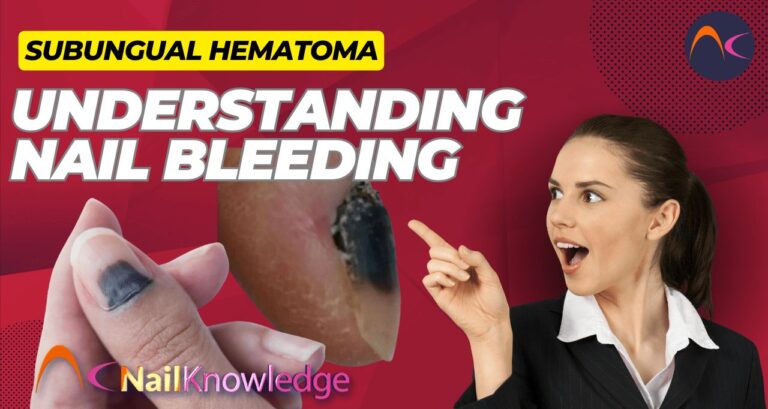
Tụ máu dưới móng – Chảy máu dưới móng

Subungual hematoma, also known as a móng tay bị bầm tím, là một tình trạng bệnh lý xảy ra khi máu tích tụ bên dưới móng tay. Tình trạng này thường do chấn thương ở đầu ngón tay, chẳng hạn như đập vào cửa, đập bằng búa hoặc thậm chí là tác động lực lặp đi lặp lại lên móng tay. Bài viết này khám phá định nghĩa, nguyên nhân, triệu chứng, chẩn đoán, phương án điều trị và biện pháp phòng ngừa, cung cấp những hiểu biết có giá trị về vấn đề phổ biến liên quan đến móng tay này.

Định nghĩa của tụ máu dưới móng

Also known as nail bed hemorrhage or bruised nail is a condition characterized by the accumulation of blood beneath the nail plate. The nail plate acts as a protective cover for the sensitive nail bed, and any injury to the fingertip can cause blood vessels to rupture, leading to blood pooling under the nail.

Tụ máu dưới móng tay

Nguyên nhân và yếu tố nguy cơ của tụ máu dưới móng

Tụ máu dưới móng thường là kết quả của chấn thương đột ngột ở đầu ngón tay. Các hoạt động như kẹt ngón tay, thả vật nặng vào móng tay hoặc các chuyển động lặp đi lặp lại gây căng thẳng cho móng tay đều có thể góp phần gây ra tình trạng này. Các vận động viên và cá nhân tham gia lao động chân tay đặc biệt dễ bị tụ máu dưới móng do bản chất hoạt động của họ.

Triệu chứng và dấu hiệu: Nhận biết sự đổi màu và đau

Triệu chứng rõ ràng nhất của tụ máu dưới móng là sự đổi màu của móng bị ảnh hưởng. Móng có thể có màu tím sẫm, đen hoặc nâu đỏ do máu bị kẹt bên dưới. Ngoài ra, cá nhân có thể bị đau nhói, sưng quanh móng và đau khi ấn vào.

Chẩn đoán tụ máu dưới móng

Xác định tình trạng đổi màu móng và tiền sử chấn thương

In most cases, nail professionals can diagnose subungual hematoma through a physical examination. The characteristic discoloration of the nail and the history of trauma are usually sufficient for diagnosis. However, in some situations where there is uncertainty about the extent of the injury, imaging tests may be recommended.

Sử dụng tia X để loại trừ các tình trạng tiềm ẩn

Các xét nghiệm hình ảnh, chẳng hạn như chụp X-quang, có thể được sử dụng để loại trừ sự hiện diện của gãy xương hoặc các tình trạng tiềm ẩn khác. Chụp X-quang có thể cung cấp thông tin có giá trị về tình trạng của xương và mô mềm, đảm bảo chẩn đoán chính xác và bất kỳ chấn thương nào liên quan đều được xử lý phù hợp.

Các lựa chọn điều trị

Thúc đẩy quá trình chữa lành và giảm đau

For minor cases of subungual hematoma, home remedies and self-care can often promote healing. This includes elevating the affected finger to reduce swelling, applying ice packs to alleviate pain, and avoiding activities that may worsen the injury. It’s crucial to refrain from attempting to drain the blood from under the nail at home, as this can lead to infection and further complications. Keeping the nail clean & flexible, soap & water with a good quality oil will help alleviate pressure from the nail plate on the nail bed. The dried blood will grow out with the nail plate.

Các thủ thuật y khoa cho tình trạng chảy máu móng tay

Trong những trường hợp nghiêm trọng hơn, có thể cần can thiệp y tế. Một chuyên gia y tế có thể tạo một lỗ nhỏ trên móng tay để dẫn lưu máu đã tích tụ, giảm áp lực và thúc đẩy quá trình lành bệnh. Quy trình này được gọi là khoan móng và chỉ nên được thực hiện bởi một nhà cung cấp dịch vụ chăm sóc sức khỏe có trình độ. Sau quy trình này, điều quan trọng là phải giữ cho móng sạch và không bị nhiễm trùng.

Biện pháp phòng ngừa chảy máu móng tay

Tips to Reduce the Risk of Nail Trauma

Để giảm nguy cơ tụ máu dưới móng, mọi người có thể thực hiện một số biện pháp phòng ngừa. Đeo găng tay bảo vệ trong các hoạt động có khả năng gây thương tích cho ngón tay, chẳng hạn như thể thao và công việc xây dựng, có thể cung cấp một lớp bảo vệ. Ngoài ra, nghỉ giải lao trong các nhiệm vụ lặp đi lặp lại có thể giúp ngăn ngừa chấn thương cho đầu ngón tay.

Khi nào cần tìm kiếm sự chăm sóc y tế

Trong khi nhiều trường hợp tụ máu dưới móng có thể được xử lý tại nhà, điều cần thiết là phải tìm kiếm sự chăm sóc y tế trong một số trường hợp nhất định. Nếu chấn thương đi kèm với đau dữ dội, chảy máu quá nhiều, dấu hiệu nhiễm trùng hoặc nếu không chắc chắn về mức độ tổn thương, tốt nhất là nên tham khảo ý kiến chuyên gia chăm sóc sức khỏe ngay lập tức.

Tụ máu dưới móng so với các tình trạng móng khác

Phân biệt với nhiễm trùng nấm móng và u hắc tố

Tụ máu dưới móng đôi khi có thể bị nhầm lẫn với các tình trạng móng khác do các triệu chứng tương tự. Hiểu được các đặc điểm phân biệt của tụ máu dưới móng có thể giúp phân biệt nó với các vấn đề khác như nhiễm trùng nấm móng hoặc u hắc tố.

Xem xét Tiền sử bệnh án và Khám sức khỏe

A healthcare professional can perform a differential diagnosis to accurately identify subungual hematoma and exclude other potential nail disorders. This process involves considering the patient’s medical history, physical examination, and sometimes laboratory tests to reach a precise diagnosis.

Tầm quan trọng của sự can thiệp kịp thời

Tránh gây tổn thương và biến dạng móng vĩnh viễn

Mặc dù tụ máu dưới móng có vẻ như là một chấn thương nhỏ, nhưng nếu không được điều trị, nó có thể dẫn đến các biến chứng. Áp lực kéo dài lên móng tay có thể gây ra tổn thương vĩnh viễn ở móng, dẫn đến biến dạng hoặc mất móng. Trong trường hợp nghiêm trọng, chấn thương có thể lan đến xương, dẫn đến gãy xương.

Tác động dài hạn

Can thiệp kịp thời và điều trị thích hợp là điều cần thiết để ngăn ngừa các tác động lâu dài của tụ máu dưới móng. Bằng cách tìm kiếm sự chăm sóc y tế kịp thời và tuân theo kế hoạch điều trị được khuyến nghị, mọi người có thể giảm thiểu nguy cơ biến chứng và đảm bảo phục hồi nhanh hơn.

Bảo vệ sức khỏe và sự khỏe mạnh của móng tay khỏi tình trạng chảy máu móng

Tụ máu dưới móng là một chấn thương thường gặp liên quan đến móng có thể xảy ra do nhiều yếu tố khác nhau. Hiểu được nguyên nhân, triệu chứng và các phương án điều trị có thể giúp mọi người thực hiện các biện pháp phòng ngừa cần thiết và tìm kiếm sự chăm sóc y tế kịp thời khi cần. Bằng cách chủ động ngăn ngừa chấn thương ngón tay và xử lý tụ máu dưới móng kịp thời, mọi người có thể bảo vệ sức khỏe móng và sức khỏe tổng thể của mình.

Câu hỏi thường gặp

1. Tôi có thể tự hút máu dưới móng tay tại nhà không?
Attempting to drain the blood at home can lead to infections and complications. It’s best to seek medical attention for proper treatment.

2. Tụ máu ở móng tay có phải là tình trạng nghiêm trọng không?
Mặc dù thường không đe dọa đến tính mạng, nhưng tình trạng tụ máu dưới móng không được điều trị có thể dẫn đến các biến chứng lâu dài và cần được xử lý kịp thời.

3. What should I do if my nail doesn’t improve after home care?
If your nail condition worsens or fails to improve after home care, it’s essential to consult a healthcare professional for further evaluation and treatment.

4. Tôi vẫn có thể tham gia các hoạt động thể thao hoặc thể chất khi bị tụ máu dưới móng không?
Engaging in physical activities with a nail bleeding can worsen the injury. It’s best to avoid such activities until the nail has healed completely.

5. Có biện pháp phòng ngừa nào cho tình trạng tụ máu dưới móng không?
Có, đeo găng tay bảo vệ khi thực hiện các hoạt động có nguy cơ gây thương tích cho ngón tay và nghỉ ngơi khi thực hiện các công việc lặp đi lặp lại có thể giúp ngăn ngừa chảy máu móng.

Thuộc chủ đề:Thông tin chung, Tình trạng móng tay

Acetone: Câu chuyện là gì?

The nail industry would be lost without acetone! It is the fastest and most efficient solvent remover for all nail coatings.

Understanding its Properties and Safety in Nail Care

Some people believe is an allergen (as they have experienced adverse skin reactions) but it is not an allergen. We know that the human body produces small quantities of acetone during metabolism. Some diabetic conditions produce larger quantities as do those on a keto diet.

It is, however, an irritant as it dries the skin faster than natural moisturisation and can be replaced when overused and after long skin contact.

It is a lot safer than alternatives used in ‘acetone free’ polish removers. These take considerable; y longer to remove coatings so result in much longer skin contact and therefore are more irritation. Acetone is a solvent as opposed to iso-propyl alcohol which is an alcohol. The two work well together as a nail plate cleanser as they remove different types of oils found on the tấm móng tay.

The Versatility and Precautions of Acetone:

Understanding its Usage in Various Industries

It is used in many applications in a variety of industries. e.g. paints, and household cleaners It poses no significant danger to the environment except aquatic systems due to microbial consumption. There is no strong evidence of chronic health effects with normal and careful usage.

It is a very volatile chemical so evaporates quickly. It is unwise to have too much in a salon breathing environment but US regulators state that 1000 parts per million is the safety limit which is quite high, especially when the known alternative, ethyl acetate (used in acetone free removers) is only 400 PPM.

The most hazardous property of acetone is its extreme flammability so must be kept away from a naked flame and even electrical equipment as a flash point can occur!

Smart Buying

It is best to purchase from beauty wholesalers. This is because it will be suitable for cosmetic use and relatively pure. Bottles bought from other outlets is likely to be contaminated with other chemicals that could cause adverse skin reactions.

Proper Storage of Acetone

Storing acetone should be in its original container in a cool, dark place away from any electricity. When decanted into pumps for the nail desk make sure it had a lid and is kept away from direct sunlight where it could get too warm and therefore more volatile.

Best Practices for Acetone Usage

It is safer to use when wearing protective nitrile gloves to avoid any skin irritation. For the removal of coatings that need soaking, a small piece of cotton wool (about the same size of the nail) that has been soaked in acetone and placed on the nail then wrapped in foil is one of the safest methods as it avoids too much skin contact and reduces evaporation. If using a bowl method, the surrounding skin can be painted with a petroleum jelly product and the bowl covered with a towel.

Disposing of Acetone Safely

Spillages should be soaked up with disposable towels and placed in a metal bin with a lid and liner. This should be removed and double bagged and placed in the usual refuse arrangement. Do NOT tip down any sink as most water pipes are plastic and it will end up in natural water.

Larger quantities of used acetone should be collected by the local hazardous waste management system.

Don’t be afraid of acetone just understand how to use it safely and effectively.

Phần kết luận

Acetone plays a vital role in the nail industry as a fast and efficient solvent remover for various nail coatings. While some individuals may mistakenly believe it to be an allergen, it is essential to understand that it is not one, but rather an irritant when used excessively with prolonged skin contact.

Acetone stands out as a safer alternative compared to “acetone-free” polish removers, as it efficiently removes coatings, reducing the risk of extended skin contact and subsequent irritation.

Being aware of acetone’s volatile and highly flammable nature is crucial for safe usage. Proper storage in a cool, dark place away from electricity is recommended to maintain stability and avoid potential hazards.

To protect against skin irritation, users should opt for protective nitrile gloves while handling acetone. The article provides safe methods for usage, such as the effective soaking of cotton wool and wrapping it on the nail to minimise skin contact and evaporation.

Disposing responsibly is vital, with spillages collected in metal bins with lids and liners. Pouring down sinks must be avoided to prevent potential contamination of natural water sources. Larger quantities should be handled through local hazardous waste management systems.

For assured quality and purity, it is advisable to purchase acetone from reputable beauty wholesalers, ensuring its suitability for cosmetic use and reducing the risk of skin reactions from potentially contaminated sources.

In conclusion, with proper knowledge and adherence to safety practices, acetone can be a valuable asset in the nail industry, offering efficient and effective results while ensuring the well-being of both professionals and users alike.

Câu hỏi thường gặp

1. Is acetone an allergen, and can it cause skin reactions?
Acetone is not an allergen; however, it can be an irritant to the skin when overused or with prolonged contact. Some individuals may experience adverse skin reactions due to its drying effect. It’s essential to handle acetone with care and use protective measures, such as wearing nitrile gloves, to avoid skin irritation.

2. Why is acetone considered a safer option compared to “acetone-free” polish removers?
It is a preferred choice for nail coating removal due to its efficiency and quick action. Unlike “acetone-free” removers, which may take considerably longer to remove coatings, acetone reduces skin contact time, thereby minimizing irritation risks. It is essential to use responsibly and according to recommended guidelines.

3. How should acetone be safely stored and disposed of?
To ensure safety, acetone should be stored in its original container in a cool, dark place, away from electricity and direct sunlight. When decanted into pumps or containers, ensure they have a lid and are kept away from heat to reduce volatility. Spillages should be absorbed with disposable towels and disposed of in metal bins with lids and liners. Avoid pouring acetone down sinks, as it can contaminate natural water sources. Larger quantities should be handled through local hazardous waste management systems for proper disposal.

Thuộc chủ đề:Thông tin chung, Sức khỏe và An toàn, Sữa dưỡng, Thuốc và Chất đánh bóng, Hóa học sản phẩm

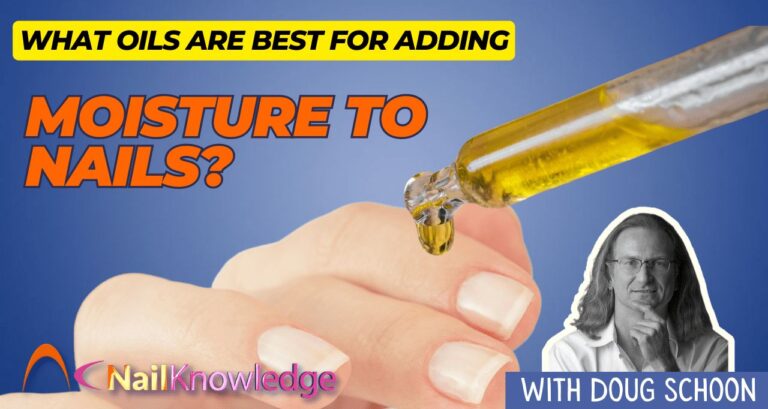
Loại dầu nào tốt nhất để bổ sung độ ẩm cho móng tay?


Ngoài ra, các loại dầu khác nhau có tốt hơn cho tóc hay da không?

Moisturizers are misunderstood. Contrary to what some may believe, oils can’t add any moisture to nails, skin or hair, but they can prevent “dryness”, so this causes some confusion.

Vai trò của việc giữ ẩm và cô đặc nước

When moisturizing is added, that increases “water” concentration inside nails, skin or hair. As you probably already know, water and oil don’t mix.

Bản chất khan của dầu mỹ phẩm và chất nhũ hóa

The water content of any cosmetic oil is nearly zero. They are considered “anhydrous” or “without water”. Oils and water can exist together in a cosmetic lotion or cream, but only if they are mixed with a special type of ingredient called an “emulsifier”. Emulsifiers are used to create many types of oil and water blends. Many foods, such as salad dressings, mayonnaise and ice cream are all made possible by emulsifiers and without them, these ingredients would quickly separate.

Độ ẩm và kem/lotion

Kem và sữa dưỡng thể có thể làm tăng độ ẩm của móng tay, da hoặc tóc vì chúng có chứa một lượng lớn nước. Bản thân dầu cũng có thể làm tăng độ ẩm content of nails and skin, but they do this in a different way than many understand. Oils coat the nails and skin with a thin film that forms a moisture resistant barrier.

Dầu và tác động của chúng đến hàm lượng ẩm

Some oils can penetrate and will create a barrier in the upper layers of the skin. Underneath this barrier, moisture can build up, thus raising the water content of nails or skin, but not for hair. Why? A steady supply of water travels from the nail bed to the nail plate surface, just as it does from the dermis to the skin’s outer surface.

Di cư nước và TEWL

This water migration is slowed down by oils. Water migration through the epidermis is called “trans-epidermal water loss” or TEWL. Cosmetic scientists use special instruments to measure the TEWL to determine the effectiveness of skin lotions, creams and oils. Lower water loss (less water escaping from the skin) means a product is a more effective moisturizer.

Oils’ Effects on Nails, Skin, and Hair

This type of water migration doesn’t occur in a shaft of hair, so oils can’t moisturize the hair. Some oils provide additional benefits by increasing the flexibility in nails, skin or hair. As I explained in a previous question, nail oils add lubrication which allows the various layers to slide across each other, increasing flexibility. Oils also soften each of these to make their surfaces less hard. Some don’t penetrate at all, and remain on top of the skin. Those that sit on top of the skin are called “occlusive agents”.

Chất gây tắc nghẽn và giữ ẩm

That term may sound like something out of a spy thriller, but the word “occlude” simply means “to block” or “obstruct”. Mineral oil is an “occlusive agent” which means it doesn’t penetrate; instead, it will sit on the skin to create a barrier that slows or blocks moisture evaporation.

Dầu silicon cũng có thể là tác nhân gây tắc nghẽn.

Tăng độ ẩm và làm căng da

The same type of moisture build-up would occur if you wrapped the skin in plastic wraps that keep foods fresh in the refrigerator. Occluding the skin causes moisture build-up, but we wouldn’t think of these plastic wraps as a skin moisturizer, even though they increase the level of moisture in the skin.

Hàm lượng nước tăng cũng có thể có chức năng làm mềm và cải thiện độ đàn hồi của da và cũng có thể gây ra tình trạng đầy đặn. Tất nhiên, điều tương tự cũng xảy ra ở móng tay, nhưng ở mức độ thấp hơn và ngược lại cũng xảy ra.

Dầu và ngăn chặn sự thâm nhập quá mức của nước

Dầu cũng có thể ngăn chặn sự xâm nhập của lượng nước dư thừa từ bên ngoài vào móng tay, tóc hoặc da và ngăn chúng bị bão hòa quá mức với các phân tử nước.

Phần kết luận

Hiểu được vai trò của dầu trong việc dưỡng ẩm là rất quan trọng để duy trì móng tay, da và tóc khỏe mạnh. Mặc dù bản thân dầu không thể bổ sung độ ẩm, nhưng chúng đóng vai trò quan trọng trong việc ngăn ngừa khô da bằng cách tạo ra một hàng rào bảo vệ. Các loại dầu khác nhau về khả năng thẩm thấu và tạo ra hàng rào, một số loại dầu mang lại những lợi ích bổ sung như tăng độ đàn hồi.

It’s important to note that water and oil do not mix, and the water content of cosmetic oils is minimal. Creams and lotions, on the other hand, contain significant amounts of water, making them effective at increasing moisture content.

Furthermore, the concept of occlusive agents, such as mineral oil and silicone oils, should be understood. These agents form a barrier on the skin’s surface, slowing down moisture evaporation and enhancing softness and plumping effects. However, they should not be mistaken for traditional moisturizers.

Bằng cách nắm bắt sự khác biệt giữa dầu, kem và chất làm tắc nghẽn, chúng ta có thể đưa ra lựa chọn sáng suốt về các sản phẩm tốt nhất để hỗ trợ sức khỏe móng, da và tóc của mình. Hãy nhớ xem xét các đặc tính riêng biệt của từng loại và lựa chọn phù hợp để duy trì độ ẩm tối ưu và sức khỏe tổng thể.

Câu hỏi thường gặp

  1. Dầu có thể bổ sung độ ẩm cho móng tay, da hoặc tóc không?
    Không, dầu không thể bổ sung độ ẩm cho móng, da hoặc tóc. Tuy nhiên, chúng có thể ngăn ngừa khô da bằng cách tạo thành một lớp màng giữ độ ẩm.
  2. Liệu các loại dầu khác nhau có thể có tác dụng khác nhau lên da và tóc không?
    Có, các loại dầu khác nhau có thể có tác dụng khác nhau lên da so với tóc. Trong khi dầu có thể làm tăng độ ẩm và mang lại lợi ích cho móng và da, chúng không có tác dụng dưỡng ẩm tương tự lên tóc.
  3. Chất gây tắc nghẽn là gì và chúng ảnh hưởng đến khả năng giữ ẩm như thế nào?
    Occlusive agents are substances that create a barrier on the skin’s surface, preventing moisture evaporation. Examples include mineral oil and silicone oils. They can help retain moisture and improve skin flexibility, but they should not be confused with traditional skin moisturizers.

Thuộc chủ đề:Thông tin chung, Tình trạng móng tay

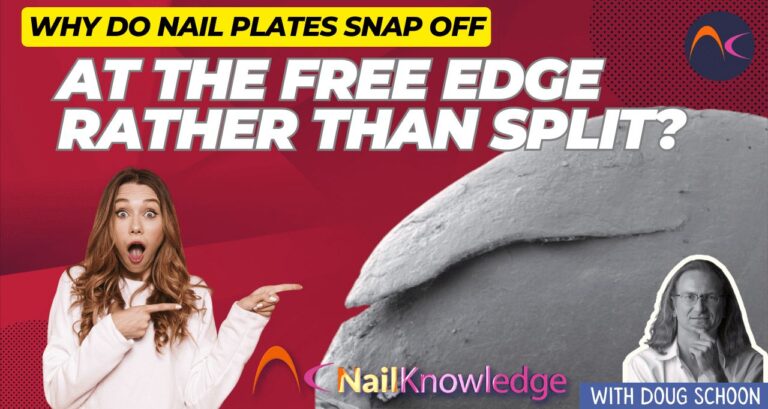
Tại sao móng tay lại gãy ở cạnh tự do thay vì tách ra?

Cấu trúc bên trong của tế bào móng và sự sắp xếp của sợi Keratin

There are many reinforcing bonds holding nails cells together. These form randomly in all directions, so it would be expected that the plate would be equally resistant to cracking in all directions. Clearly, that is not the case. The nail plate is highly prone to breaking in one direction, across the width of the plate as shown in the banner Image (above). Only in an unusual circumstance does a break or split occur down the length of the plate. The reason for this is the internal structure of each nail cell.

Sự lan truyền vết nứt và vai trò của sự sắp xếp sợi Keratin

Keratin fibrils inside a nail plate cell at high magnifications.

Each nail cell is filled with many short strands of keratin called “fibrils” and they have the appearance of tiny fibers. These fibers aren’t randomly distributed, but instead are uniformly stacked into neat piles, much like logs of wood are stacked. These stacks of fibrils lay across the width of the nail plate with their ends pointing toward the sidewalls (see image above). This arrangement makes it much easier for a crack to travel between the fibrils, rather than across or through them. This keratin fiber arrangement leads the cracks to turn toward the sidewalls and prevents cracks from spreading down the length of the plate.

Phòng ngừa chấn thương nghiêm trọng: Móng tay tự bảo vệ mình như thế nào

Cracks move like water flowing downhill; they take the path of least resistance. This helps to prevent the nail plate from splitting open to expose the underlying nail bed. In this way, the nail plate protects itself from catastrophic injuries that can lead to serious infections. The plate can split down its length, but when it does, often the crack follows a deep rãnh hình thành trong móng tay đĩa.

Phần kết luận

Cấu trúc bên trong độc đáo của tế bào móng và sự sắp xếp của các sợi keratin đóng vai trò quan trọng trong cách các phiến móng bị gãy hoặc gãy ra.

Sự hiện diện của các liên kết gia cố theo các hướng ngẫu nhiên sẽ cho thấy khả năng chống nứt như nhau theo mọi hướng, nhưng thực tế không phải vậy.

Các chồng sợi tơ trên chiều rộng của phiến móng tạo ra một cấu trúc có tổ chức cho phép các vết nứt di chuyển giữa các sợi tơ thay vì ngang qua hoặc xuyên qua chúng. Sự sắp xếp này hướng các vết nứt về phía thành bên, ngăn không cho chúng lan rộng xuống chiều dài của phiến móng.

Bằng cách đi theo con đường ít kháng cự nhất, bản móng tự bảo vệ mình khỏi những chấn thương thảm khốc có thể dẫn đến nhiễm trùng nghiêm trọng. Mặc dù bản móng vẫn có thể tách ra theo chiều dài của nó, nhưng nó thường làm như vậy dọc theo một rãnh sâu đã hình thành, bảo vệ thêm cho nền móng bên dưới.

Hiểu được cấu trúc bên trong của tế bào móng tay giúp hiểu rõ hơn về khả năng đáng kinh ngạc của móng tay trong việc chịu được lực và duy trì tính toàn vẹn.

FAQ’s

Q: Why do nail plates snap off at the free edge rather than splitting?
A: Các phiến móng chủ yếu bị gãy ở mép tự do do cấu trúc bên trong độc đáo của các tế bào móng. Sự sắp xếp của các sợi keratin, xếp chồng lên nhau theo chiều rộng của phiến móng, tạo ra một đường đi ít cản trở nhất để các vết nứt di chuyển giữa các sợi thay vì ngang qua hoặc xuyên qua chúng. Sự lan truyền vết nứt có hướng này về phía các thành bên ngăn ngừa sự tách dọc theo chiều dài của phiến móng.

H: Cấu trúc bên trong của tế bào móng tay góp phần tạo nên độ bền của móng như thế nào?
A: The internal structure of nail cells plays a significant role in the strength of nail plates. The presence of reinforcing bonds that form randomly in all directions provides overall resistance to cracking. However, the organized arrangement of keratin fibrils, resembling stacked logs of wood, further enhances this strength. By uniformly stacking the fibrils across the width of the nail plate, cracks are more likely to follow the path between the fibrils rather than across them, thereby maintaining the plate’s integrity.

Hỏi: Việc nứt móng có thể dẫn đến nhiễm trùng nghiêm trọng không?
A: Có, việc tách móng có khả năng dẫn đến nhiễm trùng nghiêm trọng. Tuy nhiên, điều quan trọng cần lưu ý là móng có cơ chế bảo vệ bản thân khỏi những chấn thương nghiêm trọng như vậy. Khi móng bị tách, nó thường theo một rãnh sâu hình thành trên móng, giảm thiểu việc lộ ra phần nền móng bên dưới. Biện pháp bảo vệ này giúp giảm nguy cơ nhiễm trùng. Tuy nhiên, điều cần thiết là phải duy trì vệ sinh móng đúng cách và xử lý kịp thời bất kỳ vết tách hoặc chấn thương nào để ngăn ngừa biến chứng.

Thuộc chủ đề:Thông tin chung, Tình trạng móng tay

  • « Chuyển đến Trang trước
  • Trang 1
  • Interim pages omitted …
  • Trang 15
  • Trang 16
  • Trang 17
  • Trang 18
  • Trang 19
  • Interim pages omitted …
  • Trang 30
  • Chuyển đến Trang sau »

Nâng cao kiến thức về làm móng

Tham gia bản tin của chúng tôi!
ĐĂNG KÝ...

Bản quyền © NailKnowledge

Kiến thức về móng tay

  • Sách điện tử
  • Về chúng tôi
  • Các khóa học
  • Tin tức
  • Blog
  • Bản tin
  • Thuật ngữ

Chính sách

  • Trang riêng tư
  • Điều khoản và điều kiện
  • Chính sách Cookie

Ủng hộ

  • Liên hệ với chúng tôi
  • Hỏi các chuyên gia
  • Hỗ trợ hệ thống
  • Câu hỏi thường gặp
Vietnamese
Vietnamese
English Portuguese Spanish