• Bỏ qua primary navigation
  • Bỏ qua nội dung chính
  • Bỏ qua footer
Kiến thức về móng tay

Kiến thức về móng tay

  • Các khóa học
  • Sách điện tử
  • Giỏ sách điện tử
  • Cơ sở tri thức
    • Cơ sở tri thức
    • Hỏi các chuyên gia
    • Thuật ngữ
  • Tin tức
  • Blog
  • Phòng trưng bày
    • Thư viện nghệ thuật làm móng
    • Nghệ sĩ làm móng
    • Tham gia Elite
  • Đăng nhập

Thông tin chung

Hình dạng móng tay đẹp nhất cho bàn tay của bạn

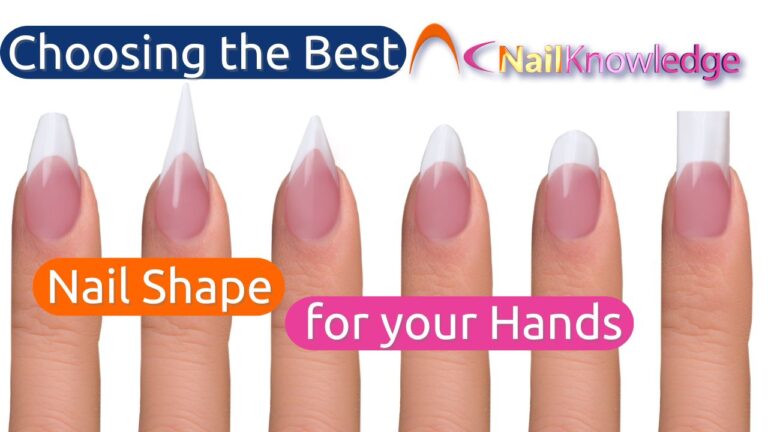
As a nail professional, I see many clients complaining that they wish their fingers were longer, or their nail beds (the area the nail plate sits on) were different. Even though we can’t change the shape of either of them (you are born with a certain shape of nail bed), there are clever ways in tricking the eye to make them look longer, narrower or anything else you want, by changing the shape of the free edge.

The Different Shapes and how they Alter the Nail’s Appearance

Việc lựa chọn hình dạng móng tay phụ thuộc vào sở thích cá nhân, hình dạng tự nhiên của nền móng và lối sống của bạn. Sau đây là một số hình dạng móng tay phổ biến và đặc điểm của chúng để giúp bạn chọn được hình dạng phù hợp nhất với mình.

Móng tay hình bầu dục

Móng tay hình bầu dục
Ảnh của Chantelle Ayres trên @nails.bellavita

Móng tay hình bầu dục được coi là cổ điển và nữ tính, giống như hình quả hạnh nhưng hơi cụt hơn. Chúng có các cạnh tròn mềm mại theo hình dạng tự nhiên của đầu ngón tay, giúp kéo dài móng theo cả chiều rộng và chiều dài.

Móng tay hình vuông

Móng vuông
Ảnh của Chantelle Ayres trên @nails.bellavita

Square-shaped nails have straight, flat edges and sharp corners. They provide a clean and modern appearance. Square nails can make your fingers appear wider and are well-suited for those with longer and narrower nail beds, and especially if you like shorter nails.

Móng tay hình tròn

Móng tay tròn
Ảnh của Chantelle Ayres trên @nails.bellavita

Round nails have curved edges that mimic the shape of the fingertip. Round nails offer durability as they do not have sharp corners that are prone to breakage, and it elongates your fingers and makes them look slender. Round nails also make wide nail beds appear thinner. 

Móng tay hình quả hạnh nhân

Hình dạng móng tay hạnh nhân
Ảnh của Chantelle Ayres trên @nails.bellavita

Móng tay hình quả hạnh nhân được vuốt nhọn với một điểm tròn ở đầu, giống như hình dạng của quả hạnh nhân. Chúng có thể làm cho ngón tay trông dài hơn và thon hơn. Móng tay hình quả hạnh nhân thanh lịch và đa năng, phù hợp với cả chiều dài móng tay ngắn và dài.

Coffin/Ballerina Shaped Nails

Móng tay quan tài của nữ diễn viên ballet
Ảnh của Chantelle Ayres trên @nails.bellavita

Coffin or ballerina-shaped nails have a squared-off tip and tapered sides, resembling the shape of a coffin or a ballerina’s pointe shoe. This shape offers a trendy and edgy look, especially when paired with longer lengths. It requires a lot of upkeep, so like the stiletto, you must commit to regular salon visits.

Móng tay hình lưỡi dao

Móng tay Stilleto
Ảnh của Chantelle Ayres trên @nails.bellavita

Stiletto nails are long and pointed, similar to the shape of a stiletto heel. They create a bold and dramatic appearance. Stiletto nails require longer lengths and maintenance due to their pointed shape, but are incredible to elongate fingers!

Squoval Shaped Nails

Móng tay hình bầu dục
Ảnh của Chantelle Ayres trên @nails.bellavita

Squoval nails are the chameleon of nail shapes, these nails look good on everyone! Part oval and part square, it’s a very easy to maintain style, especially on short nails.

Chọn hình dạng móng tay phù hợp

Khi chọn hình dạng móng tay, hãy cân nhắc đến những thông tin trên về kích thước bàn tay và hình dạng nền móng của bạn.

More importantly, your lifestyle, and personal style preference, it’s also vital when choosing. Is your job really hands on? Maybe it’s best to choose a style without many sharp corners, as these can get caught, bump into things and become blunt, which will change the shape.

Bạn phải dành bao nhiêu thời gian ở tiệm? Một số kiểu tóc cần được chăm sóc nhiều hơn những kiểu khác, như đã thấy ở trên.

Thử nghiệm nhiều hình dạng móng tay khác nhau có thể giúp bạn tìm ra hình dạng phù hợp nhất với mình.

Additionally, consult with a professional nail technician who can provide guidance based on your specific hand and nail characteristics.

Thuộc chủ đề:Thông tin chung, Nghệ thuật làm móng, Dịch vụ làm móng

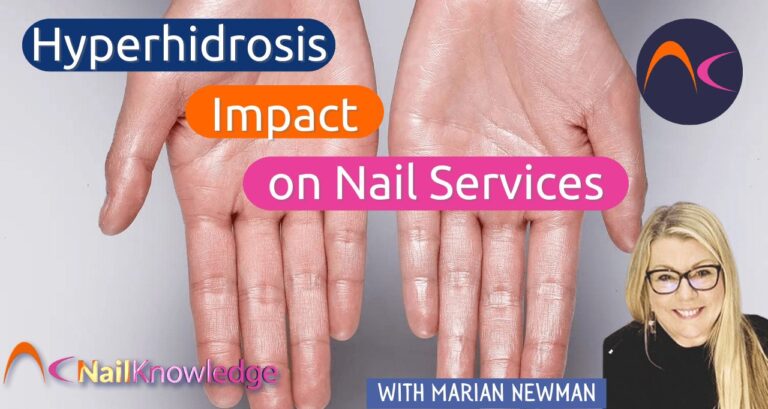
Tăng tiết mồ hôi và tác động đến dịch vụ làm móng

Hyperhidrosis, a condition characterised by excessive sweating, can have a significant impact on various aspects of a person’s life. In this article, we will explore the relationship between hyperhidrosis and nail services. From the challenges faced by individuals with hyperhidrosis to tips for managing the condition during nail treatments, we’ll cover it all. Let’s dive in!

Understanding Hyperhidrosis

Hyperhidrosis is a medical condition that causes excessive sweating beyond what is necessary to regulate body temperature. It affects approximately 3% of the global population and can occur in various parts of the body, including the palms, feet, underarms, and face. People with hyperhidrosis often experience social and emotional challenges due to their condition.

Hyperhidrosis and Nail Services

The Challenge of Sweaty Hands

Individuals with hyperhidrosis often face difficulties when receiving nail services due to their sweaty hands. Excessive moisture on the palms can make it challenging for nail technicians to work with precision and accuracy. The wetness may cause the polish to smudge, leading to a less satisfactory outcome for the customer.

Nail Product Longevity

Hyperhidrosis can affect the longevity of nail polish.  This can be frustrating for individuals who desire long-lasting and flawless nails.

  • Excessive sweating creates a consistently moist environment around the nails. Moisture interferes with the bonding process between the natural nail and the nail coating, causing the gel or other products to lift or peel off more quickly.
  • Weakened Adhesion: The excess moisture can weaken the adhesion of the nail coating to the nail bed. As a result, the coating becomes more prone to lifting, chipping, or breaking, leading to shorter-lasting results.
  • Chemical Reaction: The sweat itself can create a chemical reaction with certain nail products. This reaction can alter the composition of the nail coating, making it less durable and more susceptible to damage.
  • The best way to combat this during application is to use a stronger cleanser/dehydrator if your brand has one. If not, wipe over the nail plate thoroughly with plenty of cleanser (not just acetone, preferably a mix of acetone and IPA), allow it to evaporate and apply the coating. Do this to one nail at a time immediately before the first application. This will ensure the nail plate is perfectly dry and to allow a good adhesion. If this is done there should not be any lifting.

Nail Fungal Infections

Due to the constant moisture caused by hyperhidrosis, individuals may be more prone to nail fungal infections. The warm and damp environment created by excessive sweating provides an ideal breeding ground for fungi. Nail technicians should take precautions to prevent the spread of infections and ensure proper hygiene during nail services.

Managing Hyperhidrosis During Nail Treatments

Preparation is Key

Before visiting a nail salon, individuals with hyperhidrosis can take certain steps to minimize sweating. Washing and thoroughly drying the hands before the appointment can help reduce moisture. Additionally, using antiperspirants specifically formulated for hands may offer temporary relief from excessive sweating.

Communication with Nail Technicians

Openly discussing hyperhidrosis with nail technicians is crucial. By informing them about the condition, individuals can establish a better understanding and seek their cooperation in dealing with the challenges posed by sweaty hands. Nail technicians may suggest alternative techniques or products to enhance the longevity of the manicure.

Phần kết luận

Hyperhidrosis can present unique challenges when it comes to nail services. From the difficulties faced by individuals with sweaty hands to the impact on nail products longevity, it is essential to address these concerns. By understanding the condition and implementing appropriate strategies, individuals with hyperhidrosis can still enjoy nail services without compromising on quality or satisfaction.

FAQs (Frequently Asked Questions)

Q1: Can hyperhidrosis be treated permanently?
A1: While there is no permanent cure for hyperhidrosis, several treatment options can help manage the condition effectively.

Q2: Can hyperhidrosis affect other beauty treatments apart from nail services?
A2: Yes, hyperhidrosis can affect various beauty treatments, including makeup application and hairstyling.

Q3: Is hyperhidrosis a common condition?
A3: Hyperhidrosis affects approximately 3% of the global population, making it a relatively common condition.

Q4: Are there any home remedies for managing hyperhidrosis?
A4: While home remedies may provide temporary relief, it is advisable to consult a healthcare professional for appropriate treatment options.

Q5: Can hyperhidrosis impact a person’s self-esteem?
A5: Yes, individuals with hyperhidrosis may experience reduced self-esteem and social anxiety due to the condition.

Thuộc chủ đề:Thông tin chung, Tình trạng móng tay, Dịch vụ làm móng

Hệ thống phá vỡ trong ngành công nghiệp làm móng

The Extent of “Systems” in Nail Products

Any company would like you to apply their nail polish to their enhancement products and to use their nail oil or hand lotion but these aren’t the systems I’m concerned about. I’m talking about matched pairs of products that are designed to be used together in order to function properly and safely.  Good examples are monomer liquid and powder or UV gels and nail lamps. Even primers, removers and nail prep products are often formulated and tested to ensure they work well together and are compatible.This question that was asked really isn’t about breaking systems; it is actually about following directions.

Adding Pigments, Glitters, or Nail Foils: Are You Breaking the System?

Adding something to a nail powder or UV gel that wasn’t designed for that product may mean you’re using it incorrectly. The nail professional is skipping all the testing a manufacturer would normally do to ensure an additive is safe and effective. Just because nothing happens when this is done, doesn’t mean much. I can close my eyes for 30 seconds while driving.  Just because I don’t have an accident, doesn’t mean that driving with my eyes closed is safe or wise.

Often there are long term consequences related something a nail professional started doing a year ago. For instance, some clients may take many months or even years to develop an allergic reaction. Small changes may affect only small percentage of clients, causing them to have service breakdown.  Often nail professionals blame such problems on something the client is doing. Many times it’s related to something they changed months ago.  

The Dangers of Mixing and Misusing Product Lines

When product lines are mixed together and not used as they were designed, unexpected consequences can occur. Don’t expect some kind of warning, instead understand that you’ve created a situation where something unexpected and surprising may eventually happen. This could put you and your clients at increased risk for something to go wrong. It may not happen today, maybe not tomorrow, but maybe in month or a few years. Perhaps it will be a combination of several changes over time that will trigger unexpected problems. This isn’t just speculation, I’ve seen this happen many times.

Challenges in Identifying and Resolving Problems

No Idea nail allergey

When the issue occurs, the nail professional has no idea how to solve the problem because it is related to many things they are doing and not just one. Here is an example: a nail professional may decide to mix a pigment into her UV gel and doesn’t notice any problems over the next month. A few months later, she buys some nail foils at a trade show and still doesn’t notice any problems. She reads on the Internet about a new UV base gel someone is raving about, so she tries it. Then she buys a different UV nail lamp that’s on sale, when the old one wears out. Six months later, she notices that several of her client’s nails are breaking more easily and she’s doing more repairs than ever before. A few clients develop oddly discolored nail plates and several are becoming sensitive, the skin around their nails is red and swollen or the nail bed is feeling tight or itchy. What’s going on and how can she solve these problems?

Many struggle with such problems all the time and don’t ever solve them. These things happen all the time and I get questions like this on a weekly basis. Over the years I’ve noticed that nail professionals rarely think it is something they are doing, most blame the products or the clients.

The Role of Nail Technicians in Preventing Issues

Anyone who’s ever educated for a nail company or worked their company’s Educational Hotline can tell you a hundred stories like this. It might be something the client is doing or a defective product, but in my experience, most often it’s something the nail technician is doing/not doing.  Skin reactions usually occur because nail professionals make up their own directions, mixing different product lines together, creating their own blends or improperly applying, curing or removing the nail coatings. I understand that nail professionals consider themselves artists and want to be creative, but painting a canvas or sculpting in wood is not the same as working on someone’s nails and skin.

Addressing the Challenges for a Safer Nail Industry

The Importance of Adhering to Manufacturers’ Instructions

In the ever-evolving nail industry, it is crucial to address the challenges that arise when deviating from manufacturers’ instructions and introducing new products that fall outside the brand. One of the most significant concerns is the limited support provided by customer care in the event of problems. When nail professionals mix and misuse product lines, they expose themselves and their clients to potential risks without explicit warnings.

The consequences of these actions can be unpredictable and far-reaching. Issues may not surface immediately but can manifest months or even years later, leading to allergic reactions, service breakdowns, and client dissatisfaction. Unfortunately, when such problems occur, nail professionals often find themselves ill-equipped to address them. The accumulation of multiple changes over time makes it challenging to identify the exact cause, exacerbating the complexity of the issues at hand.

Nail technicians may inadvertently contribute to these problems by experimenting with product mixtures or disregarding proper application, curing, and removal techniques. It is important to recognize that the artistry involved in nail enhancements differs significantly from traditional artistic mediums like canvas or wood. Failure to adhere to manufacturers’ instructions can result in skin reactions, formulation discrepancies, or the improper application of nail coatings.

The prevalence of these challenges has prompted some individuals to leave the nail industry, while dissatisfied clients warn others to avoid artificial nail coatings altogether. However, there is a solution: education. Nail professionals must equip themselves with comprehensive knowledge and diligently follow manufacturers’ directions. Only through this commitment to using professional nail products properly and safely can we hope to alleviate the ongoing challenges that plague the industry.

Let us strive for a safer and more successful nail industry by embracing the importance of adhering to instructions and fostering a culture of education. By taking the initiative to educate ourselves and others, we can contribute to positive change and ensure the well-being of both nail professionals and their valued clients. Together, we can navigate these challenges and create a safer, more reliable nail industry that thrives on expertise and adherence to manufacturers’ instructions.

Thuộc chủ đề:Thông tin chung, Chất lỏng và bột, Dịch vụ làm móng, Hóa học sản phẩm, Gel UV

Hiểu về khả năng tương thích của móng tay

Lựa chọn hệ thống phù hợp để có kết quả lâu dài

Have you ever encountered clients who complain that gels never seem to last on their nails, no matter what you do? It’s a common frustration for both nail technicians and clients alike. In this blog post, we will delve into the world of nail compatibility and explore how choosing the right system can make a significant difference in the longevity of nail coatings.

Đánh giá móng tay: Các yếu tố cần xem xét

Không phải tất cả các móng đều được tạo ra như nhau, và những gì phù hợp với một khách hàng có thể không phù hợp với khách hàng khác. Khi nói đến việc lựa chọn hệ thống móng phù hợp, có một số yếu tố quan trọng cần xem xét:

1. Nail Type Assessment: Soft and pliable vs. Hard and brittle Nails

  •  Móng tay mềm, dễ uốn: Những loại móng tay này thường có độ đàn hồi cao hơn và có thể không phải là bề mặt lý tưởng để bám gel. 
  •  Móng tay cứng hơn: Móng tay cứng hơn thường phù hợp với nhiều hệ thống khác nhau, bao gồm cả gel.

2. Phân tích mức độ hoạt động

  • Khách hàng hoạt động nhiều: Khách hàng tham gia các hoạt động khiến móng tay liên tục chịu áp lực, chẳng hạn như thể thao hoặc lao động chân tay, có thể có lớp sơn móng tay bền hơn. Trong danh mục này, chúng tôi có thể bao gồm thợ làm tóc, bà mẹ mới sinh (tay họ luôn ngâm trong nước, v.v.). Những khách hàng này thường có kết quả tốt hơn với móng tay ngắn hơn.
  •  Low activity clients: Those who have less physically demanding lifestyles may have nails that are more compatible with gel systems. tend to get better results with their nail coatings.

3. Hyperhidrosis Consideration

  •   Tăng tiết mồ hôi là tình trạng đổ mồ hôi quá nhiều, có thể ảnh hưởng đến độ bền của lớp phủ móng tay.
  •   Những khách hàng bị chứng tăng tiết mồ hôi có thể thấy kết quả không kéo dài được lâu bất kể hệ thống móng nào được chọn.

Sự không tương thích của gel và các giải pháp thay thế

For clients with soft, pliable nails, gels may not be the most suitable option. These nails tend to work better with a liquid and powder (L&P) system. The L&P system provides a stronger and more rigid coating, better suited to the natural flexibility of soft nails.

Phân tích mức độ hoạt động

A client’s level of physical activity plays a significant role in the durability of nail coatings. For high-activity clients, consider recommending additional protective measures or alternative nail systems that can withstand the demands of their lifestyle. Encourage them to be mindful of their nail health during activities that may compromise the longevity of their manicure, and stress on the importance of proper home care.

Nghiên cứu tình huống: Tìm giải pháp phù hợp

In the specific case of a client with gel compatibility issues, it may be worth trying an L&P system. Perform the necessary nail preparation and apply the L&P system to assess its impact on the client’s nails. Monitor the longevity of the coating and gather feedback to determine if this alternative system provides better results.

Phần kết luận

Understanding nail compatibility is essential for providing long-lasting and satisfactory nail services. Nail technicians should evaluate factors such as nail type, activity level, and hyperhidrosis to determine the most suitable system for each client. By customizing our approach and considering these crucial factors, we can enhance the durability of nail coatings and ensure happier, more satisfied clients. Remember, it’s a journey of continuous learning and adaptation. Stay open to experimentation and embrace the challenge of finding the perfect system that complements your clients’ unique nail characteristics. Together, we can achieve stunning, long-lasting results that exceed expectations

Thuộc chủ đề:Thông tin chung, Dịch vụ làm móng

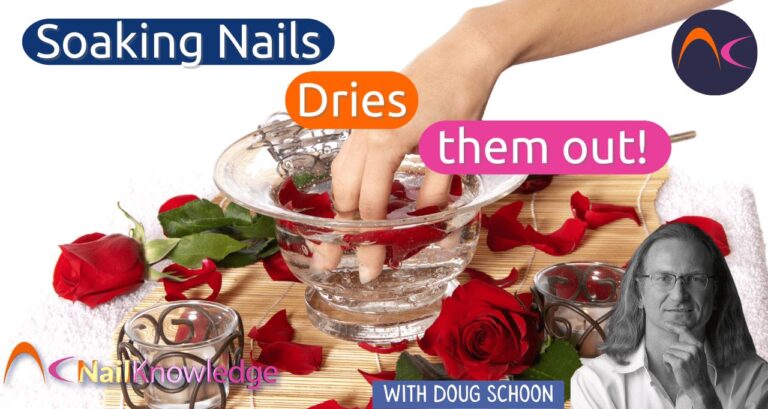
Những hiểu lầm thường gặp về việc ngâm móng và làm khô móng

It is a very common misunderstanding that soaking the nails dries them out. How can soaking the nails in water make them dry?   

That makes no sense. Water cannot cause anything to become dry.  Extra water inside the nail plate causes it to become wetter. If the extra water leaves, the nail plate returns to its normal levels of moisture. The plate always contains some moisture, which is the same as saying it contains water. I think what your teacher was trying to say is that excessive water exposure can damage some nail plates when they are repeatedly exposed to water and then dried out again.

Differentiating Damage from Dryness in Nail Plates

When the nail plate absorbs water, it swells to accommodate the extra water molecules that have crowded between the layers of the nail plate. Soaking in water for more than sixty seconds allows water molecules to seep between the layers of nail cells and sheath them in this liquid lubricant. Now the layers can slide past each other with greater ease, making the nail plate easier to bend. A similar effect is seen when hair absorbs water, it becomes much easier to stretch without breaking.

The Swelling Effect: Nail Plate and Water Absorption

When the nail plate absorbs water, it swells to accommodate the extra water molecules that have crowded between the layers of the nail plate. Soaking in water for more than sixty seconds allows water molecules to seep between the layers of nail cells and sheath them in this liquid lubricant. Now the layers can slide past each other with greater ease, making the nail plate easier to bend. A similar effect is seen when hair absorbs water, it becomes much easier to stretch without breaking.

 Vulnerability of Softened Nail Plates: Surface Damage and Causes

Absorbed water causes the plate to swell, which may cause cracks to grow. Absorbed water will also make the nail plate’s surface softer and much easier to damage. The softer the nail’s surface, the more prone it will be to scratching, pitting, flaking, and peeling. softened nail plates are easier to damage by physical actions such as prying, picking, scraping, filing, etc. When nail plates are softened by soaking in water, surface damage to the nail is more likely to occur. Water gets the blame, but heavy handed nail techs usually cause much of the surface damage.

A good general rule to remember is, “when a nail plate is soaked in water or other solvents for more than sixty seconds, expect its surface to be more susceptible to damage for the next hour”. Be Cautious!

Precautions for Damaged Nails: Water Absorption and Swelling

Hand washing for fifteen to twenty seconds is not expected to add excessive amounts of water to a nail plate. To help maintain appropriate levels of cleanliness in nail salons and services, clients should always wash their hands before receiving any type of nail  service. Although healthy nails are generally resistant to the effects of water; when previously damaged nails are soaked in water for more than a few minutes they can more quickly absorb excessive amounts of water and can swell the nail plate. When the nail plate swells, this worsens existing cracks or splits, which can weaken the nail plate. Of course, this could also be what your teacher was referring to when she said water dried out the nail. Using proper terminology is important for any profession and the nail industry is no exception.

Please help with this issue and always strive to use proper and professional nail terminology- this facilitates better understanding.

Câu hỏi thường gặp

1. Can soaking nails in water actually dry them out?

No, soaking nails in water does not dry them out. Water does not have the ability to cause dryness. Instead, excessive water exposure can lead to other forms of damage to the nail plate.

2. How does excessive water exposure affect the nail plate?

Excessive water exposure can cause the nail plate to swell as it absorbs water molecules. This swelling can lead to the growth of cracks and weaken the nail plate. Additionally, the absorbed water softens the nail’s surface, making it more prone to scratching, flaking, and peeling.

3. Does water damage to the nail plate resemble dryness?

Water damage to the nail plate is often mistaken for dryness, even though they are not the same. The nail plate may have the same water content as before, but the surface damage becomes more visible, giving the appearance of dryness.

4. Why does water make the nail plate easier to bend?

When the nail plate absorbs water, it swells and the water molecules fill the gaps between the layers of the nail cells. This makes the layers slide past each other more easily, resulting in increased flexibility of the nail plate.

5. What precautions should be taken to prevent surface damage to softened nail plates?

To prevent surface damage to softened nail plates, it is important to handle them with care. Avoid activities such as prying, picking, scraping, or filing the nails aggressively. After soaking the nail plate in water or solvents for more than sixty seconds, expect its surface to be more susceptible to damage for the next hour. Being cautious and using proper nail terminology facilitates better understanding and communication within the nail industry.

Thuộc chủ đề:Thông tin chung, Phá vỡ huyền thoại, Dịch vụ làm móng

Don’t Use a Builder to Just Lengthen Time Between Salon Visits!

In the realm of nail treatments, the builder is often subject to misconceptions. Clients mistakenly view it as a means to prolong the lifespan of UV gel polish (UVGP), aiming to reduce salon visits. However, it’s crucial to comprehend that this is not the builder’s primary purpose. This article explores the true essence of the builder, its proper utilization, and the importance of regular nail checks. Gain insights into harnessing the builder’s potential for nail treatments and maintaining optimal nail health.

What is a Builder?

Before we discuss the common misconception surrounding builders, let’s establish a clear definition. In the realm of nail treatments, a builder refers to a specific type of gel or acrylic product used to enhance the strength and structure of the natural nail. Builders are designed for nails that require additional reinforcement, especially when they have a length of free edge. Unlike regular UV gel polish, which provides color and shine, a builder is slightly more viscous and less flowing. It can be used to create aesthetically pleasing nail shapes, such as a flat or ski jump, and even a fan nail. The application allows the nail professional to not only provide strength but also shape the nails beautifully.

Common Misconception: Using a Builder to Extend the Lifespan of UV Gel Polish

One of the most prevalent misconceptions among clients is the belief that using a builder can prolong the lifespan of their UV gel polish. They assume that this will help the UVGP last longer, thus reducing the need for frequent salon visits. However, it is crucial to debunk this myth and educate clients on the proper use of a builder. Regardless of whether a client requests it, all nails should be checked every 2-3 weeks. This regular maintenance is necessary to safeguard the health of the nail plate and nail bed, as various issues can arise within that timeframe.

Importance of Regular Nail Checks

Regular nail checks play a vital role in maintaining healthy nails, regardless of whether the coating has endured or not. During the span of 2-3 weeks, nails can undergo significant changes that may compromise their overall health. Issues such as chipping, lifting, or bacterial growth can occur, and only a thorough nail check can identify these problems early on. Neglecting regular checks and relying solely on the longevity of UVGP can lead to potential nail damage, infections, and prolonged recovery periods.

When Should a Builder Be Used?

Understanding the appropriate situations for using a builder is key to providing optimal nail care. Builders are best suited for nails that are slightly weak and require extra strength, particularly those with a length of free edge. The additional reinforcement offered ensures that the nails remain strong and resistant to breakage. Nail professionals should assess each client’s nails individually and recommend the use of a builder when necessary. By incorporating a builder into the treatment, nail technicians can address weak nails effectively and help clients achieve both functionality and aesthetic appeal.

Enhancing Aesthetics with a Builder

Apart from providing structural support, a builder can significantly contribute to the overall aesthetic appeal of nails. Nail technicians have the opportunity to shape and mold the nails, creating curves and contours that are visually pleasing. Whether it’s a flat nail, a ski jump shape, or a fan nail, a builder can be skillfully applied to achieve these desired shapes. By utilizing a builder, nail professionals can showcase their expertise and provide clients with stunning nail designs that complement their style.

Educating Clients on the Proper Use of a Builder

As a nail professional, it is essential to educate clients about the purpose and correct application of this product. Many clients may request a builder to extend the lifespan of their UVGP, unaware of its intended use. By taking the time to explain the role of this product in reinforcing weak nails and enhancing aesthetics, nail technicians can empower clients with knowledge. Clients need to understand that the builder should be utilized based on the professional’s expertise, not solely on their personal preference or assumptions.

Alternative Approach: Using a Clear Builder

In certain cases, a nail technician can opt for an alternative approach. Instead of removing the colored coating completely during maintenance, they can use a clear builder. By removing the colored layer and infilling the clear builder, nail professionals can efficiently perform nail checks and ensure the structural integrity of the nails. This approach minimizes the need for repetitive application and removal of UVGP while still maintaining the health and strength of the nails.

Maximizing Product Potential

In the realm of nail treatments, professionals have access to a wide array of products designed for specific purposes. It is crucial to utilize these products wisely and understand their individual applications. While a builder serves the purpose of reinforcing weak nails, other products cater to different aspects of nail care. By expanding their knowledge and skillset, nail technicians can effectively address various nail concerns and deliver the best possible outcomes for their clients.

Phần kết luận

In conclusion, understanding the purpose and proper use of a builder in nail treatments is essential for both nail professionals and clients. Using a builder solely to extend the lifespan of UV gel polish is a common misconception that needs to be clarified. Nail checks every 2-3 weeks are crucial for identifying and addressing potential issues, irrespective of the

coating’s durability. Builders should be applied when nails require extra strength or shape enhancement, and their use should be based on the professional’s expertise. By educating clients about the role of a builder and using it correctly, nail technicians can prioritize nail health and provide aesthetically pleasing results.

Câu hỏi thường gặp

1. Can a builder be used for all nail types?

   – Builders are specifically designed for nails that require additional strength, particularly those with a length of free edge. Not all nail types may benefit from the use of a builder, so it’s important to assess each client’s nails individually.

2. How often should a nail check be performed?

   – Nail checks should be conducted every 2-3 weeks, regardless of whether the coating has lasted or not. This regular maintenance allows for early detection of potential issues and ensures the overall health of the nails.

3. Can a builder replace regular UV gel polish maintenance?

   – No, it should not replace regular maintenance for UV gel polish. While a builder provides strength and shape enhancement, UV gel polish requires its own maintenance routine to maintain color, shine, and overall appearance.

4. What if a client insists on using a builder incorrectly?

   – As a nail professional, it is important to explain the purpose and proper use of a builder to clients. If a client insists on using it improperly, it is crucial to prioritize their nail health and provide the necessary guidance to ensure proper application.

5. Are there any risks associated with using a builder?

   – When used correctly and by a trained professional, the risks associated with using a builder are minimal. However, improper application or overuse can potentially lead to nail damage or weakening. It is crucial to follow best practices and guidelines to minimize any risks involved.

Thuộc chủ đề:Thông tin chung, Dịch vụ làm móng

  • « Chuyển đến Trang trước
  • Trang 1
  • Interim pages omitted …
  • Trang 16
  • Trang 17
  • Trang 18
  • Trang 19
  • Trang 20
  • Interim pages omitted …
  • Trang 30
  • Chuyển đến Trang sau »

Nâng cao kiến thức về làm móng

Tham gia bản tin của chúng tôi!
ĐĂNG KÝ...

Bản quyền © NailKnowledge

Kiến thức về móng tay

  • Sách điện tử
  • Về chúng tôi
  • Các khóa học
  • Tin tức
  • Blog
  • Bản tin
  • Thuật ngữ

Chính sách

  • Trang riêng tư
  • Điều khoản và điều kiện
  • Chính sách Cookie

Ủng hộ

  • Liên hệ với chúng tôi
  • Hỏi các chuyên gia
  • Hỗ trợ hệ thống
  • Câu hỏi thường gặp
Vietnamese
Vietnamese
English Portuguese Spanish