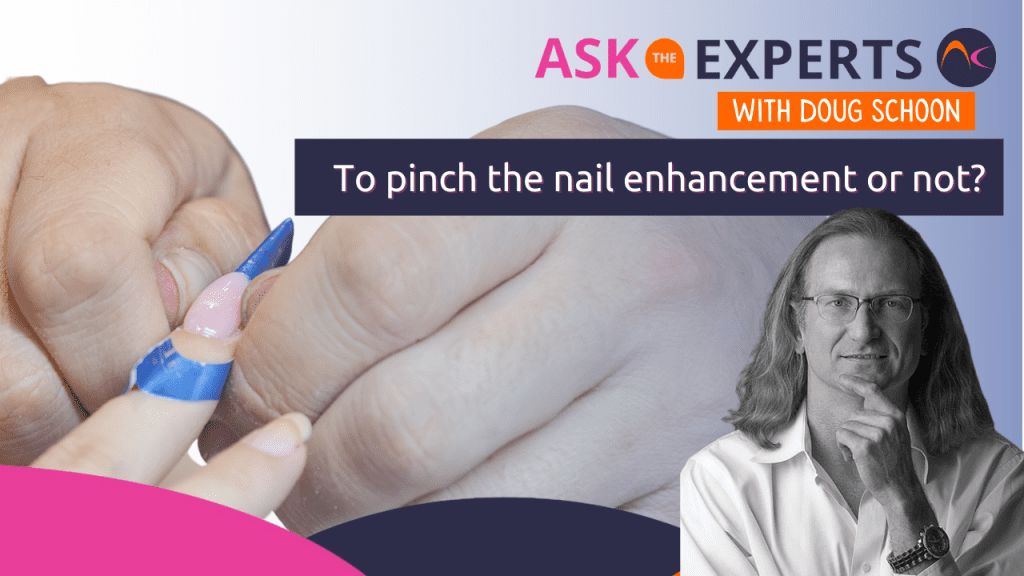
Pregunta: Compré una herramienta que me permite pellizcar los laterales de la extensión de la uña antes de que se cure para lograr una curva C más profunda. ¿Está esto bien o pellizcar así puede causar problemas más adelante?
Contesta: El pinzado es una técnica de competición de uñas que algunos usan a diario, pero no recomiendo hacerlo. Pinzar las paredes laterales antes de que el producto se cure forzará al centro del recubrimiento de la uña a tirar de la placa ungueal hacia arriba. Cuando el producto se cura, esto fija la placa ungueal en esta nueva posición, creando una constante tensión hacia arriba en el lecho ungueal, separando la placa ungueal del lecho.


Esta tracción puede ejercer una tensión excesiva en el tejido del lecho ungueal y provocar que la lámina ungueal se separe del lecho ungueal, una afección llamada onicólisis. Si está utilizando este tipo de técnica y sus clientes experimentan separación de la lámina ungueal del lecho ungueal, debe sospechar inmediatamente que esta técnica es la causa y dejar de pellizcar las paredes laterales. Además, si los lechos ungueales de la clienta se vuelven dolorosos o sensibles al tacto, debe sospechar que esta tracción constante es la razón. Un pequeño pellizco puede estar bien, pero si la lámina ungueal de su clienta desarrolla alguno de estos síntomas, significa que probablemente esté pellizcando demasiado.
¡Ten cuidado y protege la uña natural!
Más información en Onicólisis