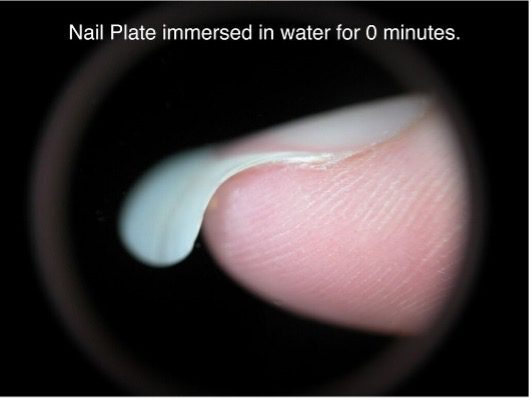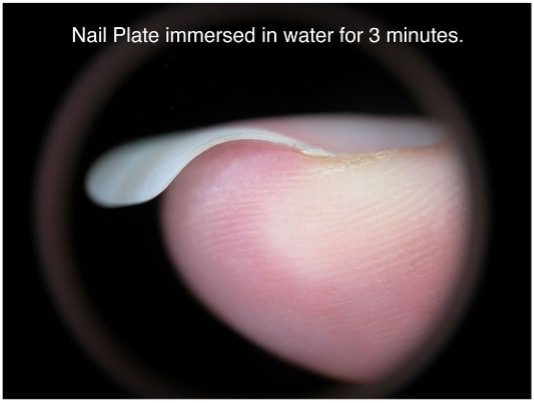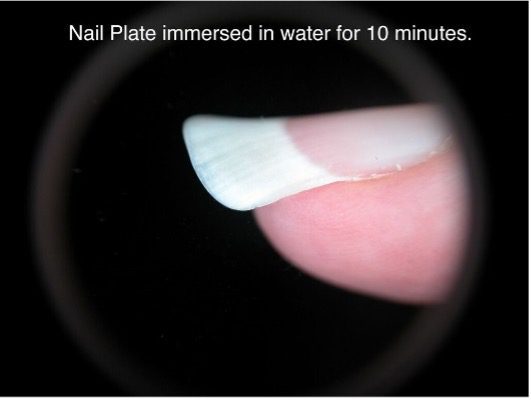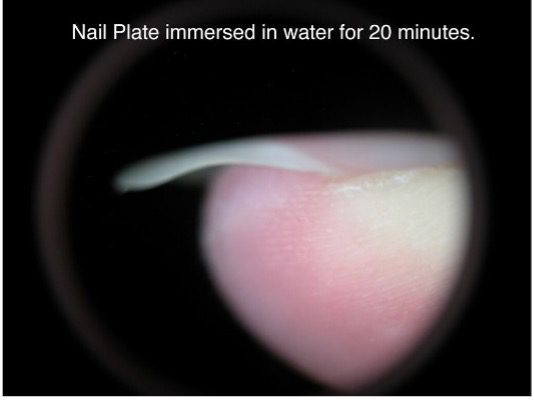
Cuando se trata de preparar las uñas antes de aplicar un recubrimiento, un debate muy común es la manicura con agua frente a la manicura sin agua. No faltan opiniones sobre este tema, pero sí escasean los hechos y la comprensión adecuada.
Creo que los clientes deben lavarse las manos antes de cada servicio. Esto expone las uñas al agua durante unos 20 segundos, si están bien hechas. Veinte segundos no es un problema, y no afectará a la adherencia. Sin embargo, esto reducirá significativamente los riesgos de infecciones de las uñas en el salón. En mi opinión, no pedir a las clientas que se laven las manos es arriesgado y aumenta el potencial de infecciones de las uñas en el salón, por lo que siempre hay que lavarse las manos antes de cada servicio.
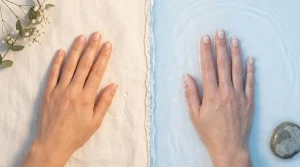
¿Cuál es el efecto de sumergir la lámina ungueal en agua? Eso depende realmente de las láminas ungueales. Las láminas ungueales gruesas y sanas con una adhesión normalmente buena a los productos de recubrimiento de uñas no se verán afectadas en gran medida cuando se sumerjan en agua o cuando se realice una manicura acuática. Sin embargo, los clientes con láminas ungueales finas, débiles o muy flexibles probablemente estarían mejor sin una manicura acuática. Normalmente, se necesitan unos 60 segundos para que una lámina ungueal absorba una cantidad sustancial de agua. Cuanto más tiempo se sumerja la lámina ungueal, más agua se absorberá. Toda esta agua absorbida puede hacer que la lámina ungueal se hinche y cambie de forma. ¿Por qué? A medida que las moléculas de agua se agolpan entre las capas de la lámina ungueal, esto lubrica las capas y permite que se deslicen unas sobre otras, al mismo tiempo que fuerza las capas a separarse.


Esto hace que la lámina ungueal sea más flexible y más propensa a hincharse y deformarse. La uña podría curvarse, aplanarse o incluso torcerse… dependiendo de su forma original. Esto ocurre porque el contenido de agua de la uña puede duplicarse, llegando al 25-30 %; luego, cuando la uña vuelve a su contenido de humedad normal, de alrededor del 15-18 %, recupera su forma habitual.
Los recubrimientos de uñas aplicados a una placa ungueal hinchada no se pueden esperar que se adhieran bien a una superficie en movimiento que cambia de forma. A medida que la placa ungueal se seca, el recubrimiento de la uña se estirará a medida que la placa ungueal pasa por su cambio de forma. Cuando la placa ungueal vuelve a su forma normal, esto puede ejercer presión sobre el recubrimiento de la uña y hacer que pierda la adhesión a la uña natural y puede provocar descamación, pelado o agrietamiento. No hay una respuesta en blanco y negro, ya que gran parte de esto depende de las uñas del cliente. Las placas ungueales más finas o flexibles se verán mucho más afectadas que las placas ungueales más gruesas que no son tan flexibles.
Esta es siempre la razón por la que es tan importante que los profesionales de las uñas comprendan este tipo de información. De lo contrario, se convierten en víctimas del “ella dijo/él dijo”. A menudo, esto es solo una guerra de opiniones desinformadas. Es mejor tomar decisiones basadas en hechos.