• Skip to primary navigation
  • Skip to main content
  • Skip to footer
NailKnowledge

NailKnowledge

  • Courses
  • MyNailEra
  • Free eBooks
  • Knowledge Base
    • Knowledge Base
    • Ask the Experts
    • Glossary
  • Blog
  • Newsletter
  • Login
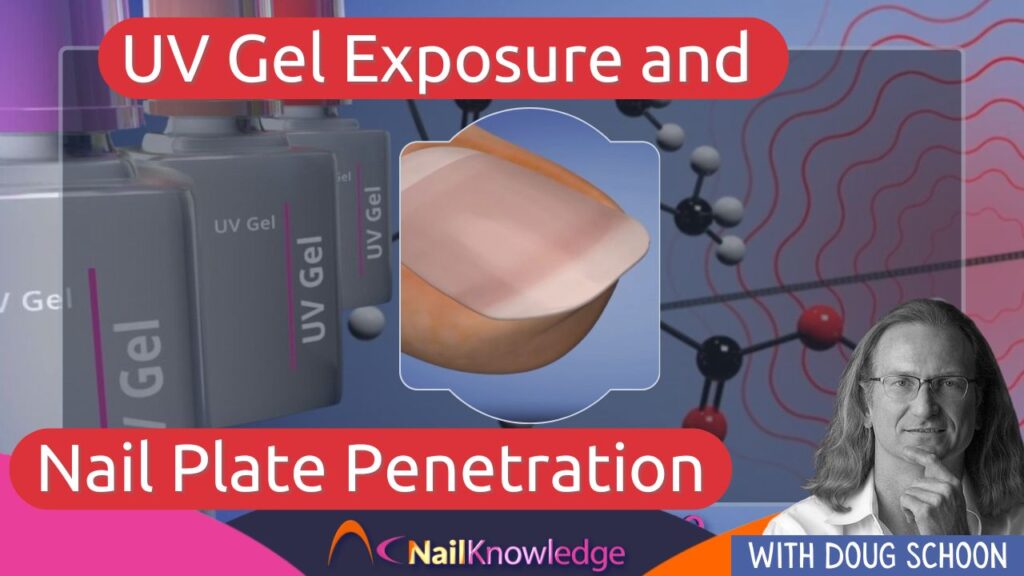
UV Gel Exposure and Nail Plate Penetration

The Truth About UV Gel Exposure and Nail Plate Penetration

May 22, 2024 by Doug Schoon

780 Views

In the world of nail care, questions about the safety and effects of products are a common theme among both professionals and clients. We frequently receive inquiries concerning various aspects of nail treatments, particularly those involving UV gels and potential allergic reactions.

 A recurring question that has sparked considerable debate and concern revolves around the likelihood of allergies being triggered by uncured gel penetrating the nail plate. Given the complexity of this topic and the importance of accurate information, this article aims to clarify these concerns with expert insights and evidence-based responses.

Here’s a common query we often encounter in the realm of nail care

A friend has an allergy that she believes is caused by uncured gel on the nail plate entering the body through this route, but I suspect it is from over exposure to the UV gel or dust.  Aren’t the molecules of ingredients too large to enter the nail plate?

Clarifying Nail Allergy Concerns: Exposure vs. Penetration

It would be extremely unlikely that penetration through the nail plate is the cause of the allergy. The exception to this would be if the nail plate were highly damaged or missing portions that expose bare nail bed.

 If the bare nail bed is exposed to UV gel, the risks of developing an irritation or permanent skin allergy will significantly increase. UV gels should only be applied to an intact nail plate. The skin has its own immune system that is separate from the internal immune system. This explains why direct skin contact is required to cause skin allergies.

UV gel ingredients do NOT penetrate through healthy, intact nail plates to cause allergy, instead, this is from direct exposure to UV gel, dust, filings or inhibition layer. This becomes especially more likely if the UV gels are not properly cured.

Related Articles

UV Free Nail Lamps

UV-Free Nail Lamps: Can They Really Cure Gel?

What Do UV-Free Nail Lamps Actually Mean? “UV-free nail lamps” are becoming more common in marketing, often positioned as a…

Read Moreabout UV-Free Nail Lamps: Can They Really Cure Gel?
UV Curing - thin layers for perfect nails

UV Curing: Why Thin Layers Matter for Perfect Nails

When it comes to working with gels, UV curing is one of the most important steps in creating long-lasting, safe…

Read Moreabout UV Curing: Why Thin Layers Matter for Perfect Nails
White Spots on Nails Damage or Dehydration

White Spots on Nails After Gel Removal

White Spots on Nails: Damage or Dehydration? White spots on nails after gel removal are a common concern among nail…

Read Moreabout White Spots on Nails After Gel Removal
When do babies start growing nails

When Do Babies Start Growing Nails?

Have you ever noticed the delicate nails on a newborn’s tiny fingers and toes? It’s a common query among expecting…

Read Moreabout When Do Babies Start Growing Nails?
Why are UV Gels so thick

Why are UV Gels so thick?

We are asked this question all the time: “Why are UV gels so thick, and can anything be added to…

Read Moreabout Why are UV Gels so thick?
consistency of UV GEL

UV Gel Consistency and Cured Flexibility

How is the consistency of a UV gel related to the flexibility of the cured UV gel? The consistency of a…

Read Moreabout UV Gel Consistency and Cured Flexibility

Level Up Your Nail Insights

Join our Newsletter!
SUBSCRIBE...

Copyright © NailKnowledge

NailKnowledge

  • MyNailEra
  • Free eBooks
  • About us
  • Courses
  • News
  • Blog
  • Newsletter
  • Glossary

Policies

  • Privacy Page
  • Terms & Conditions
  • Cookie Policy

Support

  • Contact Us
  • Meet the Experts
  • Ask the Experts
  • System Support
  • FAQs
English
English
Spanish