• Skip to primary navigation
  • Skip to main content
  • Skip to footer
NailKnowledge

NailKnowledge

  • Courses
  • eBooks
  • eBook Basket
  • Knowledge Base
    • Knowledge Base
    • Ask the Experts
    • Glossary
  • News
  • Blog
  • Gallery
    • Nail Art Gallery
    • Nail Artists
    • Join the Elite
  • Login

Archives for July 8, 2023

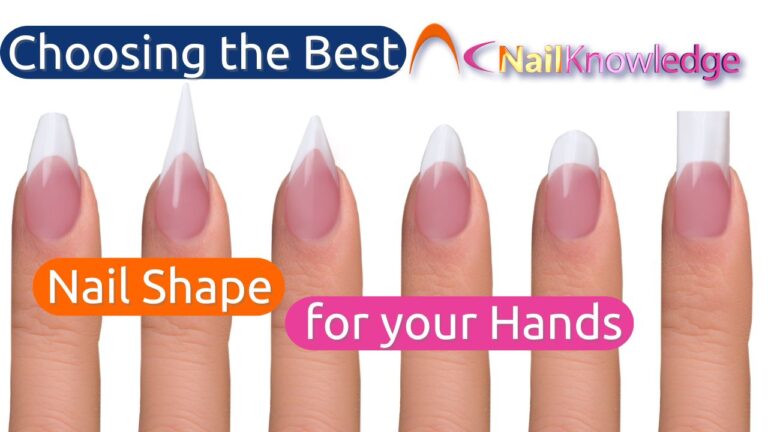
The Best Nail Shape for your Hands

As a nail professional, I see many clients complaining that they wish their fingers were longer, or their nail beds (the area the nail plate sits on) were different. Even though we can’t change the shape of either of them (you are born with a certain shape of nail bed), there are clever ways in tricking the eye to make them look longer, narrower or anything else you want, by changing the shape of the free edge.

The Different Shapes and how they Alter the Nail’s Appearance

Choosing your nail shape depends on your personal preference, the natural shape of your nail beds and your lifestyle. Here are some popular nail shapes and their characteristics to help you choose which one is best for you.

Oval Shaped Nails

Oval Nails
Photo by Chantelle Ayres on @nails.bellavita

Oval-shaped nails are considered classic and feminine, being similar to an almond but a bit more blunt. They have softly rounded edges that follow the natural shape of the fingertip, helping elongate nails in both width and length.

Square Shaped Nails

Square Nails
Photo by Chantelle Ayres on @nails.bellavita

Square-shaped nails have straight, flat edges and sharp corners. They provide a clean and modern appearance. Square nails can make your fingers appear wider and are well-suited for those with longer and narrower nail beds, and especially if you like shorter nails.

Round Shaped Nails

Round Nails
Photo by Chantelle Ayres on @nails.bellavita

Round nails have curved edges that mimic the shape of the fingertip. Round nails offer durability as they do not have sharp corners that are prone to breakage, and it elongates your fingers and makes them look slender. Round nails also make wide nail beds appear thinner. 

Almond Shaped Nails

Almond nail shapes
Photo by Chantelle Ayres on @nails.bellavita

Almond-shaped nails are tapered with a rounded point at the tip, resembling the shape of an almond. They can make the fingers appear longer and slimmer. Almond nails are elegant and versatile, suitable for both short and long nail lengths.

Coffin/Ballerina Shaped Nails

Ballerina Coffin Nails
Photo by Chantelle Ayres on @nails.bellavita

Coffin or ballerina-shaped nails have a squared-off tip and tapered sides, resembling the shape of a coffin or a ballerina’s pointe shoe. This shape offers a trendy and edgy look, especially when paired with longer lengths. It requires a lot of upkeep, so like the stiletto, you must commit to regular salon visits.

Stiletto Shaped Nails

Stilleto Nails
Photo by Chantelle Ayres on @nails.bellavita

Stiletto nails are long and pointed, similar to the shape of a stiletto heel. They create a bold and dramatic appearance. Stiletto nails require longer lengths and maintenance due to their pointed shape, but are incredible to elongate fingers!

Squoval Shaped Nails

Squoval Nails
Photo by Chantelle Ayres on @nails.bellavita

Squoval nails are the chameleon of nail shapes, these nails look good on everyone! Part oval and part square, it’s a very easy to maintain style, especially on short nails.

Choosing the Right Nail Shape

When choosing a nail shape, take into consideration the facts above about your hand size and nail bed shape.

More importantly, your lifestyle, and personal style preference, it’s also vital when choosing. Is your job really hands on? Maybe it’s best to choose a style without many sharp corners, as these can get caught, bump into things and become blunt, which will change the shape.

How much time do you have to spend in the salon? Some shapes require more maintenance than other, as seen above.

Experimenting with different nail shapes can help you discover the one that suits you best.

Additionally, consult with a professional nail technician who can provide guidance based on your specific hand and nail characteristics.

Filed Under: General Information, Nail Art, Nail Services

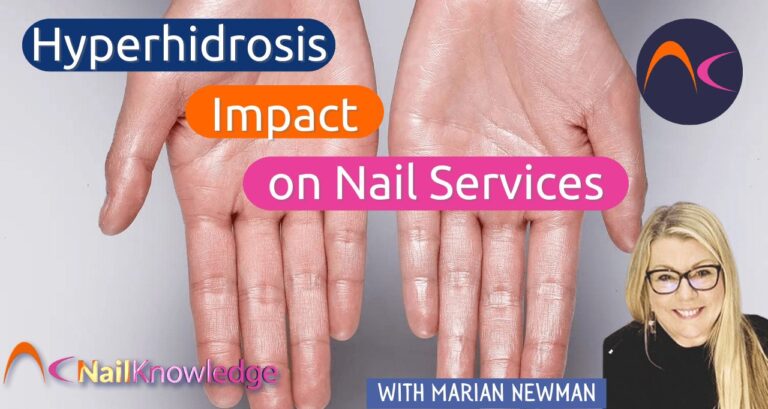
Hyperhidrosis and the Impact on Nail Services

Hyperhidrosis, a condition characterised by excessive sweating, can have a significant impact on various aspects of a person’s life. In this article, we will explore the relationship between hyperhidrosis and nail services. From the challenges faced by individuals with hyperhidrosis to tips for managing the condition during nail treatments, we’ll cover it all. Let’s dive in!

Understanding Hyperhidrosis

Hyperhidrosis is a medical condition that causes excessive sweating beyond what is necessary to regulate body temperature. It affects approximately 3% of the global population and can occur in various parts of the body, including the palms, feet, underarms, and face. People with hyperhidrosis often experience social and emotional challenges due to their condition.

Hyperhidrosis and Nail Services

The Challenge of Sweaty Hands

Individuals with hyperhidrosis often face difficulties when receiving nail services due to their sweaty hands. Excessive moisture on the palms can make it challenging for nail technicians to work with precision and accuracy. The wetness may cause the polish to smudge, leading to a less satisfactory outcome for the customer.

Nail Product Longevity

Hyperhidrosis can affect the longevity of nail polish.  This can be frustrating for individuals who desire long-lasting and flawless nails.

  • Excessive sweating creates a consistently moist environment around the nails. Moisture interferes with the bonding process between the natural nail and the nail coating, causing the gel or other products to lift or peel off more quickly.
  • Weakened Adhesion: The excess moisture can weaken the adhesion of the nail coating to the nail bed. As a result, the coating becomes more prone to lifting, chipping, or breaking, leading to shorter-lasting results.
  • Chemical Reaction: The sweat itself can create a chemical reaction with certain nail products. This reaction can alter the composition of the nail coating, making it less durable and more susceptible to damage.
  • The best way to combat this during application is to use a stronger cleanser/dehydrator if your brand has one. If not, wipe over the nail plate thoroughly with plenty of cleanser (not just acetone, preferably a mix of acetone and IPA), allow it to evaporate and apply the coating. Do this to one nail at a time immediately before the first application. This will ensure the nail plate is perfectly dry and to allow a good adhesion. If this is done there should not be any lifting.

Nail Fungal Infections

Due to the constant moisture caused by hyperhidrosis, individuals may be more prone to nail fungal infections. The warm and damp environment created by excessive sweating provides an ideal breeding ground for fungi. Nail technicians should take precautions to prevent the spread of infections and ensure proper hygiene during nail services.

Managing Hyperhidrosis During Nail Treatments

Preparation is Key

Before visiting a nail salon, individuals with hyperhidrosis can take certain steps to minimize sweating. Washing and thoroughly drying the hands before the appointment can help reduce moisture. Additionally, using antiperspirants specifically formulated for hands may offer temporary relief from excessive sweating.

Communication with Nail Technicians

Openly discussing hyperhidrosis with nail technicians is crucial. By informing them about the condition, individuals can establish a better understanding and seek their cooperation in dealing with the challenges posed by sweaty hands. Nail technicians may suggest alternative techniques or products to enhance the longevity of the manicure.

Conclusion

Hyperhidrosis can present unique challenges when it comes to nail services. From the difficulties faced by individuals with sweaty hands to the impact on nail products longevity, it is essential to address these concerns. By understanding the condition and implementing appropriate strategies, individuals with hyperhidrosis can still enjoy nail services without compromising on quality or satisfaction.

FAQs (Frequently Asked Questions)

Q1: Can hyperhidrosis be treated permanently?
A1: While there is no permanent cure for hyperhidrosis, several treatment options can help manage the condition effectively.

Q2: Can hyperhidrosis affect other beauty treatments apart from nail services?
A2: Yes, hyperhidrosis can affect various beauty treatments, including makeup application and hairstyling.

Q3: Is hyperhidrosis a common condition?
A3: Hyperhidrosis affects approximately 3% of the global population, making it a relatively common condition.

Q4: Are there any home remedies for managing hyperhidrosis?
A4: While home remedies may provide temporary relief, it is advisable to consult a healthcare professional for appropriate treatment options.

Q5: Can hyperhidrosis impact a person’s self-esteem?
A5: Yes, individuals with hyperhidrosis may experience reduced self-esteem and social anxiety due to the condition.

Filed Under: General Information, Nail Conditions, Nail Services

Level Up Your Nail Insights

Join our Newsletter!
SUBSCRIBE...

Copyright © NailKnowledge

NailKnowledge

  • eBooks
  • About us
  • Courses
  • News
  • Blog
  • Newsletter
  • Glossary

Policies

  • Privacy Page
  • Terms & Conditions
  • Cookie Policy

Support

  • Contact Us
  • Meet the Experts
  • Ask the Experts
  • System Support
  • FAQs
English
English
Portuguese Spanish Vietnamese