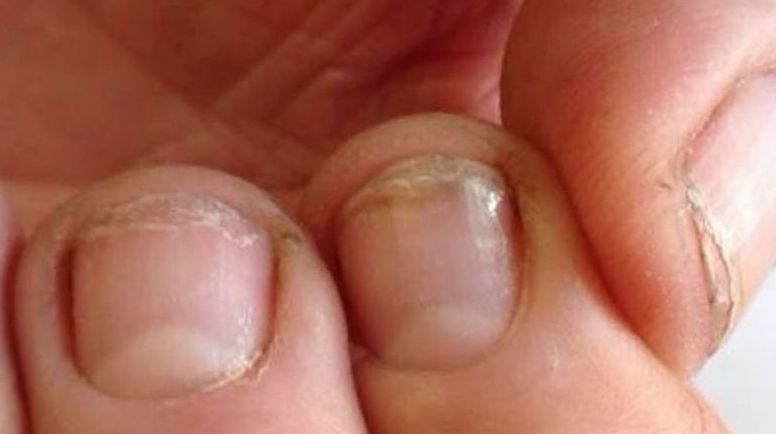
What is Lamellar Dystrophy
Lamellar dystrophy describes a condition where the layers of the nail plate split and peel away from each other, usually at the free edge of the nail. The nail appears to separate into thin sheets or flakes, giving the tip of the nail a ragged or peeling appearance.
This condition is also commonly known as lamellar splitting or onychoshizia.
How it Appears
Typical signs include:
- Thin layers of the nail plate peeling at the free edge
- A rough or frayed nail tip
- Nails that split into several thin layers
- Increased brittleness of the nail plate
- Usually affects fingernails more than toenails
The nail plate itself often remains otherwise healthy, but the outer layers separate due to weakness between the keratin layers.
Common Causes
Lamellar dystrophy is usually caused by repeated physical or chemical stress to the nail plate.
Common contributing factors include:
- Frequent contact with water and detergents
- Repeated wet and dry cycles
- Over-filing or excessive mechanical trauma
- Repeated removal of nail coatings
- Solvent exposure such as acetone
- Naturally dry or brittle nails
In some cases it may also be linked to nutritional deficiencies, ageing, or underlying health conditions, although these are less common causes.
Professional Considerations
For nail professionals, lamellar dystrophy indicates that the nail plate is weakened and fragile. Care should be taken to avoid further damage.
Best practice includes:
- Gentle filing techniques
- Avoiding aggressive buffing
- Minimising repeated chemical exposure
- Encouraging the use of conditioning treatments or nail oils
- Keeping nails at a shorter length to reduce splitting
Enhancements may require caution, as excessive preparation can worsen the condition.
When to Refer
If the nail splitting is severe, persistent, painful, or accompanied by other nail changes, clients should be advised to seek advice from a medical professional to rule out underlying conditions.
Summary
Lamellar dystrophy is a common nail plate condition where the layers of the nail split and peel, usually due to environmental stress and repeated trauma. With proper care and reduced exposure to damaging factors, the nail plate can often recover as healthy new nail grows.