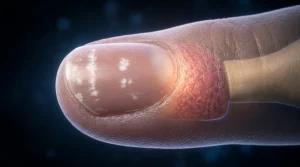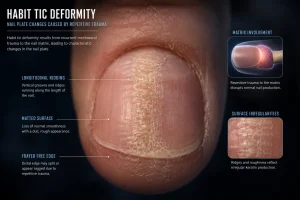
Sometimes the skin at the base of the finger, near the nail, becomes damaged and appears ‘frayed.’ This condition can be painful and inflamed, although it is not always the case.

Common Causes of Fraying Near the Base of the Finger Nail
People with naturally thin or delicate skin, or those whose skin has been weakened by treatments like chemotherapy or topical medications such as cortisone, are more prone to this issue. Simple actions like rummaging through a handbag or using cleaning products without gloves can exacerbate fraying in such sensitive skin.
Mechanical Damage to the Skin
Another key factor contributing to skin fraying at the PNF is physical abrasion or cutting. This can affect even those with more resilient skin.
Understanding Skin Structure with an Analogy
Consider a piece of woven fabric folded once, similarly, the PNF is like a fold in your skin. At the edge of this fold is a frame of clear skin, which is the underside of the epidermis (the upper layer of skin that lacks blood vessels and nerve endings). Here, new skin cells are continually produced. When these cells fully harden (keratinise), they are shed by the eponychium (the skin under the PNF), contributing to what we see as the cuticle on the nail plate.
Visualising the Damage
Imagine if you were to rub the edge of the folded fabric with sandpaper, the threads would begin to fray, right? Similarly, if the edge of the PNF is roughly treated or cut, the skin may start to peel and fray.
Care and Prevention Tips
To prevent damage, it’s crucial not to be too aggressive with this delicate area. Keeping the skin moisturized and supple is vital. Regular use of quality nail oil and protective hand cream is recommended to maintain the health of this part of the skin.
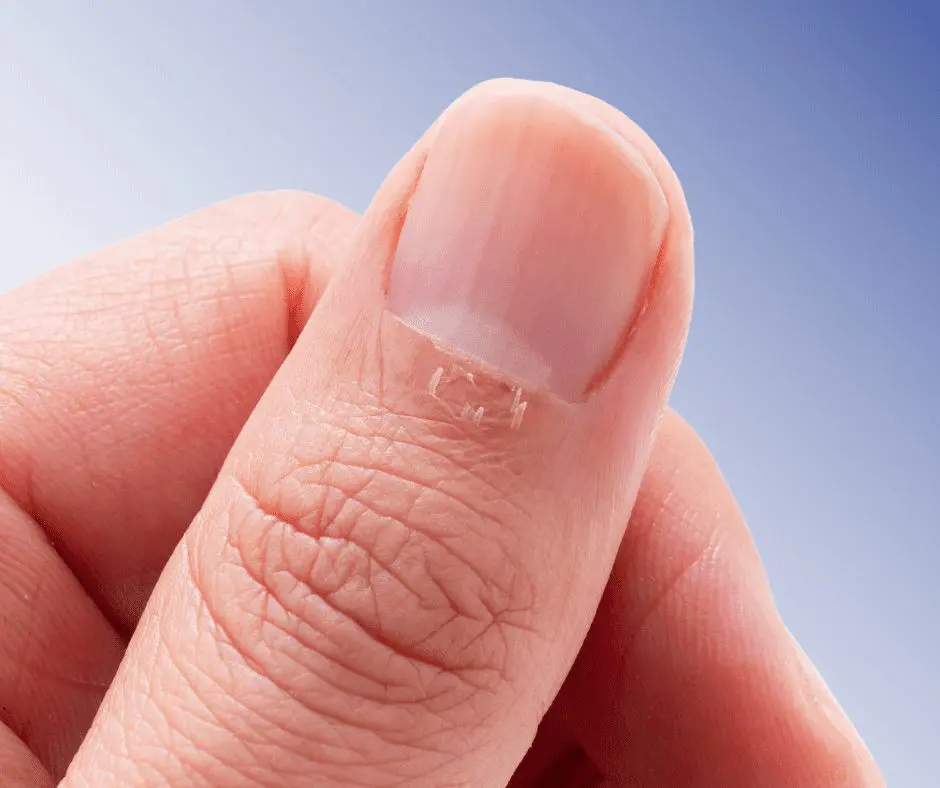
This is what can happen if the edge of the PNF is abraded or cut. The epidermis can become disconnected and peel away causing the effect as seen in the picture.
To conclude, don’t be too aggressive with this area of living skin. Keep it moisturised and supple and advise your clients to regularly use a good nail oil and protective hand cream.