• Skip to primary navigation
  • Skip to main content
  • Skip to footer
NailKnowledge

NailKnowledge

  • Courses
  • MyNailEra
  • Free eBooks
  • Knowledge Base
    • Knowledge Base
    • Ask the Experts
    • Glossary
  • News
  • Blog
  • Login

Nail Services

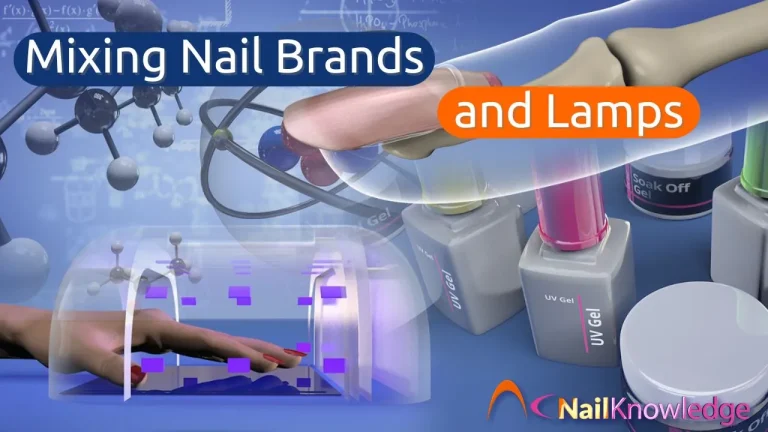
Mixing Nail Brands and Lamps

A real-world case of mixing nail brands and lamps

Mixing nail brands and lamps is a common temptation for professionals, especially when transitioning to new systems. One technician recently shared her story: despite strict hygiene standards and properly maintained lamps, she faced client issues such as lifting, splinter hemorrhages, and what appeared to be a fungal infection. Concerned that her products were to blame, she considered switching to a hypoallergenic brand but asked if she could safely keep her existing colours and top coat while using a new lamp and builder gel.

This raised a difficult question: could the products or the curing system be to blame? The technician began exploring the option of switching to a hypoallergenic brand but asked if it would be safe to use a new brand’s lamp and builder gel while keeping her existing colours and top coat.

This scenario reflects a common dilemma in the nail industry, especially when transitioning between systems while managing costs.

Nail conditions linked to lifting and mixed systems

The word “fungus***” is often used by clients to describe any discolouration or problem under a nail, but true onychomycosis (fungal infection) develops slowly and is rarely caused by nail services alone. In many cases, what appears to be fungus is actually a bacterial issue such as Pseudomonas, sometimes called a “greenie.” This thrives in the space between the natural nail plate and lifted product.

***A fungal infection can be proved or ruled out using a test – it cannot be diagnosed by eye, even medical specialists or medical hand specialists can only suspect a fungal infection until proven otherwise.

**Bacterial infections could be a problem if your client is suffering from some kind of immune disorder or diabetes so be very careful and never ‘assume’

Lifting may be triggered by poor adhesion, trauma, over-filing, or incomplete curing. It is rarely the fault of the product alone. Recognising the difference is essential. Bacterial  infections are managed differently from true fungal infection, which requires medical treatment.

Splinter hemorrhages and nail damage explained

Splinter hemorrhages are small streaks of blood beneath the nail plate. These are nearly always caused by trauma, but that does not necessarily mean one dramatic knock, repeated tapping, subtle pressure, or a nail coating that is overly rigid or unbalanced is the only reason, it can be an accumulation of more than one cause.

While these marks can worry clients, they are not usually caused by the products themselves. However, poor adhesion and repeated cycles of lifting and reapplication can make the nail plate more vulnerable to damage and by definition the nail bed more vulnerable.

Allergies and sensitivity from under-cured gels

Allergic contact dermatitis linked to nail products has been on the rise. Builder gels and hybrid products have come under scrutiny due to the frequency of reactions reported by both clients and professionals.

The key driver of these reactions is exposure to uncured or under-cured ingredients. Even when a coating looks hardened, if it has not cured completely, monomers remain present. These can penetrate the nail plate and irritate the surrounding skin, eventually leading to allergy. Once developed, an allergy to nail products is permanent.

A hypoallergenic system can reduce, but not remove, this risk. The greatest safeguard is correct curing and keeping all uncured product away from any and all living skin.

Why mixing nail brands and lamps is risky

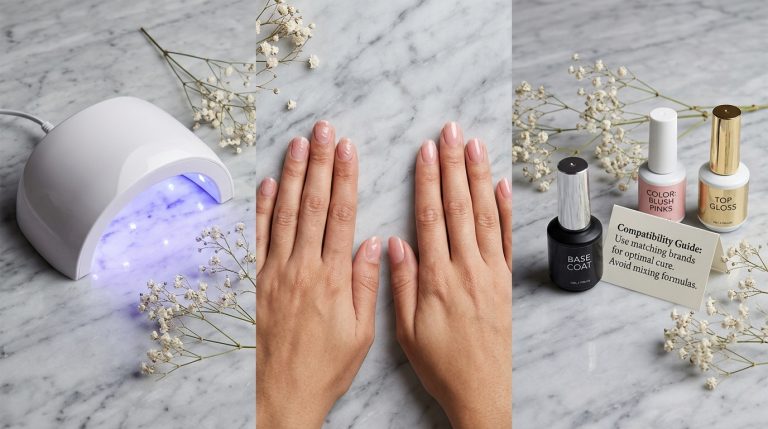
Each professional gel system is designed, tested, and certified as a complete unit: base coat, builder or colour, top coat, and lamp. The lamp’s wavelength output, intensity, and cure time are matched precisely to the photoinitiators in that brand’s gel.

When technicians attempt to mix systems, for example by curing one brand’s colour coat under another brand’s lamp, there is no guarantee of complete cure. The coating may harden on the surface but remain only partially polymerised beneath. This is one of the leading causes of both service breakdown and allergic reactions.

According to NailKnowledge, nails cured under the wrong lamp may never fully cure, even after weeks. Filing or removing these coatings later releases uncured dust that can cause skin irritation and long-term sensitivity.

Phasing in a hypoallergenic system without mixing products

The financial reality is that not every professional can replace all products at once. However, trying to combine systems to save costs is not a safe solution. A smarter approach is to phase in a new hypoallergenic system gradually but keep each client service consistent.

That means if a client books for the hypoallergenic option, you use the same brand for base, builder, colour, top, and lamp. For other clients, you continue to use your existing full system. What you must avoid is cross-curing — using a lamp and builder from one system while keeping another brand’s colour or top coat.

This way you can manage costs while ensuring the safety of your clients and yourself.

The hidden danger of under-curing when mixing systems

One of the challenges is that under-curing is not always obvious. A nail may feel hard, look shiny, and even wear well, yet still contain uncured material beneath the surface. Over time, this hidden weakness can cause lifting, allow bacteria to grow in gaps, and expose both client and technician to sensitising dust during removal.

This explains why some issues are blamed on “bad product” when the real cause lies in mixing systems or using the wrong lamp.

Professional standards and insurance risks with mixed products

There is also a serious professional risk when dealing with clients who present with suspected infections or damage. If a client shows signs of bacterial or fungal involvement, the service should be stopped immediately and the client referred to a medical professional. Proceeding in such cases is not only unsafe but also invalidates insurance coverage.

Ignoring these guidelines can leave a professional personally liable if a client files a claim. Proper record-keeping and responsible referral protect both the client and the technician.

Key takeaways for nail Key lessons on mixing nail brands and lamps for professionals

  • Nail infections and splinter hemorrhages often arise from lifting, trauma, or incomplete curing rather than product faults.
  • Allergic reactions are increasing due to exposure to under-cured products. Once an allergy is developed, it is lifelong.
  • Mixing nail brands and lamps introduces a significant risk of incomplete curing. This risk is invisible and accumulates over time.
  • Transition to hypoallergenic systems should be phased in service-by-service, ensuring all products and the lamp are from the same brand for each client.
  • Always refer clients with suspected infections to a medical professional before offering further services.

Conclusion

The temptation to mix systems is understandable, especially with financial pressures, but the evidence shows it is not safe. Lamps and gels are not interchangeable. The best course for nail professionals is to use each system as it was designed and to phase in new products as complete sets.

Client trust and long-term safety depend on professional standards, and cutting corners by mixing nail brands and lamps can lead to problems that are far more costly than any short-term savings.

Filed Under: Nail Services, Product Chemistry

Why Nails Burn When Filing: What’s Really Going On?

We get this question a lot from consumers, and honestly, it’s one we wish more people would ask. Why do nails burn when filing? It’s a surprisingly common experience in the salon chair, and for some, it’s become something they just “put up with” for the sake of a beautiful finish. But here’s the thing: while the result might be worth it, discomfort during the process shouldn’t be the norm.

Both professionals and clients deserve a better understanding of what’s happening during filing, why that burning sensation can occur, and what “thinning nails” truly means. Spoiler alert: your nails aren’t alive, so why does it feel like they are protesting? Let’s break it down.

Why Nails Burn When Filing Even Though They Aren’t Alive

Here’s a little science first. The nail plate, the part of your nail you can see, is made up of keratin, a protein also found in your hair and skin. Unlike skin, however, the nail plate doesn’t have nerves or blood supply. So, if it’s technically non-living tissue, how can something like filing cause a burning sensation?

The answer lies just beneath the surface: the nail bed. That’s the living, sensitive skin directly underneath your nail plate. When you file too aggressively, especially with high-speed electric files or coarse grit boards, you’re not damaging the “non living” nail plate so much as you’re creating heat through friction. That heat transfers quickly to the nail bed, and guess what? That’s where the nerves are.

Think of it like touching a hot pan with an oven mitt. If the mitt is too thin, the heat seeps through and, ouch! Your nail plate is that mitt, and when it gets too thin, the nail bed feels every bit of the burn.

What Does ‘Thinning Nails’ Really Mean?

This is a phrase that’s thrown around a lot in salons and online, but it’s rarely explained well. Thinning nails refers to the gradual reduction in thickness of the nail plate, often caused by over-filing or repeated exposure to harsh chemicals.

When a tech files too much off the surface (especially when prepping for gel or acrylic application), they can shave down the protective layers of keratin that make up your nail. Over time, this leads to nails that feel flimsy, bendy, and yes,  your nail beds become more sensitive to heat.

And here’s the kicker: thin nails don’t just feel weaker. They are weaker. They lose their ability to act as a thermal barrier, so even mild friction can cause that burning sensation during filing and worse still they become an unstable foundation for your gorgeous artificial nail product – crazy hu?

Why Nails Burn When Filing: The Main Culprits

Let’s get specific. If you’re experiencing that burning feeling while getting your nails done, or you’re a pro and your client winces mid-service, these are the usual suspects:

  1. Excessive Pressure – Heavy-handed filing is one of the fastest ways to generate unnecessary heat. Light, even strokes are key.
  2. Wrong Grit – Using a coarse file (e.g., 80/100 grit) on the natural nail is a recipe for damage. For natural nails, stick to 180 grit or higher.
  3. Overuse of Electric Files – E-files aren’t bad, but using them at high speeds or without proper training can cause rapid friction and heat buildup.
  4. Over-filing the Same Spot – Filing one area too long, even gently, creates a hot spot. Keep your strokes even and move across the nail continuously.
  5. Thin Nail Plates – As discussed, once the nail plate is thinned from previous services or trauma, it becomes damaged & more sensitive to future treatments.

What Can Be Done? Tips for Professionals and Consumers

For Clients:

If you’re the one sitting in the chair and your nails start to burn, say something. Nail technicians rely on your feedback to adjust their technique. You deserve a comfortable experience, not one where you’re silently enduring pain just to avoid “making a fuss.”

Also, pay attention to how your nails feel after the service. If they’re thin, peeling, or tender to the touch, bring it up at your next appointment. Ongoing discomfort is a sign that something needs adjusting, whether that’s the prep method, the products being used, or the frequency of your appointments.

For Professionals:

It starts with education. Understanding the nail’s structure and the physics of friction can completely change how you approach your filing technique. Always:

Never use an efile on the natural nail plate, when ‘shaping or rebalancing’ gel, acrygel or L&P an efile is a gift from the gods IF used in a correct manor.

  • Use the correct grit for the job.
  • Let the file do the work, no need to push down hard.
  • When using an e-file, keep it moving and never dwell in one spot.
  • If your client flinches or says it’s hot, stop and reassess.

And remember: we’re not just shaping nails, we’re caring for living tissue underneath. That’s a responsibility that comes with the title “nail technician.”

Rebuilding Trust (and Nail Health)

If nails have already been over-thinned, there’s hope. Encourage your clients to take a break from enhancements if possible, or switch to more flexible systems like builder gels or overlays that don’t require aggressive prep. You can also recommend good quality nail & skin oils and treatments to help fortify the natural nail plate as it grows out.

More importantly, empower them with information. When clients understand why nails burn when filing, they become more proactive about their care, and more likely to remain loyal because they trust your expertise.

A Final Thought: Beauty Shouldn’t Hurt

Let’s stop normalising discomfort in the salon chair. That burning feeling isn’t just part of the process, it’s your body’s way of saying “something’s not right.” By working together, client and pro, we can make the experience both beautiful and pain-free.

So next time you hear someone say “oh, it burns a bit, but it’s fine,” let’s change the conversation. Because beauty, at its best, doesn’t hurt. It empowers. And it starts with knowledge.

Filed Under: Nail Services

Should You Cut the Cuticle? The Actual Science Behind It

If you’ve ever paused with a pair of nippers hovering over your nails, you might’ve wondered: should you cut the cuticle? It’s one of the most searched questions in nail care,—and one of the most misunderstood. Scientifically speaking, the answer is more nuanced than a simple yes or no. It depends entirely on what you’re actually cutting.

Most people refer to any skin at the base of the nail as the “cuticle,” but that’s not anatomically correct. What they’re often referring to is the Proximal Nail Fold (PNF), a living tissue that serves as a barrier against infection. The true cuticle is a thin layer of dead skin cells that clings to the nail plate, created by the eponychium underneath the PNF.

So when you ask, “Should I cut the cuticle?”, you need to ask a second question: Are you referring to the dead cuticle, or the living PNF?

Why Should You Cut the Proximal Nail Fold or Just Remove the Cuticle?

Anatomy, Not versus Vanity.

You may call it the cuticle, but anatomically, that outermost bit is the proximal nail fold, a living layer of skin that seals out bacteria and pathogens. The actual “cuticle” is the thin film of dead cells that cling to the nail plate, created by that living tissue. Cutting into the proximal nail fold isn’t just cosmetic, it breaches your body’s defences. That’s why if your question is should you cut the proximal nail fold or just remove the cuticle, the answer depends: are you cutting live tissue (the proximal nail fold) or removing dead cells (the cuticle) to improve the condition of the nail plate?

When Should You Cut the Cuticle, If Ever?

In a proper manicure routine, removing hangnails and frilled dead keratinized skin off the nail plate helps polish product adhesion and makes your nails look better. The key distinction? You’re not slicing into removing living tissue, just eliminating debris that can cause lifting of your polish product or snag your socks. So yes, you may carefully trim remove the dead (non-living) cell cuticle, but only if you know where the proximal nail fold ends and the dead (non-living) cuticle begins.

Why You Should Think Twice Before You Cut the Cuticle

That living proximal nail fold isn’t just decorative; it’s like a little built in moat protecting your nail matrix . Cutting into it can create entry points for bacteria or fungi and lead to infection. Plus, skin trauma near the nail can trigger hyperkeratosis (thickened skin) or irritations. So the next time you ask should you cut the proximal nail fold or just remove the cuticle, consider this: are you respecting the natural border, or dancing too close to damaging its defences it in the name of vanity or because its always been done this way?

Should You Cut the Cuticle? Here’s How to Care for It Instead

  • Softening & pushing back – Use a gentle moisturiser or cuticle oil containing jojoba, vitamin E or almond oil. This hydrates, seals in moisture, and even supports microcirculation. Never use excessive force at the back of the nail plate where it meets the Proximal Nail Fold
  • Cleanse, don’t over-soak – Water softens skin but can lift and will help soften the cuticle from on the plate. Avoid long soaks before trimming any nail product application —they blur the line between live and dead tissue. as this will also soften the nail plate causing your nail product to lift or chip. 
  • Gentle pushing – Use a soft orangewood stick or manicure tool to nudge back the dead cuticle (proximal nail fold) without intruding on damaging it, be very gentle living skin.
  • Targeted trimming – Only cut away tiny hangnails or ridges of dead skin that are obviously detacheding from the skin—never cut right at the fold. Always use sharp clippers and avoid cutting deep into the nail folds
  • Moisturise – Finish with nail oil to reinforce the barrier and keep that natural “cutile proximal nail fold” soft. When oil is massaged into the area, it shields against loss and external stressors .

What the Pros Say

NailKnowledge experts stress that the term “cuticle” is often misapplied . They argue that What most people call the cuticle is actually the proximal nail fold, a living part of the nail area that sheds dead cells.

Cutting it is not advisable because the Proximal Nail Fold is living skin, only keratinized, and attached to the nail plate. Doing so damages the natural barriers that protect the nail unit, which is why education now promotes correct anatomical terminology.

Are you still thinking should you cut the cuticle (proximal nail fold) every time you prep for a manicure? Remember: if it bleeds or hurts, you cut the wrong thing.

Risks of Cutting or Cutting (Too Deep) Into the Proximal Nail Fold

  • Infection – Breaks in the skin allow pathogens in.
  • Thickened skin – Trauma can lead to hyperkeratosis, redness, swelling and soreness.
  • Polish lifting – Damaged skin disrupts the balance of the nail plate and this will affect adhesion.
  • Discolouration – Scarring or recurring inflammation can affect colour and texture of the nail and or the surrounding skin and can also damage melanocytes in the skin removing protection from UV light possibly making you more vulnerable to skin cancers.

Should You Cut the Cuticle? A Science-Backed Nail Care Routine

So how should you approach manicuring your nails, tidying your proximal nail folds and removing the cuticles from the nail plate before product application?

  1. Hydrate – Apply quality oil or moisturizer daily to maintain the general health and flexibility of the skin protecting your nail plate and to ensure that less water can enter your nail plate soften and seal .
  2. Gently push – Use soft tools once or twice a week to nudge back the proximal nail fold allowing for perfect removal of softened cuticle from the nail plate before applying any product.
  3. Trim only dead bits loose hanging dry skin – Carefully clip loose flakes of skin or hangnails—not living skin or proximal nail fold.
  4. Clean the nail plate – For any artificial nail product including nail polish, wash hands and nails with soap & water and use a good quality nail plate cleanser to remove wipe away oils and or debris from the nail plate with acetone or isopropyl alcohol once the skin hands and nails are clean.
  5. Finish with a good quality nail and skin oil and lotion – Seal everything in. Your nail or skin oil isn’t just cosmetic; it forms a protective buffer, enhances flexibility, and even aids circulation.

Stick with Science, Not Tradition

Gone are the days when salons flouted every boundary, soaking your hands in water and aggressively trimming living skin. Modern anatomy and evidence show that what you’ve traditionally called the cuticle is a the living protective proximal nail fold. We give you a small overview of what each part is:

  • Cuticle is a non-living tissue formed by the eponychium and laying as a very thin layer on the nail plate, has to be removed gently before applying product. It’s a protective layer that seals under the proximal nail fold.
  • Proximal Nail Fold is living skin and at the end slightly keratinized. Laying on top of the nail plate helping the cuticle seal the entry to the eponychium & nail matrix, making it an anti-pathogenic barrier.
  • Eponychium (living tissue) is a very thin layer of stem cells where the nail plate cells are crushed together to form the nail plate. It’s where the cuticle is formed and laid on the nail plate. It’s a crucial component in the production of the nail plate, along with the nail matrix.
  • Matrix (also living tissue) is made out of the same stem cells as the eponychium and produces the different layers of the nail plate cells.

Shedding tradition for knowledge makes you safer, more confident, and kinder to your nails with the added bonus of protecting your nail area while helping maintain amazing looking nail product on your fingers.


Filed Under: Nail Services

Nail Psoriasis Symptoms in Clients

How to Identify Nail Psoriasis Symptoms in Clients with Confidence and Care

As nail professionals, we often spend more time examining our clients’ nails than they do themselves. Whether you’re prepping for a manicure, applying gel, or giving a hand massage, you’re in a unique position to notice early warning signs of certain conditions, like nail psoriasis. It’s not uncommon for clients to be completely unaware of what’s happening under the polish. Spotting potential nail psoriasis symptoms in clients isn’t about diagnosing but about being observant and informed so you can offer the best advice and ensure their wellbeing.

So how do you recognise the signs of nail psoriasis without alarming your client, and when should you recommend they speak to a healthcare provider? Let’s explore the clues, what they mean, and how to navigate the conversation professionally.

Recognising the Visual Clues of Nail Psoriasis in the Salon

Nail psoriasis can be tricky to spot because it shares symptoms with other nail conditions. Most commonly, it appears in individuals who already have psoriasis on their skin, but it’s not limited to them. Interestingly, only about 5 percent of people with psoriasis experience symptoms limited to the nail plate. However, those with psoriatic arthritis, especially in fingers and toes, often show signs in their nails as well.

This condition isn’t contagious. It doesn’t come from bacteria, fungi, or any outside source. Instead, it’s rooted in the immune system and often runs in families. That means it’s not a hygiene issue, which is an important distinction to make when explaining it to a client.

You’re not expected to identify medical issues. But spotting changes in the nails helps you offer guidance and shows your professionalism.

Changes in Colour and Surface Texture to Watch For

When scanning your client’s nails during a service, there are a few tell-tale signs that may point to nail psoriasis symptoms in clients. One of the most recognisable is the “salmon patch.” These look like tiny drops of oil or blood trapped under the nail plate and tend to appear pinkish or reddish in tone.

Other discolouration might include patches of green, yellow, or brown. These could be mistaken for fungal infections or bruising, but if seen in combination with other symptoms, they may be signs of psoriasis.

Surface texture is another clue. The nail plate might develop small pits or indentations, like pinpricks scattered across the surface. These pits can be random or neatly aligned, giving the nails an unusual, rough appearance even though they haven’t been filed.

In more advanced cases, the nail may become thicker, appear chalky underneath, or start crumbling at the free edge. This brittleness is a result of weakened nail structure, not neglect.

Nail Separation, Bleeding and Tenderness

If you notice the nail lifting from the nail bed, beginning at the free edge and pulling back toward the cuticle, this condition is known as onycholysis. It’s a common issue for those with nail psoriasis and can open the door to secondary infections.

You might also see splinter haemorrhages, tiny black lines running in the direction of nail growth. These are caused by broken capillaries in the nail bed and are usually harmless, but their presence along with other signs strengthens the case for referring the client to a medical professional.

Redness in the lunula (the half-moon at the base of the nail) and inflammation around the nail folds (known as paronychia) can also be part of the picture. These symptoms may make the nails feel sore or tender, which the client might casually mention in conversation without realising it’s a sign of something more.

Communicating Your Concerns Without Alarm

When you’re faced with several of these symptoms at once, it’s wise to gently suggest your client consult a dermatologist or podiatrist. The key here is tone. Avoid sounding alarmed or overly clinical. Instead, speak in calm, neutral language that keeps the focus on their health.

For example, you could say: “I’ve noticed a few changes in your nails that I think are worth showing to a dermatologist. It’s nothing to panic about, but it could be something like nail psoriasis, and they’ll be able to give you a clear answer.”

This approach respects the client, keeps their dignity intact, and shows that you’re looking out for their overall wellbeing, not just their manicure.

Safe Practices for Nail Psoriasis in the Salon Environment

Despite its appearance, nail psoriasis is not caused by an infection, and it cannot be passed from one person to another. That means it’s completely safe to carry out nail services, as long as the client is comfortable and the nail bed is not open or actively inflamed.

In fact, well-applied artificial nail coatings can help protect the nail from further trauma. UV gel manicures, acrylic overlays, and other professional coatings are not harmful to the condition. Just be sure the nail isn’t lifting or damaged to the point of exposing the nail bed, as that could invite irritation or infection.

Everyday Nail Care Advice for Clients with Nail Psoriasis Symptoms

Although there is no cure, many clients benefit from practical, everyday care tips to manage nail psoriasis. Encourage them to keep nails short and the free edge smoothly filed. Suggest wearing gloves while doing housework or gardening, especially during colder months. A high-quality skin conditioner can help prevent cracking and dryness, which often aggravate symptoms.

Comfortable, well-fitting shoes are also important, particularly for those who exercise regularly. For clients open to medical treatment, let them know there are therapies available, from topical creams to injections and light treatments. This may offer significant relief, even if results take time to appear.

When to Refer Your Client

Refer to a podiatrist if your client has:

  • Pain, swelling, bleeding, or tenderness around the nail
  • Nails that smell bad or appear infected
  • Symptoms that aren’t improving after self-treatment
  • Changes in multiple nails, especially if they look symmetrical
  • A personal or family history of psoriasis or skin conditions
  • Any unusual or concerning changes you’re unsure about

Think your client has a fungal nail infection? It might actually be nail psoriasis. Learn how to spot the difference, avoid misdiagnosis, and protect salon hygiene.

Final Thoughts on Spotting Nail Psoriasis Symptoms in Clients

As a beauty professional, you’re not there to diagnose medical conditions, but your role can still be powerful. By being informed about nail psoriasis symptoms in clients, you’re better equipped to support them with empathy, professionalism and the right advice.

Clients trust you not just for beautiful nails, but for your expertise. When you notice changes in nail texture, colour, or structure, you have the opportunity to guide them toward the care they might need, without judgment or alarm. That’s a mark of true professionalism.

Fungal Infection or Nail Psoriasis? Here’s How to Tell the Difference

Think your client has a fungal nail infection? It might actually be nail psoriasis. Learn how to spot the difference, avoid misdiagnosis, and protect salon hygiene.

Filed Under: General Information, Nail Conditions, Nail Services

Gel Polish After Chemotherapy

When Is It Safe to Get Your Nails Done Again?

Chemotherapy is a battle, a test of resilience, and for many, a transformative journey. But alongside its life-saving power, it takes a toll on the body, and nails are no exception. Brittle, ridged, discoloured, or even lifting from the nail bed, these are common post-chemo concerns. And now that the treatment is over, a question arises: when is it safe to indulge in a little self-care and wear gel polish after chemotherapy? Let’s break it down.

Understanding Chemo’s Impact on Nails

Your nails are like a reflection of what’s happening inside your body. Chemotherapy doesn’t just attack cancer cells, it affects fast-growing cells everywhere, including those responsible for nail growth. That’s why many people notice their nails becoming weak, peeling, or developing dark streaks during treatment.

Some chemo drugs are harsher on nails than others. Taxanes, for example, are notorious for causing nail damage. In some cases, nails may even separate from the nail bed (a condition called onycholysis), it’s also possible that chemotherapy toxins in the blood leak from the nail bed where the weakest blood capillaries are and that’s not only extremely painful its dangerous for the nail tech. Given all this, it’s understandable why doctors often advise against wearing gel polish during treatment, your nails need to be carefully monitored especially for color changes – and need be, given time to heal. Not doing so is plain foolish!

Why Nail Beds Are Especially Vulnerable During Chemo

Fig 1: 1 year after the last chemotherapy until the nail bed is (almost) fully recovered.  

1-1: Leakage of chemotherapy through the capillaries of the nail bed.-2: Start of healing process the nail bed is still irritated and the nail plate is being forced out of the paronychium cup due to oedema.

1-3: Almost full recovery of the nail bed – where the little white arrow is the nail bed is still showing signs of irritation.

When nailbeds are affected by leakage of chemotherapy because the blood capillary’s get damaged, the recovery of those capillary’s can be a long, hard, ugly road and nail hygiene is paramount to stop any secondary infections from taking place. When oedema forces the nail plate out of the paronychium cup the worst thing you can do is apply any or all artificial nail products, the nail plate needs to be handled in such a way that the nail plate remains flexible and if need be a non-stick dressing (soft foam bandage) can be applied to stabilize the nail plate. Patients can also experience neuropathic symptoms that can be excruciating and again DO NOT do anything to the nails apart from good nail hygiene and maintenance and keep the free edge short.

Post-Chemo Nails: Why Recovery Looks Different for Everyone

But post-treatment? That’s when things get a little tricky. While the urge to get back to normal is strong, patience is key when it comes to your nail health.

Fig 2: The same client, same nail. 1 year after the end of chemo- a setback, cause being investigated.

2-4: 14 months after the end of chemotherapy – the nail bed starts to show signs of irritation and onycholysis.

2-5: 14 months and 21 days later, onycholysis is extreme and client is experiencing pain where the nail bed is red, there are no signs of hyperkeratosis or blood splinters – just clear clean detachment of the nail plate from the nail bed.

2-6: Although at the right lateral nail wall of this same finger it ‘looks like‘ it could be a blister, there are no signs of blistering, hyperkeratosis or extreme desquamation of nail bed cells when we look down the barrel of the nail.

We tested these nails for fungi or Candida, these tests were negative. Client does not use any nail coatings and is almost obsessive about hand and nail care. There is no conceivable reason from the outside for this nail plate detachment – None, but … something is happening and because of this clients medical history we have referred her back to the Oncologist and Dermatologist.

When Nail Recovery Doesn’t Go as Expected

With all our knowledge we cannot find a conceivable reason for this sudden nail bed irritation and onycholysis – if you don’t have this knowledge and your client just wants pretty nails you MUST refuse service – you will not be insured for any or all damage that may or may not be caused by applying any or all artificial nail products.

It Ain’t Over Till It’s Over

Sometimes nails need more time. After your immune system has been broken down by chemo or immune therapy, the slightest little thing can affect the nail unit. Do not use any artificial nail products on nails showing any onycholysis or nail wall separation. Let the specialists that the client is still seeing find the cause and wait, your client will thank you for it.

Its tough, your client has survived the hell that is cancer, he/she lost all her hair, her body swelled in all directions, her nail plates were hanging off, her operations were hard, the scars visible – he/she got through all of that and all he/she wants is to be ‘normal’ to look good, to get on with his/her life – how much harm can pretty nails cause?

We spent 14 months fighting to hold on to these nail plates – if we do something now that compromises them in the name of beauty and this client would get a secondary fungal or bacterial infection she could still lose her fingers – That’s not what were here for – we are educated nail techs, nothing more and nothing less.

The problem is every client is different – There is one guarantee ***Not all bodies react the same way to the same therapies and not all therapies react the same way in different bodies***

Nail care during and after chemotherapy should be limited to simple, passive, non-invasive manicures only.

Some people don’t suffer too much, others almost loose their minds because the neuropathic pain in their nail units is unbearable.

Rule Nr 1: CAUSE NO HARM

  • If you don’t know what your doing – don’t do it
  • If you’re not sure you should do it – don’t do it
  • If you’re worried about doing it – don’t do it
  • If your client says – its ok, my oncologist said its fine without a letter of approval – don’t do it
  • If your clients oncologist says a passive manicure is ok with a letter of approval and you want to grab your efile with a safety bit – don’t do it

When Can You Start Wearing Gel Polish Again?

There’s no universal rule for when you can safely start using gel polish after chemotherapy, but most experts recommend waiting at least three to six months after your final treatment. Why? Because even though chemo is out of your system, its effects linger. Your nails might still be fragile and possibly more sensitive and adding gel polish too soon can cause unintentional damage.

For some, nails bounce back fairly quickly. Others may take a year or more to fully regain strength. A good rule of thumb? If your nails still feel weak, thin, or ridged, it’s best to hold off. Let your (clients) body recover first before exposing your (clients) nails to gel polish application and removal.

How to Tell If Your Nails Are Ready

Before jumping back into gel polish, check for these signs:

  • Strength – Can your nails withstand gentle pressure without bending or splitting?
  • No Separation – Is the nail firmly attached to the nail bed with no separation?
  • No Lifting from the Lateral Side walls – if the nails are not in the paronychium cup do not use any artificial nail products.
  • Healthy Colour – Have any dark streaks, yellowing, or discolouration faded?
  • No Excessive Ridges or Peeling – Are your nails strong enough to hold polish without it chipping quickly?

If you’re still seeing signs of damage, don’t rush. Instead, focus on strengthening and or improving your nails first.

Prepping Your Nails for Gel Polish After Chemotherapy

If you’re confident that your nails are ready, taking the right precautions will help you avoid setbacks. Here’s what you should keep in mind:

1. Hydration is Non-Negotiable

Post-chemo nails are thirsty. Keep them hydrated with a high-quality cuticle oil. Dehydrated nails are more prone to peeling and snapping, chemotherapy or immunotherapy can cause nail plates to become thinner or more brittle, so this step is crucial. There are some amazing products in the market anno 2025 – something containing 10% Urea is perfect as are all high quality nail & skin oils, avoid oils and or lotions with artificial colourings or perfume as your client may well be more sensitive to irritations until he/she is fully recovered.

2. Avoid Buffing

Speaking of buffing. Your nails are already thin post-chemo, and buffing will make them even weaker. Do not buff nail plates pre or post chemo or immune therapy.

3. Be Mindful of Removal

Gel polish removal can be harsh on delicate nails. Acetone soaks can dry out the nail plate, leading to further brittleness. Instead of soaking for long periods, use a gentle removal method with foil wraps and plenty of high quality nail & skin oil afterwards.

Alternatives to Gel Polish While Your Nails Recover

If your nails aren’t quite ready for gel but you still want a polished look, consider these alternatives:

  • Strengthening Treatments – Products with keratin or biotin can help rebuild nail strength without the risk of damage from gel. IBX is a real option if used as advised and only after professional training.
  • Nail Wraps – These provide colour and durability without the need for UV curing or harsh removal processes. Nail Wraps can be totally gorgeous and if used properly will cause no damage take special care to remove them properly.
  • Nail Polish or Nail Varnish – take the time to apply it well, use a new base coat and it can last for days but if it doesn’t you can remove it with a good nail polish remover or acetone – this is important, by any or all signs of change in the health of the nail plate or nail bed we need to see whats going on asap.

When to Seek Professional Advice

If your nails remain weak, discoloured, or painful long after finishing chemo, it may be worth consulting a dermatologist or an Oncology Hand Care Specialist. In some cases, nail damage can be a sign of an underlying issue, such as persistent inflammation or a fungal infection. Actually post chemotherapy you are more susceptible to fungal infections especially White Superficial Onychomycosis and Candida.

Final Thoughts: Embracing the Journey

Getting back to normal after chemo is a process, and that includes nail care. While the temptation to dive straight back into gel polish after chemotherapy is understandable, patience is the name of the game. Give your nails the time they need to recover, nourish them with care, and when they’re ready, enjoy that well-earned manicure with confidence.

After everything you’ve been through, your nails deserve just as much care and attention as the rest of you. Take it slow, listen to your body, and when the time is right, you’ll be back to flaunting those perfectly polished nails in no time.

Filed Under: Nail Services, UV Gel

Nail Services for Nail Biters

We’ve all been there, that unconscious nibbling, the nervous chewing, the frustration of looking down at hands that bear the battle scars of a lifelong nail-biting habit. If you’ve decided to ditch the bite and embrace stronger, healthier nails, first of all, well done! Breaking a habit like this isn’t easy. But what if I told you that a trip to your local nail salon could be the secret weapon in your bite-free journey? Yep, Nail Services for Nail Biters aren’t just about fancy colours and pretty designs, they can play a massive role in helping you kick the habit for good.

The Psychology Behind Nail Biting

Before we dive into how Nail Services for Nail Biters can help, let’s quickly unpack why we bite our nails in the first place. Stress, boredom, and anxiety are all common culprits. Sometimes, it’s just a mindless habit, something we do without even thinking. But whatever the reason, one thing is for sure: breaking the cycle requires more than just willpower.

Your nails are something you see every single day. If they look amazing, you’ll think twice before gnawing on them, right? That’s where professional nail services come in. They don’t just transform your hands – they shift your mindset, making you more conscious about keeping your nails intact.

Nail Services for Nail Biters: Acrylics, Gels, and Hard Coatings

Your Armour Against Biting

One of the biggest reasons people struggle to stop biting their nails is accessibility. If your nails are weak, brittle, and short, it’s all too easy to start nibbling away at them. But when you add a layer of acrylic, gel, or a hard coating, suddenly, your nails become a whole lot tougher to bite through.

Think of acrylics and gel extensions as a shield, a literal barrier between your teeth and your natural nails. They’re hard, durable, and not exactly the easiest thing to chew on. Plus, biting through gel or acrylic? Not a pleasant experience. That slight discomfort is often enough to make you stop and think before sinking your teeth in.

Regular Nail Appointments Keep You Accountable

Let’s be honest – if you’ve spent money and time getting your nails done, are you really going to ruin them by biting? Probably not. That’s the beauty of regular nail appointments; they hold you accountable. It’s like having a personal trainer for your nails.

Every couple of weeks, you go back for a refill, a repair, or a fresh set. During that time, you’re training yourself to get used to not biting. Eventually, your natural nails grow underneath, getting stronger and longer without the constant interference of your teeth.

The Power of Nail Art – Making Your Nails Too Pretty to Bite

Another game changer? Beautiful nail art. There’s something about having a stunning design on your nails that makes you think twice before chomping down on them. Whether it’s intricate patterns, bright colours, or classy nude tones, investing in nail art gives you aesthetic motivation to keep your nails in one piece.

It’s a bit like getting a new haircut, you’re less likely to ruin it if it looks fantastic. So, if you struggle with biting, go all out. Try bold colours, glitter, or even 3D embellishments. The more effort and artistry involved, the more protective you’ll feel about them.

Manicures – The Self-Care Ritual That Replaces Biting

For many, nail biting is a response to stress or boredom. Instead of reaching for your nails, why not replace that habit with something equally soothing but far more beneficial? Regular manicures can become your new ritual, a moment of relaxation, pampering, and self care.

From cuticle oils and hand massages to nail strengthening treatments, manicures help your nails recover from years of damage. Plus, when your hands look and feel great, you’re naturally less inclined to chew on them.

Bite Proof Treatments – Bitter Polishes & Strengthening Coats

If you’re not quite ready for acrylics or gels, don’t worry, there are other nail salon tricks that can help. Many professionals offer bitter tasting nail coatings, which act as an instant deterrent. The moment you put your fingers in your mouth, you’re met with a disgusting taste. It’s a simple yet effective way to train yourself out of the habit.

Strengthening treatments also work wonders. Many salons offer treatments to fortify your natural nails, making them stronger, more flexible and less tempting to bite. to fortify your natural nails, making them harder and less tempting to bite.

Building Confidence One Nail at a Time

Beyond all the practical benefits, there’s one major reason why nail services can help you stop biting: confidence. Having beautifully done nails makes you feel put together, polished (pun intended), and proud of your hands. When you feel good about your nails, you want to keep them that way.

Breaking a nail-biting habit is a journey, not an overnight fix. But with the right support including help from nail professionals, you can finally kick the habit and enjoy the strong, healthy nails you deserve.

So, what are you waiting for? Book that nail appointment and start your bite-free journey today!

Additional Tips for Staying Bite-Free

While nail services offer a powerful boost in breaking the habit, a few extra tricks can help keep you on track:

  • Keep your hands busy – Fidget toys, stress balls, or even playing with a pen can distract you when the urge to bite strikes.
  • Identify your triggers – Are you biting due to stress, boredom, or anxiety? Recognising when you do it can help you find healthier coping mechanisms.
  • Keep nails short (at first) – If your nails are shorter, there’s less temptation to bite. As they grow stronger, you can experiment with longer styles.
  • Use hand cream regularly – Keeping your hands, nails and skin moisturised reducing dryness, which can sometimes trigger nail-biting.
  • Track your progress – Take weekly photos of your nails to see how much they’ve improved. Seeing growth can be a huge motivator.

With a combination of Nail Services for Nail Biters, self care, and mindful habits, you’re well on your way to a bite-free future. Stick with it, and soon, nail-biting will be a thing of the past!

Filed Under: Nail Biting, Nail Services

  • Page 1
  • Page 2
  • Page 3
  • Interim pages omitted …
  • Page 22
  • Go to Next Page »

Level Up Your Nail Insights

Join our Newsletter!
SUBSCRIBE...

Copyright © NailKnowledge

NailKnowledge

  • MyNailEra
  • eBooks
  • About us
  • Courses
  • News
  • Blog
  • Newsletter
  • Glossary

Policies

  • Privacy Page
  • Terms & Conditions
  • Cookie Policy

Support

  • Contact Us
  • Meet the Experts
  • Ask the Experts
  • System Support
  • FAQs
English
English
Portuguese Spanish Vietnamese