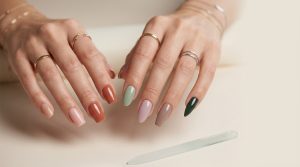
If you’ve ever paused with a pair of nippers hovering over your nails, you might’ve wondered: should you cut the cuticle? It’s one of the most searched questions in nail care,—and one of the most misunderstood. Scientifically speaking, the answer is more nuanced than a simple yes or no. It depends entirely on what you’re actually cutting.
Most people refer to any skin at the base of the nail as the “cuticle,” but that’s not anatomically correct. What they’re often referring to is the Proximal Nail Fold (PNF), a living tissue that serves as a barrier against infection. The true cuticle is a thin layer of dead skin cells that clings to the nail plate, created by the eponychium underneath the PNF.
So when you ask, “Should I cut the cuticle?”, you need to ask a second question: Are you referring to the dead cuticle, or the living PNF?


Why Should You Cut the Proximal Nail Fold or Just Remove the Cuticle?
Anatomy, Not versus Vanity.
You may call it the cuticle, but anatomically, that outermost bit is the proximal nail fold, a living layer of skin that seals out bacteria and pathogens. The actual “cuticle” is the thin film of dead cells that cling to the nail plate, created by that living tissue. Cutting into the proximal nail fold isn’t just cosmetic, it breaches your body’s defences. That’s why if your question is should you cut the proximal nail fold or just remove the cuticle, the answer depends: are you cutting live tissue (the proximal nail fold) or removing dead cells (the cuticle) to improve the condition of the nail plate?
When Should You Cut the Cuticle, If Ever?
In a proper manicure routine, removing hangnails and frilled dead keratinized skin off the nail plate helps polish product adhesion and makes your nails look better. The key distinction? You’re not slicing into removing living tissue, just eliminating debris that can cause lifting of your polish product or snag your socks. So yes, you may carefully trim remove the dead (non-living) cell cuticle, but only if you know where the proximal nail fold ends and the dead (non-living) cuticle begins.
Why You Should Think Twice Before You Cut the Cuticle
That living proximal nail fold isn’t just decorative; it’s like a little built in moat protecting your nail matrix . Cutting into it can create entry points for bacteria or fungi and lead to infection. Plus, skin trauma near the nail can trigger hyperkeratosis (thickened skin) or irritations. So the next time you ask should you cut the proximal nail fold or just remove the cuticle, consider this: are you respecting the natural border, or dancing too close to damaging its defences it in the name of vanity or because its always been done this way?
Should You Cut the Cuticle? Here’s How to Care for It Instead
- Softening & pushing back – Use a gentle moisturiser or cuticle oil containing jojoba, vitamin E or almond oil. This hydrates, seals in moisture, and even supports microcirculation. Never use excessive force at the back of the nail plate where it meets the Proximal Nail Fold
- Cleanse, don’t over-soak – Water softens skin but can lift and will help soften the cuticle from on the plate. Avoid long soaks before trimming any nail product application —they blur the line between live and dead tissue. as this will also soften the nail plate causing your nail product to lift or chip.
- Gentle pushing – Use a soft orangewood stick or manicure tool to nudge back the dead cuticle (proximal nail fold) without intruding on damaging it, be very gentle living skin.
- Targeted trimming – Only cut away tiny hangnails or ridges of dead skin that are obviously detacheding from the skin—never cut right at the fold. Always use sharp clippers and avoid cutting deep into the nail folds
- Moisturise – Finish with nail oil to reinforce the barrier and keep that natural “cutile proximal nail fold” soft. When oil is massaged into the area, it shields against loss and external stressors .
What the Pros Say
NailKnowledge experts stress that the term “cuticle” is often misapplied . They argue that What most people call the cuticle is actually the proximal nail fold, a living part of the nail area that sheds dead cells.
Cutting it is not advisable because the Proximal Nail Fold is living skin, only keratinized, and attached to the nail plate. Doing so damages the natural barriers that protect the nail unit, which is why education now promotes correct anatomical terminology.
Are you still thinking should you cut the cuticle (proximal nail fold) every time you prep for a manicure? Remember: if it bleeds or hurts, you cut the wrong thing.
Risks of Cutting or Cutting (Too Deep) Into the Proximal Nail Fold
- Infection – Breaks in the skin allow pathogens in.
- Thickened skin – Trauma can lead to hyperkeratosis, redness, swelling and soreness.
- Polish lifting – Damaged skin disrupts the balance of the nail plate and this will affect adhesion.
- Discolouration – Scarring or recurring inflammation can affect colour and texture of the nail and or the surrounding skin and can also damage melanocytes in the skin removing protection from UV light possibly making you more vulnerable to skin cancers.
Should You Cut the Cuticle? A Science-Backed Nail Care Routine
So how should you approach manicuring your nails, tidying your proximal nail folds and removing the cuticles from the nail plate before product application?
- Hydrate – Apply quality oil or moisturizer daily to maintain the general health and flexibility of the skin protecting your nail plate and to ensure that less water can enter your nail plate soften and seal .
- Gently push – Use soft tools once or twice a week to nudge back the proximal nail fold allowing for perfect removal of softened cuticle from the nail plate before applying any product.
- Trim only dead bits loose hanging dry skin – Carefully clip loose flakes of skin or hangnails—not living skin or proximal nail fold.
- Clean the nail plate – For any artificial nail product including nail polish, wash hands and nails with soap & water and use a good quality nail plate cleanser to remove wipe away oils and or debris from the nail plate with acetone or isopropyl alcohol once the skin hands and nails are clean.
- Finish with a good quality nail and skin oil and lotion – Seal everything in. Your nail or skin oil isn’t just cosmetic; it forms a protective buffer, enhances flexibility, and even aids circulation.
Stick with Science, Not Tradition
Gone are the days when salons flouted every boundary, soaking your hands in water and aggressively trimming living skin. Modern anatomy and evidence show that what you’ve traditionally called the cuticle is a the living protective proximal nail fold. We give you a small overview of what each part is:
- Cuticle is a non-living tissue formed by the eponychium and laying as a very thin layer on the nail plate, has to be removed gently before applying product. It’s a protective layer that seals under the proximal nail fold.
- Proximal Nail Fold is living skin and at the end slightly keratinized. Laying on top of the nail plate helping the cuticle seal the entry to the eponychium & nail matrix, making it an anti-pathogenic barrier.
- Eponychium (living tissue) is a very thin layer of stem cells where the nail plate cells are crushed together to form the nail plate. It’s where the cuticle is formed and laid on the nail plate. It’s a crucial component in the production of the nail plate, along with the nail matrix.
- Matrix (also living tissue) is made out of the same stem cells as the eponychium and produces the different layers of the nail plate cells.
Shedding tradition for knowledge makes you safer, more confident, and kinder to your nails with the added bonus of protecting your nail area while helping maintain amazing looking nail product on your fingers.