• Skip to primary navigation
  • Skip to main content
  • Skip to footer
NailKnowledge

NailKnowledge

  • Courses
  • MyNailEra
  • Free eBooks
  • Knowledge Base
    • Knowledge Base
    • Ask the Experts
    • Glossary
  • News
  • Blog
  • Login

Archives for December 11, 2024

Non-Wipe Top Coats: Clearing Up the Confusion

We get asked this question a lot: “Do non-wipe top coats really need to be wiped?” With so much conflicting information out there, it’s understandable to feel unsure. Safety is essential, and knowing the facts helps protect both you and your clients from potential allergies or irritation.

To help clear things up, here’s a detailed breakdown of non-wipe top coats, why some people still choose to wipe, and how to use them safely and effectively.

What is a Non-Wipe Top Coat?

  1. Non-wipe top coats are designed to cure completely without leaving a sticky or tacky inhibition layer after being cured under a UV or LED lamp.
  2. This means, in theory, you do not need to wipe the nail with alcohol or any cleanser after curing.

Why Some People Might Still Wipe

  1. Misunderstanding: Some people may be used to traditional top coats (which do leave an inhibition layer) and automatically wipe without realizing it’s unnecessary.
  2. Shine or Texture Preference: Occasionally, people feel that wiping enhances the shine or feel of the top coat. However, for genuine non-wipe top coats, this step is unnecessary.
  3. Safety Concerns: Some technicians worry that uncured product might be left behind, causing allergies or contact dermatitis. However, if the product cures correctly under a calibrated UV/LED lamp, it should be fully set, and no harmful substances should remain. If you are worried about the incidences of allergies then continue to wipe over the cured coating just in case there is any uncured material. Remember to wipe from base to the tip each time and start with little finger

Best Practices for Using a Non-Wipe Top Coat Safely

  1. Follow Manufacturer Instructions: Ensure you are using a top coat specifically formulated as a non-wipe product. Always trust the manufacturer’s guidelines and use the correct curing times and lamps they recommend.
  2. Proper Curing: Ensure your UV/LED lamp is suitable (check wattage and cure times). An under-cured product can lead to uncured monomers causing skin irritation or allergies.
  3. Check the Surface: After curing, if the nail feels fully smooth and dry, there’s no need to wipe. If it feels tacky, there may be an issue with the curing process, or it might not be a true non-wipe formula.
  4. Regularly Test Your Lamp: Over time, lamps may lose their efficiency. Ensure your lamp is functioning well to avoid incomplete curing.
  5. Allergy Awareness: If you or your clients have sensitive skin, make sure to avoid direct skin contact with the uncured product, as this can increase the risk of allergies.

Conclusion

If your top coat is labeled as a non-wipe product and you are using it correctly with a properly functioning lamp, there’s no need to wipe. Inconsistent advice may come from misunderstandings or concerns about proper curing. Trust the product guidelines and ensure good curing practices to keep yourself and your clients safe.

If you still feel uncertain, consider reaching out directly to the manufacturer’s customer support for clarification or additional advice tailored to their product.

Filed Under: Lotions, Potions and Polishes

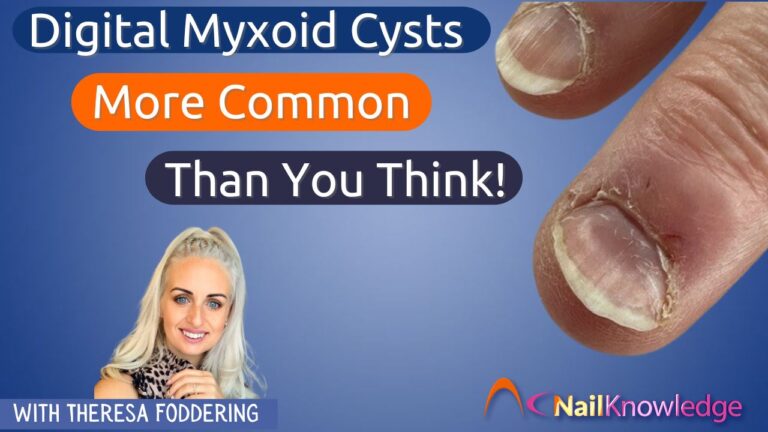
Digital Myxoid Cysts

Digital Myxoid Cysts: More Common Than You Think Yet Never Educated Upon

As a nail professional, you may have come across unusual conditions affecting the nails and surrounding skin. One such condition is the Digital Myxoid Cyst (DMC). While not often discussed in traditional training or educational resources, this condition is more common than many realise and can present challenges for both clients and professionals alike. This blog aims to demystify Digital Myxoid Cysts, filling a crucial gap in knowledge and equipping you with the tools to navigate this condition confidently.

What is a Digital Myxoid Cyst?

Digital Myxoid Cyst

A Digital Myxoid Cyst, also known as a mucous cyst, is a benign, fluid-filled lump typically found near the nail folds of the fingers or toes. Despite the term “cyst,” these are not true cysts as they lack a capsule. Instead, they are filled with a thick, jelly-like fluid derived from the synovial fluid of the joint or the gelatinous substance of connective tissue.

These cysts often appear as small, translucent bumps located on the dorsal aspect of the distal finger, close to the base of the nail plate. They may cause a ridge or groove to form on the nail plate due to pressure on the nail matrix, resulting in a characteristic deformity.

What Causes Digital Myxoid Cysts?

The exact cause of Digital Myxoid Cysts is not entirely understood, but they are believed to arise from two primary factors:

  1. Joint Degeneration: Digital Myxoid Cysts are often associated with osteoarthritis, particularly in the distal interphalangeal (DIP) joint. Over time, wear and tear on the joint can lead to the leakage of synovial fluid, which then collects and forms a cyst.
  2. Trauma or Repeated Stress: In some cases, repeated trauma or stress to the area may contribute to the development of these cysts, even in the absence of arthritis.

Other contributing factors may include aging, as the condition is most common in people over the age of 50, and genetic predisposition to joint conditions.

Who is Most Prone to Suffering with Digital Myxoid Cysts?

Digital Myxoid Cysts tend to affect individuals who fall into one or more of the following categories:

  • Age: Those over 50 are at a higher risk due to the natural aging process and the prevalence of osteoarthritis in this age group.
  • Gender: Studies suggest that women are slightly more prone to developing these cysts, potentially due to hormonal or structural differences in joint health.
  • Occupation or Lifestyle: Activities that involve repetitive hand or finger movements, or those that place stress on the fingers and nails, may increase the likelihood of developing a Digital Myxoid Cyst.
  • Pre-existing Conditions: Individuals with osteoarthritis or other degenerative joint diseases are significantly more likely to experience this condition.

Treatment Options

While Digital Myxoid Cysts are not life-threatening, they can be bothersome and may require treatment, particularly if they cause pain, interfere with daily activities, or significantly impact the appearance of the nail. Treatment options include:

  1. Conservative Management: In some cases, no treatment is necessary if the cyst is small and asymptomatic. Protecting the area from trauma and avoiding pressure may prevent further complications.
  2. Drainage: A healthcare professional may opt to drain the cyst using a sterile needle. However, this approach often leads to recurrence unless the root cause is addressed.
  3. Cryotherapy: Freezing the cyst with liquid nitrogen can shrink it, but like drainage, this method may not be a permanent solution.
  4. Surgical Excision: Surgical removal of the cyst and its connection to the joint is the most definitive treatment and significantly reduces the likelihood of recurrence. This is typically performed by a dermatologist or hand surgeon.
  5. Laser Therapy or Steroid Injections: These methods may be considered for specific cases, particularly when other treatments are not suitable.

What Can You Do as a Nail Professional?

As a nail professional, your role is not to diagnose or treat Digital Myxoid Cysts but to recognise the condition, educate your clients, and adapt your services accordingly. Here’s how you can contribute:

  1. Educate Yourself and Your Clients: Understanding the signs and causes of Digital Myxoid Cysts enables you to educate your clients. If you notice a cyst, gently explain what it might be and recommend they consult a healthcare professional for a definitive diagnosis.
  2. Adapt Your Treatments: Avoid applying excessive pressure or using tools that could irritate the cyst. For example, skip aggressive cuticle work or filing in the affected area. Gentle handling is key.
  3. Hygiene and Infection Prevention: Since the cyst can occasionally leak fluid, it’s crucial to maintain strict hygiene standards to prevent secondary infections. Always use clean, sterilised tools and follow best practices.
  4. Collaborate with Healthcare Providers: If a client is undergoing treatment for a Digital Myxoid Cyst, communicate with their healthcare provider (with the client’s permission) to ensure your services align with their treatment plan.
  5. Empathy and Support: Clients may feel self-conscious about the appearance of their nails or the cyst itself. Provide reassurance and support, emphasising that this is a common and manageable condition.

Final Thoughts

Digital Myxoid Cysts may not be a topic that frequently appears in nail education, but their impact on nail health and appearance makes them highly relevant to our industry. By broadening your understanding of this condition, you not only enhance your professional expertise but also position yourself as a trusted resource for your clients.

Remember, knowledge is power. The more we educate ourselves about these often-overlooked conditions, the better equipped we are to provide exceptional care and support. Whether it’s through recognising the signs, adapting treatments, or offering empathy, your role as a nail professional can make a significant difference.

Let’s continue to bridge the gaps in education and bring awareness to the many conditions that affect nail and skin health. Your commitment to learning and growing ensures that clients always receive the best possible care, even in the face of uncommon challenges.

Digital Myxoid Cyst on a finger
Digital Myxoid Cysts
Fingers showing Digital Myxoid Cysts

Filed Under: Nail Conditions

Level Up Your Nail Insights

Join our Newsletter!
SUBSCRIBE...

Copyright © NailKnowledge

NailKnowledge

  • MyNailEra
  • eBooks
  • About us
  • Courses
  • News
  • Blog
  • Newsletter
  • Glossary

Policies

  • Privacy Page
  • Terms & Conditions
  • Cookie Policy

Support

  • Contact Us
  • Meet the Experts
  • Ask the Experts
  • System Support
  • FAQs
English
English
Portuguese Spanish Vietnamese