• Bỏ qua primary navigation
  • Bỏ qua nội dung chính
  • Bỏ qua footer
Kiến thức về móng tay

Kiến thức về móng tay

  • Các khóa học
  • MyNailEra
  • Sách điện tử miễn phí
  • Cơ sở tri thức
    • Cơ sở tri thức
    • Hỏi các chuyên gia
    • Thuật ngữ
  • Blog
  • Đăng nhập
Bệnh tay chân miệng, Onychomadesis

Bệnh Onychomadesis và bệnh tay, chân, miệng

Tháng 12 10, 2021 qua Tracy Anne Shelverton

2,3 nghìn lượt xem

Bài viết này có hữu ích không?
Lỗi khi gửi đánh giá

As though we do not hear enough about viruses causing problems in our lives, now we get to deal with another one!

Hand, Foot & Mouth Disease (HFMD) in our young children is more prevalent at this time of year.
HFMD is caused by a virus from the Coxsackievirus family (typically the A16 variant, but it can be caused by other strains), and it is highly contagious.
A diagnosis can be made by your Medical Doctor by the presenting signs and symptoms, or by doing a culture from a throat swab or a stool specimen. Traces can be found in the stool for up to 6 weeks after the infection, by which time the young nail plates will already be showing signs of onychomadesis.

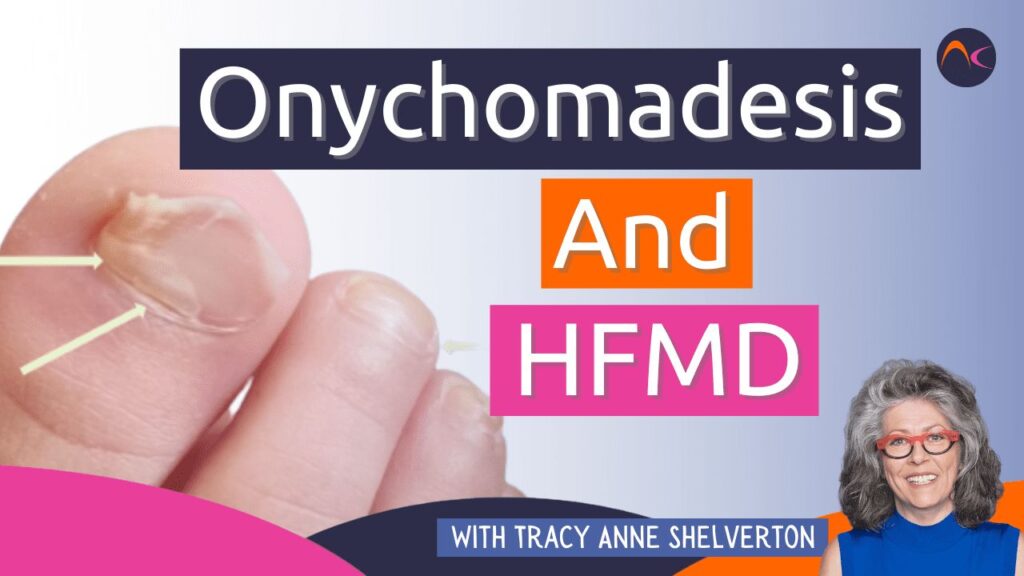
Onychomadesis is a shedding of the nails, beginning at the proximal nail fold, and is possibly caused by the temporary arrest of the function of the nail matrix. This causes the nail plate cells to be released all at once when the fever dies down a little.
We see it often in children that have had HFMD. It generally resolves without complication.

It is imperative to keep the nails clean – soap and water are your friends here – followed by a good quality oil.
A nail wrap (finger elastic tape?) comes into its own in this! We can cut it to fit those mini nails and toenails, and remove it at the end of the day without causing any problems. We can repeat it up to the moment when we can trim the nail off easily.
Nail wrap sticks to itself and not to the damaged nail plate – perfect for kids (and some adults) because we can cut it to size, and it fits just fine in little socks and shoes.

If the loose nail plate is causing a problem, file it lightly with a sponge file, and in a few weeks (about 6), cut it off.
The new one was already forming and should appear from underneath – but do not cut it too soon.


***Please refrain from using mechanical files on a child’s nails or toenails, as it could cause severe damage.


Bài viết này có hữu ích không?
Lỗi khi gửi đánh giá

Categorised: Sức khỏe và An toàn, Tình trạng móng tay

Related Articles

Chăm sóc móng tay trong quá trình điều trị ung thư

Nail Care During Cancer Treatment

Cancer treatment places significant demands on the body, and while the main focus is understandably on medical care, the condition…

Read More
Tại sao việc thử nghiệm miếng dán sơn gel trên da lại nguy hiểm

Why Gel Polish Patch Testing on Skin Is a Dangerous Mistake

Ever been tempted to dab a bit of gel polish on your skin just to “see if you’re allergic”? It…

Read More
Da móng bong tróc sau khi làm móng gel

Nails Peeling Off After Gel? Here’s What You Need to Know

If you’ve had gel nails applied and within a week they’ve started to lift, only to leave your natural nails…

Read More
Hiểu rõ về hệ thống thông gió hợp lý trong các tiệm làm móng

Understanding Proper Ventilation in Nail Salons

If you’re running a salon or working in one, your top priority should be the health and comfort of both…

Read More
Rụng móng tay & Bệnh tay-chân-miệng

Onychomadesis & Hand Foot Mouth Disease

What Nail Professionals, Parents & Carers Need to Know Autumn and spring bring more than just cosy jumpers and daffodils,…

Read More
Cách Nhận Biết Các Triệu Chứng Bệnh Vảy Nến Móng Tay Ở Khách Hàng

Nail Psoriasis Symptoms in Clients

How to Identify Nail Psoriasis Symptoms in Clients with Confidence and Care As nail professionals, we often spend more time…

Read More

Nâng cao kiến thức về làm móng

Tham gia bản tin của chúng tôi!
ĐĂNG KÝ...

Bản quyền © NailKnowledge

Kiến thức về móng tay

  • MyNailEra
  • Sách điện tử
  • Về chúng tôi
  • Các khóa học
  • Tin tức
  • Blog
  • Bản tin
  • Thuật ngữ

Chính sách

  • Trang riêng tư
  • Điều khoản và điều kiện
  • Chính sách Cookie

Ủng hộ

  • Liên hệ với chúng tôi
  • Gặp gỡ các chuyên gia
  • Hỏi các chuyên gia
  • Hỗ trợ hệ thống
  • Câu hỏi thường gặp
Vietnamese
Vietnamese
English Portuguese Spanish