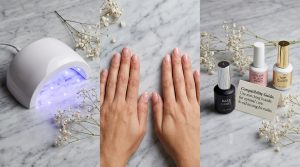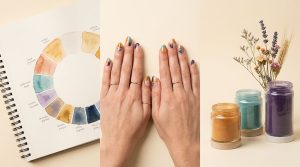
With nail allergies on the rise, particularly contact dermatitis, it’s crucial to understand the tools and products available in the market, especially those marketed for DIY use. Flash cure lamps and touchable gel products are gaining popularity, often advertised by non-professional nail companies as superior to salon alternatives. This introduction aims to shed light on what flash cure lamps and touchable gels are, their benefits, and the considerations to keep in mind to ensure safe and effective use.

The Limitations and Uses of Flash Cure Lamps in Nail Care
Flash cure lamps are not designed to properly cure any UV gel material. They are just meant for starting the polymerisation but this must be completed in a full cure lamp.
These are useful when applying fully covered tips so the tip is held in place until other fingers are done and the whole hand can go into a UV lamp for a proper cure. It can be seen that this is a long way away from a proper cure as the tip can be easily removed so the gel is still soft.
They are also useful for nail art when a design needs to be kept in place when using a low viscosity (runny) to stop it moving.
It should never be used for a full cure as virtually all UV cured material needs a minimum of 30 seconds, if not 60-90 seconds. It is very rare that cure time is less and if one is and the manufacturer says so it shouldn’t be viewed with suspicion.
Touchable Gel: Handling and Applications of Foldable UV-Cured Gel
This UV-cured material can be folded, making it useful for certain applications, such as intricate 3D nail art. However, because it remains an uncured gel, direct skin contact must be avoided to prevent potential allergic reactions. Due to its uncured state and the risk of skin exposure, it is not suitable for full cover tips.
This gel is also useful for creating 3D nail art. Colored high-viscosity gels can be folded into intricate shapes, but this process should always be done while wearing gloves to avoid skin contact. Due to the thickness and opacity of these gels, they require a longer curing time than usual to ensure they are properly cured.
The term ’touchable’ is not a good term as it must not be touched with unprotected skin