White Spots on Nails: Damage or Dehydration?
White spots on nails after gel removal are a common concern among nail professionals and enthusiasts. They don’t result from dehydration but rather from improper removal techniques. UV gel manicures are safe when applied and removed correctly. Adhering to recommended wear times, typically two weeks, is crucial.
Extending wear beyond four weeks makes removal harder. Incorrect curing with the wrong lamp also complicates the process. Proper techniques are essential for preventing damage. Moreover, using the right tools and solvents ensures a safe and effective service. For instance, acetone is commonly used due to its fast-acting properties and long history of safe use in nail care.


Why Dehydration Isn’t the Cause of White Spots
Dehydration affects the entire nail plate, not just specific spots. It’s reversible; soaking nails in water restores moisture quickly. Nail dehydrators temporarily remove moisture, but water reverses this effect. Acetone used in removal may slightly dehydrate the nail but doesn’t cause white spots.
If dehydration were the cause, white spots would disappear after hydrating treatments. However, they persist, indicating another cause. Additionally, nail dehydrators used before applying acrylic enhancements leave a chalky appearance that vanishes with water contact. This demonstrates that dehydration is not responsible for the white spots seen after gel removal.
To further illustrate this point, consider the use of nail dehydrators in nail enhancements. These products temporarily remove moisture from the nail surface, creating a chalky appearance. Yet, this effect is instantly reversed upon contact with water, showing that dehydration does not lead to permanent damage or white spots.
The Real Cause: Surface Damage
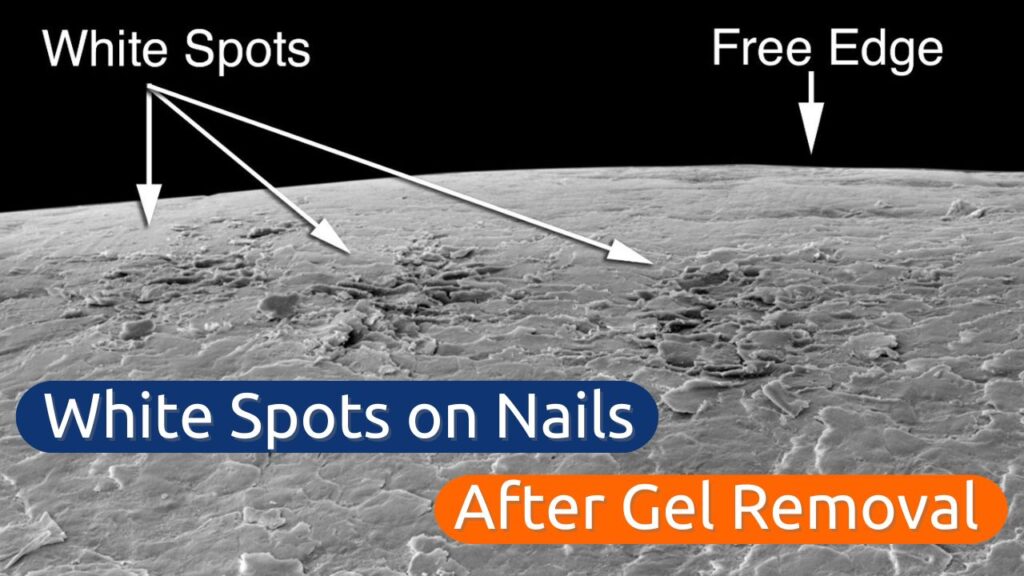
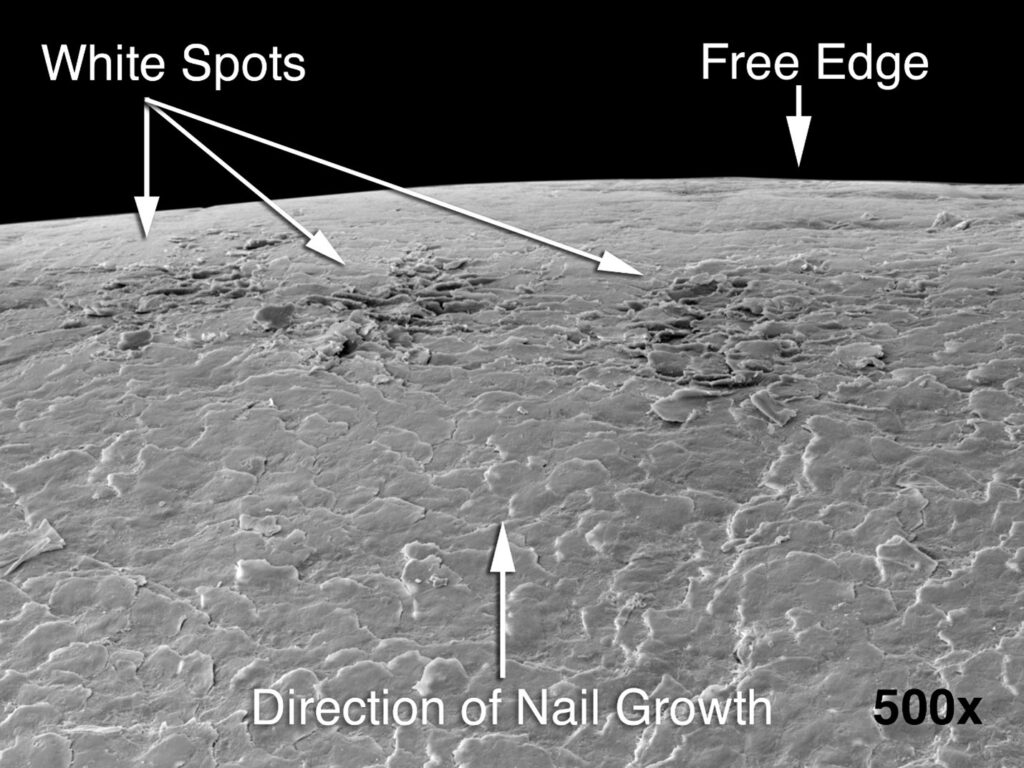
White spots are caused by physical damage during improper gel removal. Scraping or prying at coatings dislodges nail cells, creating pits that appear whitish. Proper removal involves soaking coatings in acetone or solvents for sufficient time to avoid forceful scraping.
Rushing removal or using excessive force damages the nail plate. This damage isn’t caused by UV gel itself but by improper techniques. Images often show how scraping can uplift keratin cells, leading to visible white spots. Therefore, it’s crucial to avoid using metal or wooden tools that can dislodge nail cells.
Moreover, the use of force during removal not only causes immediate damage but can also lead to long-term issues. For example, repeated scraping can weaken the nail plate over time, making it more prone to breaks or splits.
Preventing White Spots During Gel Removal
To prevent white spots, treat the nail plate with care. Ensure adequate soak time during removal to avoid using force. Minimise filing or use a 240-grit abrasive if necessary. Educate clients about proper maintenance and wear times.
By adopting gentle techniques, you can protect clients’ natural nails while maintaining professional standards. Regular training and updates on best practices are essential for nail technicians. This includes understanding the chemistry behind nail products and how they interact with the nail plate.
Additionally, client education plays a significant role in preventing damage. Informing clients about the importance of adhering to recommended wear times and avoiding excessive force during removal helps ensure their nails remain healthy.
Conclusion and Best Practices
White spots on nails after gel removal are caused by physical damage, not dehydration. Understanding this helps professionals adopt safer practices. UV gel manicures are safe when done correctly. Proper removal techniques and client education are key to preventing damage.
In conclusion, focusing on correct application and removal methods ensures healthy nails and satisfied clients. By prioritising nail care and education, professionals can enhance their services and build trust with clients.
To further enhance your practice, consider the following best practices:
- Use High-Quality Tools: Invest in tools designed specifically for nail care to ensure safe and effective results.
- Regular Training: Stay updated with the latest techniques and products to maintain high standards.
- Client Communication: Educate clients on proper nail care and maintenance to prevent damage.
By incorporating these practices into your routine, you can provide superior service while protecting your clients’ nail health.