Nail Ridges Causes: Could It Be Habit-Tic Deformity?
If you’ve noticed a series of deep horizontal ridges running down your thumbnail, you’re not alone, and you’re right to wonder. Nail ridges causes are surprisingly specific for many people, and one of the most overlooked is a condition called habit-tic deformity. It’s more common than most people realise, and understanding it properly is the first step toward protecting your nails.
💡 Key Takeaway
Deep horizontal ridges on the thumbnail are often a sign of habit-tic deformity, caused by repeated trauma to the nail matrix from unconscious picking or cuticle manipulation. The condition connects closely to stress, anxiety, and body-focused repetitive behaviours, so effective care usually means addressing both the nail and the habit driving it.


What Is Habit-Tic Deformity?
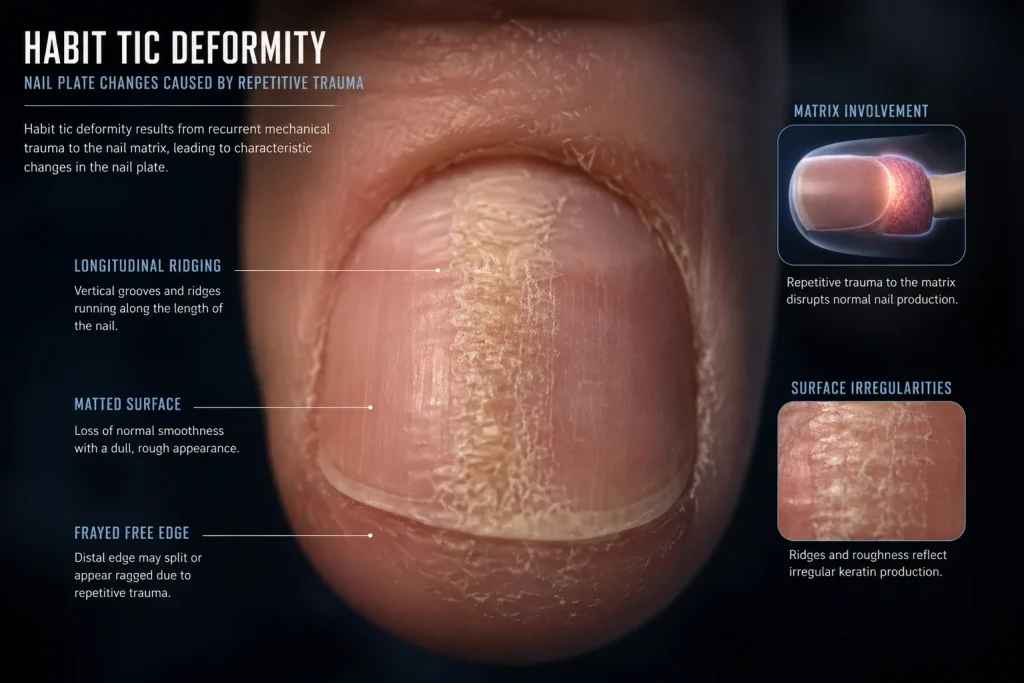
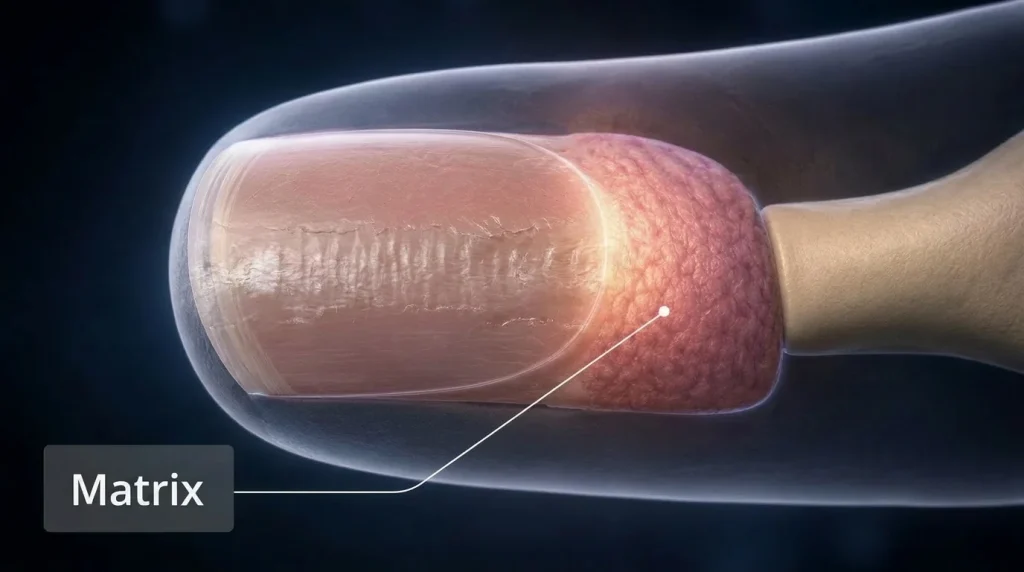
Habit-tic deformity is a nail condition where repetitive external trauma to the nail matrix disrupts normal nail plate formation. The nail matrix sits at the base of the nail and produces the nail plate. When something disturbs that area over and over again, it struggles to form the nail plate normally. The result is a nail carrying multiple deep horizontal ridges, running from the cuticle area all the way to the free edge.
The thumb is the nail habit-tic deformity affects most often. In more severe cases, other nails may develop the same pattern.
The condition goes by several names: onychotillomania, habit-tic dystrophy, and median nail dystrophy. These names all describe the same underlying process, just from slightly different clinical angles.
Think of it like a gravel path that keeps getting disturbed before it sets. Each disruption leaves a new mark, and over time the surface becomes uneven and rough rather than smooth and flat. That’s essentially what repeated trauma does to nail plate formation.
What Causes Horizontal Ridges on the Thumbnail?
The ridges appear because the nail matrix keeps getting disturbed. But what causes that disturbance? In habit-tic deformity, the trauma usually comes from a person’s own hand. Common behaviours include picking at or pushing back the cuticle of the thumb with another finger, often without even realising it’s happening.
This is where the psychological side of the condition becomes important. Stress, anxiety, and depression all drive the behaviour. It also falls within the category of body-focused repetitive behaviours. It may occur alongside obsessive-compulsive disorder (OCD) too.
The habit tends to run on autopilot. That’s part of why it can be so difficult to break.
You can read more about what happens when the nail matrix is damaged and why the effects on the nail plate can last so long.
Nail Ridges Causes: Symptoms and What to Look For
The visual signs of habit-tic dystrophy stand out clearly once you know what you’re looking for. The ridges run horizontally across the nail, often creating a washboard-like texture. They typically appear in a central band down the nail, which is why one clinical name for the condition is median nail dystrophy.
Each episode of trauma interrupts nail growth at that moment. The nail plate carries a physical record of every disruption.
Over time, repeated disturbance gradually distorts the nail plate further. It’s a similar mechanism to the way chronic nail biting affects nail shape and texture. The nail doesn’t lie about what it’s been through.
If you’re seeing other unusual changes alongside the ridges, such as redness or sensitivity around the nail, understanding nail reactions can help you piece together a fuller picture of what’s going on.
Can Acrylic or Gel Overlays Help Protect the Nail?
Yes, and this is one of the more practical aspects of managing the condition. Preventing further trauma to the nail matrix sits at the heart of treatment, so creating a physical barrier over the nail can help. Acrylic or gel overlays serve exactly this purpose for some people. They make it harder to pick at or manipulate the cuticle area, giving the nail matrix a chance to recover while you also address the underlying habit.
An overlay tackles the physical access to the nail. It doesn’t address the habit itself.
If you leave the psychological drivers behind the behaviour unaddressed, the habit may simply shift to another nail or find another outlet. That’s why medical professionals often play an active role in diagnosing and managing habit-tic deformity alongside any nail-focused care.
The Link Between Nail Ridges, Stress, and Mental Health
This is the most important thing to understand about habit-tic deformity.
It isn’t just a nail problem.
The condition sits at the intersection of physical nail health and mental wellbeing. Stress, anxiety, depression, and OCD all connect to it. For many people, the repetitive behaviour acts as an unconscious coping mechanism under pressure. According to the American Academy of Dermatology, nail changes can reflect a range of underlying health factors, including psychological ones.
Recognising this connection doesn’t make the condition any less treatable.
Effective care tends to involve more than just protecting the nail. Speaking to a GP or mental health professional about body-focused repetitive behaviours is a useful step. It benefits not just the nails but overall wellbeing too. Deep horizontal ridges on the thumbnail aren’t just a cosmetic issue. They’re a signal worth paying attention to, and your nails can be surprisingly good at reflecting what’s going on internally.
Knowing what habit-tic deformity looks like gives you a clearer picture. Understanding what drives it gives you the power to act. Going deeper into nail health topics like this takes proper guidance to do well.
If you want to explore nail health in a guided, expert-backed way, MyNailEra is built for exactly that. Era, your personal nail coach, can help you build real knowledge at your own pace, and the verified, expert-reviewed library means everything you learn is grounded in fact. See how it all fits together inside MyNailEra.