Wet Nails and the Water Myth Most People Believe
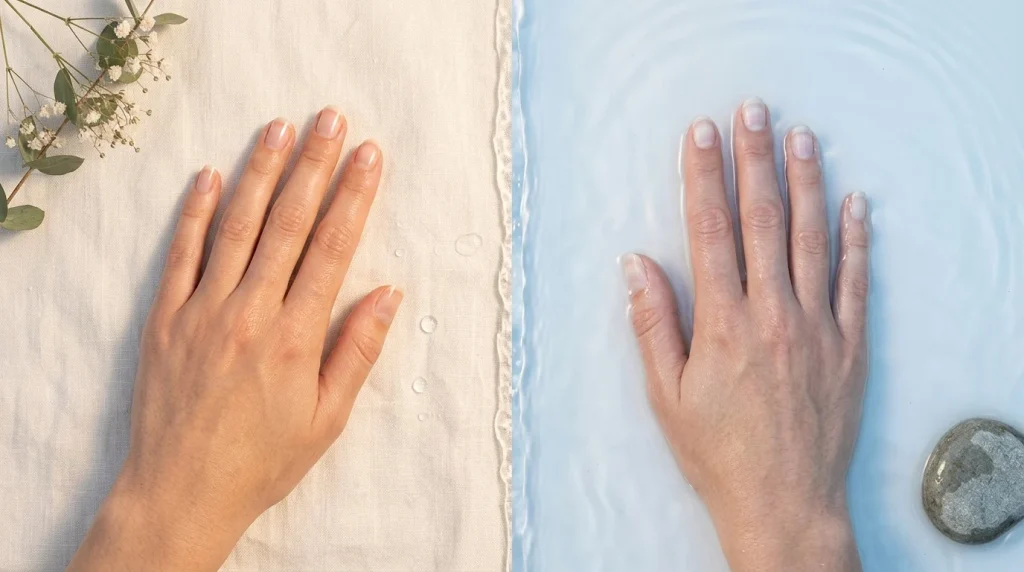
Water is essential for life, but for your nails, it tells a more complicated story. Most people assume that wet nails are hydrated nails, as if soaking your fingers is doing them a favour. In fact, repeated exposure to water is one of the most overlooked factors that may contribute to weak, peeling, and brittle nails. Understanding what actually happens inside the nail plate when it gets wet changes everything about how you care for your nails.
The confusion is understandable. We associate moisture with softness and health. But the nail plate is not skin. It behaves very differently when it meets water, and the science behind that difference is genuinely fascinating.
💡 Key Takeaway
Wet nails are not hydrated nails. Repeated water exposure can cause the keratin layers in your nail plate to swell and contract, which may weaken the bonds between them over time and contribute to peeling, splitting, and brittleness. Protecting your nails from prolonged water contact is one of the most effective things you can do for long-term nail health.

What the Nail Plate Is Actually Made Of
Dense layers of a protein called keratin build your nail plate. These layers stack horizontally across the nail, bonding together and staying slightly flexible under normal conditions. The nail plate holds around 18% water naturally, and that balance keeps nails resilient. Think of it like a laminated piece of card. Dry enough to hold its shape, but not so rigid that it snaps at the first bend.
Keratin is actually quite porous. It absorbs water readily, which sounds helpful but creates a serious structural problem when the wetting and drying cycle repeats too often.
Why Wet Nails Soften and Swell
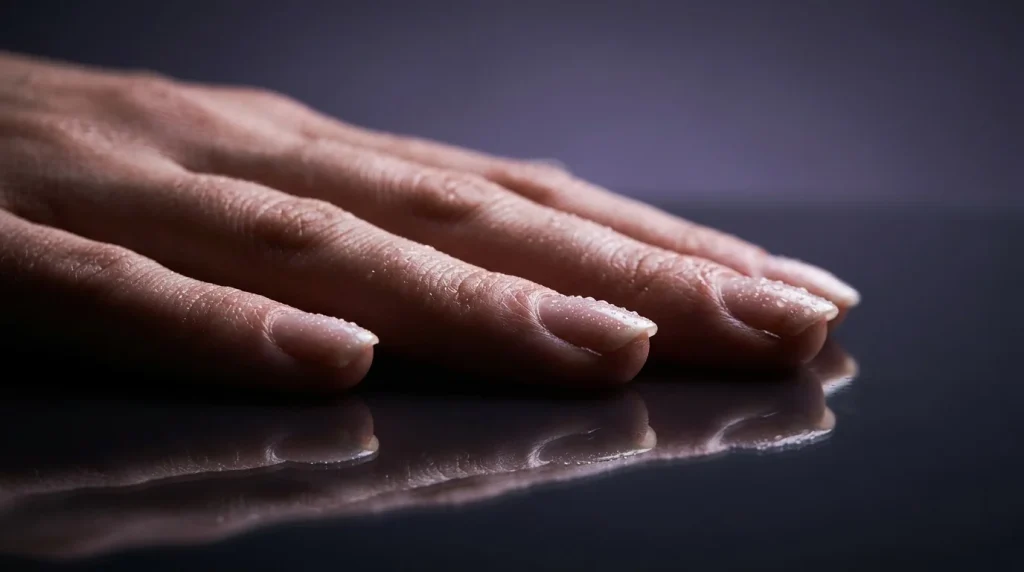
When your nails sit in water, the keratin layers absorb moisture and swell. The nail plate can expand significantly when fully saturated, some research suggests by a notable percentage, temporarily softening the nail. That swelling temporarily softens the nail, which is why your nails feel bendy and pliable after a bath or a long stint washing dishes.
Here is where the damage begins. As the nail dries out again, it contracts. That expansion and contraction cycle stresses the bonds between the keratin layers. Do it once and your nails recover. Do it every day, multiple times a day, and those bonds start to weaken and separate.
The nail plate essentially fatigues. It works the same way a piece of metal eventually cracks when you bend it back and forth too many times.
This cycle of swelling and contraction may be associated with onychoschizia, the horizontal splitting and peeling of the nail plate into layers, and repeated water exposure is considered one of several factors that may contribute to it. If you notice your nails peeling in thin, papery sheets, repeated wetting and drying may be a contributing factor worth considering, though a GP or dermatologist can help identify the full picture.
Separating the Myths from the Nail Science
So does this mean nails need no moisture at all? No. That is the other extreme, and may contribute to equal damage. A nail plate that stays too dry may become rigid and brittle, making it more prone to snapping rather than bending. The goal is stable moisture, not zero moisture.
The myth worth discarding is the idea that soaking nails in water hydrates them in a useful way. True nail hydration comes from within, through diet, circulation, and topical products that reinforce the nail plate rather than flooding it. Water absorption is not the same as healthy moisture. One is a temporary physical swelling. The other is a stable structural state.
Not all water exposure carries equal risk, either. Brief hand washing is generally associated with minimal stress to the nail plate. But prolonged exposure, think swimming, long baths, or working with wet hands for hours, creates the repeated swelling and shrinking that does real damage over time. The effects of heat and sweat on nail health follow a similar principle, where environmental stress compounds over time rather than causing instant visible damage.
Who Is Most at Risk From Wet Nails
Some people are more vulnerable than others. Healthcare workers, kitchen staff, hairdressers, and parents of young children often wash their hands dozens of times a day. That constant cycle of wet and dry can place significant stress on the nail plate over time.
Thinner nails feel the structural stress more acutely. Nail plate thickness varies naturally between people, and thinner plates absorb water more quickly. If your nails have always been on the fine side, the effects of water exposure may become apparent more quickly for you than for someone with thicker plates.
Age also plays a role. As we get older, the nail plate tends to lose some of its natural moisture content. That makes it more vulnerable to both brittleness and the stress of water exposure. Understanding how nail biology changes over time helps explain why older nails often feel more fragile despite the same lifestyle habits.
Practical Ways to Protect Your Nails From Water Damage
A few consistent habits make a real difference here.
Wearing gloves for prolonged water exposure is the most effective single step. Rubber or nitrile gloves during washing up, cleaning, or any task involving prolonged contact with water create a simple barrier. It feels fussy at first, but your nails will thank you within weeks.
After your hands get wet, dry your nails thoroughly before applying any oil or moisturiser. Sealing moisture in while the nail plate still feels swollen can trap water inside the keratin layers. Let the nail return to its normal state first, then apply a nourishing oil to support the cuticle and the surface of the plate.
Nail hardeners and strengthening base coats can also act as a physical shield. They slow down water absorption by adding a protective layer over the nail surface. They will not cure damaged nails, but they reduce the rate at which water gets in. If you are dealing with significant peeling, the science behind keratin granulations offers a useful window into how nail structure responds to surface stressors more broadly.
What Healthy Nails Actually Need
Healthy nails may benefit from stable internal moisture rather than repeated water immersion. A diet that includes biotin, protein, and essential fatty acids may support nail health, alongside gentle handling and protection from repeated wetting and drying.
Cuticle oil used consistently is one of the most effective tools available. It supports the seal around the nail plate and keeps the surrounding tissue flexible.
Reducing the frequency of prolonged water exposure, even slightly, can produce noticeable results within a single nail growth cycle. Nails grow slowly, around 3 millimetres a month on average, so changes take time to show. But the nail plate you grow from this point forward reflects the conditions you create now.
Wet nails might feel harmless in the moment, but the cumulative effect of repeated water exposure is considered one of the most common and least recognised factors that may contribute to nail damage. The evidence suggests that prolonged or repeated water exposure is not beneficial for the nail plate, and understanding that may usefully shift how you approach everyday nail care.
While the nail science behind water damage is fascinating to understand, translating that knowledge into real technique, knowing how to protect and strengthen the nail plate properly, takes more than a few facts.
If you want to go deeper, MyNailEra’s award-winning nail artists cover nail health and preparation in detail through the app’s tutorials, and Era, your personal nail coach, can give you tailored feedback on your own nails. Understanding the why is the start. Era helps you work out the how.