• Skip to primary navigation
  • Skip to main content
  • Skip to footer
NailKnowledge

NailKnowledge

  • Courses
  • MyNailEra
  • Free eBooks
  • Knowledge Base
    • Knowledge Base
    • Ask the Experts
    • Glossary
  • News
  • Blog
  • Login

Lotions, Potions and Polishes

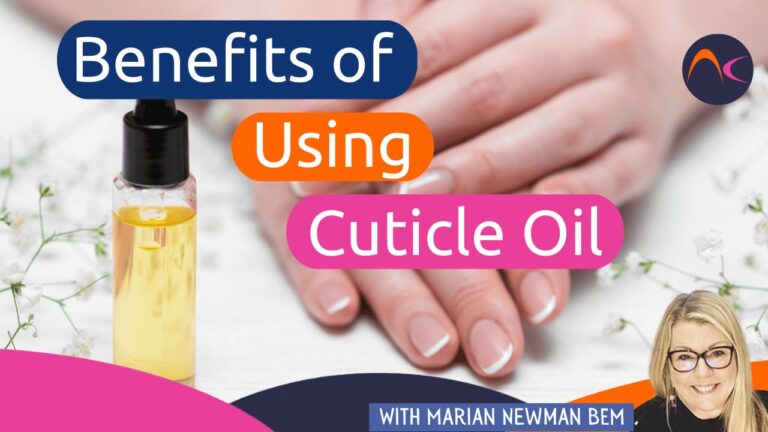
What are the benefits of using Cuticle Oil?

Cuticle oil or nail & skin oil is a moisturising product designed to improve the health and appearance of your nails and surrounding skin. It is typically made from a blend of natural oils, such as jojoba, almond, and avocado oil, as well as vitamins and other nourishing ingredients. Here are some of the main benefits of using cuticle oil:

  1. Hydrates and moisturises: The primary benefit of using cuticle oil is that it hydrates and moisturises the skin around your nails. This can help to prevent dryness, cracking, and peeling, which can be unsightly and uncomfortable. By keeping the skin around your nails moisturized, cuticle oil can also help to promote healthy nail growth.
  2. Softens cuticles: Another benefit of using cuticle oil is that it softens the cuticles, making it easier to remove with a wooden stick or curette. Softening the cuticles can also help to prevent painful splitting or tearing.
  3. Promotes nail health: Cuticle oil can help to promote healthy nail growth by moisturising the nail bed epithelium, this will in turn encourage the nail plate to be transported along the nail bed at a normal rate. *If the bed epithelium is damaged or dried out (maybe due to infection or a fungal invasion) then the nail plate growth is slowed, and the nail may start to be forced upwards (we see this in toenails with fungal infections) which can be painful or uncomfortable when wearing closed shoes. Applying your cuticle/nail oil will also make it harder for pathogens like fungi to take hold.
  4. Enhances manicures: Using cuticle oil as part of your regular manicure routine will improve flexibility of the nail (important to help stop them cracking, splitting or breaking) and can help to enhance the appearance of your nails. It can give them a healthy shine and make them look smoother and more polished. Additionally, cuticle oil can help to extend the life of your manicure by preventing chipping and peeling.
  5. Soothes skin: Finally, cuticle oil can be a soothing and relaxing addition to your self-care routine. Many people find the act of massaging the oil into their skin and nails to be a calming and stress-relieving experience. Additionally, some cuticle oils may contain essential oils that will promote penetration through the nail plate and in and around the nail folds.

Numerous benefits for using cuticle oil

Using cuticle oil can provide numerous benefits for your nails and skin. By moisturising, softening, and promoting healthy growth, cuticle oil can help you to achieve stronger, healthier, and more beautiful nails, but more important it will extend the durability of your nail coating or nail enhancement.. Additionally, using cuticle oil as part of your self-care routine can be a relaxing and enjoyable experience and combined with a quality lotion containing Allantoïne & Ureum is the perfect finish to your salon service or home-care routine.

The Best Nail Cuticle Oil

When it comes to choosing the best cuticle oil for your nail and skin care routine, consider a few key factors. Look for cuticle oils that contain natural ingredients like jojoba, almond, or avocado oil, as these are known for their moisturising properties. Avoid products with synthetic preservatives, scents, or colorings to ensure the purity of the oil. Additionally, assess the compatibility of the oil with your specific nail type and skin sensitivities. By selecting a high-quality, natural cuticle oil that aligns with your needs, you can maximise the benefits of this essential nail care product.

Filed Under: General Information, Lotions, Potions and Polishes

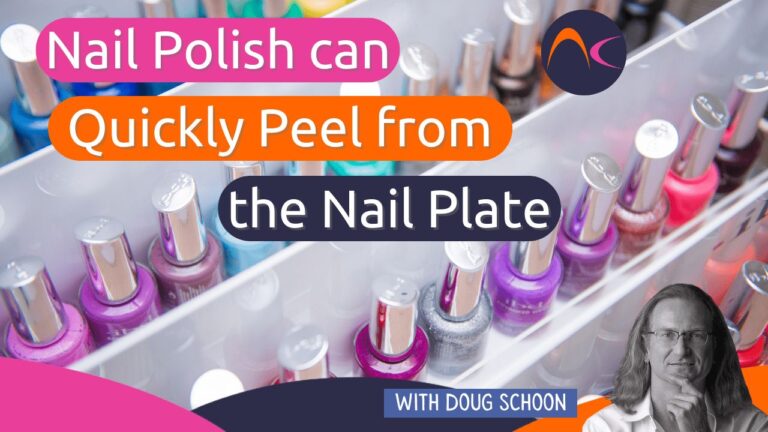
A common reason why nail polish can quickly peel from the nail plate

Water passing through the nail plate

This image demonstrates how water moves though the nail plate.

The nail plate allows for high rates of transmission of water molecules. Water (aka moisture) migrates quickly through the plate, but as shown, the molecules don’t travel in a straight line. Instead, water molecules meander through the tiny (microscopic) channels that riddle the inside of a nail plate. This results in the plate containing about 15% water content, for a normal nail. Nail polish can slow the movement of water, but it doesn’t completely stop its slow and steady migration toward the surface.

Nail polish can slow the migration of water

This Image demonstrates how nail polish can slow this migration and raise the moisture content of the nail plate.

The increased amount of water in the nail plate increases the water pressure inside the plate. As water pressure builds up underneath nail polish, it creates a force that can push upward on the underside of the nail polish and cause it to peel away from the surface. Even though the water flow is relatively slow, the pressures that build up can become significant.

Here’s an easy way to visualize this. Imagine a water hose that is trickling very slowly. Holding a thumb over the nozzle will initially block the flow, but this also causes water pressure to increase inside the hose. Eventually, the increased pressure will force the water inside the hose to squirt out between the thumb and nozzle. This happens inside the nail plate and the build-up of pressure can push or lift the nail polish from the surface to cause it to peel.

Microscopic passageway inside the nail plate

This Image shows a typical passageway inside the nail plate that allows the movement of water molecules. The width of this image is about one-fifth the diameter of a human hair.

Microscopic Passageway inside the nail plate

Other separate passages allow oils to move through the nail plate, as well. However, it is expected there are more water passages than oil passages since larger amounts of water move through the plate at much faster rates than do natural oils. This passageway inside the nail plate is created at a junction where three nail cells meet, but don’t fit together perfectly, however other types exist, e.g. small spaces between two cells. Such passages allow water molecules to migrate through the nail plate.

Filed Under: Lotions, Potions and Polishes

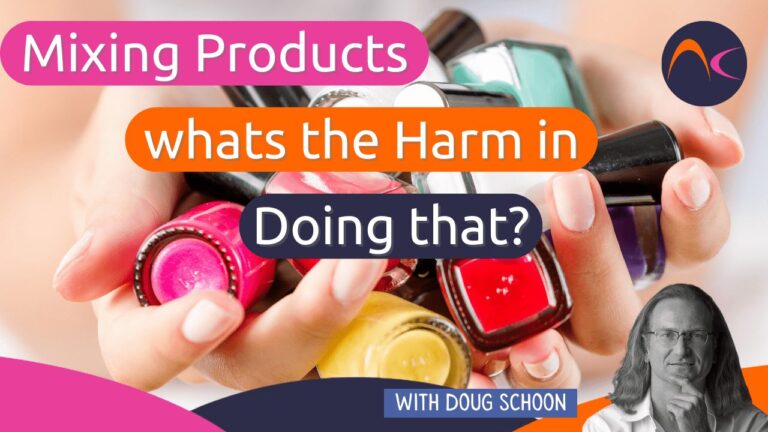
Mixing Nail Products – What’s the harm in doing that?

Nail professionals work with the most technically advanced products

Nail Professionals work in a unique and diverse profession and often unintentionally put themselves and their clients at risk.  They regularly work with the most technologically advanced products in the beauty industry.

Many nail coatings are based on high-tech substances used to create everything from bone cements to dental implants or contact lenses to bullet proof glass.  Nail Professionals also work with finger nails and toe nails that may become diseased or injured.

When faced with medical conditions of the hands and feet, some clients expect their Nail Professional to diagnosis and treat or prescribe a treatment for their condition, even though this is inappropriate and should only be done by a qualified medical professional.  

When you add to this the fact that many Nail Professionals love to “experiment” and try new things, it becomes easy to see how problems can occur, especially when manufacturer’s instructions are ignored and nail products are used in a manner they were not intended to be used.

Whats the harm in mixing nail products?

Without a deep understanding of chemistry or medicine, this could create significant problems for clients, Nail Professionals and salons.  Here are a few examples. 

Many products are intended to be used together as a “system” and in very specific ways to ensure safe use and to achieve the intended final result.  

Monomer liquids are designed to be used with specific powders. Using the wrong powder or using the incorrect ratio of liquid to powder (too wet) can lead to skin irritation, allergy or even “onycholysis”, a condition where the nail plate detaches from the nail bed.  Each of these same issues can occur when the incorrect nail lamp is used to cure a UV gel.  

Improper use of salon disinfectants can lead to infections that may result in injury or a lawsuit that could jeopardize a Salon Professional or salon’s livelihood.

Whats my point?

When products are improperly mixed or used contrary to directions/instructions, there may be unintended consequences that could cause harm to clients and/or Nail Professionals.  Contrary to what some believe, Nail Professionals should NOT use professional products in any fashion they choose.  Instead, manufacturer’s instructions should ALWAYS be carefully followed and all warnings heeded.  If a Nail Professional disagrees with, or wishes to alter the directions, or doesn’t understand the instructions, then they would be wise to contact the product manufacturer for guidance before proceeding. 

Experimenting mixing nail products!

I greatly admire the curious, inquisitive nature of Nail Professionals who like to “experiment” with their products and realize that it is their ingenuity and creativity that drives them to do this!  These are great qualities that anyone can benefit from, IF properly channeled.  But, when “experimenting” means disregarding the manufacturer’s directions or warnings, then this is inappropriate and should not be done. 

Instead, a Nail Professional’s curiosity would be better directed towards: 

a) Learning more about the structure of the natural nail and surrounding skin and how each functions AND 

 b) Gaining a better understanding about how and why nail products work.

 Those who gain a deeper understanding in these areas are much less likely to misuse nail products or encounter any of the problems described above.  Avoid focusing solely on how to skillfully apply these products; that’s only half the picture!  Gone forever are the days when product application and removal was all that mattered.  Nail Professionals need to understand how their professional products work and why they work the way they do. 

That’s what the NailKnowledge Knowledge Base is dedicated to teaching, so please check it out.  It’s free, interesting and easy to understand.  Best of all… it’s just a mouse click away.  I hope you enjoy!  

Filed Under: General Information, Lotions, Potions and Polishes, Nail Services

Do we really need all of those oils and lotions for our nails or is it just sales marketing madness?

By now you should know how the nail unit works, how our nail plates are produced and most of the advantages and or disadvantages of wearing artificial nail products, especially if you have taken your NailKnowledge Essential Nail Diploma!

We have learnt that choosing the right artificial nail product for the nail plate leads to happy clients in our salons – there is always more than 1 option and all we have to do is choose the product that works the best for our clients.

So, is it just marketing madness or can nail oils, hand & nail lotions make a difference to the day-to-day maintenance and condition of our nail units?

Almost all problems in the nail unit are accentuated by dryness.

Dry skin shrinks and cracks, dry nail plates can become brittle and start to flake, split and delaminate – but there is more to it than that.

In our daily lives our nail plates are moving all of the time, they move as they grow and they grow 24/7 only stopping if our body experiences some kind of traumatic and or shocking event. After the shock or traumatic event our nail matrix releases all the cells that were on hold at the same time, causing Beau’s Lines, and then nail plate cell production continues as normal.

During the day our hands come into contact with water on average about 10 times a day – worse still we are advised to wash our hands with soap and water 6-10 times a day, that’s a lot of water in our nail units without all the other times in our daily lives, washing the car, the dog’s, the kid’s, washing up, taking a shower even cleaning our teeth and let’s not forget when we have a moment for ourselves and take a bath.

Water is a very effective solvent, but that also makes it very efficient at getting into all the spaces that still exist between our nail plate cells and also into our skin – in the bath you see your skin swell & ripple, this is because all the skin cells are filled with water but you don’t see what happens to your nails unless you really look at them.

Our nail plates absorb all of that water and get ‘fatter’ you may well find that your C curve looks much nicer after a bath and a glass of wine, it’s not the wine – but the bath water that does that.

When we no longer have our hands in water it evaporates away – Doug Schoon’s diagrams from Face to Face II are great for showing the action with or without nail coatings. With a nail coating, evaporation is slowed somewhat because the water has to find an opening to evaporate through around the lateral nail folds and under the free edge but in both cases the water will evaporate.

This evaporation causes the nail plate to revert to its original size, you might notice it as shrinkage, but it’s actually reversion – so our nail plates not only move as they grow but they also expand & contract when we have had them in contact with water. If the nail plate is splitting or suffering from delamination this will then get worse.

Oils and lotions that are made to penetrate our skin and nail plates can be used as a sort of ‘defence’. When our nail plates are full of oils like squalene, avocado oil, jojoba oil maybe even extra virgin olive oil, they remain flexible, also making them more able to cope with minor trauma, and there is less room for excess water to penetrate, our nails maintain a good C curve and they help to keep our guardian seals guarding. The same goes for our skin when it is full of lotion with wonderful ingredients, including glycerin, there is less room for water so our skin does not expand excessively causing small wounds and abrasions which may have to become larger, which in turn causes more dryness.

Oils and lotions are essential in our modern world to help maintain flexible and healthy nails and to maintain elasticity of our skin, with the added bonus of keeping our nail coatings in optimal condition.

Filed Under: Lotions, Potions and Polishes, Myth Busting

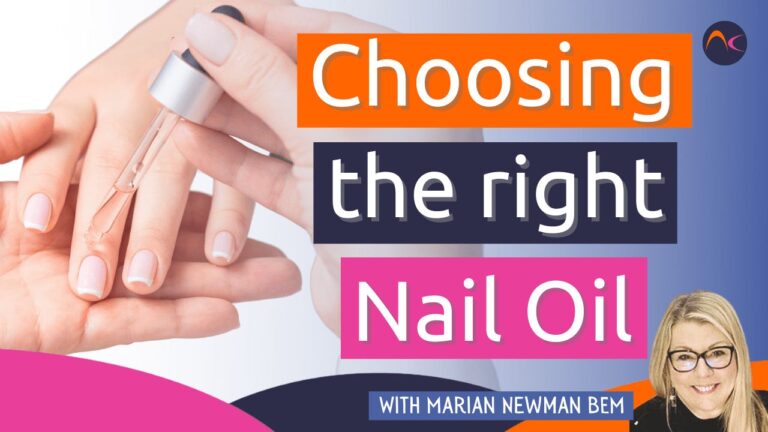
Choosing the right Nail Oil

Think about it. Our hands work hard. We spend lots of hard-earned cash on facial skincare but seem to neglect our hands which we constantly exposed to sunlight, cold wind, and washing-up water, at the very least.

Skin around the nails become dry and our nails become brittle and split. Fortunately, this is easy to remedy. Use a nail oil!

Oils are easily absorbed into the skin which provides a healthy environment for the nails to grow on. They will restore and protect against future damage and can ward of nasty fungal infections. But which one to choose?

Choose a thin oil-based product. Every oil has different benefits so you can tailor make a treatment to match your needs.

Jojoba Oil – A hero to our nails with molecules that are the right shape to penetrate some way into the nail plate. Containing high levels of vitamin E and B can also help repair the collagen in our skin and offers deep hydration. It absorbs easily too and will result in strong, healthy, moisturised nails and cuticles.

Avocado oil – like jojoba, this natural oil is able to penetrate the upper layers of the nail plate to help provide lubrication between the layers and help prevent brittleness and dryness.

Squalene – alongside the two oils above, this is a very good oil for both nails and skin. Make sure to use the vegetable derived version.

Almond Oil – Packed with nutrients like vitamins E, A and B plus Omega 6 and 9 essential fatty acids, this is a readily available product to help prevent dry skin.

These oils all work wonders on their own but you can give them a real boost by adding a few drops of essential oils. Before using essential oils, be sure you are not sensitive to them and avoid them if you are pregnant. There are many different essential oils on the market but it is best to go for a natural, organic oil rather than a synthetically produced one. The results will be far better.

Once again, each essential oil has different properties and benefits. A lot depends on personal preference but here are a few to consider.

Tea Tree Essential Oil – A natural anti-fungal treatment and has great deodorising properties meaning it is great for the feet too! It will heal and protect your nails. Some do have a sensitivity to it so do not use it if you have allergies to some chemicals. (Tea Tree can be an irritant so don’t apply undiluted oil directly to the skin)

Lavender Essential Oil – As well as smelling divine, this relaxing oil also promotes the healing of skin. Great if you need to soothe sore skin. Avoid if pregnant.

Clove Essential Oil – This oil calms the skin and is also an antiseptic. Great for warts too!

Lemon Essential Oil – The zingy scent will give you a lift and your nails will thank you for the antiseptic and skin toning effects. It will boost your circulation and brighten your nails too.

These are just a few of the many oils available. There are lots of nail balms and oils on the market that contain blends of these nourishing ingredients and now you know which oils are effective, it is easy to make your own at home. Just be sure to check the safety tips and dilution advice for any essential oils you may want to try.

Your nails will soon be strong and healthy and ready to get to work but they would still thank you for a pair of Marigold gloves to tackle the washing up!

Filed Under: Lotions, Potions and Polishes

  • « Go to Previous Page
  • Page 1
  • Interim pages omitted …
  • Page 9
  • Page 10
  • Page 11

Level Up Your Nail Insights

Join our Newsletter!
SUBSCRIBE...

Copyright © NailKnowledge

NailKnowledge

  • MyNailEra
  • eBooks
  • About us
  • Courses
  • News
  • Blog
  • Newsletter
  • Glossary

Policies

  • Privacy Page
  • Terms & Conditions
  • Cookie Policy

Support

  • Contact Us
  • Meet the Experts
  • Ask the Experts
  • System Support
  • FAQs
English
English
Portuguese Spanish Vietnamese