• Skip to primary navigation
  • Skip to main content
  • Skip to footer
NailKnowledge

NailKnowledge

  • Courses
  • MyNailEra
  • Free eBooks
  • Knowledge Base
    • Knowledge Base
    • Ask the Experts
    • Glossary
  • Blog
  • Login
The fungal nail

The Fungal Nail

January 28, 2022 by Tracy Anne Shelverton

110 Views

Was this article helpful?
Error submitting rating

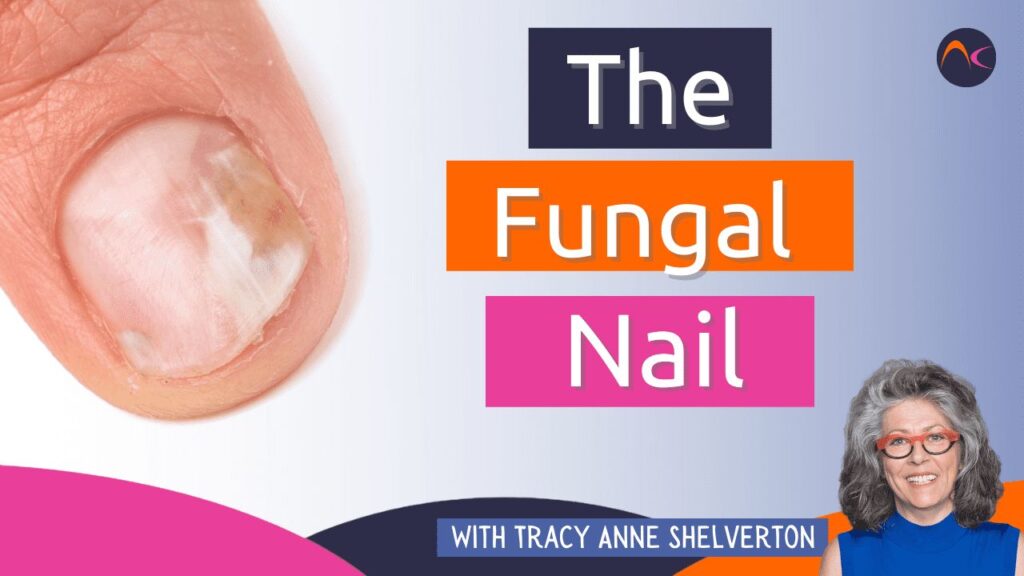
The fungal nail is a very common sight for nail professionals. The medical term is Onychomycosis, and it means “a nail that is infected with a fungus”.

Like many other medical terms, it is a Greek word. It is a combination of the words onyx = nail, and mycosis = fungal infection. 

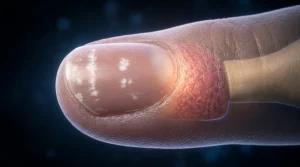
The fungal infection causes a white, yellow, or tan discoloration of the nail. In addition, there could be a thickening of the infected nail plate and it often becomes brittle and, in the worst case, the nail plate can detach from the nail bed.

Fungal infections are caused by dermatophytes (+/- 80%) or non-dermatophytes (+/-20%). Read more on dermatophytes here.

Dermatophytes are transmitted through direct contact with an infected host (human or animal) or through direct or indirect contact with contaminated exfoliated skin. Depending on the (fungal) species, the organisms can survive for up to 15 months before infecting a new host. 

In humans, there is an increased susceptibility to infection when the nail or skin is damaged.

Onychomycosis rarely occurs on the fingernails and is more common in people who tend the garden without gloves. 

People with chronic conditions or reduced immune responses are more susceptible to fungal infections.

It is impossible to diagnose a mycosis with the naked eye, as there are too many other nail infections that look similar. It is also impossible to differentiate between dermatophytes and/or non-dermatophytes.

To be able to make a proper diagnosis you will have to do a test, with which you can establish or rule out your suspicion and provide results so that effective treatment can take place. To learn more about diagnosing and testing, read our Ask The Experts article on the subject.

Healthy skin and nail units will reduce the chance of infection considerably.

Learn about effective strategies for addressing fungal nail infections and keeping your cuticles healthy in this informative article.


Was this article helpful?
Error submitting rating

Categorised: Nail Conditions

Related Articles

Nail peeling after gel

Nails Peeling Off After Gel? Here’s What You Need to Know

If you’ve had gel nails applied and within a week they’ve started to lift, only to leave your natural nails…

Read More
Onychomadesis & Hand Foot Mouth Disease

Onychomadesis & Hand Foot Mouth Disease

What Nail Professionals, Parents & Carers Need to Know Autumn and spring bring more than just cosy jumpers and daffodils,…

Read More
How to Identify Nail Psoriasis Symptoms in Clients

Nail Psoriasis Symptoms in Clients

How to Identify Nail Psoriasis Symptoms in Clients with Confidence and Care As nail professionals, we often spend more time…

Read More
Pinched Nail After Gel Removal

Pinched Nail After Gel Removal?

If you’ve ever looked down at your nails and noticed one of them narrowing oddly at the tip, sometimes even…

Read More
Fungal Nail or Nail Psoriasis

Difference Between Fungal Nail Infections and Nail Psoriasis

Fungal Nail or Nail Psoriasis? How Nail Pros Can Spot the Difference between Fungal Nail and Nail Psoriasis… and when…

Read More
Peeling free edge of a natural nail plate

Understanding Free Edge Peeling

Understanding Free Edge Peeling: Why the Top of Your Nails Always Seems to Flake First Ever notice how your nails…

Read More

Level Up Your Nail Insights

Join our Newsletter!
SUBSCRIBE...

Copyright © NailKnowledge

NailKnowledge

  • MyNailEra
  • eBooks
  • About us
  • Courses
  • News
  • Blog
  • Newsletter
  • Glossary

Policies

  • Privacy Page
  • Terms & Conditions
  • Cookie Policy

Support

  • Contact Us
  • Meet the Experts
  • Ask the Experts
  • System Support
  • FAQs
English
English
Portuguese Spanish Vietnamese