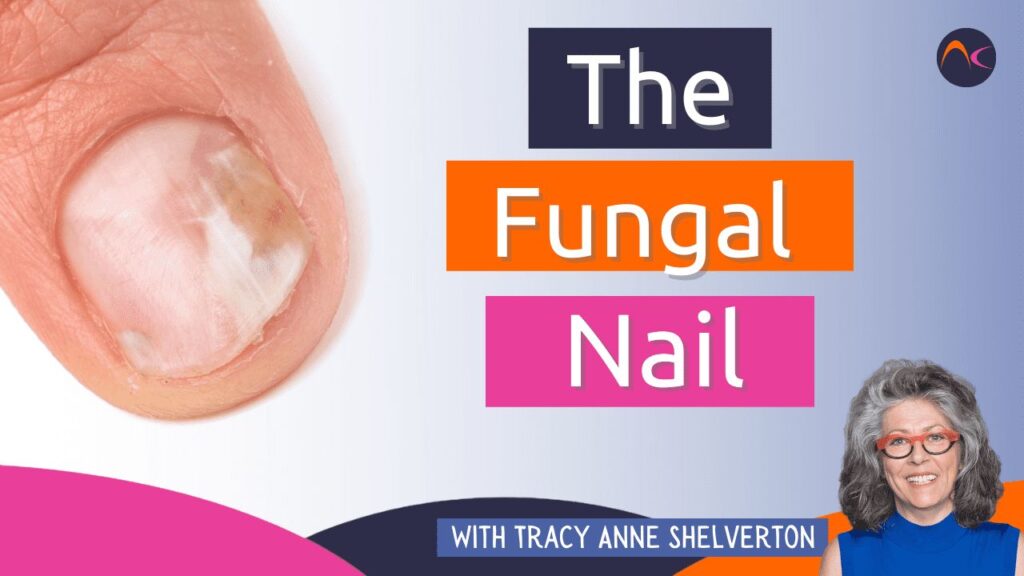
The fungal nail is a very common sight for nail professionals. The medical term is Onychomycosis, and it means “a nail that is infected with a fungus”.
Like many other medical terms, it is a Greek word. It is a combination of the words onyx = nail, and mycosis = fungal infection.
The fungal infection causes a white, yellow, or tan discoloration of the nail. In addition, there could be a thickening of the infected nail plate and it often becomes brittle and, in the worst case, the nail plate can detach from the nail bed.
Fungal infections are caused by dermatophytes (+/- 80%) or non-dermatophytes (+/-20%). Read more on dermatophytes here.
Dermatophytes are transmitted through direct contact with an infected host (human or animal) or through direct or indirect contact with contaminated exfoliated skin. Depending on the (fungal) species, the organisms can survive for up to 15 months before infecting a new host.
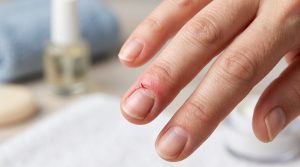
In humans, there is an increased susceptibility to infection when the nail or skin is damaged.


Onychomycosis rarely occurs on the fingernails and is more common in people who tend the garden without gloves.
People with chronic conditions or reduced immune responses are more susceptible to fungal infections.
It is impossible to diagnose a mycosis with the naked eye, as there are too many other nail infections that look similar. It is also impossible to differentiate between dermatophytes and/or non-dermatophytes.
To be able to make a proper diagnosis you will have to do a test, with which you can establish or rule out your suspicion and provide results so that effective treatment can take place. To learn more about diagnosing and testing, read our Ask The Experts article on the subject.
Healthy skin and nail units will reduce the chance of infection considerably.
Learn about effective strategies for addressing fungal nail infections and keeping your cuticles healthy in this informative article.