Why Foil Wraps Nail Removal Works Better Than Soaking
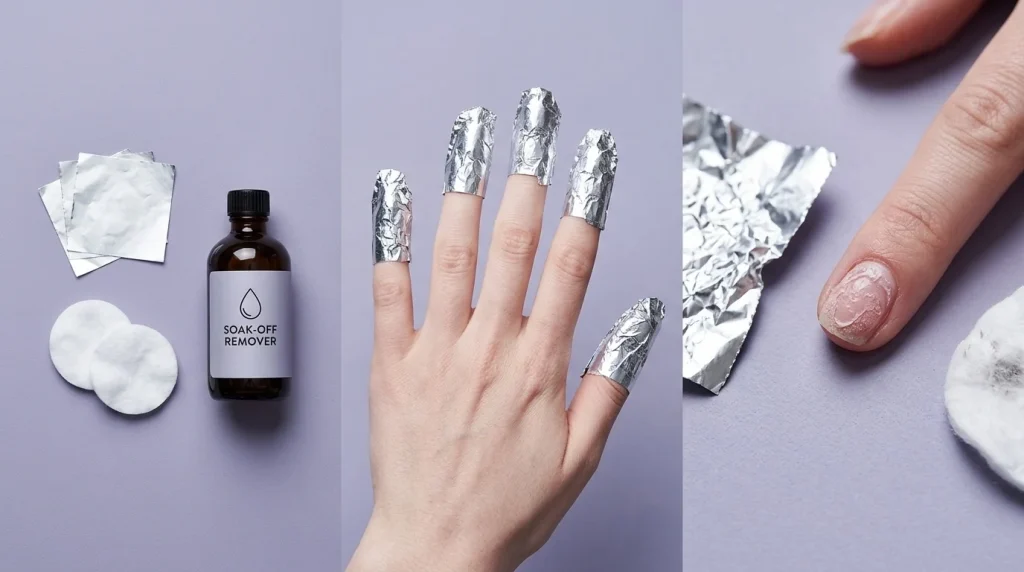
Aluminium foil, cotton saturated in acetone, pressed firmly against the nail. Foil wraps nail removal is one of those techniques that looks almost too simple to be scientific. But real chemistry sits behind why it works so well, and understanding it changes how you think about the whole process.
Would soaking your nails in a bowl of acetone do the same job? Not quite. The difference comes down to evaporation, contact, and warmth, and foil tackles all three at once.
💡 Key Takeaway
Foil wraps nail removal works because foil solves three problems at once: it slows acetone evaporation, keeps the solvent in consistent contact with the coating, and retains just enough warmth to help acetone penetrate the polymer network. The speed of removal depends on the product’s cross-link density, not the foil itself, so patience always beats force.

What Acetone Actually Does to Nail Products
One of the most common misconceptions about gel polish removal is that acetone melts the product away. It doesn’t. Acetone is a solvent, and it works very differently from that.
When acetone contacts a cured gel or acrylic coating, it penetrates the polymer network rather than dissolving the surface. Acetone molecules move into the structure and weaken the forces holding the coating together. The material swells. It softens. Eventually it loosens enough to lift away from the natural nail with gentle pressure, not force.
This is why patience matters so much. The solvent needs time to penetrate. Rushing the process is where damage tends to happen.
Why Cotton Is Part of the Process
Cotton acts as a reservoir. Rather than letting acetone run straight off the nail surface, the cotton holds a generous volume of solvent directly against the coating. This keeps the acetone in continuous contact with the enhancement throughout the removal process, which is exactly what the chemistry requires.
Without something to hold the acetone in place, you would lose most of it almost immediately. And that brings us to the foil itself.
The Three Jobs Foil Does During Nail Removal
Aluminium foil is not just a wrapper. It does three distinct things simultaneously, and each one matters.
It slows evaporation dramatically. Acetone evaporates extremely quickly. Left open to the air, it disappears fast, often before it has had enough time to penetrate the coating properly. Wrapping the cotton in foil creates a sealed environment that keeps more acetone available for longer.
It maintains consistent contact. The foil gently presses the saturated cotton against the entire nail surface. Fresh acetone stays available across the coating rather than pooling in one spot and leaving others dry.
It helps retain warmth. Foil doesn’t generate heat, but it does trap some of the natural warmth radiating from the finger. A slightly warmer environment increases molecular movement, which allows acetone to diffuse into the polymer network more efficiently. The effect is modest, but it genuinely contributes to the process.
Why Some Products Take Much Longer to Remove
Not every nail enhancement responds to acetone at the same speed. If you have ever noticed that some gel polishes lift off in minutes while others seem almost unmoved after twenty, the explanation lies in the chemistry of the product itself.
The key factor is cross-link density. Think of the cured coating as a fishing net. A loosely woven net has large gaps that acetone molecules can move through relatively easily. A tightly woven net has much smaller openings, and acetone struggles to penetrate quickly. This microscopic structure determines how fast removal happens.
Gel polish tends to soften fairly quickly because its polymer network is relatively loose. Some soft gels take longer. Hard gels, which builders cross-link tightly, barely respond to acetone at all and generally need filing rather than soaking. Traditional acrylics sit somewhere in the middle, softening gradually with sustained acetone contact. Some hybrid systems behave differently again depending on their specific formulation.
The foil hasn’t changed. The acetone hasn’t changed. The chemistry of the product has. That is what drives the difference in removal time. Understanding how gel polish cures at a molecular level actually helps make sense of why removal speed varies so much between products.
What Happens When You Scrape Too Early
Significant scraping during removal almost always signals that the acetone hasn’t had enough time to penetrate the coating fully.
When you force partially softened product away from the nail, you risk pulling superficial layers of the natural nail plate with it. The nail can look thin, feel rough, and become more prone to peeling afterwards.
More soaking time beats more mechanical force. Every time.
This is one of the most important things to understand about foil wraps nail removal: the foil creates the ideal conditions, but you still need to give the acetone enough time to do its work. Patience is not optional here.
A Common Myth About Foil and Acetone
Some people assume that wrapping nails in foil somehow makes the acetone stronger or more chemically active. It doesn’t. Foil has no effect on the chemical composition of acetone whatsoever.
What foil does is create better conditions for the acetone to remain in contact with the product for longer. That is the entire point. The chemistry of the solvent stays exactly the same. The environment around the nail changes, and that is what makes the difference.
Does Warming Acetone Speed Things Up?
Gentle warmth does increase molecular movement, which can improve how quickly acetone penetrates a polymer network. So in theory, warmer acetone works faster.
But acetone is highly flammable. Direct heat, open flames, and uncontrolled heat sources are all serious risks. Professional warming systems designed specifically for this purpose account for that. Outside of those controlled tools, the warmth the foil wrap naturally retains is the safer and more practical contribution to the process.
Knowing why nail products sometimes behave unexpectedly during and after removal, including reactions like soreness or sensitivity, is worth understanding too. Nail reactions after gel or acrylic services are more common than many people realise, and they often connect directly to how removal is handled.
Foil Wraps Nail Removal: What the Science Tells Us
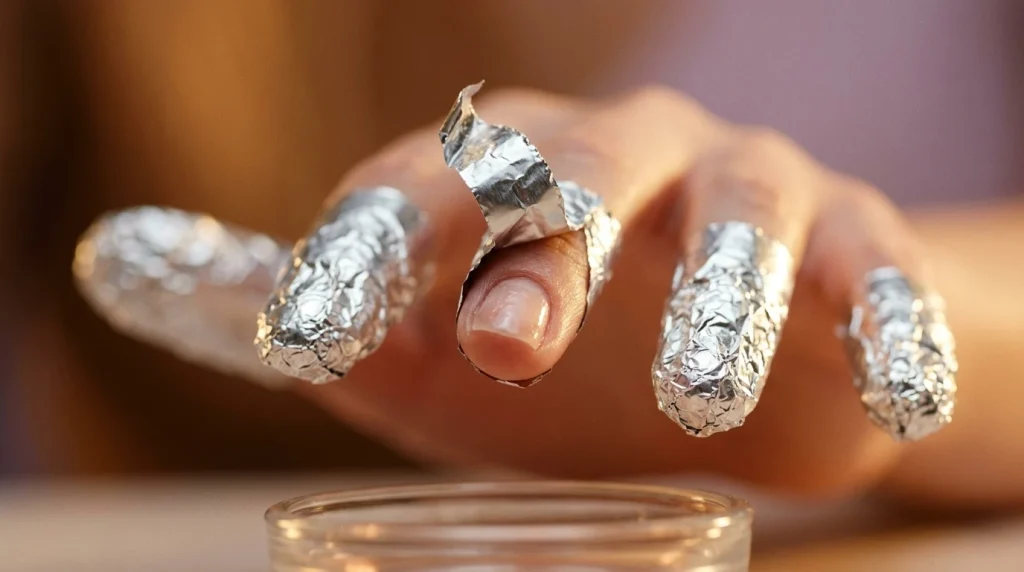
Foil wraps have been the industry standard for decades because they solve three scientific problems at once. They slow evaporation. They maintain continuous solvent contact. They create a stable, slightly warmer environment that allows acetone to diffuse into the polymer network at its most efficient rate.
The speed of removal still depends on the product’s cross-link density. But by controlling the environment around the nail, foil gives acetone the best possible conditions to work in. That is the entire logic behind the technique, and it is surprisingly elegant once you see it clearly.
Understanding the science behind foil wraps nail removal makes it much easier to adapt the process to different products rather than applying the same approach to everything and wondering why results vary.
Getting removal right takes more than knowing the theory. Technique, timing, and reading how a product responds all develop with proper guidance, and the difference shows clearly in the condition of the nail afterwards.
On MyNailEra, tutorials from 12 award-winning nail artists cover the full range of nail techniques, and Era, your personal nail coach, helps you apply what you learn to your own nails. Explore the technique properly in the app.