• Skip to primary navigation
  • Skip to main content
  • Skip to footer
NailKnowledge

NailKnowledge

  • Courses
  • eBooks
  • eBook Basket
  • Knowledge Base
    • Knowledge Base
    • Ask the Experts
    • Glossary
  • News
  • Blog
  • Gallery
    • Nail Art Gallery
    • Nail Artists
    • Join the Elite
  • Login

General Information

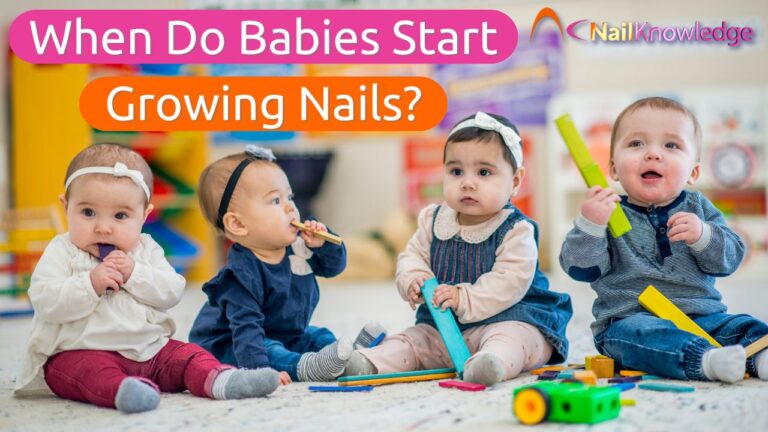
When Do Babies Start Growing Nails?

Have you ever noticed the delicate nails on a newborn’s tiny fingers and toes? It’s a common query among expecting parents: when do babies start growing nails? This article explores the nail growth journey in babies, tracing the timeline from the early stages of pregnancy to the world outside the womb.

Understanding Baby Nail Development: Decoding Nail Formation in Infants

Nails serve vital functions beyond aesthetics; they protect fingertips and toes while enhancing sensory experiences. This development starts surprisingly early during gestation and plays a critical role in overall fetal growth.

Detailed Timeline of Nail Growth in Fetuses:

  • Initial Development (10th week): The process begins quietly, under the skin, where the nail beds start to form.
  • Visible Changes (16th week): Tiny, translucent nails appear on both the fingers and toes, slowly defining themselves more clearly against the baby’s skin.
  • Pre-Birth Maturation (Third Trimester): During these final weeks, nails strengthen but remain soft, often reaching beyond the tips of tiny fingers by the time of birth.

Influencing Factors for Baby Nails

While genetics predominantly dictate the development timeline and characteristics of baby nails, maternal nutrition and health also subtly impact these early stages. Normal variations are to be expected, highlighting the uniqueness of each pregnancy.

Practical Tips for Managing Baby Nails

Swift growth can mean baby nails need frequent trimming to prevent accidental scratches. It’s best to trim nails during a baby’s sleep when they are most calm, using specially designed baby nail clippers that reduce the risk of nicks.

Addressing Parental Concerns

It’s common for new parents to notice and worry about nail irregularities like ridges or brittleness, which are typically harmless and resolve on their own. Persistent or pronounced abnormalities, however, should be evaluated by a pediatrician to rule out underlying health issues.

Navigating Baby Nail Development

The appearance of your baby’s nails, although subtle, is a fascinating indicator of the intricate developmental processes happening within the womb. As these variations are quite normal, gaining an understanding of what to expect can equip you to manage your baby’s nail care more effectively and with greater confidence.

Learn More: Explore our comprehensive guides on newborn nail formation in developing fetuses.

Filed Under: General Information

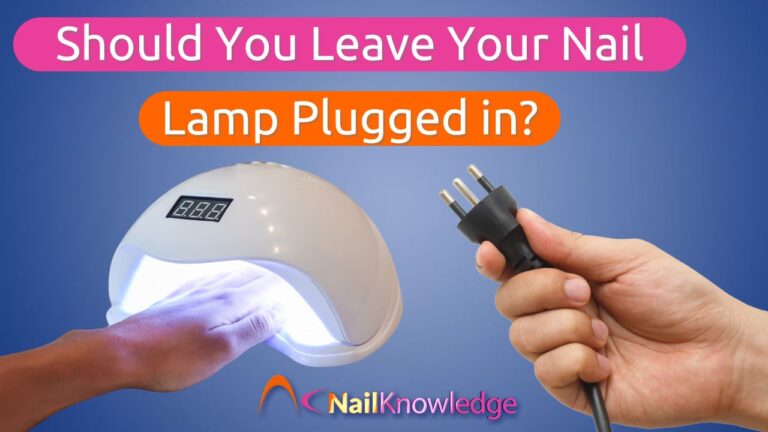
Should You Leave Your Nail Lamp Plugged In?

Recently, a nail professional posed a great question: “Can you leave your UV/LED nail lamp plugged in indefinitely without causing damage?” Many people leave electronic devices plugged in for convenience, but this practice might not always be advisable for nail lamps. Let’s explore the safety and maintenance aspects of keeping your nail lamp plugged in.

The Impact of Leaving Your Nail Lamp Plugged In

Can leaving a UV/LED nail lamp plugged in cause damage? Even when not in use, most lamps draw a small amount of “standby power,” which can activate components like timers or touch sensors. Over time, this minimal power consumption might not immediately harm the lamp but could contribute to the gradual degradation of its electronic components, especially in cheaper models.

Heat Exposure When Plugged In

While LEDs themselves do not generate heat when the lamp is off, a constant power connection can lead to minor heat buildup in other internal components. This can stress the circuitry over time, particularly in lamps without proper heat-resistant designs or adequate ventilation.

Unplugging to Prevent Damage

The simplest measure to avoid any potential issues is to unplug the nail lamp when it’s not being used. This completely cuts off any power draw and ensures no internal component remains active unnecessarily. If it’s essential to keep the lamp plugged in, using a surge protector can offer protection against voltage spikes, which are particularly harmful to sensitive electronics in budget-friendly models.

Proper Storage and Occasional Extended Plugging-In

Properly storing your nail lamp in a cool, dry place protects it against environmental damages like moisture and dust, which can shorten its lifespan. But what if you forget to unplug your lamp occasionally? Thankfully, high-quality lamps are built to withstand such oversights without significant damage. However, consistently leaving your lamp plugged in can increase the risk of premature failure, especially for lower-end models.

Final Recommendations on Leaving Your Nail Lamp Plugged In

To maximise the longevity of your nail lamp:

  1. Unplug it when not in use, particularly for extended periods.
  2. Utilise a surge protector for additional safety.
  3. Always store the lamp in a cool, dry place to prevent environmental damage.

In conclusion, while occasionally leaving your nail lamp plugged in won’t necessarily destroy it, regularly unplugging it can greatly extend its operational life and help avoid unnecessary repairs or replacements. By practicing moderate use and proper care, you can keep your nail lamp in excellent condition for years to come!s

Filed Under: General Information, Nail Services

Wear Resistance: The Seventh Key Property of Natural and Artificial Nails

In this final part of our series on the key properties of natural and artificial nails, we focus on wear resistance. Wear refers to the ability of a surface to resist abrasion or rubbing over time. As we’ve already explored strength, hardness, flexibility, toughness, brittleness, and solvent resistance, understanding wear is crucial for maintaining the longevity and durability of both natural and artificial nails.

What Is Wear Resistance and Why Is It Important?

Wear resistance describes how well a surface can withstand abrasion or damage caused by rubbing and scraping. For nails, wear resistance ensures that they do not wear away too quickly from daily activities like typing, cleaning, or filing. Both the natural nail plate and artificial nail coatings benefit from wear resistance, as tougher and harder surfaces tend to last longer and maintain their appearance.

Nail plates have a relatively low hardness compared to other materials, largely because they contain a significant amount of water. On the Mohs scale, natural nails have a hardness of 2, while artificial nail coatings typically range between 2 and 3. This means artificial coatings often provide a tougher, more wear-resistant surface than natural nails but when our artificial nail is harder than the natural nail we need to be aware of maintenance and care, it can’t just be hard it also needs to be flexible.

Nail Hardness and Wear Resistance

Nail hardness is a major factor in wear resistance. Harder materials tend to resist abrasion better than softer ones. For example, diamond, which has a hardness of 10, is one of the hardest substances and is often used in high-quality nail files. In comparison, natural nails and most artificial coatings fall far below this level of hardness, meaning they are more susceptible to wear. Silicon carbide, a common material used in nail files, has a hardness of 9, making it nearly as effective as diamond in abrading nail surfaces.

Nail files with high hardness materials, such as diamond grit or silicon carbide, can be overly aggressive if not used carefully. These files can wear down artificial coatings quickly but more so the nail plate, potentially causing excessive thinning and damage. Aluminum oxide, a softer abrasive with a hardness of 7.5, is less aggressive but still significantly harder than natural nails. This makes it an ideal material for nail files because they are gentler on the nails its self but tough enough to do the job well. Almost all Aluminium Oxide files are white but check with your supplier to be sure.

How Abrasives Affect Nail Wear

Abrasive particles in nail files scratch away the surface of the coating to shape and smooth it. For the natural nail, we only need the file to shape the free-edge. A 180 grit Aluminium Oxide Spong File can be used with care to ‘etch’ the surface of a natural nail and also tip to remove any little bits of nail at the free edge (those irritating little bits of nail that can cause so much trouble at the free edge when applying gel polish after filing into shape)

Coarse-grit abrasives with larger particles create deeper and wider scratches, while finer-grit abrasives create smaller and shallower scratches. Heavier grit abrasives can cause excessive thinning of the nail plate, especially if used with heavy pressure. Even buffers, which are meant to etch the nail surface, will cause damage when over excessive pressure is used. Damage done with a nail file on the nail surface cannot be recovered without using an intensive nail recovery system of which there is only one – not recovering the surface of the nail plate will not only disturb the balance of your nail coating but also seriously diminish the wear time.

The wear resistance of nails is closely linked to toughness, as tougher materials tend to resist wear better. Natural nails that are more brittle are at a higher risk of wear, and the solution is often to increase flexibility through treatments such as hot oil applications. This added flexibility helps protect the nails from excessive wear and tear.

Maximizing Wear Resistance for Nail Health

To ensure optimal wear resistance, it’s important to maintain a balance between toughness and flexibility in both natural and artificial nails. For artificial coatings, using products that offer a combination of strength and flexibility can improve wear resistance and longevity. For natural nails, keeping them hydrated and using treatments to enhance flexibility can help prevent wear and damage over time.

In conclusion, wear resistance is the final key property that ensures the durability and health of both natural and artificial nails. By understanding how wear, hardness, and abrasives interact, nail care professionals can make informed decisions to protect their clients’ nails from excessive wear.

Recap of the Seven Key Properties of Nails:

  • Nail Strength – Discover how the strength of nails impacts their performance and durability.
  • Nail Hardness – Understand the crucial role of hardness in nail health and how to maintain the perfect balance.
  • Nail Flexibility – Understand the importance of flexibility in preventing nail breakage and maintaining resilience.
  • Nail Toughness – Find out what makes nails tough and how this property differs from strength and hardness.
  • Nail Brittleness – Learn what causes brittleness in nails and how to prevent it.
  • Nail Solvent Resistance – Explore how nails can resist damage from chemicals and solvents.
  • Nail Wear – Understand the factors that affect how well nails withstand regular use and environmental exposure.

By taking the time to understand these seven key properties, you’ll be able to better troubleshoot issues and ensure that natural nails remain healthy and strong, and artificial nail coatings strong and long-lasting.

Filed Under: General Information, Nail Services

Solvent Resistance: The Sixth Key Property of Natural and Artificial Nails

In this sixth part of our series on the key properties of natural and artificial nails, we’ll explore solvent resistance. As we’ve already discussed properties like strength, hardness, flexibility, toughness, and brittleness, solvent resistance is another critical factor that helps maintain the health and longevity of both natural and artificial nails. Solvents are liquids that dissolve solids or other liquids, and in nail care, it is important to understand how different solvents interact with nails, especially with artificial coatings.

What Is Solvent Resistance and Why Is It Important?

Solvent resistance refers to a material’s ability to withstand the effects of liquids, such as water or acetone, without breaking down or dissolving. Water is known as the “Universal Solvent” because it dissolves more substances than any other liquid, but it doesn’t dissolve natural or artificial nails. Both types of nails are resistant to water, which is crucial since regular exposure to water would otherwise cause damage over time.

While natural nails can absorb small amounts of water and other solvents, they do not dissolve in them. This solvent resistance ensures that natural nails remain intact even when exposed to moisture. Artificial nails, however, are typically more resistant to water absorption, yet can be affected by other solvents like acetone, which is commonly used to remove nail polish and artificial coatings.

Nail Hardness and Solvent Resistance

Nail hardness plays a significant role in determining a nail’s resistance to solvents. Artificial nail coatings, such as acrylics and UV gels, vary in their resistance to solvents based on their formulation. For example, methyl methacrylate (MMA) and certain UV-curable gels are highly resistant to solvents like acetone, making them more challenging to remove. These coatings can take an hour or more to dissolve in acetone, indicating high solvent resistance. However, this same resistance to acetone can also prevent the penetration of nail oils, which are essential for maintaining flexibility.

In contrast, some artificial nail coatings are formulated to break down more easily in acetone, making removal quicker. These coatings tend to absorb nail oils more effectively, allowing them to maintain the necessary balance of flexibility and strength. The more solvent-resistant a coating is, the more likely it will resist both acetone and nail oils, which can impact the flexibility of the nails.

The Role of Acetone in Solvent Resistance

Acetone is one of the most common solvents used in nail care, primarily for the removal of artificial nail coatings. It is fast-acting, penetrating most artificial nails within ten to twenty minutes. However, the time it takes for acetone to break down a coating can vary widely based on the type of artificial nail product used.The resistance of artificial nails coatings to acetone also provides insight into their ability to absorb other substances like nail oils. Nail coatings that take longer to break down in acetone are often less likely to absorb nail oils, which can reduce the flexibility of the nails over time. When applying nail maintenance, it’s important to realise that applying oil behind the free edge essential is to prevent unnecessary brittleness of the natural nail under the nail coating. On the other hand, coatings that dissolve more easily in acetone are typically better at absorbing oils, which can help increase the nail’s flexibility and prevent brittleness.

Acetone Science Check

Acetone does not damage, weaken, or change the structure of the natural nail plate.
It does not denature keratin or cause permanent harm.

Acetone temporarily removes surface oils and moisture, which can make nails feel dry. This is a cosmetic effect, not structural damage, and is fully reversible with proper hydration and regular use of nail oil.

How to Address Nail Brittleness with Nail Oils

When natural or artificial nails become brittle, restoring flexibility is key, and nail oils are highly effective in achieving this. These oils penetrate the nail plate and help restore flexibility by balancing out strength and hardness. Nail oils can penetrate most artificial nail coatings. To improve penetration, warming the nail oil to slightly above body temperature (around 100°F or 38°C) can significantly speed up absorption for all nail coating users but especially for those with brittle nails.

Natural nails, despite their resistance to solvents like acetone, have built-in channels that allow for the transmission of natural oils from the nail bed to the nail plate. These oils, which include substances like squalene, help maintain nail flexibility. While some believe that nails can’t contain oils because they lack sebaceous glands, this is just not true. The underlying tissues of the nail bed produce oils including squaline, contributing to the overall health and flexibility of the nail plate and the nail unit.

Maximizing Solvent Resistance for Optimal Nail Health

Maintaining solvent resistance in artificial nails is essential for ensuring their longevity and performance. However, this resistance must be balanced with the ability to absorb nail oils, as overly rigid nail coatings can lead to brittleness. For natural nails, minimalizing water absorption and maintaining natural oil content helps preserve flexibility and prevents cracking.

In conclusion, solvent resistance is an important property of both natural and artificial nails, protecting them from damage caused by liquids like water and acetone. Understanding how this resistance interacts with other key properties, such as nail hardness and flexibility, allows nail care professionals to make informed choices about the products, maintenance products and treatments they use.

Explore More Key Properties of Nails in Our 7-Part Series:

  • Nail Strength – Discover how the strength of nails impacts their performance and durability.
  • Nail Hardness – Understand the crucial role of hardness in nail health and how to maintain the perfect balance.
  • Nail Flexibility – Understand the importance of flexibility in preventing nail breakage and maintaining resilience.
  • Nail Toughness – Find out what makes nails tough and how this property differs from strength and hardness.
  • Nail Brittleness – Learn what causes brittleness in nails and how to prevent it.
  • Nail Solvent Resistance – Explore how nails can resist damage from chemicals and solvents.
  • Nail Wear – Understand the factors that affect how well nails withstand regular use and environmental exposure.

By understanding solvent resistance and its connection to nail hardness and flexibility, you’ll gain insights into how to maintain both natural and artificial nails for long-term health and durability not only of the nail coatings but also the nail unit – allowing for continued and regular use of your favourite nail coatings without the need for a break in use due to excessive dryness or nail plate damage (see blog about nail plate etching and or passive nail plate prep).

Filed Under: General Information, Nail Services

Brittleness: The Fifth Key Property of Natural and Artificial Nails

In this fifth part of our series on the key properties of natural and artificial nails, we examine brittleness. We’ve previously covered strength, hardness, flexibility, and toughness, all of which play crucial roles in maintaining nail health. Brittleness, however, occurs when the balance between strength and flexibility is lost, causing nails to break easily, even under minimal stress or impact. Understanding brittleness is essential for both natural and artificial nail care, as it affects the durability and resilience of the nails over time.

What Is Brittleness and How Does It Affect Nails?
Brittleness occurs when a nail lacks flexibility and becomes prone to cracking or breaking without bending. A great comparison can be made with bones—children’s bones are flexible, but as we age, our bones lose flexibility and become brittle. The same happens to nails. When a nail is brittle, even a small impact or snag can cause it to break, crack, or shatter without much force. For example, clients might claim that their nail “just broke” while doing nothing; this could indicate that their nails have become brittle over time, so some small (unnoticeable) trauma was enough to break (brittle) the nail.

Brittle nails easily break, crack or shatter without much bending

Brittleness can develop in artificial nails or nail coatings as well, though it typically takes a little time for this to become noticeable. This could be due to the specific formulation of the product used, or brittleness may result from improper curing. When brittle artificial nails break, it is often accompanied by a snapping sound, but when a nail coating breaks it usually quietly fractures and we don’t notice until we wash our hair or the nail coating snags on our clothing, this needs to be fixed as soon as possible to stop pathogens from nestling between the nail coating and the nail bed as water from simple things like washing our hands can be a starting point for the development of an infection because pathogens love warm cozy places and a few drops of water. This can be easily avoided with a quick removal and replacement of the damaged nail coating.

Nail Hardness and Brittleness: The Connection
Brittleness is closely tied to nail hardness, as a nail that becomes too hard and loses its flexibility will crack or shatter instead of bending. While nail hardness refers to a nail’s ability to resist surface damage like scratches, brittleness describes the nail’s tendency to break without bending. Nails that are too hard without enough flexibility will inevitably become brittle, resulting in a higher likelihood of damage. Artificial nail coatings, like hard UV gels, are sometimes brittle if they are too rigid and lack the necessary flexibility to bend with the natural nail.

The loss of flexibility is often the main culprit behind brittleness. When nails are no longer able to bend under pressure, they are more likely to fracture. This is why maintaining a balance between hardness and flexibility is key to preventing brittleness in both natural and artificial nails.

*** The natural nail under the gel is in continuous motion and if its brittle it will curl away from the nail coating at the free edge, that in combination with a brittle gel is a recipe for disaster. ***

Causes and Reversal of Brittleness
Several factors can contribute to nail brittleness, including age, diet, overall health, and environmental exposure to cleaning agents and solvents. Artificial nails can also become brittle over time, particularly if improper curing has occurred or if the product’s formulation doesn’t maintain the right balance of flexibility and strength.

Fortunately, there are ways to address and reverse brittleness. Since brittleness occurs due to a loss of flexibility, the best solution is to restore flexibility in the nail plate. High-quality nail oils or solvent treatments containing Allantoïne and or Ureum are highly effective in combating brittleness. These oils and natural moisturisers absorb into the nail plate, increasing its flexibility and restoring the balance between strength and flexibility. Good quality nail oils work similarly to leather conditioners, which soften and reduce brittleness in leather with the added ability to hold water at bay.

Good quality nail oils can penetrate both natural nails and most artificial nail coatings, except for some UV-cured coatings with surfaces that resist penetration hard gels are a good example of this. This is also true for solvents like acetone, which may struggle to penetrate these harder UV gel coatings, for this reason a hard gel cannot be soaked off of a natural nail.

Restoring Flexibility to Reduce Brittleness
To reverse brittleness, it is important to maintain flexibility in the nails. This can be done by regularly applying [TS1] good quality nail oils. These oils help restore the nails’ natural elasticity and help prevent further cracking or shattering. By focusing on flexibility, both natural and artificial nails can maintain their durability and appearance over time.

Explore More Key Properties of Nails in Our 7-Part Series:

  • Nail Strength – Discover how the strength of nails impacts their performance and durability.
  • Nail Hardness – Understand the crucial role of hardness in nail health and how to maintain the perfect balance.
  • Nail Flexibility – Understand the importance of flexibility in preventing nail breakage and maintaining resilience.
  • Nail Toughness – Find out what makes nails tough and how this property differs from strength and hardness.
  • Nail Brittleness – Learn what causes brittleness in nails and how to prevent it.
  • Nail Solvent Resistance – Explore how nails can resist damage from chemicals and solvents.
  • Nail Wear – Understand the factors that affect how well nails withstand regular use and environmental exposure.

In summary, brittleness in nails can be a result of an imbalance between hardness and flexibility. By understanding how to restore flexibility through proper nail care and the use of high-quality nail oils, both natural and artificial nails can maintain their strength, flexibility, and overall health of the nail unit, ensuring the perfect harmony between the natural nail and our much loved artificial nails or coatings.

Filed Under: General Information, Nail Services

Nail Care in the Caveman Era

Picture this: a rugged landscape, woolly mammoths roaming in the distance, and our ancestors huddled around a fire, scratching their heads—or rather, their nails. They didn’t have nail clippers, files, or polish, but their nails kept growing all the same. So, what did a caveman do about his claws? It’s fun to imagine, isn’t it? Let’s dive into this prehistoric “nail care routine” with a little humor and a lot of imagination.

The Prehistoric ‘Tool Kit’ for Nail Maintenance

Now, without metal or fancy gadgets, cavemen had to get creative. Think of a caveman—let’s call him Og—who picks up a sharp rock to trim down those talons. Or maybe he found a rough bone discarded from last night’s hunt, just right for grinding down a stubborn hangnail. Stones, sticks, bones—whatever he could get his hands on, Og was probably making do with what nature provided. And who knows, maybe the discovery of sharp stones for nails was the Stone Age’s first “aha” moment in self-care.

Fashion or Function? The Role of Nails in Caveman Society

In those days, nails were more than just a grooming concern; they were tools in their own right. Short, smooth nails might signal that someone was adept at carving or hunting. Overgrown, jagged nails? Perhaps a sign of a less active cave-dweller, or someone who stayed closer to camp. Could nails have been a status symbol? It’s a stretch, but fun to imagine—a “neat” nail might mean a skilled worker, while gnarly nails were just one more weapon against the wild.

Did Cavemen Have Nail Trends?

Now, picture this: different tribes, different “nail styles.” One tribe might have preferred long, pointed nails for intimidation—“Look out, here comes the sharp-clawed tribe!” Meanwhile, another could’ve gone for shorter, squared nails for practicality. And maybe, just maybe, some inventive cavewoman thought to smear a little crushed berry juice on her nails for a touch of color. Was it practical? Probably not. But hey, who doesn’t love a splash of red?

Hygiene Hacks: How They Might Have Kept Nails Clean

Caveman Nail Care

Let’s face it: cavemen weren’t clean by modern standards. But survival meant adapting. Sand could’ve served as an abrasive cleaner, scrubbing away dirt after a day of foraging. Leaves or fibers might work in a pinch, scraping out grime from under nails. Imagine Og, hunkered by the river, running a stick under his nails after a particularly messy hunt. Primitive? Yes. But effective enough, in its own way.

The Legacy of Caveman Nails in Today’s Culture

Fast forward to today, and we’re worlds apart from sharp stones and sticks. Now, we have nail salons, endless colors, and professional-grade tools for every possible nail need. But think about it: our modern routines trace back to those early days, where nails still mattered. The humble beginnings of nail care weren’t glamorous, but they set us on a path that led to today’s nail artistry and self-expression.

Conclusion: What We Can Learn from Caveman Nail ‘Care’

In the end, nail care has always been part of the human experience, whether it’s survival or self-expression. So, next time you’re in a salon, consider that sharp rock your ancient ancestor used, or the stick he found by the river. It might’ve been messy, crude, and anything but elegant, but hey—our nails have been with us through it all, evolving right alongside us.

Filed Under: General Information

  • « Go to Previous Page
  • Page 1
  • Page 2
  • Page 3
  • Page 4
  • Interim pages omitted …
  • Page 30
  • Go to Next Page »

Level Up Your Nail Insights

Join our Newsletter!
SUBSCRIBE...

Copyright © NailKnowledge

NailKnowledge

  • eBooks
  • About us
  • Courses
  • News
  • Blog
  • Newsletter
  • Glossary

Policies

  • Privacy Page
  • Terms & Conditions
  • Cookie Policy

Support

  • Contact Us
  • Ask the Experts
  • System Support
  • FAQs
English
English
Portuguese Spanish Vietnamese