• Skip to primary navigation
  • Skip to main content
  • Skip to footer
NailKnowledge

NailKnowledge

  • Courses
  • MyNailEra
  • Free eBooks
  • Knowledge Base
    • Knowledge Base
    • Ask the Experts
    • Glossary
  • News
  • Blog
  • Login

Lotions, Potions and Polishes

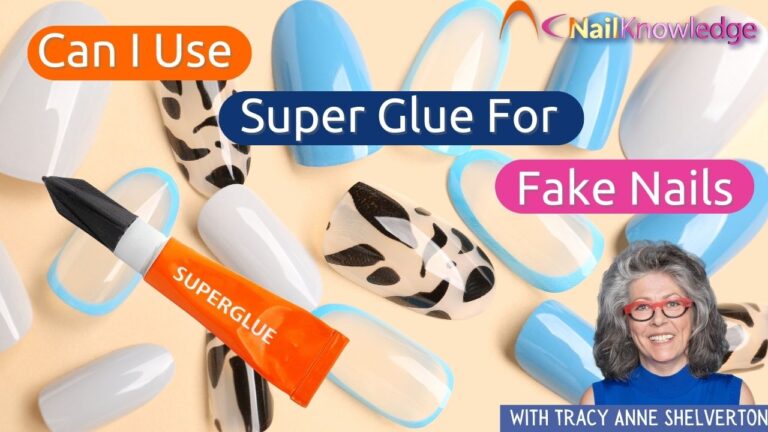
The Dangers of Using Superglue for Fake Nails

The Risks of Using Superglue for Fake Nails

In this blog, we explore the risks of using superglue for fake nails, like press-ons and fiberglass extensions, and explain why it’s crucial to steer clear of this practice.

In the pursuit of beautiful fake nails, some may resort to using unconventional methods, such as substituting super glue for proper nail adhesives. However, this practice can pose significant risks to both nail health and your overall well-being.

Understanding the Effects of Superglue on Fake or Natural Nails

Although superglue is effective for specific purposes, it’s not intended for use on either fake nails or natural nails. Unlike nail adhesives formulated for cosmetics, superglue contains harsh chemicals that can result in adverse reactions and lasting damage.

When applied to nails, superglue can:

  • Trigger Allergic Reactions: Superglue can cause severe allergic reactions, potentially leading to lifelong sensitivities. Such reactions may manifest as skin irritation, swelling, or even respiratory issues.
  • Cause Nail Coating Hardening: The rigidity of superglue can harden the nail coating excessively, resulting in damage to the delicate nail bed and surrounding tissues.
  • Induce Chemical Burns: The reactive nature of superglue can lead to chemical burns upon contact with the skin, posing a significant risk during nail application and making removal almost impossible.

The Risks of Substituting Super Glue for Resin in Nail Extensions

When it comes to nail extensions, particularly fiberglass ones, proper adhesion is crucial for durability and safety. While some may consider using superglue as a substitute for resin, this poses several risks:

  • Allergic Reactions: Individuals may experience severe allergic reactions to superglue, jeopardizing not only their nail health but also their overall well-being.
  • Nail Damage: Superglue’s adhesive properties can lead to excessive hardening of the nail coating, potentially causing irreversible damage to the nail bed and surrounding tissues.
  • Chemical Burns: Improper application or removal of superglue can result in chemical burns, causing pain, discomfort, and long-term skin damage.

Tips for Nail Recovery and Safe Practices

To safeguard nail health and promote recovery from any damage caused by superglue or other improper adhesives, consider the following tips:

  • Seek Professional Assistance: If you experience adverse reactions or nail damage, consult a qualified nail technician or dermatologist for proper assessment and treatment.
  • Avoid DIY Fixes: Refrain from attempting DIY nail repairs using superglue or other non-approved adhesives. These can exacerbate existing issues and lead to further damage.
  • Choose Safe Alternatives: Opt for cosmetic-grade nail adhesives specifically formulated for fake nails, ensuring safety and effectiveness during application and wear.
  • Prioritise Nail Health: Practice good nail care habits, such as keeping nails clean and moisturized, avoiding harsh chemicals, and giving nails adequate rest between applications.

To Summarise – Prioritise Nail Health and Safety

In the pursuit of beautiful nails, it’s crucial to prioritise health and safety above all else. Using superglue for fake nails, including press-ons and fiberglass extensions, poses significant risks that outweigh any potential benefits. By understanding the dangers associated with improper nail adhesives and following safe practices, individuals can maintain healthy, beautiful nails for years to come. Remember, when it comes to nail care, safety always comes first.

Filed Under: General Information, Lotions, Potions and Polishes

Exploring the Quality Divide in Nail Polishes

From Budget to Luxury Nail Polishes

The quality of nail polish can be assessed based on several characteristics, and it’s not solely determined by the price. Here are some factors to consider when evaluating the quality of nail polish:

1. Pigmentation: A high-quality nail polish should have excellent colour pigmentation, meaning it provides full coverage with fewer coats. Cheaper polishes may require multiple layers to achieve the desired colour.

 2. Longevity: Quality nail polish should have good staying power and resist chipping and fading for an extended period. More expensive options often have better staying power.

 3. Smooth Application: Look for nail polishes that apply smoothly without streaks or bubbles. High-end polishes tend to have better consistency.

 4. Quick Drying: A good nail polish should dry relatively quickly, reducing the chances of smudging or smearing.

 5. Finish: Nail polishes come in various finishes, such as matte, glossy, or metallic. The quality of the finish should meet your preferences.

 6. Ingredients: Some people prefer nail polishes that are free from harmful chemicals like formaldehyde, toluene, and dibutyl phthalate. High-quality brands may offer more “3-free” or “5-free” options.

 7. Brand Reputation: Established and reputable nail polish brands often invest in research and development to create high-quality products. Their reputation can be an indicator of quality.

 8. Price: While price isn’t the only factor, more expensive nail polishes may contain better ingredients and have superior formulas.

9. Packaging Impact: The quality and design of the packaging can influence the perceived value of the nail polish and may affect pricing considerations. Premium packaging may contribute to a higher price point, while simpler packaging may result in a more budget-friendly option.

10. Plant-Based Formulations: With growing consumer demand for eco-friendly and sustainable products, nail polish brands are increasingly offering plant-based formulations. These formulations often prioritise natural and renewable ingredients, providing an alternative for those seeking environmentally conscious nail care options.

Navigating Nail Polish Purchases: Balancing Quality and Budget

It’s not always the case that budget-priced polishes are of lower quality, but they may not always meet the same standards as more expensive ones. It can be a bit of trial and error to find a budget-friendly nail polish that performs well for your specific needs. Ultimately, the choice depends on your preferences, budget, and the desired result. Some people find value in investing in higher-end nail polishes for special occasions or long-lasting wear, while others may be perfectly satisfied with budget options for everyday use.

Filed Under: General Information, Lotions, Potions and Polishes

Busting the Acrylic Nail Powder Myth: The Truth You Need to Know

Aren’t all acrylic nail powders just a blend of ethyl and methyl methacrylate? Aren’t they basically all the same?

No, acrylic nail powder varies greatly and it is a myth that they are all the same. Wonder who started this myth? No surprise, it was started by those who sell low quality nail powders. Of course, they want to fool nail professionals into using inferior and/or incorrect nail powders. They can’t make money if nail technicians use the powder that was specifically designed for use with the monomer of their choice.  So, they fooled them into believing a “powder is a powder”, which is false.

Nail Powder Composition and Safe Use of MMA

Here are the facts – nail powders are polymer blends and their compositions vary widely. For instance, a nail powder could be a blend of 10% poly ethyl methacrylate, which is the polymerized form of ethyl methacrylate and 90% poly methyl methacrylate. Or it could contain the reverse, 90% poly ethyl methacrylate and 10% poly methyl methacrylate, and every combination in-between.

When methyl methacrylate or MMA is polymerized to make artificial nail powders, this is considered a safe and appropriate use for this monomer.  This is NOT the same as using MMA monomer as the liquid component in a system. I don’t recommend using MMA monomer nail products because they are likely to lead to damage of the nail plate.  

Unlocking the Power of Custom Co-Polymer Nail Powders

It is important to understand that nail powders are often customized “co-polymers”.  A co-polymer is a polymer containing two types of monomers in their structure and not just blended together. Co-polymers are completely different from those created by physically blending two different types of polymers. Co-polymers are one polymer, made from two different monomers.  This means that knowledgeable scientists can create hundreds of powders that all have ethyl and methyl methacrylate and each powder will be different in strength, durability and ease of use.

There is an even more important difference, as I discussed in Volume l of my Face-to-Face series, it is VERY important to understand that various nail powders contain varying amounts of benzoyl peroxide or BPO. The amount of BPO used depends on the formulation of the monomer liquid component of the system.  Some monomer liquids require more BPO, while others need less. The BPO concentration is usually between 1-2%, however there is a VERY big difference between a nail powder containing 1% verses a nail powder containing 2% BPO. A nail powder with 2% BPO contains twice as much BPO as a powder with only 1%. 

The Crucial Role of BPO in Acrylic Nail Powders

The amount of BPO in the powder determines how “completely” the liquid monomer will cure. Too little BPO, the enhancement will under-cure. Too much BPO, the enhancement will over-cure.  Over-curing can lead to discoloration, brittleness, cracking, breaking, chipping and loss of adhesion or lifting.

The Dangers of Under-Cured Nail Coatings

Under cured nail coatings may have a lower resistance to staining or they can be overly flexible and have increased cracking at the stress zones near the free-edge.

However, there is a much more important problem to consider, under-cured nail coatings are much more likely to cause adverse skin reactions for clients and nail professionals.  Under-curing leaves excessive amounts of monomer trapped in the coating. Therefore, fresh dust and filings may be rich in monomer. Prolonged or repeated contact to monomer-rich dust and filings may lead to skin overexposure, which is a leading cause of allergy to nail enhancements.

Matching BPO Levels: A Must for Proper Nail Enhancement Curing

If you use the incorrect powder, it may not contain the correct amount of benzoyl peroxide. In other words, don’t use a 1% BPO containing nail powder with systems designed for use with a 1.5% BPO powder, and the opposite is true.  Even a half percent difference in BPO can lead to an under-cured enhancement and higher risk of skin irritation or allergies.

This is especially true during the first hour after creating the enhancement. This is when the coating contains the highest concentration of uncured monomer and the potential for over exposing the skin is at its highest.


Filed Under: Liquid and Powder, Lotions, Potions and Polishes, Myth Busting

Is the Smell of Acrylic Liquid Linked to MMA?

The Acrylic Liquid Smell: Dispelling the MMA Misconception

Have you ever been told that if your acrylic liquid has a strong smell, it must contain MMA (methyl methacrylate)? It’s a common misconception in the nail industry, but let’s debunk this myth and set the record straight.

Understanding the Smell in Acrylic Liquids

First and foremost, it’s essential to know that all artificial nail systems based on monomer liquids have some level of odor. Even those marketed as “odorless” still have a detectable scent. The intensity of the odor can vary between different brands and products, but the presence of an odor alone doesn’t indicate the use of MMA.

Why Odor Isn’t a Reliable Indicator

Assuming that an acrylic liquid contains MMA solely based on its smell is a reckless generalization. Some of the best and most effective monomer ingredients used in artificial nail liquids do have noticeable odors. Therefore, the presence of an odor doesn’t necessarily imply that the product is unsafe or contains MMA.

The Importance of Safety Data Sheets (SDS)

To make an informed judgment about a nail coating product, it’s crucial to refer to its Safety Data Sheet (SDS), also known as MSDS (Material Safety Data Sheet). If a product contains MMA in a concentration greater than 1%, it must be listed on the SDS.

Red Flags and Safety Precautions

If you find that an SDS for a particular product is not readily available or easily obtainable, it’s a red flag. Nail technicians should exercise caution and prioritize safety. Using nail enhancement products without reviewing the SDS could mean missing essential information regarding proper and safe handling.

The Truth About Acrylic Liquid Smells and MMA Content

While the smell of acrylic liquid can vary from one brand to another, associating a strong odor solely with MMA is a misconception. Always refer to the SDS for accurate information about a product’s composition. Your safety and the quality of your nail applications should never be compromised. Stay informed, stay safe, and provide the best nail services to your clients.

Filed Under: General Information, Lotions, Potions and Polishes, Myth Busting

Nail Prep, one size does NOT fit all!

There are so many questions along the lines of: I do the same nail prep for all but a couple of my clients keep getting chips or lifting.

The answer to that problem is in the question. That is the same prep for all. This does not work as every ones nails and lifestyle are different.

This starts with a very educated understanding of the nail condition and lifestyle.

Building Strong Foundations for Enhancements and UV Gel Polish

If nails are thin and/or weak from previous damage, over buffing or naturally thin then that client may not be suitable for enhancements or UV gel polish. You cannot build a strong structure on weak foundations.

The client may need a course of treatment that strengthens the nail plate first. Most brands have a nail-strengthening treatment (this is different from a hardener as this will cause a different problem). Those that have keratin in an oil or one that penetrates the nail plate and strengthens from the inside.

It may be that a rubber base can work as it should be flexible enough to move with the weak nail and not against it. But a rubber base will not suit all clients and trying another brand will involve a new lamp so try using it much thinner or applying two thin layers. If you are using all the same brand it can sometimes work by putting a thin rubber base in between the colour layers giving more strength. If doing this beware of the thickness all around the edges of the coating as it can easily look unpleasantly thick.

Many Nail Prep Problems Involve the Need for Extra Adhesion

This has several causes:

  • some nails have cuticle much higher up the nail than expected, even as far as halfway up. Every particle of this must be removed gently for adhesion of any coating. With a cuticle remover tool (with experience) you will be able to feel what is skin and what is nail so start much further up the nail when removing but be careful not to dig into the nail plate and cause a ridge.
  • Every brand should have a cleanser and/or a dehydrator. You may use this on all 10 nails at the same time but sometimes, if the oil is especially oily, the answer is to dehydrate one nail at a time and apply the coating which will be applied to a perfectly dehydrated nail before natural oils and moisture have reached the surface again.

Some brands have additional adhesion enhancers such as a primer. Use this on the lifters but do not be tempted to use a product from another brand as it may not be compatible with the colour and will cause it to lift. Most primers need a minimal application and are allowed to air dry before moving on. Some may need curing. Always follow the instructions.

Nails that are excessively oily pose a challenge. The solution, as previously explained, is to dehydrate them one at a time.

Some nails are too hard especially when they have no surface damage. This type of nail may need extra buffing with a slightly harder grit (lower grit number) than other nails as they need a bit of help with the adhesion as all adhesives penetrate into the top couple of nail layers for a good grip. If this is needed be careful to buff or file any more than necessary as the nail will eventually become thin and weak and cause a different problem.

Using UV gel polish is a skill that is more similar to applying enhancements than using regular nail polish (which many have lost or not learned the skill of applying as it dries too quickly for them)

Perfecting the Nail Apex for Stronger Nails

Every coating needs an apex for strength to avoid breaking or bending (which happens often to weak nails with a free edge and causes lifting) Always create an apex. This is usually over the onychodermal band but maybe a little nearer the base of the nail for a longer nail. If you are not skilled at creating an apex, when you have applied the second colour coat, turn the clients hand over parallel to the desk top which allows gravity to pull the uncured coating from the sides and it into a natural apex over the centre of the nail.

Guiding Clients Towards Nail Length and Health

Some clients want the nails to be longer than is practical for their lifestyle. If they are too long they will break often and need to be shorter. If a client breaks  nail and the nail plate is torn from the nail bed this is because the coating is too thick and strong! The coating must break before the nail does.

If a client insists on nails too long for them remind them you are the professional in this relationship and you are advising them for the health of their nails. Even a crack in the nail plate can let pathogens in and cause long-term problems.

It is your professional duty to make an accurate assessment of every clients nails and provide the best nail prep treatment based on your knowledge and skill and not blame the product.

Filed Under: General Information, Lotions, Potions and Polishes, Product Chemistry

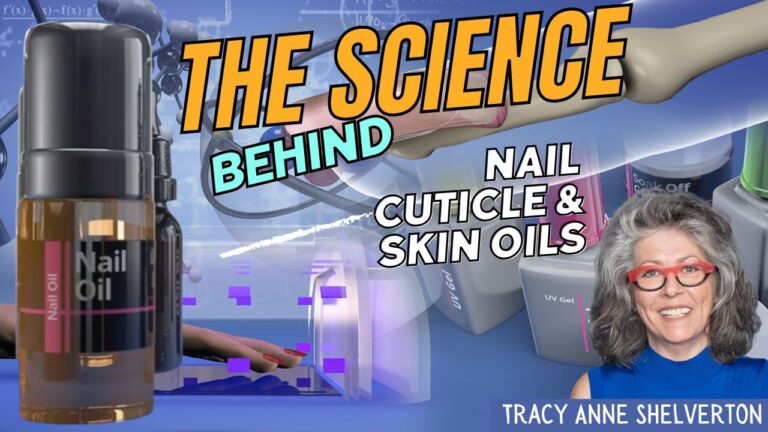
The Science Behind the Nail Cuticle Oil

The science behind nail cuticle oil is as intriguing as it is essential for maintaining healthy, beautiful nails. This seemingly simple product plays a crucial role in nail & hand care routines, and its effectiveness goes beyond its pleasant scent and moisturizing properties. Let’s delve into the fascinating science behind nail & skin oil.

Nail Cuticle & Skin Oil and Hydration

At its core, nail oil is all about hydration. The skin surrounding your nails, including the nail bed, is much more important than you might think. It acts as a natural barrier, preventing bacteria and other foreign invaders from infiltrating your nails’ matrix, the place where nail growth originates. The 4 Guardian Seals (cuticle (non-living tissue), 2 lateral nail folds and the hyponychium) are the most, but not the only important skin barrier in and around the nail unit.

The Science: Skin and nails require moisture to maintain their health and integrity. Dehydrated skin is more prone to splitting which creates microscopic openings for opportunistic pathogens but also to sunburn and other forms of UV damage. Hydration can help protect your skin from the sun’s harmful rays and possible negative effects of the UV LED lights that we use when curing our artificial nail products.

Its also important to recognise that we all have our own set of unique microbiomes and that we meet transient microbiomes in and from other people around us, these amazing microbiomes are part of our protection, our skin & nails are their living environment, and it also needs to be protected so they can protect us.

Nail & Skin oil typically contains a blend of nourishing oils like jojoba, almond, and avocado but can also contain ingredients such as y-Tocopherol (a natural non synthetic form of vitamin E).  These oils are rich in essential fatty acids that not only penetrate the nail plate & skin but also provide a protective layer sealing in moisture and preventing dehydration that can lead to brittle nails and unsightly hangnails. Avoid nail & skin oils with synthetic preservatives, scents or colouring.

The science here is simple yet effective: Preventing Trans Epidermal Water Loss is the key hydrated nails & skin mean healthier nails & skin. Healthy skin and nails can defend against invasive microorganisms.

Stimulating Blood Circulation

One of the intriguing aspects of a good quality nail & skin oil is its ability to penetrate the nail plate, helping the bed epithelium (also non-living tissue) to remain flexible, ensuring proper transport of the nail plate along the nail bed but also helping to keep our very special nail beds in optimal condition. It’s important to remember that the nail bed has to reabsorb the old skin cells as they cannot sloth off, this makes the nail bed react quickly when all is not as it should be causing nasty problems such as hyperkeratosis which can also be painful.

The Science: When you massage nail & skin oil into your nails and skin, you’re not only delivering nourishing ingredients but also stimulating blood circulation. Improved blood flow means more nutrients and oxygen reaching the nail matrix, where new nail cells are formed. This enhanced circulation can help nail growth and make your nails appear healthier and more vibrant. It’s like giving your nails a mini spa treatment, all thanks to the science behind the oil.

Protection from Environmental Stressors

Our nails face numerous challenges in their daily lives, from exposure to harsh chemicals to the wear and tear of everyday activities. Nail & skin oil acts as a protective shield, guarding your nails against these external stressors.

The Science: The oils and ingredients in oil form a barrier just below the surface of your skin and penetrates your nails, shielding them from environmental pollutants, water, and chemicals found in cleaning products. Think of it as a protective force field for your nails, helping to prevent the penetration of water, damage and breakage. This protection is an essential aspect of nail care that often goes unnoticed but is crucial for maintaining strong, beautiful nails, but especially nails that are crowned with gorgeous artificial nail products or your favourite nail polish.

Flexibility and Preventing Breakage

Nails need to be flexible to withstand daily activities without snapping like a brittle twig. Nail Cuticle Oil contributes to the flexibility and resilience of your nails, reducing the risk of breakage.

The Science: A good quality oil can penetrates the nail plates, making them more flexible and less prone to splitting or breaking. Imagine it as giving your nails a strengthening workout, helping them bend without breaking.

Enhancing Nail Polish Adhesion

Just as a base coat is essential for proper nail polish adhesion, oil plays a role in ensuring your manicure lasts longer. Your well-hydrated nails will provide a better surface for nail polish application, leading to smoother and more durable results.

The Science: When you apply nail polish or your favourite artificial nail product on hydrated nails, it adheres better and spreads evenly. This means fewer streaks and chips in your manicure. Oil’s moisturizing properties create an ideal foundation for your nail polish or artificial nail products, enhancing their longevity. It’s like providing a smooth, moisturized canvas for a masterpiece.

Don’t forget to wash your hands first and to use a good quality nail plate cleanser that removes surface minerals that can affect adhesion but also ingredients that remove surface oils and other fluids so that your product of choice adheres well.

Tip: After soaking off your artificial nails or removing nail polish with nail polish remover your nails and skin will look dry because acetone or other solvents in the remover have broken down or removed your product, a dose of oil here now will help replenish any lost moisture and or oil in your nails and your skin.

Nurturing Beauty and Strength

The science behind nail & skin oil involves a harmonious blend of hydration, protection, stimulation, and strengthening. This unassuming product packs a punch when it comes to nail & skin care, working behind the scenes to keep your nails healthy, flexible, and beautiful. So, the next time you indulge in a relaxing oil massage, remember that you’re not just pampering your nails; you’re embracing the science that keeps them in top-notch condition. Your nails will thank you with strength, resilience, and a stunning appearance that lasts.

Filed Under: General Information, Lotions, Potions and Polishes, Product Chemistry

  • « Go to Previous Page
  • Page 1
  • Interim pages omitted …
  • Page 6
  • Page 7
  • Page 8
  • Page 9
  • Page 10
  • Page 11
  • Go to Next Page »

Level Up Your Nail Insights

Join our Newsletter!
SUBSCRIBE...

Copyright © NailKnowledge

NailKnowledge

  • MyNailEra
  • eBooks
  • About us
  • Courses
  • News
  • Blog
  • Newsletter
  • Glossary

Policies

  • Privacy Page
  • Terms & Conditions
  • Cookie Policy

Support

  • Contact Us
  • Meet the Experts
  • Ask the Experts
  • System Support
  • FAQs
English
English
Portuguese Spanish Vietnamese