• Skip to primary navigation
  • Skip to main content
  • Skip to footer
NailKnowledge

NailKnowledge

  • Courses
  • MyNailEra
  • Free eBooks
  • Knowledge Base
    • Knowledge Base
    • Ask the Experts
    • Glossary
  • News
  • Blog
  • Login

Lotions, Potions and Polishes

UV Gel Thickness: Key Insights for Optimal UV Gel Application

Every day is a school day which offers a new learning opportunity, and that’s how it should be! never stop learning. I consider that I know and understand quite a bit about UV gels but I learned something new the other day about UV gel thickness.

In our short course about UV gel we explain how if the gel coating is too thick it can cause over curing (heat spikes) and heavily pigmented can block the UV and cause under curing, but what I’d didn’t know is that a thick coat can also cause the lower part of the coating to be under cured as the UV cannot penetrate that deep.

The Critical Role of UV Gel Thickness in Application Safety and Efficacy

Instructions have always been to apply thin coats for the following reasons:

  1. over curing where the clients nail bed can be burned
  2. under curing if pigments are in the gel
  3. and now, lower levels will not be cured which can lead to leaching during wear or removal.

If you think you know a lot about UV gels then test your knowledge against the insights shared in Doug Schoon’s latest articles, delve into his new e-book on UV Gels, and challenge yourself with our quizzes to earn a digital badge.

I bet you’ll learn something new!!

Dougs Latest Articles

Colour Pigments in UV Gel, how do pigments affect the UV Gel absorbtion
UV Gel Application – Insighs into Pigments
Unveiling the Hazards of Thick UV Gel Application
Hazards of Thick UV Gel Applications

Embracing Continuous Learning in UV Gel Application: A Journey of Mastery and Safety

The journey of mastering UV gel application is an ongoing process of learning and discovery, even for those well-versed in nail care. The revelation about the significance of UV gel thickness underscores the importance of continuous education in our field. It’s not just about adhering to the basics; it’s about delving deeper into the nuances that can make or break the safety and effectiveness of our nail treatments. This insight serves as a reminder to embrace every learning opportunity and to approach our craft with both curiosity and caution.

Whether you’re a seasoned professional or a budding nail technician, there’s always more to uncover, more to understand, and more to perfect. Let’s commit to refining our skills, staying informed through resources like Doug Schoon’s work, and elevating the standard of care we provide to our clients, one thin, meticulously applied coat at a time.

Filed Under: General Information, Lotions, Potions and Polishes, Nail Services, UV Gel

Mastering UV Gel Application: Insights into Pigments

In the realm of nail artistry, UV gel has revolutionised the way we approach nail enhancements. Its versatility, durability, and ability to create stunning designs have made it a favourite among nail professionals and enthusiasts alike. However, achieving flawless results with UV gel requires more than just skilful application. It involves understanding the intricate interplay between the gel, UV light, and pigments.

Join us as we uncover some of the science behind UV gel application, shedding light on the crucial factors that influence its curing process and the role pigments play in achieving optimal results.

UV Absorption in UV Gel Application

UV gel application is a meticulous process that hinges on the interaction between the gel and UV light. As a type of resin applied to the nail plate, UV gel undergoes a transformative journey under the influence of UV light. During the curing process, both the UV gel itself and the pigments within it eagerly absorb the UV light emitted by the curing lamp. This absorption sets off a cascade of chemical reactions within the gel, catalysing its cross-linking and solidification. The end result? A resilient and long-lasting coating that adheres seamlessly to the nail, showcasing the beauty and durability of UV gel manicures.

In addition to the UV gel, pigments may be added to the gel to create desired colours or effects. These pigments also absorb UV light during the curing process. As the UV light penetrates the gel, it interacts with the pigments, causing them to absorb the UV energy. This absorption of UV light by the pigments may affect the curing process and the final appearance of the nail coating.

Unveiling the Secrets of Pigments in UV Gel

Pigments play a vital role in the world of UV gel manicures, offering endless possibilities for creativity and expression. These colourful additives are incorporated into UV gel formulations to enhance their aesthetic appeal, allowing nail artists to create stunning designs and vibrant hues. From rich reds to deep blues, pigments come in a variety of shades and formulations, each offering its own unique characteristics and effects. But beyond their visual allure, pigments also influence the curing process of UV gel, affecting its opacity, consistency, and overall performance on the nail.

Diving Deep into Pigment Absorption: Understanding Colour Dynamics in UV Gel Manicures

Exploring Pigment Absorption in UV Gel

In the realm of UV gel manicures, pigments are the palette with which nail artists paint their masterpieces. These tiny particles, infused within the gel, hold the power to transform nails into stunning works of art. But beyond their vibrant hues and captivating shades lies a fascinating phenomenon: pigment absorption.

Pigments within UV gel, particularly shades like red and black, possess a unique ability to absorb UV light with greater efficiency compared to lighter colours such as white or blue. This heightened absorption not only intensifies the colour saturation but also influences the curing process of the gel.

Furthermore, regardless of their specific hue, all pigments create what can be described as an “umbrella effect.” As UV light penetrates the layers of gel, pigments cast a subtle shade on the layers beneath them, altering the distribution of light and affecting the overall curing process.

The Impact of Pigment Load on UV Gel Curing

The pigment load in UV gel plays a significant role in the curing process, with higher pigment concentrations presenting potential challenges. As the pigment load increases, more UV light is absorbed by the pigments themselves, thereby reducing the amount of light that penetrates through to the gel for proper curing. This phenomenon exacerbates the under-curing issue, as insufficient UV exposure leads to incomplete polymerisation, compromised durability and increased potential for adverse skin reactions.

Nail professionals must carefully consider the pigment load in UV gel formulations to ensure optimal curing and long-lasting results. The only way for nail professionals to manage pigment load is by curing longer to ensure proper curing and applying thinner layers.

Navigating the Risks of Adding Nail Art Pigments to UV Gel

While the addition of nail art pigments can elevate the aesthetic appeal of UV gel manicures, it also introduces inherent risks that must be navigated with caution. One such risk is the increase in pigment load, which amplifies the likelihood of under-curing due to UV absorption by the pigments. As more UV light is absorbed by the pigments, less reaches the deeper layers of gel for proper curing, leading to premature wear and increased potential for adverse skin reactions. Nail artists must strike a delicate balance between creativity and practicality when incorporating pigments into UV gel formulations, prioritising proper curing techniques and product compatibility to mitigate the risks associated with pigment addition.

Filed Under: General Information, Lotions, Potions and Polishes, Nail Art, UV Gel

Unveiling the Hazards of Thick UV Gel Application

Let’s explore a crucial fact that every nail professional, student or enthusiast must be made aware of. As we explore the world of UV gel application, it’s essential to understand the impact of thicker gels on the curing process. 

The Crucial Fact About UV Gel Thickness You Can’t Afford to Overlook

Thicker Gels: Thicker layers of UV gel absorb more UV light at the top surface, resulting in lower penetration to the bottom layers of the gel. This can lead to incomplete curing and under-curing in the deeper layers.

The Phenomenon of UV Gel Absorption in Thicker Gel Layers

In thicker layers of UV gel, most of the UV light is absorbed by the upper layers of the gel, resulting in lower penetration of UV light into the lower layers. This phenomenon occurs due to the nature of UV light and the properties of the UV gel material.

When UV light passes through a material like UV gel, it is absorbed or scattered by the molecules within the UV gel. As the light travels deeper into the gel, even more of it is absorbed or scattered, leading to a reduction in the intensity of UV light reaching the lower layers. As a result, thicker layers of UV gel provide more material for the UV light to interact with, further reducing the amount of UV light that can penetrate to the bottom layers.

As a result, the top layers of the gel receive the highest intensity of UV light, leading to more efficient curing of the upper layers. However, as the light travels deeper into the gel, its intensity decreases, and the lower layers receive less UV light, which can result in incomplete curing and under-curing in those regions.

This phenomenon highlights the importance of proper curing techniques, including using thinner layers of UV gel to ensure adequate UV light penetration and uniform curing throughout the entire thickness of the gel layer. It also underscores the need for understanding the curing properties of UV gel and adjusting application techniques accordingly to achieve optimal results.

Filed Under: General Information, Lotions, Potions and Polishes, UV Gel

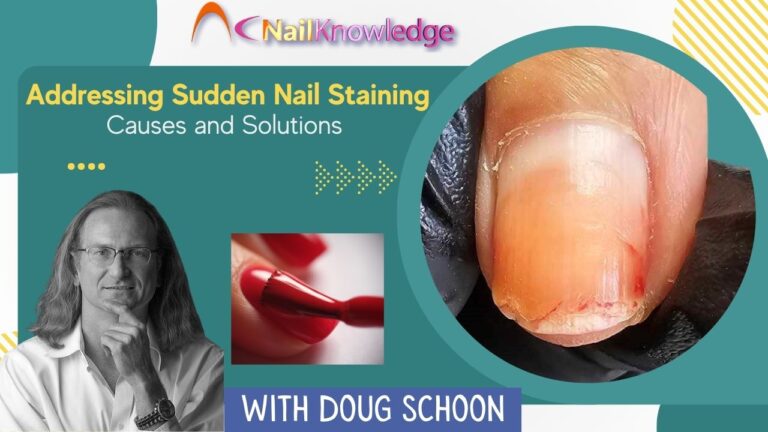
Addressing Sudden Nail Staining: Causes and Solutions

Exploring the realm of nail care unveils unexpected intricacies, particularly when it comes to dealing with nail staining, as shared by one of our valued clients.

Despite conscientious efforts in application and curing techniques, they found their nail plates marred by stubborn stains, particularly after adorning them with a rich, dark red hue.

In our pursuit of unraveling this perplexing issue, we look into the critical role of the base coat, shedding light on how its thickness can influence staining susceptibility. Join us as we explore the unique challenges posed by red-colored nail coatings and unveil strategies to mitigate staining while restoring the beauty and resilience of your client’s nails.

Managing Nail Staining: Importance of Base Coat Thickness

One of the first things to consider is the base coat, since applying it too thinly can increase staining.  

Understanding the Challenge of Red Nail Coatings and Nail Staining

Red colored nail coatings are one of the greatest challenges for the nail plate. It is difficult to create a deep red color that doesn’t stain the nail plate. Because some red colorant molecules can penetrate the nail plate’s surface. When that occurs, the molecules collect and pool just underneath the surface to create a visible stain.

Tackling Nail Staining: The Role of Incomplete Curing

The surface of the nail coating may seem hard, but if the color coat isn’t completely cured all the way through, it will remain tacky in the area where it meets the base coat. This is called a “tacky interface”, in technical terms. This tacky interface allows colorants to move around more easily, into and through the base coat, so nail plate surface staining becomes easier.

This is especially true for areas of nail surface damage. Nail plates that are over filed, peeling, pitted or otherwise damaged are more readily stained. This is hard to avoid when nail surfaces are damaged. The greater the damage, the more likely it is that staining will occur.

Application Techniques for Success

Also, it is very important to note that staining is more likely to occur when the color coating is applied too thickly.  So, besides finding a solution to the surface peeling problems, perhaps what this nail professional needs is more base coat and less color coat.

Filed Under: General Information, Lotions, Potions and Polishes, UV Gel

Jojoba Oil and Vitamin E’s Journey into the Nail Plate

Have you ever wondered how certain ingredients like jojoba oil and Vitamin E work their magic in nail care products? One reader’s query led us to delve into the science behind these ingredients and their ability to penetrate the nail plate. Join us as we uncover the mysteries behind jojoba oil, Vitamin E (tocopherol), and their role in promoting healthy nails.

Understanding Terminology: Tocopherol vs. Vitamin E in Nail Care

First, I want to discuss some terminology. Vitamin E is a food supplement name for a substance that is properly named “Tocopherol”.  In other words, tocopherol is the correct cosmetic name that should appear on the label and the term vitamin should only be used for foods and ingested nutritional supplements. I’ll use the correct cosmetic ingredient name, of course, and so should manufacturers and marketers.

Molecule Size and Nail Penetration: Tocopherol vs. Jojoba Oil

Tocopherol is a very large molecule and molecules of this size typically have a difficult time penetrating the nail plate, but the same could be said for jojoba oil. Certain molecules found in jojoba oil have a very long sleek shape, rather than a large, bulky shape, which can really make a big difference. I agree that vitamin E molecules would have a difficult time penetrating on their own.

Most would likely sit on or near the surface of the nail plate, but that’s not a bad thing. Why it that? This is where tocopherols protective action is most needed, near the surface where sunlight and oxygen exposure create unwanted and potentially destructive chemical reactions that lead to discoloration and embrittlement of the nail plate and/or nail coatings.

Tocopherol is most needed on or near the surface, and it is less useful deep inside the nail plate or enhancement.

Harnessing Tocopherol: The Science Behind Nail Penetration and Protection

I have done testing with blends of tocopherol and various natural oils such as jojoba and avocado oil and these studies indicated tocopherol did indeed slowly penetrate the nail plate over time and it seemed to concentrate near the surface.

These natural oils do act as carrier solvents for the tocopherol. That is NOT surprising since many vegetable oils naturally contain tocopherol. For example, wheat germ oil is the most concentrated natural source known for tocopherol. Therefore, I’m confident that some tocopherol does absorb, but not large amounts. However, large amounts of tocopherol aren’t needed, since it is highly effective in very low concentrations. 

This helps explain why nail oils which contain tocopherol, must be used regularly to ensure that a protective amount of tocopherol is always present. Of course, tocopherol can also be blended into a monomer liquid and/or UV gel to provide similar protective effects throughout the coating.  But, the real protective value of tocopherol is when it’s concentrated at the upper surface. Therefore, using a high-quality nail oil with tocopherol is a valid approach to protecting the integrity of both natural and artificial nails. 

Clarifying Tocopherol’s Role in Artificial Nail Products

Protection vs. Absorption

When tocopherol is added to artificial nail products, it’s function is to protect the coating, not the nail plate. I am not aware of any evidence that demonstrates that any useful or significant amounts of “vitamins” can migrate from artificial nail coatings and absorb into the nail plate to provide benefits, so I recommend disregarding those claims until convincing evidence is provided.

Filed Under: General Information, Lotions, Potions and Polishes

Exploring the Role of Nail Primer in UV Gel Nail Applications

In the realm of nail care and beautification, one recurring question perplexes both professionals and enthusiasts alike: Can nail primer serve as a suitable bonding layer for UV gel nails?

The practice of applying a nail primer pen on the natural nail, curing it, and subsequently applying the building gel has sparked curiosity regarding the necessity of a specifically formulated product.

Below Doug Schoon delves into the intricacies of nail primer usage in UV gel nail applications, shedding light on its effectiveness and the potential need for specialised formulations.

Addressing Concerns with Nail Primer Pens

There are several issues here, but I will try to address them all. First, I don’t recommend primer pens, since these are multi-use devices that can become contaminated with nail oils.

In my view, it is better to use a brush and bottle to be disposed of after use- not refill. Refilling allows oily contaminants to be transferred from the nail plate to the brush and into the product in the container.

Importance of Nail Bonders in UV Gel Applications

If UV gels require a nail bonder or primer layer which improves adhesion of the nail coating, then it should be used.  Otherwise, I would not recommend this to be done.  It is easy to see that too little adhesion causes lifting problems, but nail professionals often don’t stop to think about the problems caused by TOO MUCH adhesion.

Using a primer, when it is not needed can create too much adhesion, which makes removal more difficult, time-consuming and can increase the risks of nail damage related to removal processes.

Preventing Nail Damage: Proper Removal Techniques for Nail Coatings

Improper removal of nail coatings are top causes for nail damage.  Many become impatient and use forceful techniques to more quickly remove the nail coatings. When this occurs and nail damage results, many explain away the damage by fooling customers into thinking their nails are just dry, when actually the nail surface has been damaged due to improper removal.

My main point is this, if the directions for the UV gel don’t “specifically” mention the use of a nail primer, then a primer should NOT be used.

Avoiding Nail Coating Lifting: The Role of Proper Technique over Nail Primers

Many times, a nail primer is used as a crutch to hide improper techniques. If the nail technician does a poor job preparing the nail plate, or they incorrectly apply the product, or they improperly cure with the wrong nail lamp, these can all result in lifting- premature loss of adhesion.

In these cases, the solution is NOT to use primer, instead, the best solution is to correct the issues that are causing the nail coatings to lift. If the UV gel doesn’t require the use of a primer in their directions or instructions, then don’t use one or this can create excessive adhesion and the nail coatings will be much more difficult and time consuming to remove.

Preventing Nail Damage: Alternatives to Nail Primers

Many nail technicians will forcibly remove the nail coatings- which leads to nail plate thinning, pitting, splits, cracks, peeling and surface white spots. Instead of using a nail primer, it would be wiser to seek out the reason for the low adhesion and solve the problem. Maybe the client’s nails need more careful cleaning and preparation. Or perhaps, the professional needs to invest in purchasing and using the correct nail lamp, the one designed for use with the UV gel.  Or maybe they should take a manufacturer’s class to learn the proper application techniques. 

Responsibility and Corrective Actions in Nail Care

Nail technicians are responsible for their actions and any harm caused by their inappropriate actions. Making up their own procedures and ignoring directions is a common reason for nail problems. Instead of using primers to correct problems created by incorrect use, nail professionals should address and solve the problem correctly. 

Concerns with Nail Primer and UV Gel

Allergic Reactions and Industry Challenges

For instance, nail primer may improve adhesion when nail coatings aren’t fully cured, but then nail technicians or clients could develop allergic reactions to improperly cured dusts. The nail technician is not likely to realize they’re improperly curing, so they won’t take any steps to solve the real problem. Don’t make up your own directions/instructions. This is one of the greatest challenges facing the nail industry and a leading reason why most women are afraid of nail salon services and refuse to go to salons. Improper use of nail coatings, is the main reason why the nail industry isn’t growing and attracting more customers.

Filed Under: General Information, Lotions, Potions and Polishes, UV Gel

  • « Go to Previous Page
  • Page 1
  • Interim pages omitted …
  • Page 5
  • Page 6
  • Page 7
  • Page 8
  • Page 9
  • Interim pages omitted …
  • Page 11
  • Go to Next Page »

Level Up Your Nail Insights

Join our Newsletter!
SUBSCRIBE...

Copyright © NailKnowledge

NailKnowledge

  • MyNailEra
  • eBooks
  • About us
  • Courses
  • News
  • Blog
  • Newsletter
  • Glossary

Policies

  • Privacy Page
  • Terms & Conditions
  • Cookie Policy

Support

  • Contact Us
  • Meet the Experts
  • Ask the Experts
  • System Support
  • FAQs
English
English
Portuguese Spanish Vietnamese