• Skip to primary navigation
  • Skip to main content
  • Skip to footer
NailKnowledge

NailKnowledge

  • Courses
  • MyNailEra
  • Free eBooks
  • Knowledge Base
    • Knowledge Base
    • Ask the Experts
    • Glossary
  • News
  • Blog
  • Login

Lotions, Potions and Polishes

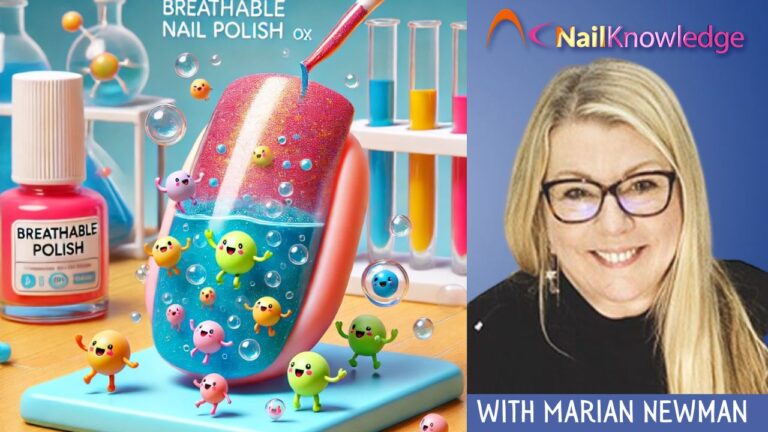
What is Breathable Nail Polish?

What is Breathable Nail Polish, and How Does It Differ from Regular Nail Polish?

In recent years, beauty enthusiasts, professionals and marketeers have introduced the concept of breathable nail polish, sparking curiosity and debate among consumers. While this product is growing in popularity, many are left wondering: What exactly is breathable nail polish, and how does it differ from traditional nail polish? Let’s delve into this topic, demystify the concept, and explore the benefits and potential misconceptions surrounding it.

The Basics: What is Breathable Nail Polish?

Breathable nail polish is a type of nail coating designed with a unique formulation that allows minute amounts of water and oxygen molecules to pass through the polish layer. This is achieved through advanced polymer technology that creates tiny microscopic gaps in the polish. These gaps are so small that they are invisible to the naked eye but large enough to let oxygen and water molecules move through the surface of the polish.

The term “breathable” refers to this. Breathable polish is designed to mimic the natural exchange of air and moisture that occurs when nails are left bare.

Why Do Nails Need to “Breathe”?

The short answer: They don’t.

Nails are made of keratin, a hard, non-living protein. Like hair, nails do not “breathe,” as they lack blood vessels or living cells that would require oxygen. Instead, nails receive their nutrients and oxygen from the blood supply within the nail bed. This means that the concept of “breathing nails” is more of a marketing term than a biological necessity.

However, the idea of breathable nail polish appeals to individuals who believe that allowing air and water to pass through the nail coating might contribute to healthier nails or provide other benefits. Whether these claims hold merit is still up for debate, but the marketing angle has resonated with many.

The Difference Between Breathable and Regular Nail Polish

While both breathable and traditional nail polishes serve the primary function of adding color, shine, and protection to nails, they differ in their composition and performance. Here are the key distinctions:

Permeability:

Breathable Polish: Allows the passage of oxygen and water molecules. This permeability is especially important for individuals who follow certain religious practices, such as Islam, where water must reach the surface of the nails during ablution for prayers.

Regular Polish: Creates a less porous barrier that prevents water and oxygen from passing through.

Application and Feel:

Breathable polishes often have a lighter texture compared to traditional formulas, which may feel thicker or heavier on the nails.

Market Claims:

Breathable nail polishes are marketed as being better for nail health, though these claims lack robust scientific backing. They also appeal to individuals looking for a polish that aligns with certain lifestyle or ethical choices.

Removal Process:

Both types of polish are typically removed using acetone or nail polish remover, so the removal process is not significantly different.

The Appeal of Breathable Nail Polish

  1. Religious Observance: One of the primary reasons for the popularity of breathable nail polish is its compatibility with Islamic practices. During wudu (ablution), water must touch the entire body, including the surface of the nails. Regular nail polish is often seen as a barrier to this requirement. Breathable polish addresses this concern by allowing water to pass through, making it a popular choice for Muslim women although not enough water passes through to come into contact with the entire nail.
  2. Perceived Health Benefits: While nails do not require oxygen to “breathe,” some proponents of breathable polish argue that its water and air permeability helps maintain a healthier environment for the nail bed, potentially preventing issues like brittleness or fungal growth. However, it’s important to note that these claims are not universally supported by scientific studies.
  3. Convenience: Some users find that breathable polish chips less easily or provides a more natural feel on the nails. Additionally, the lightweight nature of the formula makes it appealing to those who prefer minimalistic beauty routines.

Potential Misconceptions About Breathable Nail Polish

It’s important to approach the concept of breathable nail polish with realistic expectations. Here are some common misconceptions:

  1. Breathability Equals Nail Health: As mentioned earlier, nails do not need to breathe. Any perceived health benefits of breathable polish are likely due to the quality of the formulation rather than its permeability.
  2. Water and Oxygen Fully Penetrate the Polish: While breathable polish is designed to allow some water and oxygen molecules to pass through, the amount that reaches the nail bed is minimal. This feature is more relevant for symbolic or religious reasons than for substantial biological impact.
  3. All Breathable Polishes Are the Same: Not all brands of breathable polish are created equal. Different formulations may vary in their actual permeability, quality, and durability.

Choosing Between Breathable and Regular Nail Polish

Ultimately, the decision to use breathable or regular nail polish depends on your personal preferences and needs. Here are a few factors to consider:

  1. Religious or Cultural Practices: If water permeability is a priority for religious reasons, breathable polish is a clear choice.
  2. Lifestyle: Breathable polish might be a good option if you prefer a lightweight formula or are interested in exploring new beauty innovations.
  3. Nail Health Concerns: If you have concerns about nail damage, consider other aspects of nail care, such as moisturizing the nail bed, avoiding harsh removers, and taking breaks from polish altogether.

Conclusion

Breathable nail polish is an innovative product that has carved out a niche in the beauty market. While its primary appeal lies in its permeability, its actual benefits beyond convenience and religious compatibility may be limited. It’s essential to understand the science (or lack thereof) behind the claims and choose a product that aligns with your lifestyle and values. Whether you opt for breathable polish or traditional formulas, remember that proper care and mindful beauty practices are the best way to maintain healthy nails.

Filed Under: Lotions, Potions and Polishes

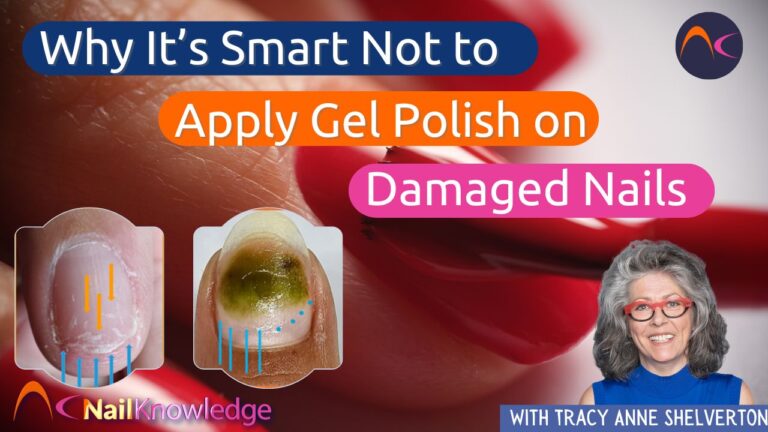
Why It’s Smart Not to Apply Gel Polish on Damaged Nails

Understanding the Risks of Reapplying Nail Coating Without Allowing Proper Recovery

When your nails are damaged, it’s essential to let the nail plate recover before reapplying any nail coating. Failing to do so can lead to complications, making it important to choose the best plan of action for nail health and appearance.

Visualizing the Impact: Before and After

Before: Normal nail coating after about 10 days, featuring one layer of a Builder Gel for shine and a bit of stability.

Photo 1: Builder Gel before an accident

After: All Builder In A Bottle ripped off the nail plate along with the free edge of the nail plate.

Photo 2: Nail plate damage after an accident

The Importance of Sealing the Nail Plate

If we look at photo 2 and the yellow arrows, we need first to seal the upper layers of the nail plate before applying more Gel Polish, and if we cannot do that a more permanent base coat will need to be applied, if we don’t do this we will create pockets for air, moisture or both under our gel polish

  • Air – causes lifting
Air pockets in the nail plate

These pockets can trap various contaminants your nails come into contact with, such as dirt, bacteria, and moisture. If caught early, the product can be removed and replaced to prevent issues. However, if not addressed, trapped moisture can create an ideal breeding ground for opportunistic pathogens like Pseudomonas aeruginosa, leading to potential infections.

Moisture trapped causing pseudomonas aeruginosa

 What can we do to Prevent Problems Happening?

Accidents happen, we can’t prevent those but our clients can help with good maintenance of their nail enhancements. A good quality oil helps prevent a build up of moisture and also helps to keep your nail and nail coating flexible and less prone to breaking or cracking, so a win win for your client but also for your salon, longer lasting gorgeous nails and happier clients.

Can we Recover the Nail Plate?

We can, there is a special product on the market today that is available the world over, treatments such as this will re seal the upper layers of the nail plate from the inside out and you will be able to re-apply your artificial nail product without a problem.

Without this product its smart to prep your nail plate with a good nail plate cleanser, and apply a semi-permanent nail product such as acrylic Liquid & Powder – Acryl has more than one advantage over a hard gel or an acrygel, it is designed to remain on a nail plate for longer periods of time and that’s important to know with this kind of nail plate damage, but if necessary, it can also be safely removed by thinning with a nail file and soaking off the last layer for optimal control and no extra damage to the nail plate.

Risks of Applying Short-Life Nail Enhancements on Damaged Nails

Placing a ‘short life‘ nail enhancement on a damaged nail plate is asking for problems and complications – something we would like to avoid in the nail salon. Doing so can create pocket lifting or a great home for opportunistic pathogens that are hanging around waiting to do their thing, recovery of the nail plate after such an infection takes considerably longer than recovering the original damage of the nail coating being ripped off.

It’s a good idea to inform your salon clients about the pros and cons of nail plate and nail unit maintenance with oils and lotions, its not just a sales pitch, your clients are paying you good money for nail coatings – having spent that money they also have a responsibility to keep them in the best possible condition and your responsibility is to provide a safe lasting service with minimal chance of causing infections.

DoDon’tNail ProductRefer to MD
Keep clean and make smart choicesDisguise with artificial nail products without a planIBX, Oil & LotionIf the nail becomes infected or changes colour
Use a semi-permanent product to aid recoveryUse hard gel or an acrygel – removal is difficultAcryl -L&P 
Oil 4dd’s High quality Oil & Lotion 

Contra indication: If the client already shows signs of a possible infection, redness, swelling or any changes in color do not reapply ANY artificial nail product. Refer to hygiene guidelines, hand care specialist or contact a MD

Filed Under: General Information, Lotions, Potions and Polishes, UV Gel

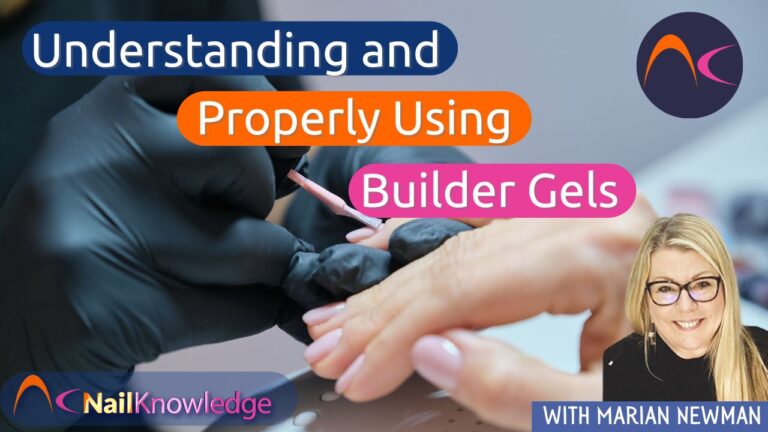
Understanding and Properly Using Builder Gels

Many nail professionals misunderstand the true purpose of builder gels, leading to their misuse and a tarnished reputation. Builder gels are not just thicker gels to be layered on for added strength; they have specific applications and techniques that, when used correctly, can enhance nail structure and strength without causing adverse reactions.

Misconceptions About Builder Gel Strength

A builder gel is a high-viscosity (thicker) gel, but this does not mean that simply applying a layer will enhance the nail’s strength more than a regular gel.

This is how many use it and then wonder why they are getting reactions from their clients that are lifelong and may mean they can no longer wear any type of gel!

The True Purpose of Builder Gels: Creating Structure and Strength

A builder gel is formulated so you can build structures with it. For example, you can create a perfect apex on a flat nail. OR for a weak nail, you can build a ‘backbone’ to create maximum strength. This is a slightly thicker line down the centre of the nail to make the whole length stronger but still look aesthetically pleasing and not thick and ugly.

A builder can do this as it will hold its shape, unlike a thinner gel which will just run into the sidewalls before curing. This is the way to use a builder.

The Dangers of Incorrectly Applying Builder Gels

By applying a thick layer thinking that will create the strength is wrong. It will look ugly and thick and will likely not be properly cured so the unreacted monomers can leach out or be released during shaping and removal causing an allergy. Game over!

The best way to use a builder is to first apply a very thin layer, often called a slip layer, some brands recommend curing, while others recommend not curing it. Then on this thin layer create a shape that is needed by the specific nail and the slip lay will help to hold it in place until curing. This must still be thin to properly cure. Another structured lay may be needed and that is OK.

Proper Application Prevents Adverse Reactions

In conclusion, do not just pick up your builder and apply it as a routine. Use it as it is meant to be used then it will do the job it is intended for and will be much less likely to cause a reaction.

All these reactions that are perceived as a problem with a buyer are wrong. If you are using a good quality product it will be the bad application that is causing the massive problem.

Filed Under: General Information, Lotions, Potions and Polishes

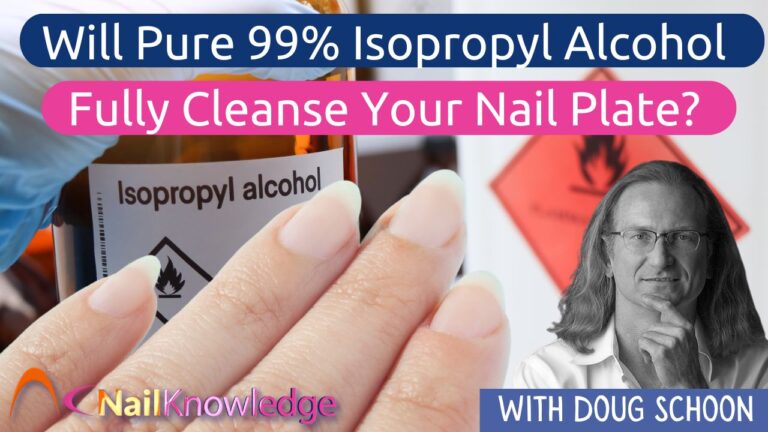
Can 99% Isopropyl Alcohol Effectively Remove All Surface Oils and Moisture from the Nail Plate?

We are asked this question a lot, and you are right to call them surface oils. The nail plate contains a lot of oil, but our focus is on removing the surface oils because they can block adhesion. Understanding the complexity of nail oils and the effectiveness of different solvents in removing these oils is crucial for achieving optimal results in nail care.

 Let’s explore why using a professionally designed nail cleaner is more effective than relying on pure isopropyl alcohol alone.

The Complexity of Nail Plate Oils

The nail plate contains a lot of oil, but we only want to remove surface oils because they can block adhesion. We are making a simplification when we say the nail plate contains “oil”. Nail oil contains many different oily substances, and some are much more difficult to remove from the nail plate than others.  The natural oils in the nail plate are a complex blend of more than a dozen different waxes and oily substances. Most of these substances are secreted by the tissue surrounding the nail plate, but some are transferred from the hair to the nails when they come into contact with each other. Not all oily substances found on the nail plate may be removed when the nail plate is cleaned with either acetone or alcohol or ethyl acetate, the most common solvents used.

Solvent Efficacy in Nail Cleansing

That’s because not all types of nail plate oily substances are soluble in every solvent.  Some are more soluble in acetone, while others are more soluble in isopropyl alcohol.  In other words, different solvents selectively remove various contaminants from the surface of the nail plate. Some solvents can leave behind contaminants that may fill up and/or block the various tiny spaces where the nail coating would normally seep into, harden and anchor itself more firmly to the surface of the nail plate.  This helps explain why cleansing the nail plate is so important to good adhesion. A scientifically designed nail surface cleanser will contain a synergistic blend of solvents and other beneficial additive ingredients that are more likely to do a superior job when compared to using isopropyl alcohol alone. That’s why I recommend using professionally designed nail cleaners and avoiding less effective substitutes.

Filed Under: Lotions, Potions and Polishes, Product Chemistry

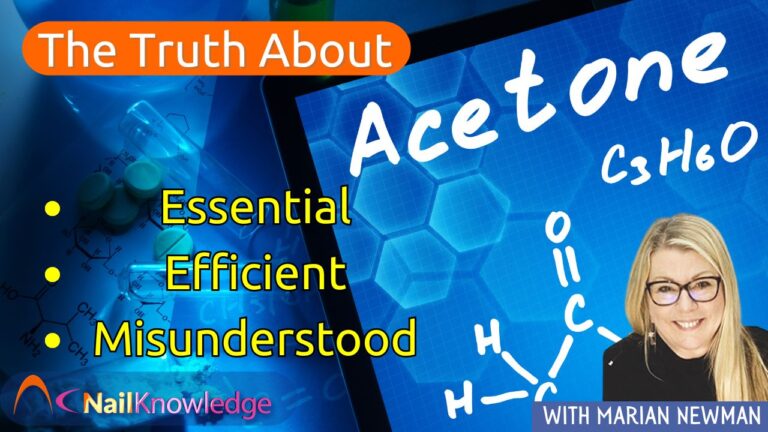
The Truth About Acetone: Essential, Efficient, and Often Misunderstood

Acetone is a solvent. It is not an allergen as some think. The human body produces small amounts of acetone through metabolism. It is however an irritant which means it can dry skin faster than natural moisture can be produced. This can cause some symptoms that are often misdiagnosed as an allergy.

Efficient Removal of UV Gel and Nail Coatings

Acetone is a crucial product in the nail industry as it is the most efficient remover for both UV gel products and liquid and powder nail coatings. It quickly breaks the bonds without melting them, altering the structure so it can be easily removed from the nails.

A way to understand how this works is to imagine a roll of kitchen paper towel is put in a bucket of water. It will become mushy and lose its structure, but it is still paper though. If it is dried out the structure will be different, in that it is no longer in neat sheets, but it is still paper in a chaotic state.

Acetone’s Role in Nail Product Removal

Even though it can be drying for the skin, it remains the most efficient option because the contact time with the skin is kept as short as possible.

There are many ‘acetone free’ polish removers where acetone is replaced by ethyl acetate or butyl acetate. These will remove polish but are not so efficient so takes longer to do the job. This results in longer skin contact with an equally drying solvent.

My advice to consumers is to use acetone to remove polish as it is quicker and skin contact is as short as it can be. The alternatives need more rubbing and longer skin contact.

Why Cosmetic-Grade is Essential for Nail Care

But only buy acetone suitable for cosmetic use. The acetone sold in stores such as DIY is unlikely to be impure and may have trace ingredients that are unsuitable for skin contact and could even be an allergen. Pure acetone from beauty suppliers is best for use in nail services.

Don’t be scared of acetone, other than understanding the fact that it is very flammable and any flame near to it can cause a flashback. Acetone should be stored in the cool and dark as it is very volatile meaning it evaporates easily so keep all containers of acetone covered to stop evaporation as it does have a strong smell that many don’t like or believe to be harmful.

It is the most efficient for nail coating removal and is often an ingredient in cleansers. It is not so effective alone for cleansing and dehydrating the nail plate. A mix of a solvent and alcohol (such as isopropyl alcohol, IPA) is the most efficient for this job.

Acetone Science Check

Acetone does not damage, weaken, or change the structure of the natural nail plate.
It does not denature keratin or cause permanent harm.

Acetone temporarily removes surface oils and moisture, which can make nails feel dry. This is a cosmetic effect, not structural damage, and is fully reversible with proper hydration and regular use of nail oil.

Filed Under: General Information, Lotions, Potions and Polishes, Product Chemistry

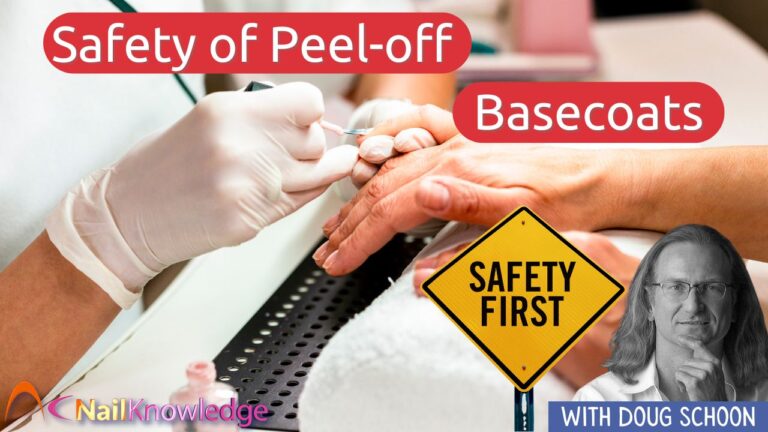
The Impact of Peel-Off Basecoats on Nail Health

Peel-off basecoats offer a convenient solution for those who frequently change their nail color, but what is the real cost of this convenience to your nail health?

This article delves into the common misconceptions and potential risks associated with peel-off basecoats.

Peeling Back the Truth about Peel-Off Basecoats

We are receiving a lot of questions from nail professionals regarding the safety of peel-off basecoats. A common inquiry concerns the correct method of removal: “Are peel-off basecoats safe as long as they are peeled from the base of the nail plate toward the tips, supposedly going with the grain of the keratin cells?”

If they did as you described, then they would be going “against the grain”, since any so-called grain in the nail would run across the width of the nail plate. Keratin fibers inside the nail cells lays across the width of the nail plate, which is why the nail plate typically splits across the width of the plate and not down the length. Therefore, the grain doesn’t seem to make a difference, at least when it comes to nail surface damage. People with healthy nail plates may not see damage when these base coats are used according to directions.  Even so, if the nail plate is already damaged, these peelable nail coatings can worsen existing damage. If the nail plates become dry-appearing or small white spots develop on the surface of the plate, then I would recommend that the wearer should discontinue use and/or reevaluate how they are using and removing these products. 

How Improper Use of Peel-Off Basecoats Can Affect Nail Health

These types of peel-off basecoats are more likely to worsen existing nail surface damage, but it is very common that people ignore directions and do it “their way” and then blame the product when it doesn’t work.  Users will likely notice decreased wear time. In other words, they won’t get the same wear.  These basecoats are likely to shorten wear time by as much as 50%.  Often those who use these types of products are people who want to change their nail color often and doing so can also increase nail damage.

Filed Under: General Information, Lotions, Potions and Polishes, Nail Services

  • « Go to Previous Page
  • Page 1
  • Interim pages omitted …
  • Page 3
  • Page 4
  • Page 5
  • Page 6
  • Page 7
  • Interim pages omitted …
  • Page 11
  • Go to Next Page »

Level Up Your Nail Insights

Join our Newsletter!
SUBSCRIBE...

Copyright © NailKnowledge

NailKnowledge

  • MyNailEra
  • eBooks
  • About us
  • Courses
  • News
  • Blog
  • Newsletter
  • Glossary

Policies

  • Privacy Page
  • Terms & Conditions
  • Cookie Policy

Support

  • Contact Us
  • Meet the Experts
  • Ask the Experts
  • System Support
  • FAQs
English
English
Portuguese Spanish Vietnamese