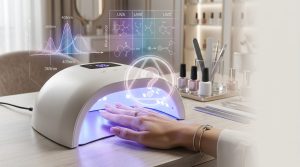
Since UV technology revolutionised our industry, we have long relied on UV nail lamps for curing various types of nail coatings. Yet, these devices, whether using fluorescent-style bulbs or LED diodes, still puzzle many nail professionals as they carry differences that are critical to understand.
Let’s have a look if we can help shed some light on this matter, with nine important facts to consider about both fluorescent-style UV nail lamps and LED-style UV nail lamps.


1. UV Lamps: Understanding Bulb Variance in Nail Curing
– Both styles of lamp cure gel products by producing UV energy. The main difference between both is how this energy is created. LED nail lamps use diodes as bulbs, whereas traditional models rely on fluorescent tubes.
2. Curing Speed and UV Emission:
– LED (which stands for ‘light emitting diode’) nail lamps produce higher levels of UV energy, which makes them much faster than the old fluorescent style lamps in curing nail coatings. They are the standard at the moment, as they are faster and consume less energy.
3. Wavelengths and Intensity:
– LED diodes emit fewer UV wavelengths (narrower spectrum of cure) but at higher intensities (faster), while fluorescent tubes produce numerous wavelengths (higher spectrum) at lower intensities (slower), resulting in different ranges of cure methods for UV gels.
4. Power Efficiency vs. UV Emission:
– Surprisingly, LED-style UV nail lamps, despite their faster curing, operate at around 30% lower wattages, so it will save you in energy bills.
This is also great proof that wattage is not indicative of UV emission, as many seem to believe.
5. Potential Risks:
– LED nail lamps, if used on UV gels formulated especially for fluorescent-style lamps, can overcure, which can lead to severe heat spikes, nail bed burns and plate separation, potentially causing infections or loss of the nail plate completely.
6. Understanding Intensity Variation in UV Nail Lamps:
– Different LED nail lamps can emit significantly different amounts of UV, suggesting that not all LED-style UV nail lamps are equal in UV emission. This is a very important point!!! As they produce a narrower spectrum of UV wavelengths, we can never use the same UV lamp to cure all products, which is the same as saying that a universal lamp doesn’t exist!
7. Safety Assurance:
– Both fluorescent and LED nail lamps have undergone safety tests and are confirmed not to cause cancer, if used according to manufacturer’s guidance.
Both lamp types are safer than natural sunlight exposure, reducing the risks associated with UV exposure. Nail lamps produce only UVA rays, which are not harmful to skin if used appropriately.
8. Lifespan Expectancy:
– Typically, both styles of nail lamps will deteriorate over time with usage and will require replacement after approximately three years of normal use.
LED diodes cannot be replaced, which means the whole machine will have to be replaced; whereas fluorescent tubes usually need replacement in average 2-3 times annually, so both with add on maintenance costs.
9. Manufacturer Calibration and Compatibility:
– As we mentioned above, manufacturers will tailor UV gels to work well with specific lamps, so there isn’t a universal gel compatible with all nail lamps, emphasizing the need for specificity in product selection.
Mastering UV Nail Lamps: Science, Safety, and Success in the Salon
Salon professionals must understand the differences between the two styles of nail lamps and how they promote product curing on the nail plate. This knowledge is crucial for ensuring proper curing, minimizing risks, and maximizing the efficacy of nail treatments.
While it may seem like a lot of effort, understanding the science behind our work is essential. It ensures we maintain the highest standards of safety and professionalism, which, in turn, leads to a long and successful career.