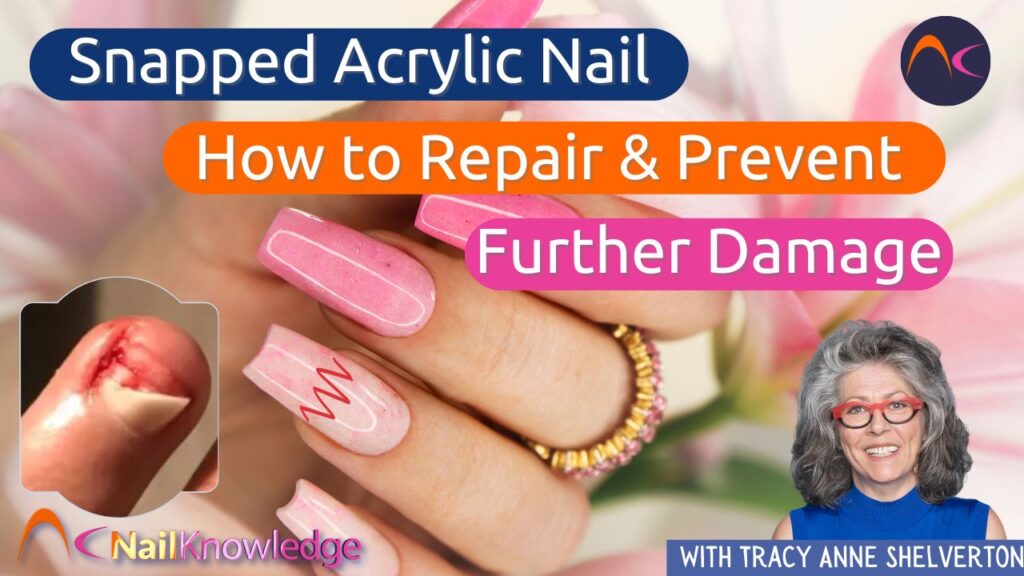
If you’ve ever experienced the frustration of snapping off an acrylic nail and taking a chunk of your natural nail with it, you’re not alone. It’s a common mishap that can leave you wondering how to rectify the situation and prevent it from happening again.
This article explores effective solutions for repairing a snapped acrylic nail and discusses preventive measures to safeguard your nails against future damage. Whether you’re dealing with a sudden break or aiming to avoid such incidents in the future, we’ve got you covered with practical tips and advice.

Maintaining Cleanliness: Essential Care for the Snapped Acrylic Nail
Its important to keep the affected nail clean – especially as you were wearing an artificial nail product at the time.
- Clean and Disinfect: Wash your hands and the injured nail with mild soap and warm water to remove any dirt or debris. Pat the area dry with a clean towel, and rinse with a mild antiseptic solution or disinfectant to prevent any or further infection. Do not soak in a water bath as this could encourage pathogens to take hold.
- Trim and File: First, trim any jagged edges of the broken nail with nail clippers. Then, use a nail file to gently smooth out the edges to prevent snagging and further damage.
- Protect and Support: If the nail is partially attached, you can use a small piece of soft foam bandage or a non-adhesive wrap to secure it in place and provide support while it heals. Be gentle to avoid putting pressure on the damaged area.
- Gentle Care: Be gentle with your hands and avoid activities that could further damage the injured nail, such as picking, pulling, or biting. Keep the nail
sshort to reduce the risk of additional breakage.
Tips for Healing Broken Nails Safely
- If you shorten it, keep it clean (with a gentle cleanser, wash, rinse, and oil), it will recover. In a few weeks, depending on how far up the nail the damage was, it will heal.
- Do not use superglue or artificial nail glue to hold the nail together as this will increase the chance of infection and or an allergy. Patience and nurturing is the key here.
Seeking Medical Attention for Broken Nail Injuries
If the injury is severe or if you experience pain, swelling, or signs of infection (such as redness, warmth, or pus), it’s important to seek medical attention from a healthcare professional or a dermatologist. They can provide proper treatment and advice based on your specific situation.