When a client raises concerns about a potential nail infection following a gel manicure, it can feel both frustrating and worrying, especially when you know your hygiene standards are impeccable. A common question that arises in these situations is:
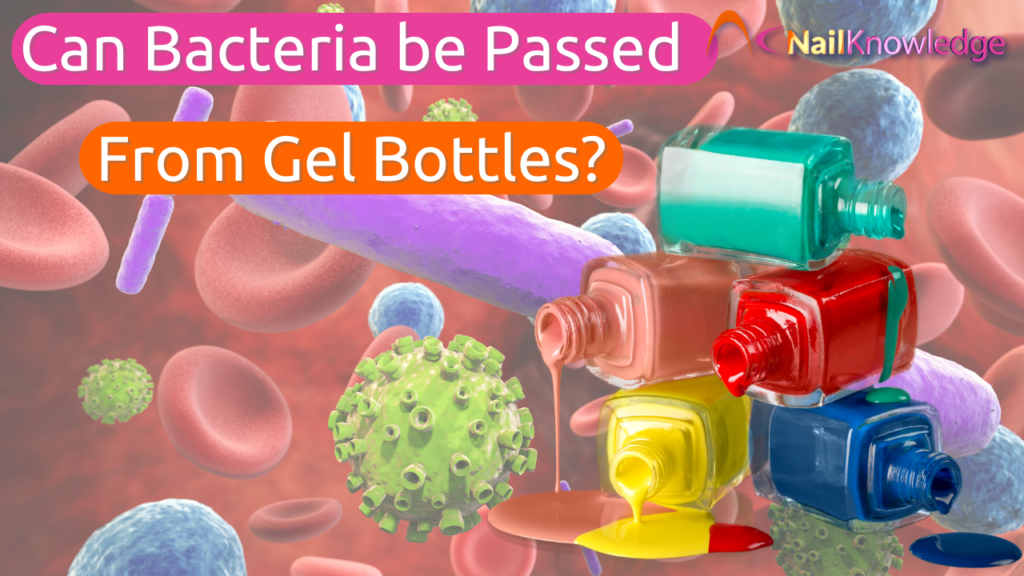
“Can bacteria be passed from gel polish bottles or brushes?”
The short answer? It’s highly unlikely.


Infection Risks from Gel Bottles and Professional Responsibilities
Let’s break this down step by step, exploring the science behind gel polish, infection risks, professional responsibility, and how to address client concerns with confidence.
1. The Science Behind Gel Polish: An Inhospitable Environment for Bacteria
Gel polish is more than just a cosmetic product, it’s a carefully formulated chemical system. Its core ingredients, including ethyl methacrylate, isopropyl alcohol, and photoinitiators and more, create an environment where bacteria struggle to survive.
- Solvent Power: The solvents in gel polish or standard polishes are inherently antimicrobial, meaning they kill or inhibit the growth of bacteria and other microorganisms.
- Double-Dipping: When you dip a brush back into the gel bottle after applying polish to a client’s nails, any bacteria present on the brush would immediately encounter these solvents. Survival in such a chemical-rich environment is highly unlikely.
- Curing Process: Once applied, gel polish is cured under UV or LED light, which hardens the product and further eliminates any potential for bacterial growth.
In short: Gel polish bottles and brushes are not viable hosts for bacterial infections.
However, this is critical, as just because the product itself is inhospitable to bacteria doesn’t mean we can become complacent about hygiene standards or ignore nail health concerns.
2. Our Professional Responsibility: Only Work on Healthy Nails
As professional nail technicians, our duty extends beyond applying beautiful nails, it’s about protecting our clients’ health and wellbeing.
We must only ever work on healthy nails.
If there is any doubt about the health of the client’s nails, be it signs of infection, trauma, or any abnormality, the safest and most professional action is to not proceed with the service and recommend they seek medical advice.
The assumption that “bacteria or pathogens won’t thrive in the bottle due to the chemicals, so it’s a risk that can be taken” is absurd and irresponsible.
Hygiene First, Always:
- Every tool and brush must be sanitised and sterilised or disposed of accordingly.
- Workspaces must equally be kept disinfected and immaculate.
- Hands (both technician’s and client’s) must be properly sanitised before the beginning the service, and even at the end where possible.
- Any visible nail or skin abnormality must trigger a pause, assessment, and, if necessary, a referral to a healthcare professional.
Maintaining hygienic practices and working solely upon healthy nails minimises, or even abolishes, the risk of bacterial contamination, regardless of how inhospitable the product may be.
If Not the Gel, Then What? Common Causes of Nail Infections
While gel polish itself isn’t a likely culprit, nail infections can arise from other factors. Here are the most common causes:
- Uncured Gel Polish
If gel isn’t fully cured under UV/LED light, it can remain tacky and trap moisture—a potential breeding ground for bacteria and fungi. - Improper Nail Preparation
Skipping essential steps like cleansing and sanitising the nail plate before applying coatings can leave bacteria or fungi behind. - Contaminated Tools
Reusable tools that aren’t properly disinfected or sterilised can transfer bacteria or fungi from one client to another. - Nail Trauma or Damage
Over-filing, aggressive cuticle removal, or accidental nicks during the service can expose the nail bed and/or surrounding skin to opportunistic pathogens. - Pre-existing Conditions
Clients who already have fungal infections or compromised nail health are naturally more prone to further complications. - Allergic Reactions
Sometimes, what appears to be an infection might actually be an irritation or allergic reaction to one of the ingredients within the nail coating. - Poor Aftercare
Clients who expose their nails to prolonged moisture, harsh chemicals, or neglect aftercare advice may experience nail health issues post-manicure.
Each of these factors could lead to symptoms like redness, swelling, or discomfort, which may mimic an infection.
How to Professionally Address Client Concerns
Handling these situations with professionalism, empathy, and education is key. Here’s how:
Step 1: Acknowledge Their Concern
Start by thanking your client for bringing the issue to your attention. Reassure them that their concern is being taken seriously.
Example:
“Thank you so much for letting me know about your concern. I take issues like this very seriously, and I want to make sure we address it together.”
Step 2: Educate with Confidence
Share the science behind polish and its antimicrobial properties. Explain how uncured gel, pre-existing conditions, or other factors are more common culprits for infections.
Example:
“Gel polish itself isn’t a hospitable environment for bacteria due to its chemical composition. However, infections can sometimes arise from other factors, such as trauma to the nail, pre-existing conditions, or aftercare habits.”
Step 3: Offer Support and Encourage a Medical Diagnosis
If a client’s symptoms persist or worsen, it’s important they consult a healthcare professional for an accurate diagnosis.
Example:
“I’d recommend visiting a medical professional to confirm if there’s an infection and identify the exact cause. This will help us both understand what might have happened.”
Step 4: Reinforce Your Hygiene Standards
Use this opportunity to reassure your client about your commitment to hygiene and safety.
Example:
“In my salon, I follow strict hygiene protocols, including sterilising tools, sanitising workstations, and following manufacturer guidelines for all products.”
Final Thoughts
While gel polish bottles and brushes are not a likely source of bacterial contamination, infections can still arise from other factors.
But more importantly:
- We must never assume risk is acceptable just because the product reduces it.
- We must always uphold the highest standards of hygiene and professionalism.
- We must only work on healthy nails, with no exceptions.
This approach not only ensures client safety but also protects your professional reputation and credibility.
Professionalism, education, and accountability are the cornerstones of our industry. Let’s continue to uphold them with pride.
Stay educated and stay professional.