• Skip to primary navigation
  • Skip to main content
  • Skip to footer
NailKnowledge

NailKnowledge

  • Courses
  • eBooks
  • eBook Basket
  • Knowledge Base
    • Knowledge Base
    • Ask the Experts
    • Glossary
  • News
  • Blog
  • Gallery
    • Nail Art Gallery
    • Nail Artists
    • Join the Elite
  • Login

General Information

Mastering UV Gel Application: Insights into Pigments

In the realm of nail artistry, UV gel has revolutionised the way we approach nail enhancements. Its versatility, durability, and ability to create stunning designs have made it a favourite among nail professionals and enthusiasts alike. However, achieving flawless results with UV gel requires more than just skilful application. It involves understanding the intricate interplay between the gel, UV light, and pigments.

Join us as we uncover some of the science behind UV gel application, shedding light on the crucial factors that influence its curing process and the role pigments play in achieving optimal results.

UV Absorption in UV Gel Application

UV gel application is a meticulous process that hinges on the interaction between the gel and UV light. As a type of resin applied to the nail plate, UV gel undergoes a transformative journey under the influence of UV light. During the curing process, both the UV gel itself and the pigments within it eagerly absorb the UV light emitted by the curing lamp. This absorption sets off a cascade of chemical reactions within the gel, catalysing its cross-linking and solidification. The end result? A resilient and long-lasting coating that adheres seamlessly to the nail, showcasing the beauty and durability of UV gel manicures.

In addition to the UV gel, pigments may be added to the gel to create desired colours or effects. These pigments also absorb UV light during the curing process. As the UV light penetrates the gel, it interacts with the pigments, causing them to absorb the UV energy. This absorption of UV light by the pigments may affect the curing process and the final appearance of the nail coating.

Unveiling the Secrets of Pigments in UV Gel

Pigments play a vital role in the world of UV gel manicures, offering endless possibilities for creativity and expression. These colourful additives are incorporated into UV gel formulations to enhance their aesthetic appeal, allowing nail artists to create stunning designs and vibrant hues. From rich reds to deep blues, pigments come in a variety of shades and formulations, each offering its own unique characteristics and effects. But beyond their visual allure, pigments also influence the curing process of UV gel, affecting its opacity, consistency, and overall performance on the nail.

Diving Deep into Pigment Absorption: Understanding Colour Dynamics in UV Gel Manicures

Exploring Pigment Absorption in UV Gel

In the realm of UV gel manicures, pigments are the palette with which nail artists paint their masterpieces. These tiny particles, infused within the gel, hold the power to transform nails into stunning works of art. But beyond their vibrant hues and captivating shades lies a fascinating phenomenon: pigment absorption.

Pigments within UV gel, particularly shades like red and black, possess a unique ability to absorb UV light with greater efficiency compared to lighter colours such as white or blue. This heightened absorption not only intensifies the colour saturation but also influences the curing process of the gel.

Furthermore, regardless of their specific hue, all pigments create what can be described as an “umbrella effect.” As UV light penetrates the layers of gel, pigments cast a subtle shade on the layers beneath them, altering the distribution of light and affecting the overall curing process.

The Impact of Pigment Load on UV Gel Curing

The pigment load in UV gel plays a significant role in the curing process, with higher pigment concentrations presenting potential challenges. As the pigment load increases, more UV light is absorbed by the pigments themselves, thereby reducing the amount of light that penetrates through to the gel for proper curing. This phenomenon exacerbates the under-curing issue, as insufficient UV exposure leads to incomplete polymerisation, compromised durability and increased potential for adverse skin reactions.

Nail professionals must carefully consider the pigment load in UV gel formulations to ensure optimal curing and long-lasting results. The only way for nail professionals to manage pigment load is by curing longer to ensure proper curing and applying thinner layers.

Navigating the Risks of Adding Nail Art Pigments to UV Gel

While the addition of nail art pigments can elevate the aesthetic appeal of UV gel manicures, it also introduces inherent risks that must be navigated with caution. One such risk is the increase in pigment load, which amplifies the likelihood of under-curing due to UV absorption by the pigments. As more UV light is absorbed by the pigments, less reaches the deeper layers of gel for proper curing, leading to premature wear and increased potential for adverse skin reactions. Nail artists must strike a delicate balance between creativity and practicality when incorporating pigments into UV gel formulations, prioritising proper curing techniques and product compatibility to mitigate the risks associated with pigment addition.

Filed Under: General Information, Lotions, Potions and Polishes, Nail Art, UV Gel

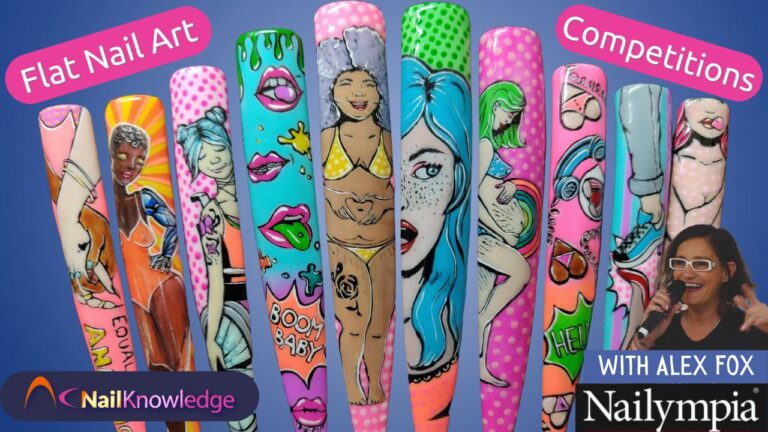
Exploring the World of Flat Art Nail Competitions

Flat art nail competitions serve as a platform for nail artists to showcase their artistic prowess and technical skills in creating intricate designs on a two-dimensional canvas. Unlike three-dimensional competitions that focus on sculptural elements, flat art competitions emphasise the mastery of free-hand painting, drawing and detailing on a flat surface.

Participants typically work on nail tips arranged in various sizes within a picture frame or box, allowing them to unleash their creativity without the limitations of salon requests or time constraints. These competitions challenge nail artists to explore new techniques, push their creative boundaries and demonstrate their artistic potential to a wider audience.

Through flat art nail competitions, they can elevate their craft, gain industry recognition and unlock new avenues for career advancement in the nail art community.  

Nailympia London 2022

Nita Avalos Falt Nail Art
Nita Avalos – Flat Nail Art Div 1 Winner – Courtesy of Nailympia
Gemma-Dawson Flat Nail Art
Gemma Dawson – Flat Nail Art Div 2 Winner – Courtesy of Nailympia

Types of Nail Tips & Canvas

In flat art nail competitions, participants utilise a variety of nail tips to create their designs. These typically consist of 10 nail tips in 5 different sizes, arranged either with or without gaps to form a cohesive canvas. Nail techs have the flexibility to choose the configuration that best suits their artistic vision and allows them to showcase their skills effectively.

The selection of nail tips plays a crucial role in determining the overall presentation of the design and may vary based on the competition’s requirements or the tech’s preferences. By understanding the characteristics and potential of different types of canvases, participants can strategically plan and execute their designs to captivate the judges and stand out in the competition.

Exploring Paint Options for Flat Nail Art

In flat art nail competitions, participants have access to a diverse range of specified paints to bring their designs to life. These can include airbrush paints, acrylic, gel paints, watercolour/aquarelle and alcohol inks, each offering unique properties and advantages for creating stunning nail art. Each competition will specify, which of these paints can be used.

Each paint medium offers a very different application and finish.

  • Airbrush paints allow for smooth gradients and precise detailing.
  • Acrylics offer versatility and durability.
  • Gel paints provide a glossy finish and excellent colour saturation, which is ideal for intricate designs.
  • Alcohol inks and watercolours/aquarelle offer vibrant, translucent colours that can be layered to achieve captivating effects.

By mastering the use of these paints, techs unleash their creativity and experiment with various techniques to elevate their designs. Whether blending colours, adding texture or creating intricate patterns, the choice of paint plays a crucial role in defining the outcome of the nail art piece.

Techniques & Skills

Flat art nail competitions challenge participants to showcase a wide range of techniques and skills in their designs. From free-hand painting and drawing to meticulous detailing and blending, techs must demonstrate precision and creativity in their artwork.

Techniques such as shading, layering and highlighting are employed to add depth and dimension to the designs, while intricate patterns and textures enhance visual interest.

Mastery of brush control, colour theory and composition is essential to create cohesive and visually striking nail art. Participants are encouraged to push the boundaries of their technical abilities and experiment with innovative techniques to set their designs apart from the competition. By honing their skills and mastering various techniques, techs can unlock their full creative potential and leave a lasting impression on judges.

Judging Criteria 

Judging at Nailympia 2023 – Courtesy of Nailympia

In flat art nail competitions, judges evaluate entries based on a comprehensive set of criteria to determine the overall quality and creativity of the designs. Elements such as the ‘wow-factor’, demonstrated techniques, creativity, precision, originality, colour palette and level of skill, are carefully assessed to select the winners.

Additionally, judges consider the artist’s ability to interpret the competition theme and effectively convey their artistic expression. Product control and attention to detail play a crucial role in distinguishing exceptional entries from the rest. By understanding the judging criteria, participants can tailor their designs to meet the expectations of the judges and maximise their chances of success in the competition.

Originality also presents a great opportunity to gain high points, as judges are searching for a new, fresh interpretation and style being delivered and serving up huge impact.

Challenges & Tips for Success with Flat Nail Art

While flat art nail competitions offer exciting opportunities for nail techs to showcase their talent, they also present unique challenges that participants must navigate to succeed. Time constraints, precision requirements and theme interpretation can pose significant challenges for competitors. However, on many occasions this competition is a turn-in or postal category, which means the artist can create this piece in the comfort of their own salon and in their own time, allowing for a more relaxed and creative space in which to work.

To overcome any obstacles and maximise their chances of success, tech’s can benefit from practical tips and strategies. Seeking guidance from experienced mentors or past competitors can provide valuable insights and motivation throughout the competition process. Additionally, attending competition classes and workshops can offer specialised training and technique insights to help participants achieve their goals more efficiently.

For competitions like Nailympia, where competitors can only enter Division 1 once, entering multiple competitions allows participants to make the most of this division and maximise their opportunities for recognition. Maintaining confidence, staying focused and believing in oneself are crucial aspects of success in flat art nail competitions. Participants are encouraged to embrace the competition experience, enjoy the creative process and showcase their unique style and talent with pride.

Showcasing Creativity

Flat art provides a canvas for nail techs to unleash their creativity and explore innovative ideas. By infusing personal flair and originality into their designs, participants can captivate judges, leaving a lasting impression. Furthermore, exposure to diverse techniques and trends from fellow competitors worldwide inspires continuous growth and evolution in their artistic journey. Embracing creativity in flat art nail competitions is not only a means of showcasing talent but also a celebration of individuality and artistic expression within the nail art community.

Benefits & Opportunities

Participating in flat art nail comps offers a multitude of benefits and opportunities for nail techs. Beyond the thrill of competition, it provides a platform for industry recognition and career advancement. Winners may gain exposure as industry experts, mentors or brand ambassadors, opening doors to exciting opportunities such as editorial shoots, advertising campaigns and participation in fashion week events.

Additionally, success in competitions can elevate the prestige of a tech’s salon business, attracting new clients and justifying higher service prices. The networking opportunities inherent in competitions enable techs to connect with peers, share knowledge and expand their professional network, fostering collaboration and growth within the nail art community.

Ismael Camero – Div 3 Flat Nail Art – Courtsey of Nailympia
Olivia Castillo – Div 3 Flat Nail Art – Courtsey of Nailympia
Vanessa Grossi – Div 3 Flat Nail Art – Courtsey of Nailympia

Embracing the Excitement: The Essence of Flat Art Nail Competitions

Flat art nail comps represent a dynamic and rewarding avenue for nail techs to showcase their skills, creativity and passion for nail art.

By participating, nail techs not only challenge themselves to achieve new heights but also contribute to the vibrant tapestry of innovation and artistry within the nail industry. With dedication, perseverance and a commitment to excellence, participants can unlock a world of opportunities, propel their careers to new heights and leave a lasting impact on the global nail art community.

Aspiring competitors are encouraged to embrace the journey, push their creative boundaries, and seize the invaluable experiences and opportunities that await in the competitive arena.

Filed Under: General Information, Nail Art

Skin Cancer and UV Lamps: Professional Responsibility and Client Safety

Skin Cancer and UV Lamps: Professional Responsibility and Client Safety

We get this query quite a lot: Is it safe to put your hands or nails into a nail lamp after being diagnosed with malignant melanoma skin cancer? This is a critical question that raises important considerations regarding professional responsibility and client safety.

Clients diagnosed with skin cancer have a medical condition and their doctor should determine if this is safe or hazardous for their patient. The doctor’s decision would be based on the patients’ medical history. I do NOT think this is a decision that a nail professional should ever make, because it is a medical choice, not cosmetic.  

Navigating Client Requests: Upholding Professional Judgment and Safety Standards

What if the “patient” wants to be a nail client and insists that you do the services? That’s a little more difficult to answer.  Please understand this, a client can NOT sign away or give up their right to have a safe service. In other words, a client can’t permit you to do something that goes against your professional judgment, if you believe it would be harmful or highly risky or potentially dangerous. The customer is NOT always right.

Prioritizing Client Safety

Consulting with Healthcare Professionals for Informed Decisions

As a professional, you are always responsible for working safely and protecting the client’s health. So, if an unhealthy condition exists, you should refuse the service. My guess is that most doctors, out of an abundance of caution, would likely advise against exposure to UV nail lamps. But some may recommend protecting the hand with a cover or SPF lotion. Or a disposable UV shield hand shield/glove can be extremely effective in blocking virtually all UV exposure. That’s why it’s always very important to get the doctor involved when clients are making such choices.

Don’t go around the doctor, remember, you’re working on their patient- it’s not just your client any longer.

Filed Under: General Information, Myth Busting, Nail Services, UV Gel

Unveiling the Hazards of Thick UV Gel Application

Let’s explore a crucial fact that every nail professional, student or enthusiast must be made aware of. As we explore the world of UV gel application, it’s essential to understand the impact of thicker gels on the curing process. 

The Crucial Fact About UV Gel Thickness You Can’t Afford to Overlook

Thicker Gels: Thicker layers of UV gel absorb more UV light at the top surface, resulting in lower penetration to the bottom layers of the gel. This can lead to incomplete curing and under-curing in the deeper layers.

The Phenomenon of UV Gel Absorption in Thicker Gel Layers

In thicker layers of UV gel, most of the UV light is absorbed by the upper layers of the gel, resulting in lower penetration of UV light into the lower layers. This phenomenon occurs due to the nature of UV light and the properties of the UV gel material.

When UV light passes through a material like UV gel, it is absorbed or scattered by the molecules within the UV gel. As the light travels deeper into the gel, even more of it is absorbed or scattered, leading to a reduction in the intensity of UV light reaching the lower layers. As a result, thicker layers of UV gel provide more material for the UV light to interact with, further reducing the amount of UV light that can penetrate to the bottom layers.

As a result, the top layers of the gel receive the highest intensity of UV light, leading to more efficient curing of the upper layers. However, as the light travels deeper into the gel, its intensity decreases, and the lower layers receive less UV light, which can result in incomplete curing and under-curing in those regions.

This phenomenon highlights the importance of proper curing techniques, including using thinner layers of UV gel to ensure adequate UV light penetration and uniform curing throughout the entire thickness of the gel layer. It also underscores the need for understanding the curing properties of UV gel and adjusting application techniques accordingly to achieve optimal results.

Filed Under: General Information, Lotions, Potions and Polishes, UV Gel

Addressing Sudden Nail Staining: Causes and Solutions

Exploring the realm of nail care unveils unexpected intricacies, particularly when it comes to dealing with nail staining, as shared by one of our valued clients.

Despite conscientious efforts in application and curing techniques, they found their nail plates marred by stubborn stains, particularly after adorning them with a rich, dark red hue.

In our pursuit of unraveling this perplexing issue, we look into the critical role of the base coat, shedding light on how its thickness can influence staining susceptibility. Join us as we explore the unique challenges posed by red-colored nail coatings and unveil strategies to mitigate staining while restoring the beauty and resilience of your client’s nails.

Managing Nail Staining: Importance of Base Coat Thickness

One of the first things to consider is the base coat, since applying it too thinly can increase staining.  

Understanding the Challenge of Red Nail Coatings and Nail Staining

Red colored nail coatings are one of the greatest challenges for the nail plate. It is difficult to create a deep red color that doesn’t stain the nail plate. Because some red colorant molecules can penetrate the nail plate’s surface. When that occurs, the molecules collect and pool just underneath the surface to create a visible stain.

Tackling Nail Staining: The Role of Incomplete Curing

The surface of the nail coating may seem hard, but if the color coat isn’t completely cured all the way through, it will remain tacky in the area where it meets the base coat. This is called a “tacky interface”, in technical terms. This tacky interface allows colorants to move around more easily, into and through the base coat, so nail plate surface staining becomes easier.

This is especially true for areas of nail surface damage. Nail plates that are over filed, peeling, pitted or otherwise damaged are more readily stained. This is hard to avoid when nail surfaces are damaged. The greater the damage, the more likely it is that staining will occur.

Application Techniques for Success

Also, it is very important to note that staining is more likely to occur when the color coating is applied too thickly.  So, besides finding a solution to the surface peeling problems, perhaps what this nail professional needs is more base coat and less color coat.

Filed Under: General Information, Lotions, Potions and Polishes, UV Gel

The Impact of Nail Polish and Chemical Exposure on Fertility

In today’s age of abundant information, especially regarding fertility and reproductive health, it’s not uncommon to come across advice that can cause confusion or concern.

One such instance is highlighted by a reader who, after delving into the book “It Starts with the Egg” by Rebecca Fett, found themselves questioning the impact of nail polish and certain chemicals on fertility.

The book, aimed at women seeking to enhance their chances of conception, mentions reducing exposure to chemicals like BPA and phthalates, prompting our reader to seek clarification on the matter.

In response, our experts provide insightful perspectives on evaluating such advice, separating fact from fear, and making informed choices about personal health.

Addressing Concerns About Chemical Exposure and Fertility in Nail Polish

It’s understandable that you may have reservations about the language used regarding certain chemicals and their impact on fertility. While it’s important to be mindful of potential risks and make informed choices, it’s also essential to critically evaluate the evidence and consider the context.

Many studies have examined the potential effects of chemicals like BPA, phthalates, and parabens on reproductive health, including fertility. While some research suggests a possible association between exposure to these chemicals and adverse reproductive outcomes, such as reduced fertility or hormonal disturbances, the findings are not always conclusive or consistent.

Furthermore, the levels of exposure and individual susceptibility can vary widely among different populations. What might be concerning for one person may not pose a significant risk to another, especially if they are already taking steps to minimize exposure or if they do not have underlying fertility issues.

Acknowledging the Use of Language in General Audience Publications

It’s also important to recognize that the language used in books or articles aimed at a general audience, like “It Starts with the Egg,” may sometimes use terms like “toxic” to convey a sense of urgency or importance in avoiding certain substances. However, this language can sometimes oversimplify complex scientific concepts and may contribute to unnecessary anxiety or fear.

Ultimately, when considering advice related to fertility and chemical exposure, it’s essential to weigh the available evidence, consider individual circumstances, and consult with trusted healthcare professionals for personalized guidance. Additionally, making informed choices about lifestyle factors, including product use and environmental exposures, can be empowering, but it’s also important to maintain a balanced perspective and not let fear dictate decision-making.

Prioritizing Pre-Pregnancy Health: Separating Fact from Fiction

Taking care of your health pre pregnancy is very important.

We don’t use thoughts we use facts – so I hope this helps to settle your mind at a time when you need all the good information possible.

Perspective and fearmongering play a major role when it comes to the ins and outs of nail polish of nail services with artificial nail coatings in a salon.

Choosing Nail Polish Wisely: Understanding Ingredients and Risks

You quote the author: “most major brands of nail polish now claim to be phthalate-free, but nail polish remains a source of many other questionable chemicals, so it is better to choose a brand that relies on nontoxic ingredients.”

All nail products are chemical and could be considered toxic if you drink or digest them.

The thing is, our skin is responsible for protecting us – keeping your skin in perfect condition and not damaging the guardian seals of your nail units is paramount to removing the possibility of an adverse reaction to any nail product. Its also important to remember that what is IN the product is much more important than whats NOT IN the product.

Guidance on Reputable Nail Polish Brands and Product Claims

Please feel free to use any reputable nail polish – major brands are reliable and have a lot of knowledge about whats in their product, ask them if you are in anyway concerned. Avoid the ones that say ‘breathable, chemical free’ etc they are lying to you.

Protecting Your Nails: Precautions for UV or LED Cured Nail Coatings

If you choose to have a nail coating that needs to cure in a UV or LED lamp in a salon, do not allow them to remove any layers or dry flaking skin with an efile or rough up your nail plate before application, these are important guardians of your nail unit.

Filed Under: General Information, Health and Safety

  • « Go to Previous Page
  • Page 1
  • Interim pages omitted …
  • Page 8
  • Page 9
  • Page 10
  • Page 11
  • Page 12
  • Interim pages omitted …
  • Page 30
  • Go to Next Page »

Level Up Your Nail Insights

Join our Newsletter!
SUBSCRIBE...

Copyright © NailKnowledge

NailKnowledge

  • eBooks
  • About us
  • Courses
  • News
  • Blog
  • Newsletter
  • Glossary

Policies

  • Privacy Page
  • Terms & Conditions
  • Cookie Policy

Support

  • Contact Us
  • Ask the Experts
  • System Support
  • FAQs
English
English
Portuguese Spanish Vietnamese